
How to Introduce a New Kitten to a Dog Safely at Home
Key takeaways
- Keep the kitten and dog fully separate for the first days, and let scent do the first introduction.
- Move to sight, then to brief leashed meetings, only when both animals stay calm at each stage.
- Full unsupervised time together can take weeks, and rushing it risks setbacks.
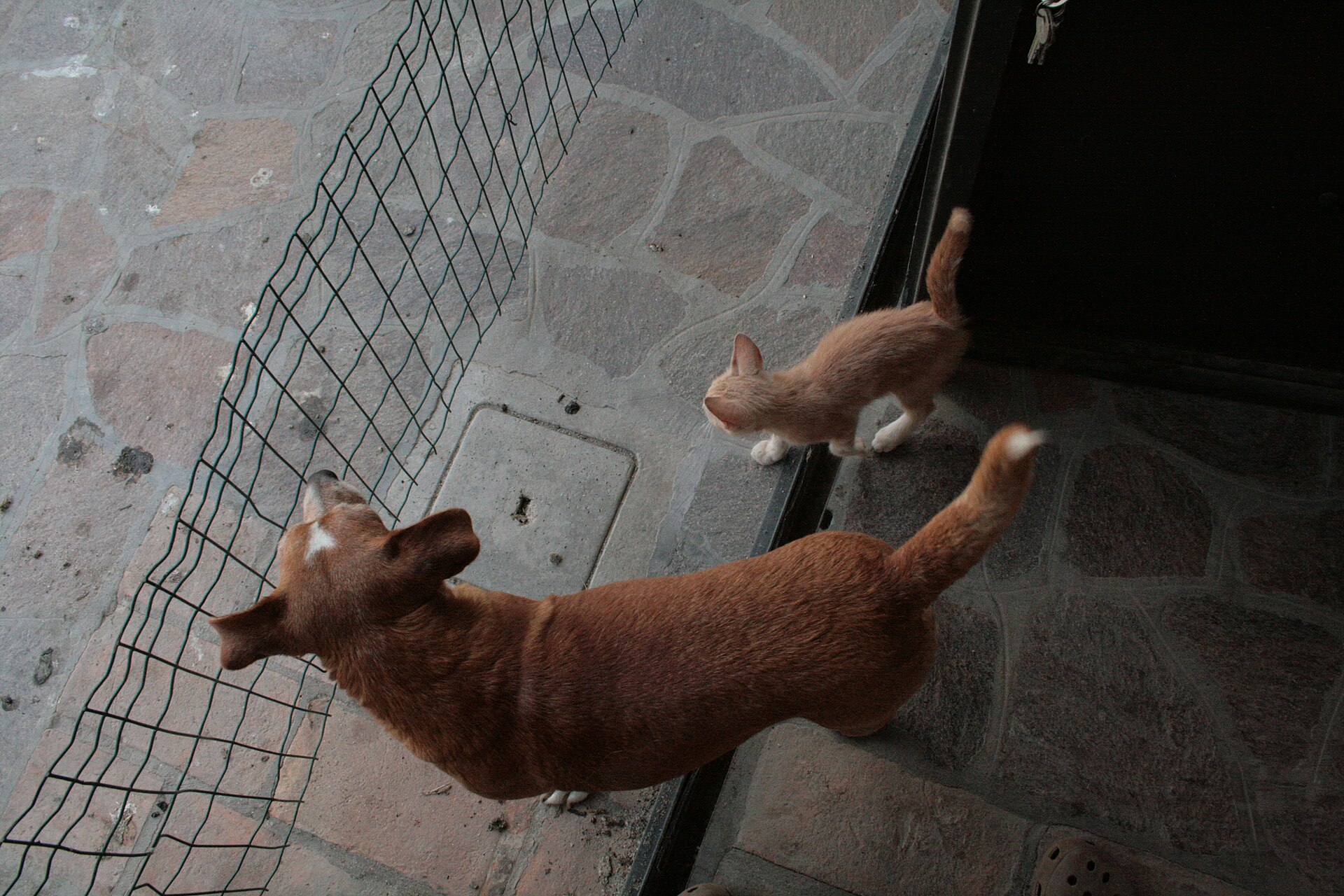
The temptation is strong. You carry the new kitten through the door, set her down in the living room, and watch your dog's reaction. Do not do it.
A kitten in the middle of a strange room, facing a much larger animal, has nowhere to run and no time to learn. A dog that feels surprised or overexcited can chase, mouth, or pin a kitten before you can react.
A safe introduction runs in stages: scent first, sight second, brief contact last. Each stage has its own signals for moving on or stepping back. This article explains how to introduce a new kitten to a dog safely, including how to set up the house, how scent swapping works, and how to run the first meetings.
Before the kitten arrives
Prepare the house before the carrier comes through the door. A little setup work prevents most first-day chaos.
Give the kitten a sanctuary room with a closed door. The room needs food, water, a litter box, a bed, a scratching post, and hiding places. A cardboard box with a kitten-sized hole works well.
Add a tall perch or a cleared shelf so the kitten can climb above floor level. High places feel safe to cats.
Set the dog up in the rest of the house with his own bed, water, and toys. Move the dog's food bowl away from the sanctuary room door if he tends to guard food.
Buy a baby gate before the kitten arrives. You will need it for the visual stage.
Check the dog's basics. A dog that responds to "sit," "look at me," and "leave it" is far easier to manage around a kitten. If the dog has a strong chase drive toward small animals, or a history of harming cats, talk to a behavior professional before bringing a kitten home.
Some dogs need a managed plan from day one.
Stage 1: Separate rooms and scent
The first rule of introducing a kitten to a dog is not to introduce them at all. Tractor Supply Co. puts it plainly: keep the kitten in a separate room with the door closed so she has time to get used to her new home.
The dog can sniff around outside the door. Even without seeing each other, both animals start learning through scent and sound.
Scent is how cats and dogs read the world. A new smell tells each animal that another animal exists, without any risk. The Governing Council of the Cat Fancy advises swapping blankets or a towel carrying each animal's scent into the other's bed.
This lets both animals get used to the smell before they ever meet.
Run scent swapping this way:
- Rub a clean cloth gently on the kitten's cheeks and chin, where scent glands sit. Do the same for the dog.
- Place each cloth near the other animal's food bowl or bed.
- Swap bedding between the two spaces every day or two.
- Watch the reaction. Sniffing and then walking away is a good sign. Hissing, growling, or refusing to eat near the cloth means slow down.
Let each animal explore the other's space when the other is out of it. After the kitten has settled for a few days, let her explore the house while the dog waits in her room with the door closed. Then swap back.
Each animal reads the full scent map of the other without a face-to-face meeting.
How long does this stage last? Second Chance Animal Services suggests about a week of scent work before moving on, if none of the animals react badly. If the dog barks, scratches, or whines at the kitten's door, or the kitten hides and stops eating, stay in this stage longer.
Patience here pays for itself later.
Stage 2: Sight without touch
When both animals eat calmly near the other's scent and ignore the door, move to visual contact through a barrier. A baby gate in the sanctuary room doorway works well. Some families drape a blanket over the gate at first, then raise it a little more each day so the visual reveal is gradual.
Keep sessions short, five to ten minutes. Feed both animals near the gate, each on their own side, so they link the sight of the other with a good meal. Reward calm behavior with treats and quiet praise.
End the session before either animal gets wound up.
Expect some hissing and puffing from the kitten. The Governing Council of the Cat Fancy notes that the kitten should stay in her carrier or behind the barrier while the dog stays on a leash during early sightings. A little hissing is normal communication.
Constant screaming, a flattened body, or a kitten that will not come out of hiding means the pace is too fast.
Watch the dog closely. A relaxed dog looks away, lies down, or sniffs and loses interest. A dog that stares hard, whines, barks, lunges, or fixates on the kitten is not ready.
Redirect that dog with a "look at me" cue and a treat. If fixation keeps happening, drop back to scent-only work for a few days.
Stage 3: First meeting on a leash
When both animals stay relaxed behind the gate, try a brief meeting in a room. Keep the dog on a leash. Let the kitten move freely.
Never carry the kitten toward the dog, and never hold her in front of his face. She must be able to choose the distance and to leave.
Let the kitten enter the room on her own terms. If she wants to stay behind the gate, let her. If she walks in and then retreats, that is fine.
Keep the dog's leash loose but ready. A tight leash raises tension. Reward the dog for calm glances at the kitten followed by looking back at you.
Reward the kitten for calm curiosity. Keep the first meeting to a few minutes. End on a calm note, before either animal tires.
Repeat short meetings several times a day. Gradually lengthen them as both animals stay relaxed. The Governing Council of the Cat Fancy advises repeating these sessions until both animals can relax together, and notes that reaching that point can sometimes take weeks.
Stage 4: Supervised time together
When the dog stays calm while the kitten explores, try dropping the leash but keeping it attached, so you can step on it if needed. Stay in the room. Supervise every second.
Give the kitten escape routes and high perches in every shared room. A cat tree, a cleared shelf, or a baby gate with a cat-sized gap gives the kitten a way out.
Watch for play that tips into chasing. Dogs often chase because it is fun, not because they mean harm. But a 30-kilogram dog chasing a one-kilogram kitten can hurt her by accident.
Interrupt chase play early with a cheerful recall and a toy. Redirect the dog's energy into a game that does not involve the kitten.
Feed them separately for a long time. Food guarding is one of the most common triggers for a fight. Separate bowls in separate spots remove the problem.
The same goes for litter boxes. The Oregon Humane Society advises keeping the cat's litter box where the dog cannot reach it after the sanctuary stage ends.
When they can be alone together
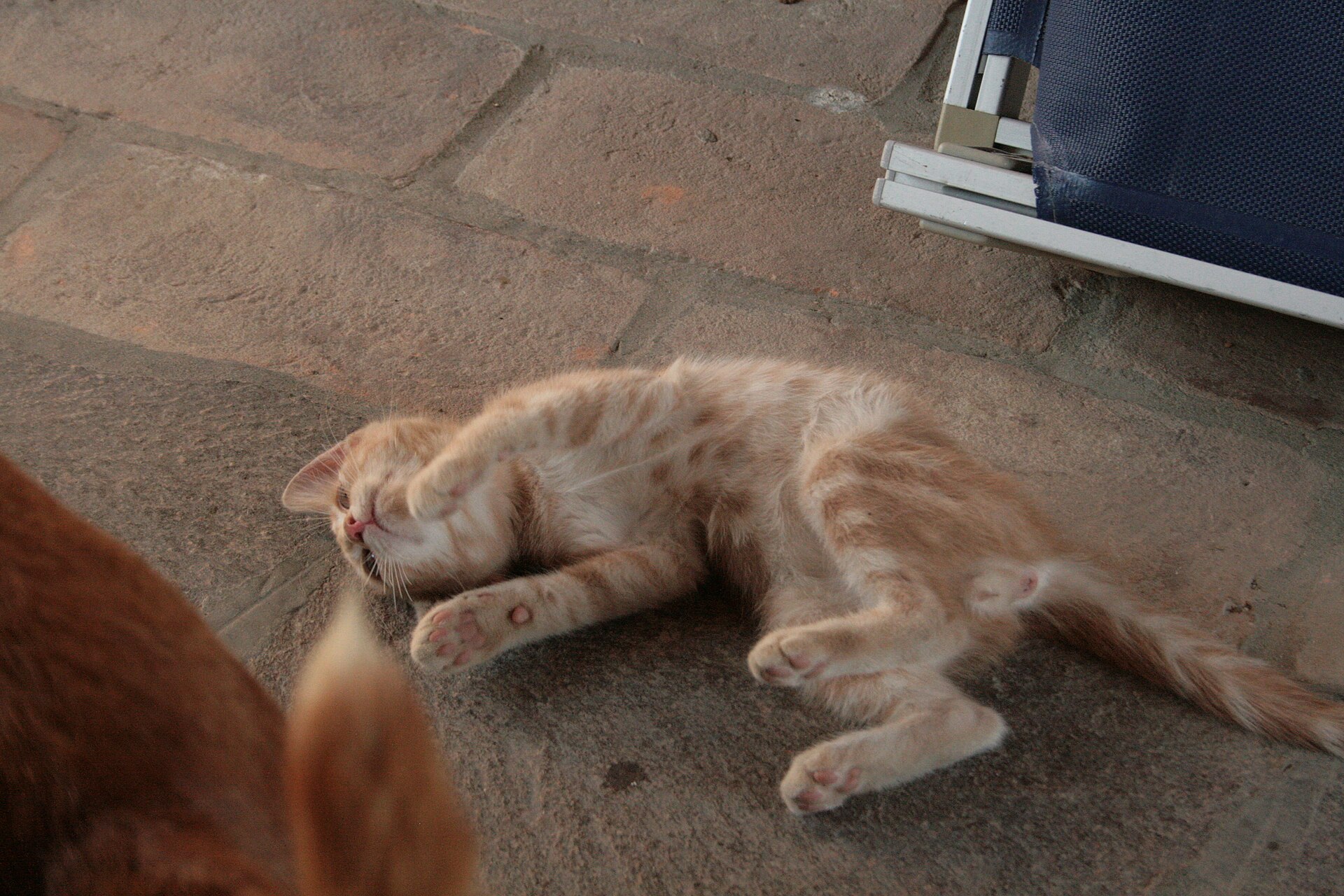
Unsupervised time is the last step, not the second one. Wait until both animals have been calm together for at least a few weeks of supervised sessions. The dog should ignore the kitten or greet her calmly.
The kitten should move around the house with a relaxed body and tail.
The Governing Council of the Cat Fancy advises keeping pets separated when left alone until the kitten is a full-grown cat, especially if the dog sees small animals as prey. That is cautious advice, and it is right. A sleeping owner cannot interrupt a chase.
A closed door can.
When you do start leaving them together, start with short absences. A 20-minute trip to the shop is a better first test than a full workday. Check for signs of stress when you return: a hiding kitten, knocked-over furniture, or a dog that seems overexcited.
If you see those signs, go back to separation while you are out.
If things go wrong
Setbacks happen. A loud noise, a visitor, or a chase game can reset progress. The Oregon Humane Society warns that fearful or aggressive meetings can become a habit if they keep happening.
The fix is to go back to the last stage that worked and rebuild from there.
Separate the animals at once if either shows real aggression: sustained growling, snapping, or a kitten that screams and cannot escape. Give both animals a quiet day apart. Restart with scent work.
Restart with scent work.
Get professional help if the dog fixates on the kitten and cannot be redirected, or if the kitten stops eating, hides all day, or starts soiling outside the litter box. A certified behavior consultant or a veterinarian can check for pain, fear, or a mismatch that needs a structured plan.
Frequently asked questions
How long does it take for a kitten and dog to get along?
Days to weeks for tolerance, often longer for real friendship. Some pairs bond within a fortnight. Others take months to relax fully.
The scent stage alone may take a week. Rushing the schedule usually adds time, not saves it.
Should I let the dog sniff the kitten in the carrier?
A carrier sniff is a common first step, but only after scent swapping. The kitten stays safe inside, and the dog learns the smell up close. Keep the dog on a leash, keep it brief, and end the session if either animal panics.
What if the kitten hisses at the dog?
Hissing is normal cat language for "back off." Let the kitten set the distance. Do not scold hissing.
It is the kitten's polite warning, and it beats a swat or a bolt.
Can an older dog accept a kitten?
Yes, and many do. Older dogs often have less chase drive and more patience. The same staged process applies.
Go at the slower animal's pace, and protect the kitten's escape routes.
The bottom line
Scent first, sight second, touch last. Keep the kitten in her own room, swap scents for days, then let the pair see each other through a gate. Move to brief leashed meetings only when both animals stay calm, and keep them separated while you are out until trust is proven over weeks.
Patience at each stage is what makes the friendship last. For more pet care, read whether dogs should eat grass and which human foods are dangerous for dogs and cats.
Tags: kittens, dogs, pet introduction, pet safety
Latest in Pets
- Why Dogs Eat Grass
- Human Foods Dangerous for Dogs and Cats
- Stop a Puppy Chewing Everything
- Help a Pet Scared of Fireworks
Subscribe for one practical pet guide in your inbox each week.
Related stories

Why Does My Dog Eat Grass and Vomit?
A UC Davis study of 1,571 owners found grass eating is normal dog behavior, not self-medication: only 10% were ill first. What the science

Why Does My Dog Stare at Me While I Eat?
Dogs stare at you while you eat because it has worked before, and mutual gaze raises bonding hormones. Learn the reinforcement science

Foods toxic to dogs: the list, with reasons
Chocolate, xylitol, grapes, onions: common foods can harm dogs. Learn what makes each one toxic, the warning signs, and what to do if your