
Why pets yawn when you yawn back at owners
By Rive News / Research desk | Rive News / Published October 28, 2026 at 9:00 AM PKT
Key takeaways
- Dogs are the best-documented case: they yawn more after their owner's yawns than after a stranger's yawns.
- Cats show only weak or anecdotal evidence for contagious yawning, despite many owner reports.
- The leading explanations are motor mimicry and social bonding, but whether it proves empathy is still debated.
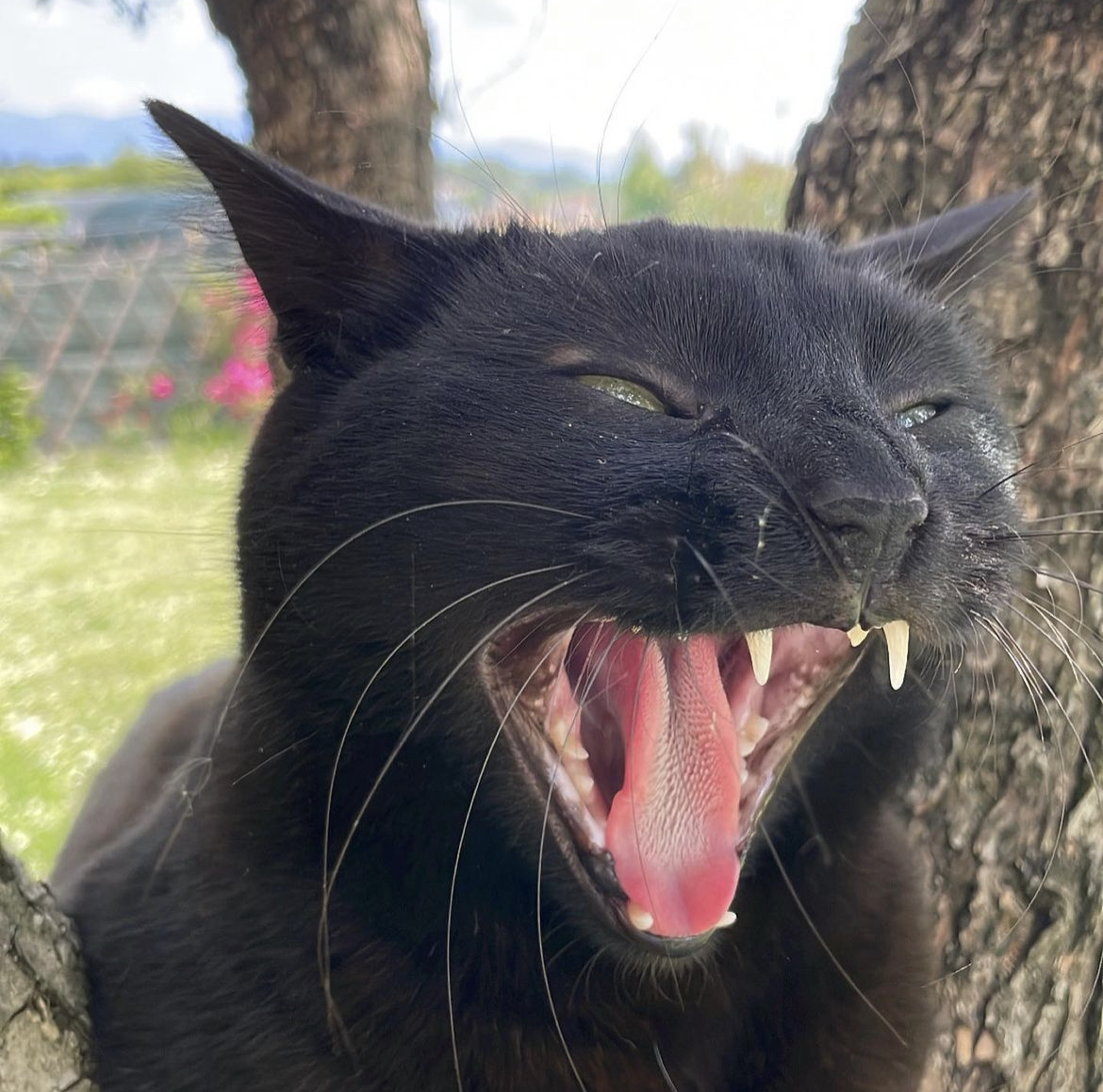
[A black cat yawning outdoors.] Photograph: yawning cat
Image Credits: Wikimedia Commons
You yawn, and a moment later your dog yawns too. It feels like sympathy, and in a loose sense it may be, but the science behind it is more careful than the feeling.
This article explains what contagious yawning is, what studies found in dogs and cats, and why researchers still argue about what a copied yawn actually means.
What contagious yawning is
Contagious yawning means yawning after seeing, hearing, or even thinking about someone else yawning. It is common in humans, and it shows up in a growing number of social animals.
The basic mechanism is automatic. Perceiving a yawn activates brain systems involved in producing one, so the observer yawns without deciding to.
That automatic quality is why it spreads in groups. One yawn can trigger another, and the effect is strongest among individuals with close social bonds.
In humans, a study by Gallup and Wozny tested whether people yawn in response to yawns from other species. Of 296 participants, 69 percent reported yawn contagion during testing, and the response did not depend on how closely related the animal was.
That finding suggests the trigger is general, not specific to one species. A yawn signal, in almost any form, can set off the response.
Dogs: the strongest evidence
Dogs are the most studied pet in this area, and the pattern is consistent. Dogs yawn more often after seeing or hearing their owner yawn than after a stranger yawns.
A study at the University of Tokyo, published in 2013 by Romero and colleagues, found that dogs yawned contagiously after familiar humans. The researchers also monitored heart rate and found no significant change across conditions, which argued against stress as the sole explanation.
A study from the University of Porto, by Silva and colleagues in 2012, used recorded yawns rather than live ones. Dogs still yawned more to familiar human yawns than to unfamiliar ones, and their stress-related behaviour did not differ by condition.
An earlier experiment at Birkbeck College, University of London, by Joly-Mascheroni and colleagues in 2008, showed that live human yawning triggered yawning in many dogs. Together, these studies point to a real effect, not just coincidence.
A study published in PLOS ONE found the same familiarity pattern. Dogs yawned significantly more often when watching their owner yawn than when watching an unfamiliar person do the same.
That familiarity gap is the key clue. If yawning were pure reflex, a stranger's yawn should work as well as an owner's, but in dogs it usually does not.
Cats: a much weaker case
Cat owners often report the same effect, but controlled studies have not backed it up as strongly. Evidence for contagious yawning in domestic cats is limited, with anecdotal reports far ahead of experimental proof.
One reason may be how cats attend to people. Cats watch their owners, but they may not fixate on a human face in the same way dogs do during a yawn test.
Another reason may be that cat yawning serves different functions. Cats yawn when waking, when stretching, and when shifting between activities, which makes a copied yawn harder to separate from an ordinary one.
That does not mean cats never catch yawns. It means researchers have not yet shown it reliably under controlled conditions, and owner stories alone cannot settle the question.
Pet owners should therefore be cautious about generalising from dogs to all pets. The word "pets" covers species with very different social systems, and contagious yawning tracks social complexity.
Does a copied yawn mean empathy?
This is where the debate sharpens. Some researchers link contagious yawning to empathy, the ability to share another's emotional state, because the effect is stronger among bonded individuals.
The familiarity pattern in dogs fits that idea. Dogs yawn more for owners than strangers, just as humans yawn more for friends and family than for strangers.
Other researchers urge caution. A 2020 Bayesian re-analysis of canine studies by Neilands, Claessens, and Ren concluded that although contagious yawning is present in dogs, it does not show the familiarity, gender, or prosociality biases that an empathy model predicts.
That re-analysis does not erase the earlier findings, but it weakens the empathy interpretation. A behaviour can be socially sensitive without being proof of empathy.
A middle explanation is motor resonance. Seeing an action activates the brain circuits for doing it, so the yawn spreads through imitation machinery rather than emotional understanding.
Both explanations may hold at once. Motor resonance could be the mechanism, while social closeness tunes how strongly it fires.
Other reasons pets yawn
Not every pet yawn is contagious. Dogs and cats yawn when they wake up, when they stretch, when they are bored, and when they are winding down.
Dogs also yawn as a calming signal in tense moments. A dog that yawns during training, at the vet, or when meeting a stranger may be signalling stress or trying to defuse tension.
That is why context matters more than the yawn itself. A yawn after your yawn, in a relaxed home, is likely contagious or coincidental, while a yawn in a tense situation may be communication of a different kind.
Yawning can also accompany physical states. In dogs, yawning paired with drooling, lip licking, and swallowing can signal nausea, and motion sickness in a car produces that pattern reliably.
The rule of thumb is simple. One or two yawns in context mean little, while a sharp change in yawning frequency, especially alongside other changes, is worth noting.
When yawning deserves a vet visit
This article is general information only, not a diagnosis. If yawning comes with lethargy, reduced appetite, or behaviour changes over several days, a vet visit is sensible.
The same applies if yawning is excessive, far beyond what context explains, or paired with drooling without an obvious cause. Pain, thyroid problems, and neurological changes can all alter a pet's baseline behaviour.
A vet will look at the whole pattern, not the yawn alone. That is the right approach, since a yawn is one of the least specific signals an animal produces.
For most pets, though, a copied yawn is simply a small, social moment. It shows that your pet is paying attention to you, even if it does not prove they feel what you feel.
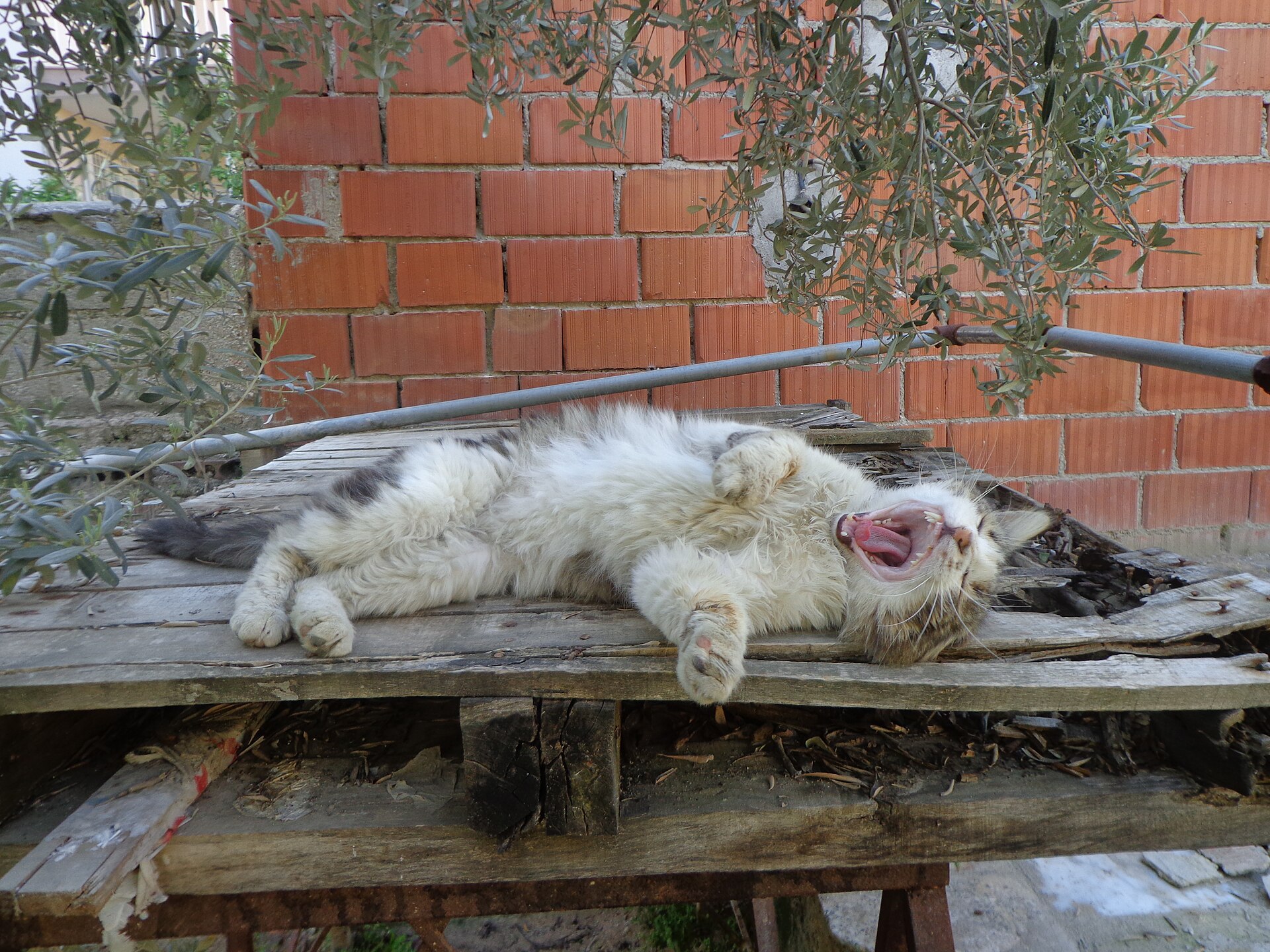
[A fluffy cat yawning while lying on a wooden platform outdoors.] Photograph: yawning cat
Image Credits: Wikimedia Commons
The bottom line
Pets, above all dogs, often yawn when you yawn because contagious yawning is a real, socially tuned reflex. Dogs show it most clearly with familiar people, while cats show only weak experimental evidence so far.
Whether that reflex counts as empathy remains open. What is clear is that your pet is watching you closely enough for your behaviour to shape theirs, and that attention is itself a sign of the bond.
Next time your dog catches your yawn, enjoy the moment for what it is. It may not be proof of empathy, but it is proof of connection.
If yawning comes with persistent changes in appetite, energy, or behaviour, ask a vet to check your pet.
Tags: dogs, cats, pet behaviour
Rive News / Research desk writes plain-language explainers drawn from published research and reputable pet science sources.
Related
- Why cats sleep so much and when it is too much
- Why cats knead with their paws at home
- Why cats stare at walls for no apparent reason
Subscribe to Rive News for one plain-language explainer each week.
Rive News follows published sources and corrects errors when readers point them out.
Related stories
Why Does My Dog Eat Grass and Vomit?
A UC Davis study of 1,571 owners found grass eating is normal dog behavior, not self-medication: only 10% were ill first. What the science
Why Does My Dog Stare at Me While I Eat?
Dogs stare at you while you eat because it has worked before, and mutual gaze raises bonding hormones. Learn the reinforcement science

Foods toxic to dogs: the list, with reasons
Chocolate, xylitol, grapes, onions: common foods can harm dogs. Learn what makes each one toxic, the warning signs, and what to do if your