
Why Do Rabbits Pull Out Their Fur to Line a Nest?
Key takeaways
- A pregnant doe pulls fur from her chest and belly in the final day before birth to build a warm, insulated nest for her kits.
- The trigger is hormonal: prolactin rises nearly fivefold the day before kindling, loosening the coat so fur comes out easily.
- Unspayed females do the same thing during false pregnancies, which last 16 to 18 days and need no treatment beyond patience.
A female rabbit yanking mouthfuls of her own fur can look alarming the first time you see it. Bald patches appear on her chest, belly, and sides within hours. But in most cases this is not a skin disease or a stress disorder.
It is one of the most precisely timed maternal behaviors in the animal kingdom: nest building.
This article explains why rabbits pull their fur to line a nest, which hormones drive the behavior, why unspayed females do it even when no babies are coming, and what owners should and should not do while it happens.
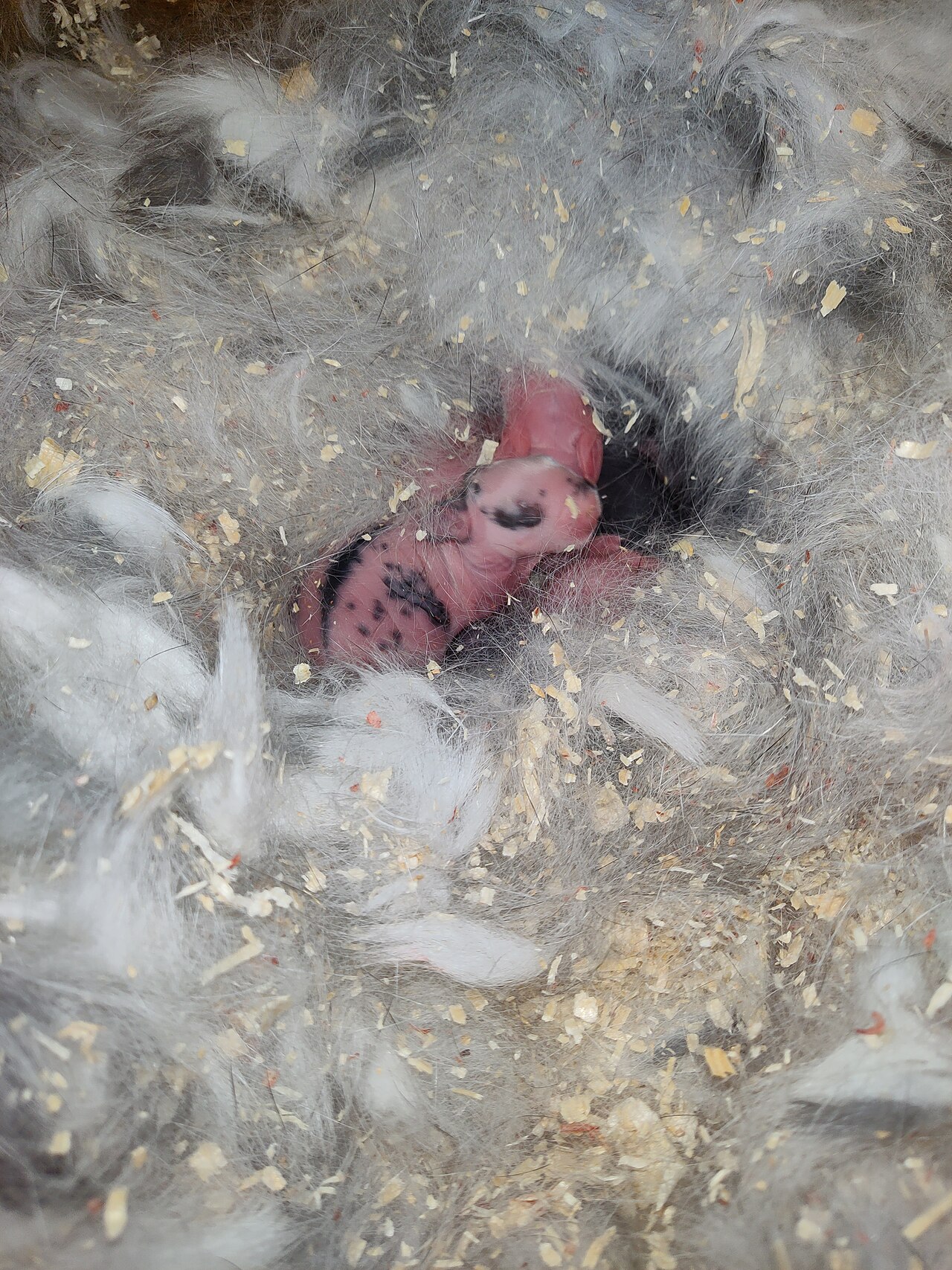
Newborn kits in a fur-lined nest. Kits are born hairless and blind, so the pulled fur is their main defense against chilling. Photograph: ScottishFinnishRadish / Wikimedia Commons
What fur pulling is and when it happens
Fur pulling for nesting follows a strict timetable. According to a House Rabbit Society chapter's reproductive guide, a doe's preparations unfold in stages: digging begins about 6 to 8 days before kindling, nest building starts 1 to 3 days before, and hair pulling happens in the final stretch, from 24 hours down to minutes before birth. Kindling itself usually occurs in the early morning and takes only about 30 minutes from start to finish.
The doe pulls fur mainly from her dewlap, chest, belly, and flanks, using her teeth and paws. She weaves it together with hay, straw, or shredded paper into a shallow cup. The finished nest is a mixture of plucked fur and gathered material, just deep enough to cover the babies and hold warmth around them.
Two purposes are served at once. First, the fur is insulation. Rabbit kits are born hairless, blind, and unable to regulate their own body temperature, so a lining of soft fur is what stands between them and hypothermia in the first days of life.
Second, pulling fur from the underside exposes the doe's teats, making it easier for the newborn kits to find them and nurse. Nature solves bedding and breastfeeding access with a single behavior.
Not every doe pulls the same amount. Some strip large areas nearly bare; others pull only a modest lining. First-time mothers often build earlier or more erratically, sometimes starting a practice nest in the first week of pregnancy and then building the real one days before birth.
Individual variation is normal, and it does not predict mothering ability on its own.
The hormones behind the behavior
The timetable above is driven by hormones, not by the calendar. In the final days of the roughly 30 to 33 day gestation, the doe's endocrine system shifts decisively toward birth and nursing. The key mover is prolactin.
Veterinary reference site MediRabbit reports that on the day before parturition, the doe's prolactin level rises nearly fivefold. That surge does two things: it prepares the mammary glands for milk production, and it loosens the fur so that it sheds easily when the doe pulls at it. The behavior feels almost effortless to her because, hormonally speaking, the coat is already letting go.
The nesting behavior itself typically lasts 1 to 3 days and then stops as abruptly as it started.
Estrogen and progesterone set the stage earlier. Across the reproductive cycle these ovarian hormones shape nesting instincts, and rabbits with strong hormonal responses show more intense fur pulling. Because rabbits are induced ovulators, meaning ovulation is triggered by mating rather than running on a fixed cycle, the whole system can switch on quickly.
The doe's heat cycle runs 16 to 18 days with about 12 fertile days, so the hormonal machinery is rarely far from ready.
This hormonal precision is why fur pulling is such a reliable sign. When a doe who was bred about a month ago starts gathering hay and pulling fur, birth is usually a day or two away. Breeders use it as the final countdown signal, and pet owners can treat it the same way: prepare a quiet nest box, stop rearranging the enclosure, and leave the doe alone to finish the job.
False pregnancy: nesting with no babies
Here is the twist that confuses most pet owners. An unspayed female rabbit with no access to any male can go through the entire performance: hay gathering, fur pulling, nest guarding, even swollen mammary glands. No babies ever arrive.
This is pseudopregnancy, or false pregnancy, and it is remarkably common.
The mechanism is straightforward. If ovulation happens without fertilization, through a sterile mating, being mounted by another female, or even spontaneously, the corpus luteum still forms and secretes progesterone. The uterus and mammary glands begin preparing for a pregnancy that does not exist.
Around day 12 the corpus luteum starts to regress, estrogen rises, progesterone drops, and the maternal behaviors switch on: nest building, fur pulling from the abdomen and shoulders, and frenzied gathering of materials.
A false pregnancy typically lasts 16 to 18 days, mirroring the first half of a real one. Nesting behavior peaks around days 12 through 16, then fades as hormone levels settle, and most does return fully to normal within about three weeks of onset. The Furry Critter Network notes that some does cycle through episodes every few weeks until they are spayed, spending a large share of their lives in a hormonally agitated state with territorial aggression and disrupted eating.
For a single episode, the right response is patience. Do not dismantle the nest while the doe is still using it; removing it mid-episode can stress her and prolong the behavior. Provide hay, keep handling gentle and minimal, and let the hormones run their course.
If episodes repeat every few weeks, talk to a rabbit-savvy veterinarian about spaying. MediRabbit lists ovariohysterectomy as the treatment of choice for hormonally driven fur plucking, and it also removes the risk of uterine disorders that intact females face.
What owners should and should not do
When fur pulling is clearly nesting, the owner's job is mostly to stay out of the way. Provide a nest box about 3 to 5 days before the expected kindling date, fill it with clean hay, and let the doe arrange it to her liking. Do not rearrange her construction.
One breeder guide warns plainly that interfering with the nest stresses the female, and a stressed doe is a worse mother.
Watch the skin, not just the fur. Normal nesting pulls leave the skin underneath looking clean and unbroken. If the skin looks raw, red, or scabby, or if the rabbit is pulling fur from all over her body rather than the chest and belly, that points away from nesting and toward skin disease, parasites, or a fiber-poor diet.
Those cases need a vet, not a nest box.
Do not confuse nesting with barbering. Fur chewing, where a rabbit repeatedly bites its own coat or a companion's coat into bald patches, is a different behavior with different causes, including boredom and stress. Nesting fur pulling is seasonal to the reproductive cycle, concentrated on the underside, and paired with gathering behavior.
Chewing is year-round and indiscriminate.
Resist the urge to "help" by adding your own bedding on top of the doe's arrangement. She built it to a specification written by hormones: fur on the bottom for insulation, shaped to hold the kits together. Extra material on top can trap moisture or separate her from the babies.
The best help is quiet, clean surroundings and fresh hay nearby so she can adjust the nest herself. Like cats choosing boxes over beds, she has strong opinions about her setup, and she is usually right.
How soon after fur pulling will rabbits give birth?
Usually within a day or two. Hair pulling is the last step of nest building, happening from 24 hours to minutes before kindling. If a bred doe is pulling fur, expect babies very soon and stop disturbing her.
Why is my rabbit pulling fur but she is spayed or has no mate?
The most likely answer is false pregnancy, which needs no male at all and lasts 16 to 18 days. If the behavior is constant, year-round, and not paired with nest building, consider stress, boredom, skin irritation, or low dietary fiber, and get a vet's opinion.
Will the fur grow back?
Yes. The coat regrows over the following weeks once hormone levels settle. Bald patches from a single nesting episode fill in completely.
Repeated episodes in unspayed does can keep the coat thin, which is another reason to discuss spaying with a vet.
Should I remove the nest after a false pregnancy?
Wait until the doe abandons it on her own, usually within a few days of the behavior fading. Removing an actively guarded nest can restart the stress cycle. Once she loses interest, clean it out and refresh the bedding.
The bottom line
Rabbits pull their own fur to line a nest because hormones command it: prolactin surges nearly fivefold before birth, the coat loosens, and the doe builds insulated bedding for hairless kits while exposing her teats for nursing. Unspayed females run the same program during 16 to 18 day false pregnancies. Leave the nest alone, watch the skin underneath, and talk to a vet if the pattern repeats constantly.
Image Credits: Wikimedia Commons / ScottishFinnishRadish, Wikimedia Commons, Wikimedia Commons / Adamantios
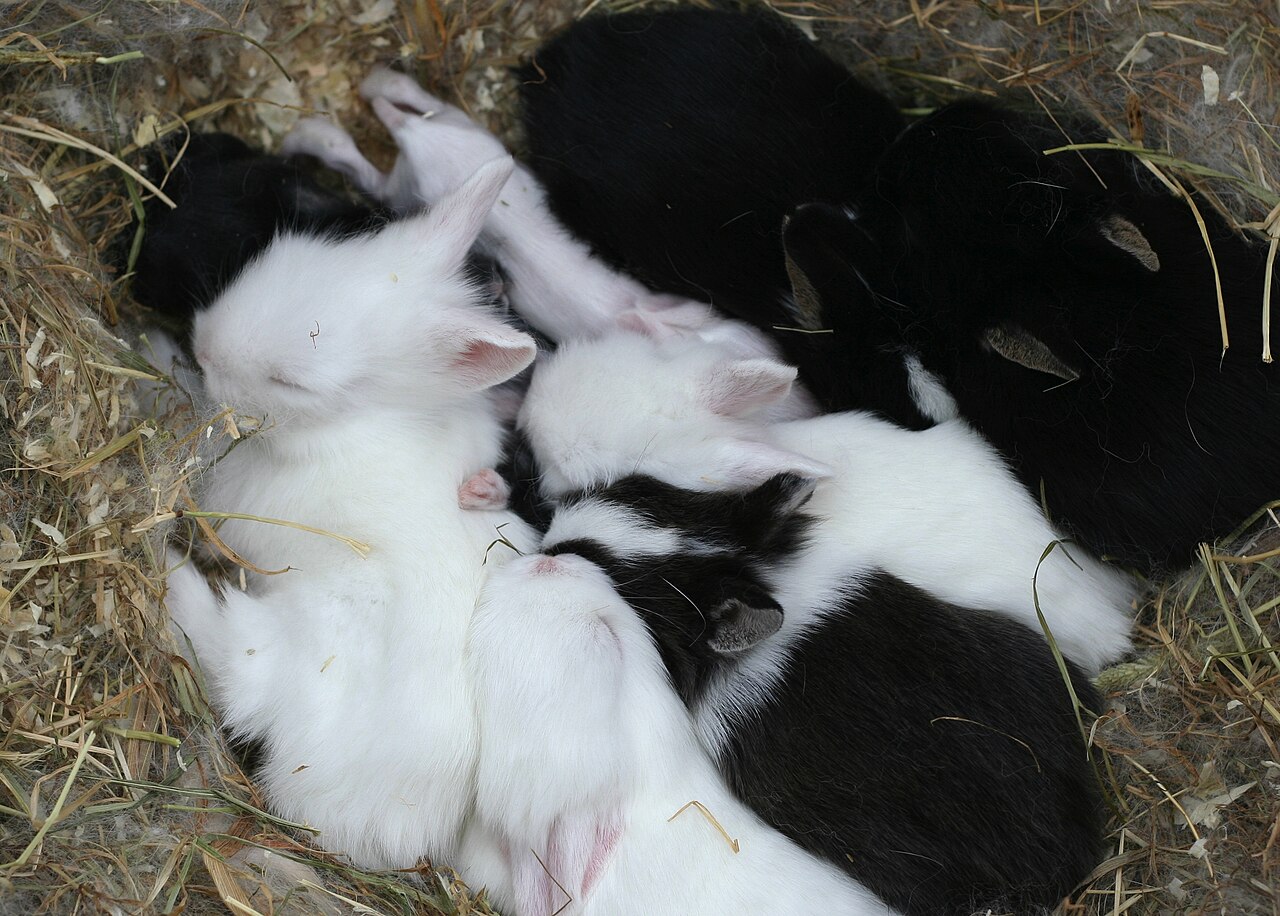
Rabbit kits in a nest built from hay and pulled fur. Photograph: Stephen Rahn / Wikimedia Commons
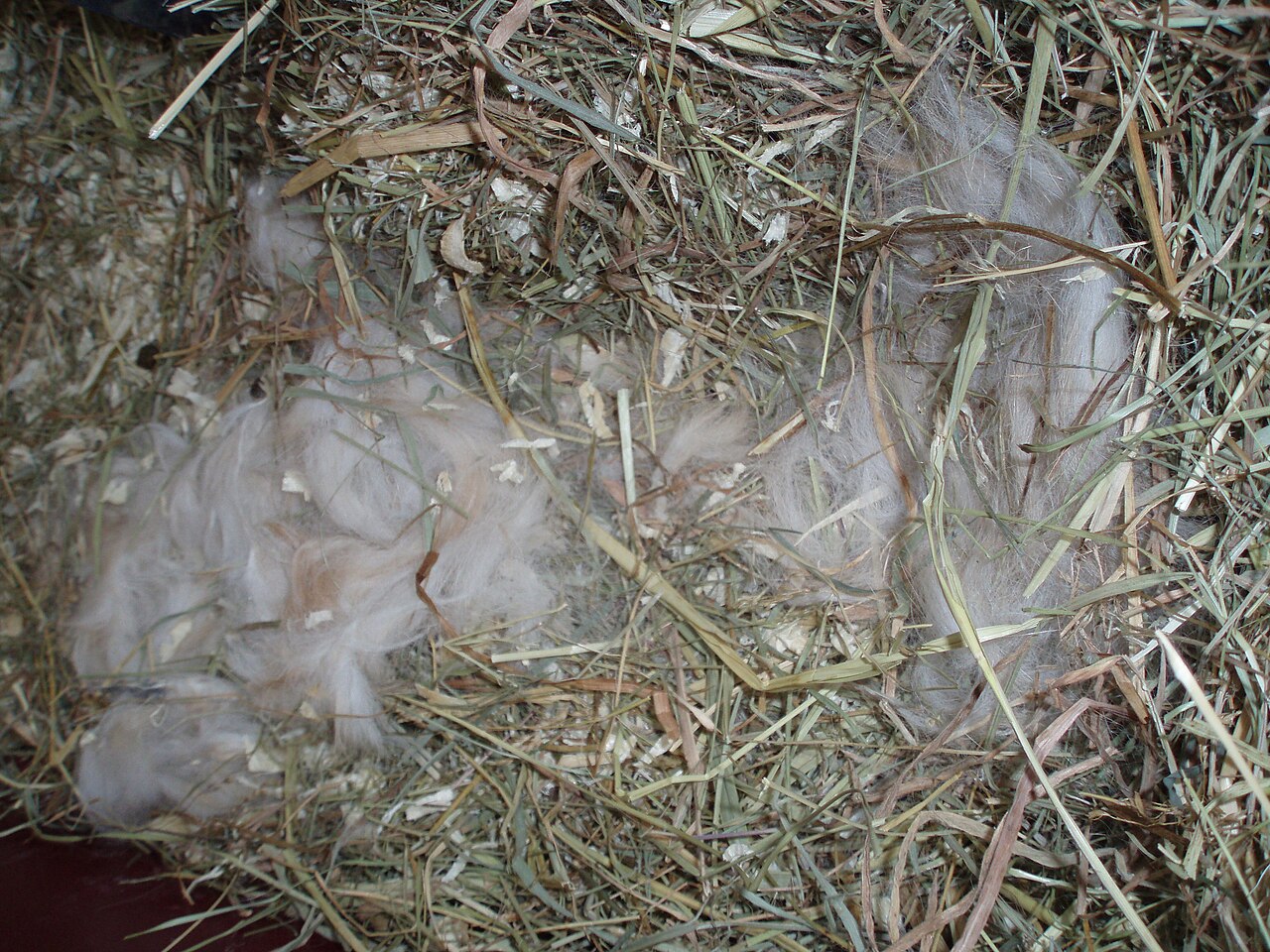
Close-up of a domestic rabbit nest: pulled fur woven through hay for insulation. Photograph: Adamantios / Wikimedia Commons
Latest in Pets
- Why cats sleep in boxes even when a bed is nearby
- Why parrots copy human speech
- Why babies grab your finger so tightly
Subscribe to the Rive News newsletter for one clear animal-behavior explainer every morning.
Related stories
Why Does My Dog Eat Grass and Vomit?
A UC Davis study of 1,571 owners found grass eating is normal dog behavior, not self-medication: only 10% were ill first. What the science
Why Does My Dog Stare at Me While I Eat?
Dogs stare at you while you eat because it has worked before, and mutual gaze raises bonding hormones. Learn the reinforcement science
Foods toxic to dogs: the list, with reasons
Chocolate, xylitol, grapes, onions: common foods can harm dogs. Learn what makes each one toxic, the warning signs, and what to do if your