
How Do Birds Know Where to Fly During Migration?
Key takeaways
- Birds navigate with several compasses at once: sun, stars, smell, landmarks, and Earth's magnetic field.
- Young birds inherit a rough route and direction, then build a precise mental map on their first migration.
- A bar-tailed godwit flew about 12,200 km nonstop from Alaska to New Zealand in 11 days.
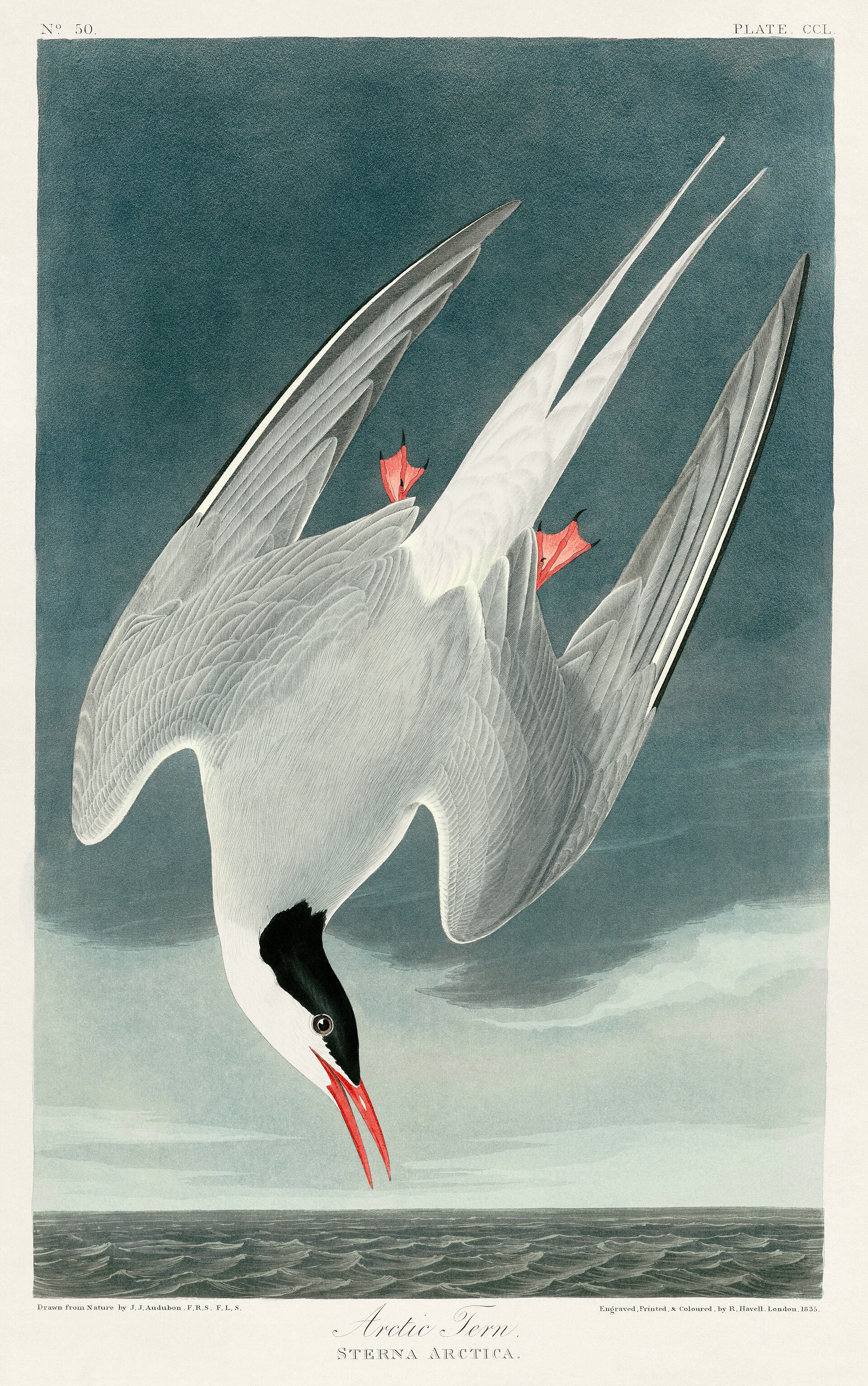
Every year, billions of birds migrate in and out of the United States alone. They cross continents and oceans, often at night, and many return to the same nesting site year after year.
They do it without maps, road signs, or instruments. Instead, birds carry a toolkit of senses that humans either lack or use only with tools. Each sense covers the gaps left by the others.
This article explains how birds know where to fly during migration, including the sun compass, the star compass, magnetoreception, smell, and memory. It also covers what young birds inherit and what scientists still do not understand.
The short answer: several compasses at once
No single sense explains bird migration. A bird flying under clear skies can use the sun by day and the stars by night.
Under cloud, it can fall back on Earth's magnetic field. Near home, it can use landmarks and smells it remembers.
Miriam Liedvogel, director of the Institute of Avian Research in Germany, told Live Science that birds use a variety of cues to keep their migratory direction. She added that birds likely integrate their compass cues, with different cues mattering more at different points in the journey.
That redundancy is the point. A cloudy night, a storm, or a disrupted magnetic field can knock out one system, and the bird still has others. Migration works because the systems overlap.
The sun compass
Birds that fly by day use a sun compass. They track where the sun sits in the sky and combine that view with their internal sense of the time of day, set by their circadian rhythm. Together, the two inputs give a direction, like a living sundial.
The clock matters as much as the sun. The sun sits in a different place at 8 in the morning than at 4 in the afternoon, so a bird must know the time to read the compass.
Research shows that disrupting a bird's circadian rhythm with artificial light keeps it from navigating accurately, according to Live Science.
This is one reason light pollution worries ornithologists. Bright lights can confuse the clock that the sun compass depends on. Birds passing through lit cities may circle, land in the wrong places, or lose time on their journey.
The sun compass works best on clear days. When cloud hides the sun, birds switch to other cues rather than guessing.
The star compass
Most birds actually migrate at night. That makes the stars, not the sun, their main celestial guide.
Night migrants learn the pattern of stars around the celestial pole, roughly marked by Polaris, the North Star. The stars appear to rotate around that point through the night, and the center of the rotation marks north. Humans have used the same star to navigate for millennia.
Young birds learn this star map before their first migration. Experiments in planetariums, where researchers shifted the artificial star patterns, changed the direction young birds chose to fly. That showed the star compass is learned, not simply built in.
Cloud cover blocks the stars just as it blocks the sun. On overcast nights, birds lean harder on their magnetic sense and on smells and landmarks they already know.
The magnetic compass
Magnetoreception is the most unusual tool in the toolkit. It lets birds sense Earth's magnetic field, which is generated by molten metals moving in the planet's core. Even with no sun, stars, or landmarks visible, a bird can still tell direction.
One study found that altering the magnetic fields around pigeons disrupted their homing ability, according to Live Science. The sense is real, even though the exact mechanism is still under study.
The leading candidate involves a molecule called cryptochrome in the bird's retina. Peter Hore, a professor of chemistry at the University of Oxford, told Live Science that birds must use some chemical reaction whose outcome depends on the strength and direction of Earth's magnetic field. Lab work has confirmed that isolated cryptochrome responds to magnetic fields and that the reaction needs blue light.
A second mechanism may sit in the beak. Studies have found receptors that interact with magnetite, an iron-based mineral, in the upper beak. Those receptors connect to the brain through nerve pathways, which suggests they could help birds judge the strength of the magnetic field.
Birds also sense polarized light, which is sunlight scattered through the atmosphere into predictable patterns. Special cells in the retina pick up those patterns, which reveal where the sun sits even when it is overcast. It is one more backup for a cloudy day.
Smell, landmarks, and memory
Birds that have migrated before use the world they remember. Rivers, mountain ranges, and coastlines act as landmarks along familiar routes. A bird that has flown a route once can recognize parts of it on the next trip.
Smell helps too, mainly over water where landmarks run out. In one study, researchers blocked the nasal passages of Scopoli's shearwaters, a seabird species. The birds could still fly over land, but they became disoriented over water, according to Live Science.
Memory sharpens with every trip. Scientific American reports that during its first migration, a bird builds a map in its brain that later lets it navigate with precision over thousands of kilometers. Some birds breed in the same nest box and sleep on the same perch in their wintering range year after year.
That map explains a hard fact of relocation. When conservation teams move birds to new sites, the birds often leave.
One analysis cited by Live Science found that in 45 percent of studies, relocated birds left their new location. Hore said displaced birds simply fly back, because they are such good navigators.
What young birds inherit
A young bird on its first migration does not have a map yet. It has something simpler: inherited instructions about direction and distance.
Scientific American describes those instructions as a rough program, such as flying southwest for three weeks and then south-southeast for two weeks. The bird inherits the directions from its parents. If parents with different routes breed, their offspring tend to take an intermediate direction.
The program gets the bird to the right region, but it cannot correct errors. A young bird blown off course by a storm has no map to guide it back, which is one reason first migrations are so dangerous. Scientific American reports that only about 30 percent of small songbirds survive their first migration to the wintering grounds and back.
Adults fare better. With a map built from experience, about 50 percent of adult songbirds make it back to their nesting site to breed every year, according to Scientific American. The map, not the inherited program, is what allows the return trip.
Genetics still sets the urge itself. Liedvogel told Live Science that birds inherit the tendency to migrate from their parents, and that the distance and direction are mainly genetic. Researchers are still working out which genes are involved and how they act.
A record flight that shows the system working
The bar-tailed godwit gives the clearest proof of how far this navigation system can carry a bird. One male godwit, known to researchers as 4BBRW for the colored rings on its legs, flew from southwest Alaska to New Zealand without stopping.
The bird left Alaska on September 16 after feeding on mudflats, then flew south over the Aleutian Islands and landed near Auckland 11 days later, according to ScienceAlert. The satellite tag recorded about 12,200 kilometers of nonstop flight, a record for the longest nonstop flight by a bird.
Before the trip, the godwits build fat reserves and shrink organs such as the stomach and intestines to travel light. The flight then runs entirely on stored fuel, with no chance to eat, drink, or rest on land. A navigation error over the open Pacific would leave no place to recover.
Later tracking found an even longer flight of about 13,560 kilometers by a young godwit flying from Alaska to Tasmania in 11 days. Each record tightens the same conclusion: the compasses work, and they work over distances that would defeat any human without instruments.
Why the system still puzzles scientists
The outline of bird navigation is clear, but the details are not. Hore told Live Science, "We know so little about the details of how this compass might operate." He added that researchers do not even know how many cryptochrome molecules sit in a bird's retina.
Magnetoreception also weakens at the wrong moments. Hore noted that the magnetic sense is less useful during thunderstorms or periods of high solar activity, both of which disturb Earth's magnetic fields. That is another reason birds keep several compasses running at once.
Other open questions concern genes and maps. Scientists know migration is inherited, but not which genes carry the program. They know experienced birds hold a map, but not exactly how the brain stores routes that span continents.

Frequently asked questions
Do birds use only the magnetic field to navigate?
No. Magnetoreception is one tool among several. Birds also use the sun, the stars, polarized light, smell, landmarks, and memory, and they switch between systems as conditions change.
How do birds navigate on cloudy nights?
They fall back on magnetoreception and on smells and landmarks they know. Cloud blocks the sun and stars, but it does not block Earth's magnetic field.
Do young birds learn the route from their parents?
Young birds inherit a rough direction and distance program, not a learned route. They build a precise map during their first migration and use it on later trips.
Can birds get lost?
Yes. Storms, artificial light, and magnetic disturbances can all throw birds off course. Experienced birds can often correct with their map, while first-time migrants usually cannot.
The bottom line
Birds know where to fly because they carry several compasses and know how to combine them. The sun gives direction by day, the stars give it by night, and the magnetic field fills the gaps when skies close over.
Smell and memory sharpen the picture near familiar ground. Young birds start with an inherited program and end with a map, which is why the first migration is the hardest trip of their lives.
Tags: bird migration, animal navigation, magnetoreception, ornithology
Latest in Science
- Why Does Earth Have Seasons? It Is Not About Distance From the Sun
- What Is the Difference Between a Meteor, a Meteoroid, and a Meteorite?
- Why Do We See Colors in Optical Illusions?
- Why Does a Balloon Shrink in Cold Air?
Subscribe to Rive News for one science explainer each week.
Related stories

Why diamond is hard and graphite is soft when both are carbon
Diamond and graphite are both pure carbon, yet diamond is 10 on the Mohs scale and graphite is 1 to 2. The difference is not the atoms;

Why Hot Water Can Freeze Faster Than Cold: The Mpemba Effect Explained
Hot water can freeze faster than cold under specific conditions. The Mpemba effect, named for a 1963 schoolboy experiment, still divides

How Magnets Work at the Atomic Level: Spins, Domains, and Iron
Magnetism comes from electrons: their spin and orbits make each atom a tiny magnet. In iron, quantum forces align these atomic magnets into