
Why does the Earth have seasons if distance is not the cause
Key takeaways
- Seasons come from the 23.5-degree tilt of Earth's axis, not from distance to the Sun.
- A hemisphere tilted toward the Sun gets more direct light and longer days, which brings summer.
- Earth is actually closest to the Sun in January, during Northern Hemisphere winter.
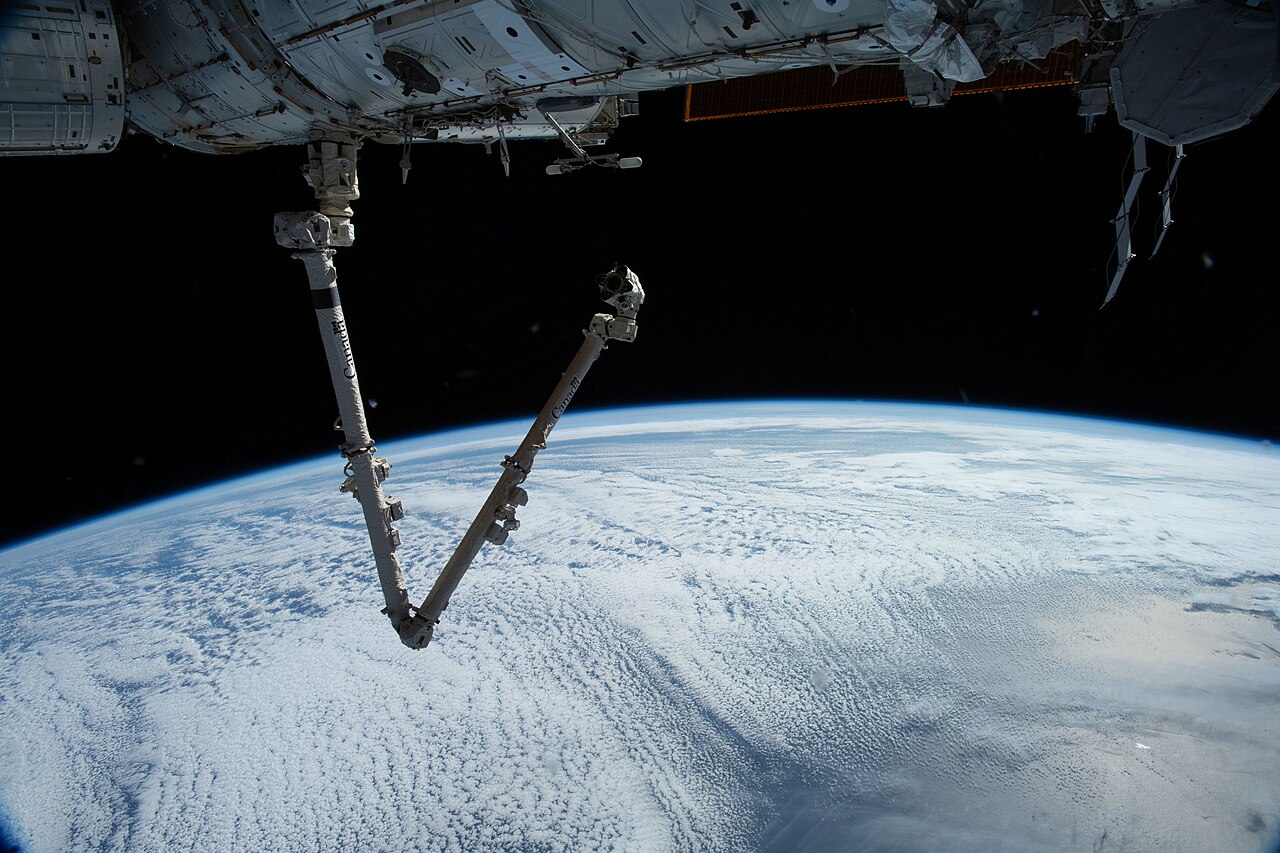
It feels like common sense. Summer should arrive when Earth is closest to the Sun, and winter when it drifts farther away. The real story runs the other way.
Earth is nearest the Sun in January, in the middle of Northern Hemisphere winter.
This article explains why the Earth has seasons if distance from the Sun is not the cause, including the tilt of the axis, the angle of sunlight, day length, and the solstices and equinoxes. The answer is geometry, not distance.
The tilt is the whole story
Earth spins on an axis that leans about 23.5 degrees from vertical, relative to its orbit around the Sun. That tilt stays pointed in the same direction all year, toward the star Polaris. As Earth travels around the Sun, the tilt aims one hemisphere toward the Sun, then the other.
NASA states it plainly: it is Earth's tilt that causes the seasons, and Earth's axis is always tilted at an angle of about 23.5 degrees. The tilt is thought to come from a cataclysmic collision about 4.5 billion years ago with an ancient planetary body called Theia, in the same event that formed the Moon, according to NASA's Earth Observatory.
Picture a spinning top leaning to one side. As it circles a lamp, the lean points toward the lamp for half the circle and away for the other half. Earth does the same thing around the Sun, once per year.
Distance fails the simplest test
If distance caused the seasons, the whole planet would share the same season at the same time. It does not. When the Northern Hemisphere has summer, the Southern Hemisphere has winter, and the reverse holds six months later.
The dates settle it. Earth reaches perihelion, its closest point to the Sun, around January 3, at roughly 147 million kilometers. It reaches aphelion, its farthest point, around July 4, at roughly 152 million kilometers.
January is winter in the north, and July is summer in the north.
NASA's My NASA Data lesson puts it directly: summer in the Northern Hemisphere occurs at aphelion, the farthest distance between Earth and the Sun. Distance changes sunlight by only a small amount, far too little to drive the seasons.
Two effects of tilt: angle and day length
Tilt changes the seasons through two effects that work together. The first is the angle of sunlight. When a hemisphere leans toward the Sun, sunlight strikes it more directly, packing more energy into each patch of ground.
When it leans away, sunlight arrives at a slant and spreads over a wider area, delivering less heat per patch.
A flashlight shows the same effect. Shine it straight at a wall, and you get a bright, tight spot. Tilt it, and the spot stretches into a dim oval.
Summer sunlight is the straight-on beam, and winter sunlight is the stretched oval.
The second effect is day length. A hemisphere tilted toward the Sun gets longer days, so the ground receives sunlight for more hours. A hemisphere tilted away gets shorter days and longer nights, so it cools for more hours.
Together, direct light plus long days make summer, and slanted light plus short days make winter.
Solstices: the extremes
A solstice is the day when one hemisphere leans most strongly toward or away from the Sun. Around the June solstice, the Northern Hemisphere leans toward the Sun, bringing more direct sunlight and longer days. Around the December solstice, the Southern Hemisphere takes its turn.
NASA's Earth Observatory describes the June solstice as the moment the Northern Hemisphere leans toward the Sun, and the December solstice as the moment the Southern Hemisphere does the same. June brings summer in the north and winter in the south. December flips the pair.
Near the poles, the extremes go further. North of the Arctic Circle, the Sun never sets around the June solstice, and never rises around the December solstice. South of the Antarctic Circle, the pattern reverses.
These polar days and polar nights are tilt at its most dramatic.
Equinoxes: the balance points
An equinox is the midpoint between the solstices. On those days, neither hemisphere leans strongly toward or away from the Sun. The March and September equinoxes serve as the midpoints between the two seasonal extremes, according to NASA.
On an equinox, the terminator, the boundary between the sunlit and dark sides of Earth, runs directly through both poles. Both hemispheres receive almost the same amount of sunlight, and day and night are nearly equal in length around the world.
Equinox means equal night, and it is close to true. Day and night are nearly equal, though not exact, because the atmosphere bends sunlight slightly and the Sun is a disk, not a point. The name still captures the idea well.
Proof from a million miles away
NASA's EPIC camera, aboard the NOAA DSCOVR mission, watches Earth from roughly 1.6 million kilometers away, between the Sun and Earth. It photographs the full sunlit face of the planet every few hours. That vantage point makes the tilt visible.
In December images, South America sits near the center of the disk and much of Antarctica is visible, while North America is partly out of view. In June images, the situation reverses: the Northern Hemisphere and North America are more centered, Arctic sea ice comes into view, and Antarctica disappears from sight. The continents appear to shift position because the tilt turns one hemisphere toward the camera and the other away.
Alexander Marshak, deputy project scientist for the DSCOVR mission, said the most obvious changes in the images, the apparent location of the continents, are due to Earth's tilt. That is the same tilt that sets the seasons, seen from deep space.
Why the tropics and poles differ
Tilt explains why seasons look different around the world. Near the equator, sunlight stays fairly direct all year, so temperatures change little. The year divides into wet and dry periods more than into summer and winter.
In the mid-latitudes, the tilt produces four clear seasons. Summers are warm, winters are cold, and spring and autumn sit between. At the poles, the tilt produces months of daylight and months of darkness, with extreme cold.
Local factors still matter. Oceans, elevation, and geography shape the weather on top of the seasonal pattern. A coastal city and an inland city at the same latitude can feel very different in the same month.
Tilt sets the rhythm, and local geography writes the details.
Frequently asked questions
Does Earth's distance from the Sun change at all?
Yes, but only slightly. The orbit is nearly circular. Earth moves between about 147 million and 152 million kilometers from the Sun, and that small swing cannot explain the seasons.
Why do the Northern and Southern Hemispheres have opposite seasons?
The tilt aims one hemisphere toward the Sun while the other leans away. The two hemispheres always get opposite treatment, so their seasons run in opposite phases.
What would happen if Earth had no tilt?
There would be no seasons as we know them. Every latitude would keep roughly the same sunlight pattern all year. The equator would stay warm, the poles would stay cold, and spring, summer, autumn, and winter would vanish.
Is the tilt changing?
Yes, very slowly. Over a cycle averaging about 40,000 years, the tilt varies between 22.1 and 24.5 degrees. That slow wobble shapes long-term climate, including ice ages, but it does not change the seasons within a human lifetime.
The bottom line
Earth has seasons because its axis tilts about 23.5 degrees, not because of distance from the Sun. The tilt aims each hemisphere toward the Sun for half the year, delivering direct light and long days, then aims it away, delivering slanted light and short days. The proof is in the calendar: Earth is closest to the Sun in January, during northern winter.
Once you see the tilt, the seasons stop being a mystery and become simple geometry. If the Sun's changing angle through the year puzzles you, the same geometry explains why hot water can sometimes freeze faster than cold water, a case where intuition also points the wrong way.
Tags: seasons, Earth, astronomy, axial tilt
Latest in Science
- Hot water can sometimes freeze faster than cold water
- The difference between a meteor, meteoroid, and meteorite
- How birds know where to fly when they migrate
Subscribe for one science explainer each week.
Related stories

Why diamond is hard and graphite is soft when both are carbon
Diamond and graphite are both pure carbon, yet diamond is 10 on the Mohs scale and graphite is 1 to 2. The difference is not the atoms;

Why Hot Water Can Freeze Faster Than Cold: The Mpemba Effect Explained
Hot water can freeze faster than cold under specific conditions. The Mpemba effect, named for a 1963 schoolboy experiment, still divides

How Magnets Work at the Atomic Level: Spins, Domains, and Iron
Magnetism comes from electrons: their spin and orbits make each atom a tiny magnet. In iron, quantum forces align these atomic magnets into