
Why Does Hot Water Sometimes Freeze Faster Than Cold Water
Key takeaways
- Hot water can freeze first under some conditions, an observation called the Mpemba effect.
- Evaporation, convection, and reduced supercooling are the leading explanations for the result.
- The effect is not reliable, since small changes in setup can erase it entirely.
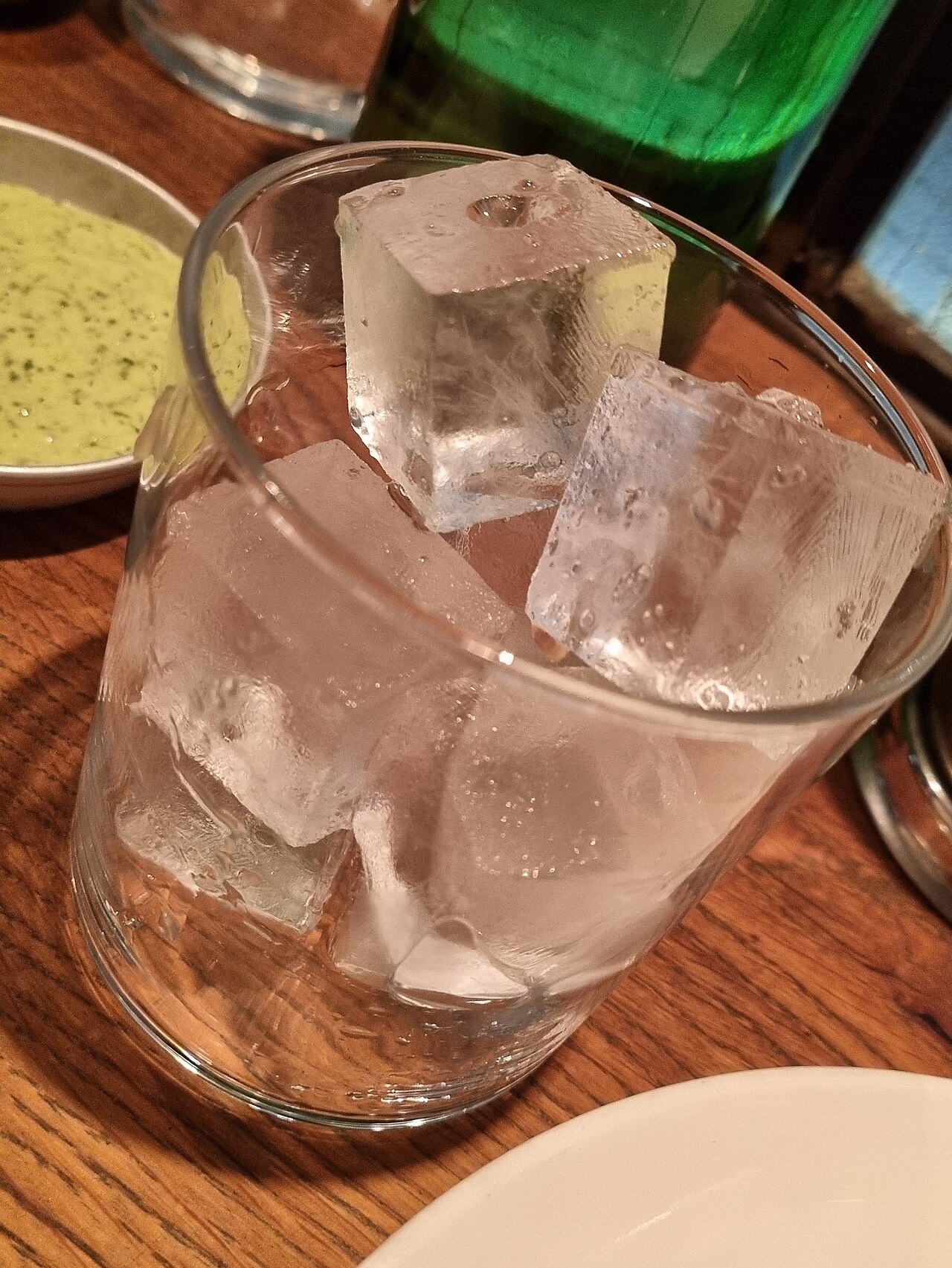
Hot water sometimes freezes faster than cold water, even though it starts further from freezing. The observation is called the Mpemba effect, after a Tanzanian student who noticed it in a school cookery class in 1963. Physicists have argued about it ever since, and the honest answer is that it happens sometimes, under some conditions, for reasons that are still debated.
This article explains what the Mpemba effect is, including the original experiment, the leading explanations for how hot water can win the race, and the sceptical evidence that keeps the question open.
What the Mpemba effect is
The Mpemba effect is the observation that hot water can freeze faster than cold water when both sit in the same freezing environment. The key word is "sometimes".
The effect does not show up in every setup, and careful experiments have produced mixed results. Physicists remain divided on the precise definition and the underlying mechanisms, according to Wikipedia.
The story starts with ice cream. In 1963, Erasto Mpemba was in Form 3 at Magamba Secondary School in Tanganyika when his cookery class made ice cream.
He noticed that a hot ice cream mixture froze before a cooler one. His teacher doubted him, but the visiting physicist Denis Osborne tested the claim and confirmed the finding.
Their experiment used small, matched samples. Wikipedia reports that they placed 70 millilitre samples of water in 100 millilitre beakers in the icebox of a domestic refrigerator on a sheet of polystyrene foam.
Mpemba was not the first to notice the pattern. Aristotle wrote that water previously warmed freezes quickly, Francis Bacon noted that slightly tepid water freezes more easily than water that is utterly cold, and Rene Descartes wrote about hot water freezing faster in his Discourse on the Method. What Mpemba added was a modern, testable version of the claim.
Why hot water might freeze first
No single explanation covers every case. Researchers have proposed several mechanisms, and more than one may act at the same time. These are the leading candidates.
Evaporation shrinks the hot sample. Hot water in an open container loses mass as vapour escapes, so there is less water left to freeze.
Live Science calls evaporation the strongest candidate explanation. It also notes the limit: evaporation cannot explain results from closed containers, where vapour cannot escape.
Convection moves heat faster in hot water. In a hot container, warm water rises and cool water sinks, setting up circulation currents that carry heat to the surface.
Live Science explains that this uneven temperature distribution creates convection currents that speed up cooling. Cold water is more still, so its heat escapes more slowly.
Hot water may supercool less. Water can drop below 0 degrees Celsius without freezing, a state called supercooling.
In modern studies, cooler water tends to reach a lower supercooled temperature before freezing, according to Wikipedia. In a 1995 study, David Auerbach found that water supercooled to between minus 6 and minus 18 degrees Celsius before freezing, and hotter samples sometimes began freezing first.
Frost can insulate the cold sample. A container of cold water may develop a frost layer that acts as insulation, slowing further cooling.
A hot container melts through frost on the cooling surface, which improves thermal contact, according to the account in Wikipedia. That small difference can matter in a freezer with frosty shelves.
Dissolved gases and minerals change when water is heated. Heating drives out dissolved gases, and boiling can precipitate out mineral salts such as calcium carbonate.
Wikipedia lists both as proposed explanations, since they change the freezing behaviour of the water. Joseph Black found in 1775 that previously boiled water froze faster even when evaporation was controlled for, which points to something beyond mass loss.
The container itself matters. James Brownridge studied a range of starting conditions and containers, and found that hot samples sometimes froze first but that the result depended on the properties of the container, according to Wikipedia. The same water in a different beaker can give a different answer.
The sceptical case
The Mpemba effect is far from settled science. Some careful experiments fail to observe it, and critics argue that many positive results come from uncontrolled variables rather than from a real property of water.
Burridge and Linden studied the time water samples took to reach 0 degrees Celsius without freezing. Their 2016 review concluded that there was no evidence to support meaningful observations of the Mpemba effect, according to Wikipedia. HowStuffWorks reports that their study found any apparent effect depended on the size of the vessel and the placement of the thermometer.
Small shifts in conditions can erase the result. HowStuffWorks notes that sceptics such as Harry Burridge and Paul Linden acknowledge that some vessels of hot water can freeze faster than cold ones, but argue that even a slight shift in conditions erases the effect. That fragility is why home attempts give inconsistent answers.
The definition itself is disputed. Monwhea Jeng proposed a careful definition: given two bodies of water identical in every parameter except starting temperature, the hot one freezes sooner.
Even that leaves open whether "freezing" means the first visible ice or complete solidification, according to Wikipedia. Different studies measure different endpoints, which makes results hard to compare.
What newer research adds
Recent work has moved the debate from kitchen freezers to tightly controlled systems. In 2020, John Bechhoefer and Avinash Kumar showed a strong Mpemba effect in a single-particle colloidal system, where a hotter starting point reached equilibrium far faster than a cooler one. HowStuffWorks reports that the beads that started hotter reached equilibrium first.
Theory has followed the experiments. Zhiyue Lu of the University of North Carolina and Oren Raz of the Weizmann Institute of Science published a paper on the nonequilibrium thermodynamics of the Mpemba effect, which proposes that hotter systems can skip ahead on the path to equilibrium. Their work suggests the effect belongs to a broader family of counterintuitive thermal behaviour.
Physicist Raul Rica Alarcon of the University of Granada told HowStuffWorks: "My view is that the Mpemba effect can take place under some special circumstances, but we are still trying to figure out what are the minimal conditions for this to happen." That sums up the current state of the field: real under special conditions, still not fully mapped.
In 2024, Argelia Ortega and colleagues studied small drops of 1 to 20 millilitres in a Peltier cell with a thermographic camera. Hot drops consistently froze faster than cold ones, with a larger difference for bigger drops, according to Wikipedia. Hot drops also finished freezing sooner after freezing began.
Can you try it at home
You can test the effect with two identical containers, equal volumes of water, and a freezer. Use one hot sample and one cold sample, leave both uncovered, and place them side by side on the same shelf. Check which one forms ice first.
Expect inconsistent results. The outcome depends on the container, the freezer airflow, the water purity, and the starting temperatures.
Treat a single trial as a curiosity, not a proof. Run the test several times and swap the positions of the containers between runs, since one shelf spot may be colder than the other. If the hot sample wins some rounds and loses others, you have reproduced the literature fairly well.
The same physics of heat transfer shows up in everyday weather. Cold air shrinks a balloon because gas contracts as it cools, as explained in why a balloon shrinks in cold air. Water is stranger, since it expands when it freezes, which is part of why its behaviour surprises us.
Frequently asked questions
Does hot water always freeze faster than cold water?
No. The effect appears only under some conditions, and many controlled experiments find no difference or the expected result. The word "sometimes" in the question matters.
What is the best explanation for the Mpemba effect?
There is no agreed single explanation. Evaporation, convection, reduced supercooling, frost melting, and dissolved gases all have support, and several may act together. The leading candidate depends on the setup.
Did Erasto Mpemba discover the effect?
He did not discover the observation, since Aristotle and others noted it centuries earlier. He did bring it back into modern science by reporting it, defending it, and publishing a controlled test with Denis Osborne in 1969.
Why do home experiments give mixed results?
Freezer airflow, container material, water purity, and thermometer placement all change the outcome. Burridge and Linden showed that small setup differences can erase the apparent effect entirely.
The bottom line
Hot water can freeze faster than cold water, but only sometimes and only when the setup favours it. Evaporation, convection, supercooling, and frost all push the result one way or another, and careful studies still disagree about which matters most.
The Mpemba effect survives as a reminder that familiar physics can still surprise us, and that a school student's stubborn question can keep researchers busy for decades. For more everyday physics puzzles, see why Earth has seasons or how birds know where to fly when they migrate.
The bottom line
Latest in Science
- Why Does Earth Have Seasons If Distance From the Sun Barely Changes?
- How Do Birds Know Where to Fly When They Migrate?
- What Is the Difference Between a Meteor, a Meteoroid, and a Meteorite?
- Why Does a Balloon Shrink in Cold Air?
Subscribe to the Rive News newsletter for one science explainer each week.
Related stories

Why diamond is hard and graphite is soft when both are carbon
Diamond and graphite are both pure carbon, yet diamond is 10 on the Mohs scale and graphite is 1 to 2. The difference is not the atoms;

Why Hot Water Can Freeze Faster Than Cold: The Mpemba Effect Explained
Hot water can freeze faster than cold under specific conditions. The Mpemba effect, named for a 1963 schoolboy experiment, still divides

How Magnets Work at the Atomic Level: Spins, Domains, and Iron
Magnetism comes from electrons: their spin and orbits make each atom a tiny magnet. In iron, quantum forces align these atomic magnets into