
What Is the Difference Between a Meteor, Meteoroid, and Meteorite?
Key takeaways
- The three words describe one object at three places: space, atmosphere, and ground.
- A meteor is the streak of light, not the rock itself.
- Most incoming material burns up, so true meteorites are the rare survivors.
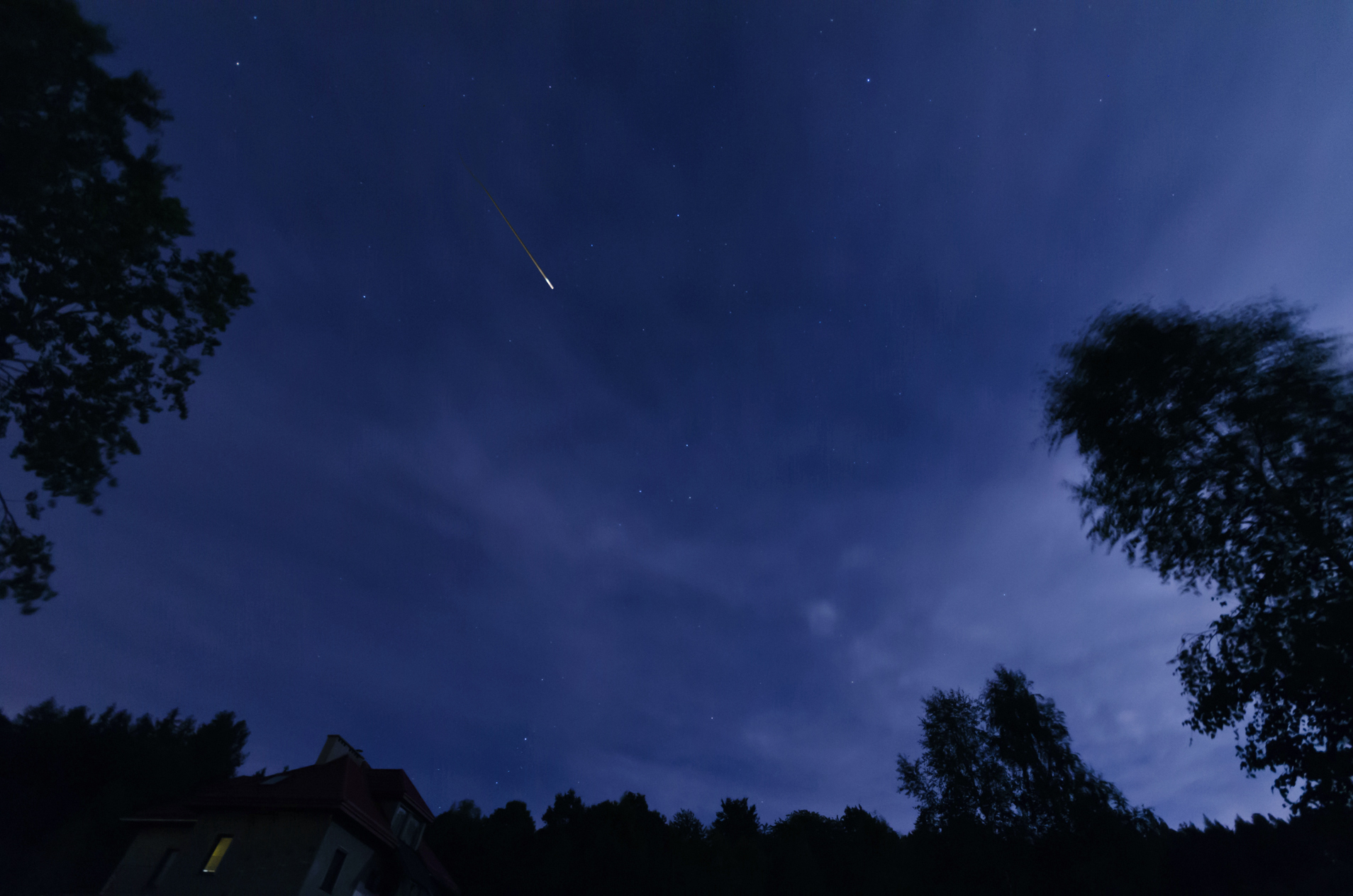
People often call any falling space rock a meteor. The real split is simpler and stricter. The name changes with the location of the object, not with its shape or its makeup.
One rock can carry all three names in a single trip.
This article explains what is the difference between a meteor, meteoroid, and meteorite, including the definition of each term, how size and speed fit in, why meteor showers happen, and how to use the words correctly.
The one rule: location decides the name
NASA states the rule in plain terms. A meteoroid is the rock while it is still in space. A meteor is the light that appears when that rock enters an atmosphere and burns.
A meteorite is the piece that survives the trip and reaches the ground.
That means a meteor is an event, not an object. When someone points at a streak in the sky and says "a meteor," they are naming the flash. The rock behind the flash is a meteoroid on its way in.
If a chunk lands, the name changes again to meteorite. Keeping location in mind clears up most of the confusion at once.
The same logic covers other planets. A rock burning in the atmosphere of Mars is a meteor on Mars. A rock sitting on Martian ground after surviving entry is a meteorite.
The words follow the journey, wherever it happens.
What is a meteoroid?
A meteoroid is a small rock or particle traveling through space. NASA describes meteoroids as ranging from dust grains to small asteroids. The Jet Propulsion Laboratory adds a size guide: a meteoroid is a small Sun-orbiting rock or particle less than about 3 feet, or 1 meter, in size.
Meteoroids come from several sources. Some are chips broken off asteroids in collisions. Some are dust and debris shed by comets as they orbit the Sun.
A few are fragments blasted off the Moon or Mars by ancient impacts. All of them keep orbiting the Sun until something changes their path.
Most meteoroids are tiny and invisible to the naked eye. They drift through space for years or centuries, and only a small share ever meets a planet. When one does cross Earth's path, the next stage begins.
The rock is still a meteoroid until it touches the atmosphere.
What is a meteor?
A meteor is the streak of light produced when a meteoroid enters an atmosphere at high speed. NASA calls meteors fireballs or shooting stars when they burn up in view. The Jet Propulsion Laboratory defines a meteor as a light phenomenon, which is a careful choice of words.
The glow comes from superheated air around the speeding rock, not from the rock catching fire like a match.
Speed drives the show. Incoming rocks hit the upper atmosphere at tens of thousands of miles per hour. The air in front of the rock cannot get out of the way, so it compresses and heats until it glows.
That glow is what watchers see from the ground. A larger object makes a brighter meteor, called a fireball or bolide.
Most meteors never reach the ground. The heat and pressure break the rock apart, and the pieces vaporize high above the surface. NASA estimates that about 48.5 tons, or 44,000 kilograms, of meteoritic material falls on Earth each day.
Almost all of that material burns up in the atmosphere, leaving only a bright trail behind.
Several meteors per hour are visible on any given night, according to NASA. That steady background rate comes from random dust and small rocks sweeping through Earth's path. The count jumps when Earth crosses a dense stream of comet debris, which is when a shower begins.
What is a meteorite?
A meteorite is a leftover piece of a meteoroid or asteroid that survives the passage through the atmosphere and lands on Earth's surface. That is the Jet Propulsion Laboratory definition. The key word is survives.
Entry is violent, and only the tougher or larger pieces make it through.
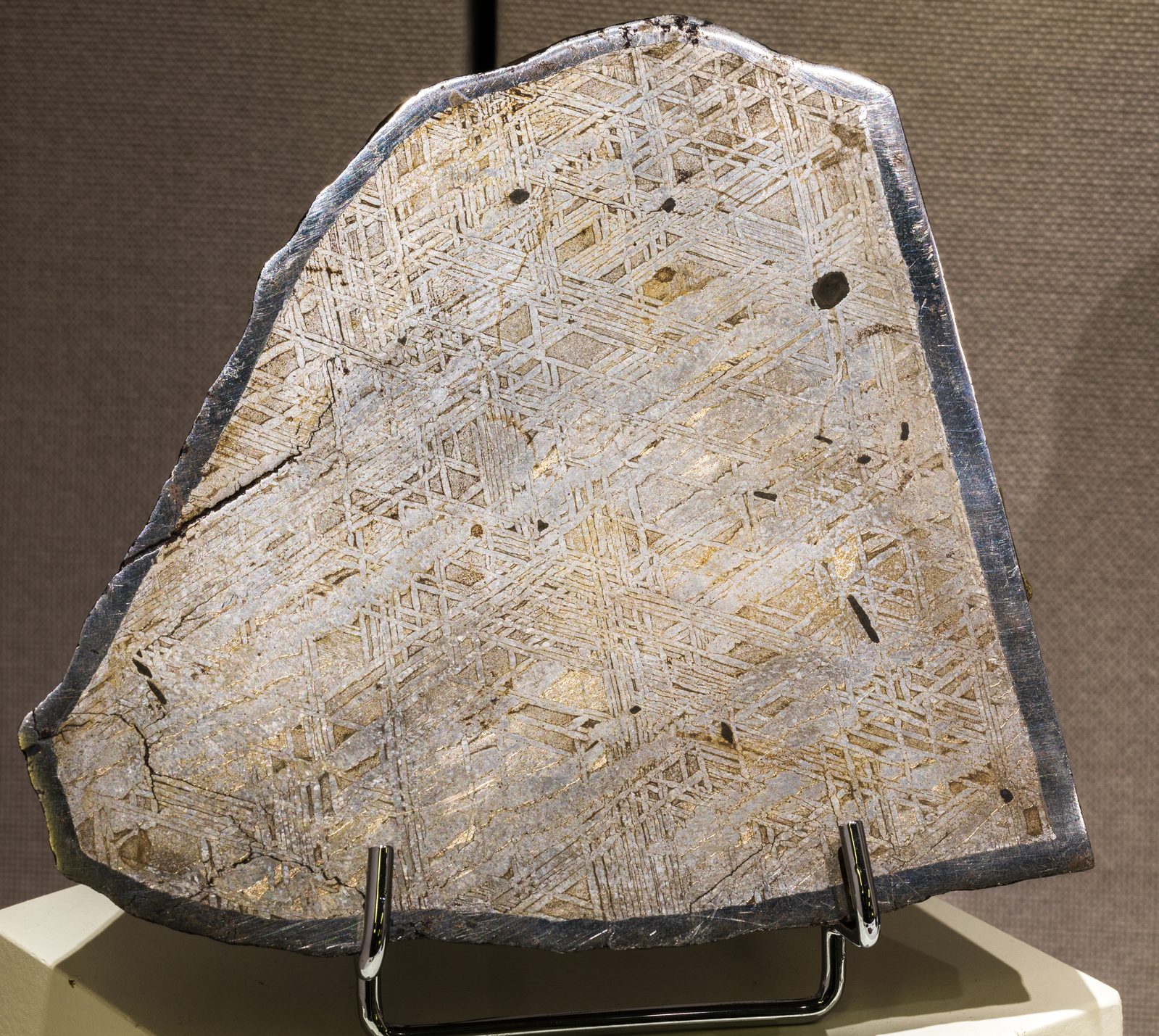
Survivors look different from ordinary rocks. Fresh meteorites often carry a dark fusion crust, a thin melted skin formed by the heat of entry. Many are denser than local stones, and iron-rich ones respond to a magnet.
Their interiors can hold metal flecks or small round grains called chondrules, which formed in the early solar system.
Scientists prize meteorites because they are free samples of other worlds. Asteroid fragments carry the chemistry of the early solar system. Lunar and Martian meteorites carry rock from those bodies without a sample-return mission.
Museum collections and research labs study them to learn how planets formed and how water and organic material spread through the solar system.
Anyone who finds a strange heavy stone should handle it with care. Note the location, take photos, and contact a local museum or university geology department. Cutting or cleaning a possible meteorite can destroy the very clues that identify it.
Why meteor showers happen
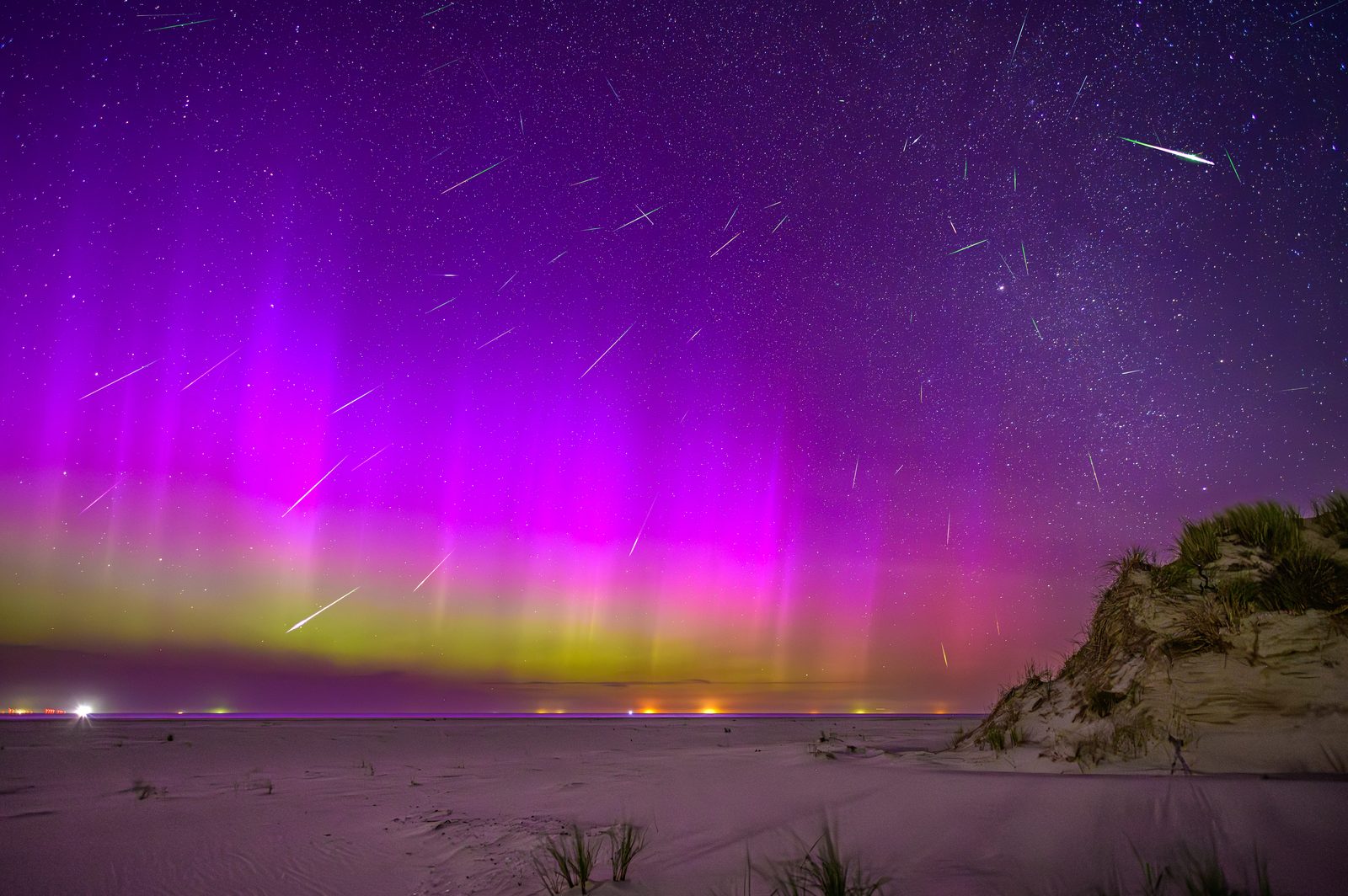
A shower happens when Earth passes through a trail of dusty debris left by a comet. The debris spreads along the comet's orbit, so Earth meets the same stream at roughly the same time each year. Each grain burns as a meteor, and the shower can last for days as the planet crosses the stream.
Showers take their names from the constellation near the point where the meteors seem to come from. That point is called the radiant. The Perseids, for example, seem to radiate from the constellation Perseus.
The name does not mean the rocks come from that constellation. The rocks come from the comet trail, and the radiant is only a trick of perspective.
The Perseids are the best-known shower. They peak in August every year. NASA notes that every Perseid meteor is a tiny piece of comet Swift-Tuttle, which swings by the Sun every 135 years.
The comet last visited the inner solar system in 1992, yet its debris still gives Earth a show each summer.
Other showers follow the same pattern with different parent comets. The Geminids peak in December and come from an asteroid-like object named 3200 Phaethon. The Leonids in November trace back to comet Tempel-Tuttle.
The calendar of showers is really a calendar of Earth's crossings through old comet trails.
How to use the words correctly
The fastest check is a location question. If the rock is in space, call it a meteoroid. If you are describing the streak of light in the sky, call it a meteor.
If you are holding a rock that fell, call it a meteorite. That single test fixes most mistakes.
Avoid calling a rock in a museum a meteor. The meteor was the flash, which ended the moment the rock landed or burned away. The museum specimen is a meteorite.
News reports often get this wrong in headlines, so the careful reader can spot the error fast.
Asteroids and comets need their own care. An asteroid is a larger rocky body orbiting the Sun, while a comet is an icy body that grows a coma and tail near the Sun. A meteoroid is smaller than an asteroid, and a comet can shed the debris that becomes meteoroids.
NASA scientist Ryan Park explained in a NASA video that asteroids are rocky, comets are icy, and meteors are the much smaller shooting stars seen in the sky.
Frequently asked questions
Is a shooting star a star?
No. A shooting star is a meteor, which is a small rock burning in Earth's atmosphere. Real stars are distant suns that shine for billions of years.
The streak lasts seconds because the rock is small and the atmosphere destroys it fast.
How big is a meteoroid?
Most are dust grains or pebbles. The Jet Propulsion Laboratory puts meteoroids under about 3 feet, or 1 meter, in size. Larger objects count as asteroids, though the boundary is not perfectly sharp in every technical context.
Size matters less than location for the three names.
Can a meteorite hurt someone?
A direct hit is extremely rare, and no confirmed human death from a meteorite exists in modern records. Property damage happens from time to time when a large fireball drops stones. The daily rain of 48.5 tons sounds large, but it spreads across the whole planet and mostly burns up high in the sky.
What should I do if I see a fireball?
Note the time, direction, and how long it lasted. Report it to a fireball network such as NASA's All Sky Fireball Network or a local astronomy group. Photos or doorbell camera footage help scientists work out the path and whether any stones may have landed.
The bottom line
One object, three names, one rule. A meteoroid flies in space, a meteor lights up the atmosphere, and a meteorite rests on the ground. Most incoming rocks burn up as meteors, which is why meteorites are rare and valuable.
Watch a shower with the right words in mind, and the night sky gets a little clearer.
Tags: space, meteors, astronomy, NASA
Latest in Science
- Why Does Earth Have Seasons?
- How Do Birds Know Where to Fly When They Migrate?
- Why Do We See Colours in Optical Illusions?
- What Is the Difference Between a Hurricane and a Tornado?
Subscribe for one clear science explainer each week.
Related stories

Why diamond is hard and graphite is soft when both are carbon
Diamond and graphite are both pure carbon, yet diamond is 10 on the Mohs scale and graphite is 1 to 2. The difference is not the atoms;

Why Hot Water Can Freeze Faster Than Cold: The Mpemba Effect Explained
Hot water can freeze faster than cold under specific conditions. The Mpemba effect, named for a 1963 schoolboy experiment, still divides

How Magnets Work at the Atomic Level: Spins, Domains, and Iron
Magnetism comes from electrons: their spin and orbits make each atom a tiny magnet. In iron, quantum forces align these atomic magnets into