
What Causes Earthquakes and Can We Predict Them
Key takeaways
- Earthquakes happen when built-up stress on a fault releases suddenly as seismic waves.
- The USGS states that no scientist has ever predicted a major earthquake.
- Forecasts give probabilities for an area over years, while early warning systems react after a quake starts.
What causes earthquakes and can we predict them
An earthquake is the shaking of the ground when built-up energy releases suddenly and sends seismic waves through the Earth. Most quakes happen on faults, which are cracks in the crust where blocks of rock slide past each other. This article explains what causes that release, why exact prediction still eludes science, and what forecasts and early warning can do instead.
The short answer on prediction is blunt. The US Geological Survey (USGS) writes: "No. Neither the USGS nor any other scientists have ever predicted a major earthquake.
We do not know how, and we do not expect to know how any time in the foreseeable future. " That statement sets the frame for everything that follows.
What causes an earthquake
The Earth's outer shell is broken into tectonic plates that move slowly over the hot rock below. Where plates meet, their edges catch and lock. Stress builds up along the locked fault for years, decades, or centuries.
When the stress passes what the rock can hold, the fault slips. The stored energy releases in seconds. That sudden slip sends out seismic waves, and the ground shakes.
The point where the slip starts is the focus, and the point on the surface above it is the epicentre.
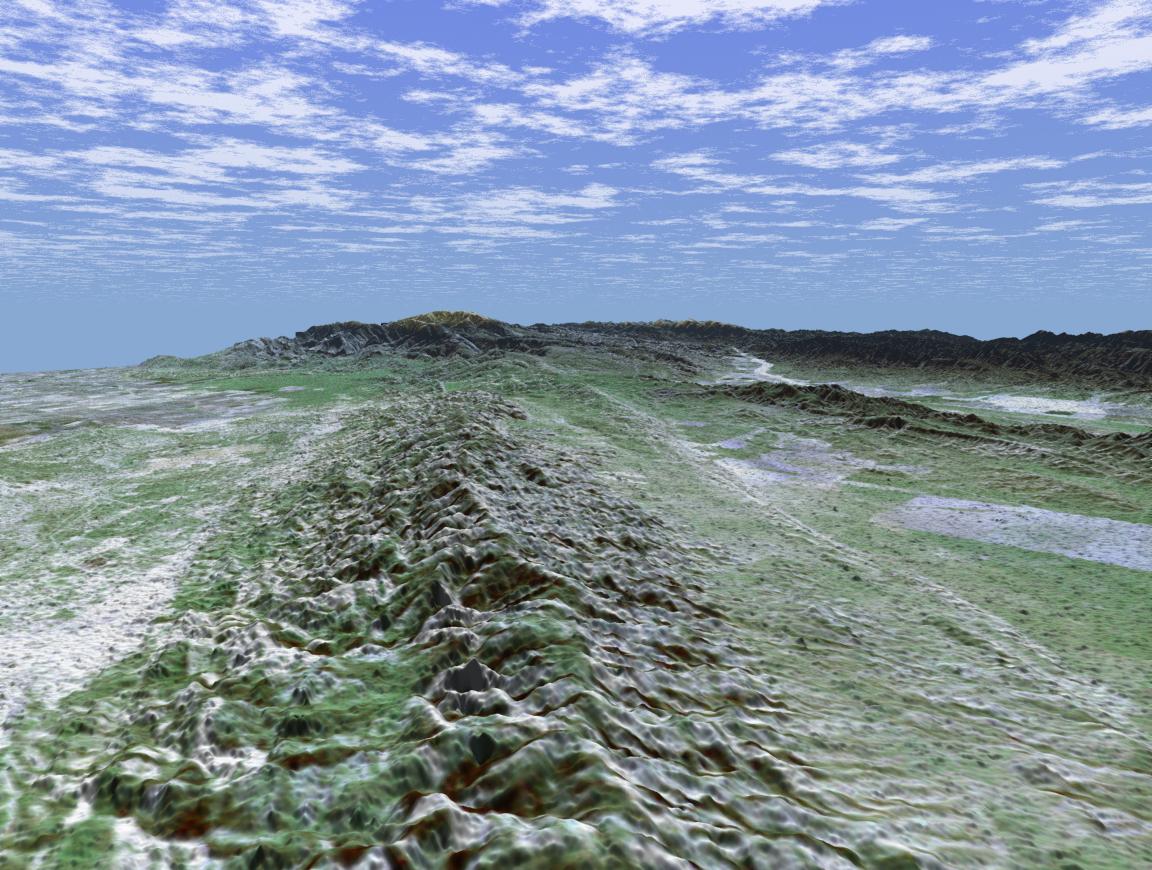
Most earthquakes happen along faults at plate boundaries. The San Andreas Fault in California is one of the best-known examples. It marks the boundary where the Pacific Plate slides past the North American Plate.
Quakes can also come from other triggers. Volcanic eruptions, landslides, and human activity such as reservoir filling or deep fluid injection can all shake the ground. Fault slip remains the main cause of large, damaging earthquakes.
The three things a prediction must name
The USGS sets a strict test for prediction. A real prediction must define three elements: the date and time, the location, and the magnitude. Miss one, and it is not a prediction.
This test matters because vague claims are easy to make. The USGS gives two examples of statements that sound like predictions but are not: a magnitude 4 earthquake somewhere in the United States in the next 30 days, and a magnitude 2 earthquake on the west coast of the United States today. Both are so general that some quake will always fit.
When a quake happens to match a vague claim, the claimant often declares success. The USGS says that is a failed prediction when one or more of the predicted elements is wildly different from what occurred. A prediction must be specific before the event, not matched to it afterwards.
Why exact prediction is so hard
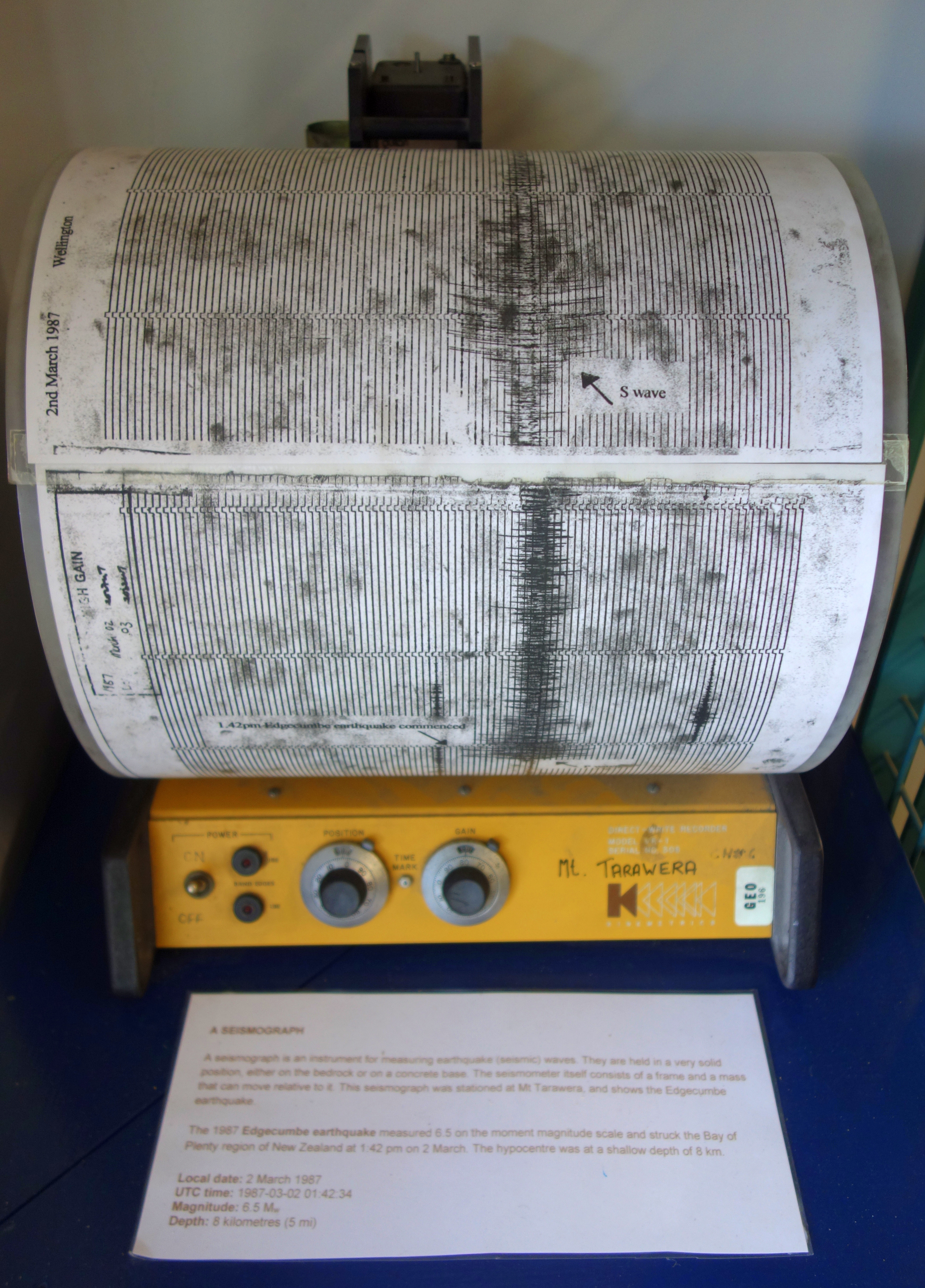
Faults sit kilometres underground, out of direct view. Scientists cannot watch a fault the way forecasters watch a storm forming on satellite images. The processes that start a quake play out at depths of a few kilometres to hundreds of kilometres below the surface.
Some evidence suggests quake nucleation may be chaotic in the technical sense. Tiny differences in starting conditions could grow into large differences in outcome. If that is right, even perfect instruments might not deliver exact predictions.
The precursor problem
After many large quakes, people point to warning signs that seemed to come first. Swarms of small quakes, radon gas in local water, odd animal behaviour, or a moderate quake that might have been a foreshock all get cited. The USGS says most such precursors occur often without being followed by an earthquake.
That is the core trouble. A useful precursor must show up before large quakes and stay absent when no large quake follows. Most proposed precursors fail that test.
They are common, and large quakes are rare, so the false alarm rate is high.
The USGS notes that an earthquake forecast was once made in China based on small quakes and unusual animal activity. Many people chose to sleep outside, and were spared when the main quake struck. But the agency adds that this type of activity is rarely followed by a large quake, and most quakes have no precursory events at all.
The next large quake in China had no precursors, and thousands of people died.
What happened in Türkiye in 2023
The February 2023 earthquake sequence in Türkiye shows why the question matters. The largest quake measured magnitude 7.8, and the sequence killed about 50,000 people, according to Communications of the ACM. The quakes struck near a triple plate junction where the Anatolian, Arabian, and African plates meet, along the East Anatolian Fault system.
The USGS reports that no magnitude 7 or larger quake had struck that fault zone since 1822 and 1138 before this sequence. The last quake of similar size in Türkiye was the magnitude 7.8 Erzincan quake on the North Anatolian Fault in 1939. Long quiet gaps do not tell scientists when the next slip will come.
Forecasts are not predictions
Forecasts answer a different question. Instead of naming a date, a forecast gives the probability that a quake of a given size will strike a specific area within a certain number of years. The USGS publishes hazard maps built on those probabilities.
Aftershock forecasts work the same way. After a mainshock, the USGS can issue statistical statements about the likely size and number of aftershocks. Those statements describe odds, not certainties.
Early warning is a third category. An early warning system detects a quake after it starts and sends alerts before the shaking reaches distant places. It reacts to a quake in progress.
It does not predict one.
The AI trial in China
A 2023 trial tested whether artificial intelligence could do better. Researchers at the University of Texas at Austin used AI to analyse real-time seismic data over seven months in southwestern China. They correctly forecast 70 percent of earthquakes a week ahead, according to Communications of the ACM.
The system drew on the AETA network, a Chinese monitoring system with 150 stations fitted with acoustic and electromagnetic sensors. Acoustic sensors pick up ground vibrations. Electromagnetic sensors pick up disturbances that may signal seismic activity.
The team extracted 95 features from every 10 minutes of data, then used a method called principal component analysis to trim the flood of features down. Two models ran on the result: one to predict whether a quake would occur in the next week, and one to predict its magnitude. Over the trial, the system correctly forecast 14 earthquakes.
One researcher on the project, Yangkang Chen, told CACM: "Fundamentally speaking, there are actually no new algorithms or techniques invented in our work. We just use existing mathematical algorithms in a smart way." The breakthrough came from rich data and a clever combination of existing tools, not from a new law of physics.
Why the trial does not settle the question
The researchers themselves say the method needs testing in other regions. Faults in California or Japan do not share the same quake patterns or data signatures as the test area in China. A model tuned to one region may not transfer to another without heavy changes.
The USGS response was cautious. It called the published work "a proper first step in proposing and vetting a possible earthquake prediction technique." It added that it is too soon to say whether the result is a breakthrough or a promising result that fails to lead to a useful technique for cutting quake losses.
Another researcher, Sergey Fomel, struck a careful note. He told CACM: "It is good to be cautious and state that all predictions can be only probabilistic, similar to extreme weather events. Our results show that making short-term earthquake probability estimates less random might finally be possible.
" Probabilistic is the key word. Even the hopeful version is about better odds, not exact dates.
How planes stay in the air shows the same pattern: steady progress comes from measurement and testing, not from one dramatic claim.
What to do with the uncertainty
Since no one can name the date of the next big quake, preparation is the practical response. Hazard maps show which regions carry the most risk. Building codes in those regions aim to keep structures standing through shaking.
Emergency plans cover what to do in the first minutes after a quake.
Individual steps are simple. Know whether you live in a quake-prone area. Secure heavy furniture and water heaters.
Keep water, food, and a torch within reach. Learn the drop, cover, and hold on drill before you need it.
Treat prediction claims with the USGS test. Ask whether the claim names a date and time, a location, and a magnitude, all in advance. If it does not, it is not a prediction, however confident it sounds.
Frequently asked questions
Can scientists predict earthquakes today?
No. The USGS states that neither it nor any other scientists have ever predicted a major earthquake. Scientists can calculate probabilities for an area over years, and early warning systems can react once a quake starts.
Can animals predict earthquakes?
There is no verified method based on animal behaviour. The USGS notes anecdotes dating back to Greece in 373 BC, but unusual animal behaviour often occurs without any quake following. It is not a reliable signal.
What is the difference between a forecast and a prediction?
A prediction names the date and time, location, and magnitude in advance. A forecast gives the probability that a quake of a given size will hit an area within a period of years. Forecasts guide building codes and planning.
Did AI predict earthquakes in China?
In a seven-month trial, an AI system correctly forecast 70 percent of quakes a week ahead in one region of China, using data from 150 monitoring stations. The researchers and the USGS both say the method needs testing in other regions before it counts as a general tool.
What causes most earthquakes?
Sudden slip on a fault, driven by stress that builds as tectonic plates move and lock. Volcanic eruptions, landslides, and some human activities can also cause shaking, but fault slip causes the largest quakes.
The bottom line
Earthquakes come from sudden fault slip, and the physics of that slip keeps exact prediction out of reach. Forecasts give odds, early warning buys seconds after a quake starts, and the AI trial in China hints at better short-term odds without changing the verdict. The smart move is to prepare for shaking you cannot schedule.
Tags: earthquakes, tectonic plates, seismology, prediction
Latest in Science
- How Planes Stay in the Air
- Gravity in Simple Words
- What Causes the Northern Lights to Appear
- Do Trees Talk to Each Other Underground
Subscribe to the Rive News newsletter for one practical guide each week.
Related stories

Why diamond is hard and graphite is soft when both are carbon
Diamond and graphite are both pure carbon, yet diamond is 10 on the Mohs scale and graphite is 1 to 2. The difference is not the atoms;

Why Hot Water Can Freeze Faster Than Cold: The Mpemba Effect Explained
Hot water can freeze faster than cold under specific conditions. The Mpemba effect, named for a 1963 schoolboy experiment, still divides
How Magnets Work at the Atomic Level: Spins, Domains, and Iron
Magnetism comes from electrons: their spin and orbits make each atom a tiny magnet. In iron, quantum forces align these atomic magnets into