
Geomagnetic storm aurora visibility: where northern US can see lights tonight
Web StoryWatch this story in 15 seconds →Key takeaways
- A G2 geomagnetic storm reached Earth on October 10, and a weaker G1 storm is forecast for October 13.
- The best chances are in Alaska, Canada, and northern Europe, with horizon views possible in northern US states.
- The peak is expected between 06:00 and 09:00 UTC on October 13, so US viewers should watch late Monday night.
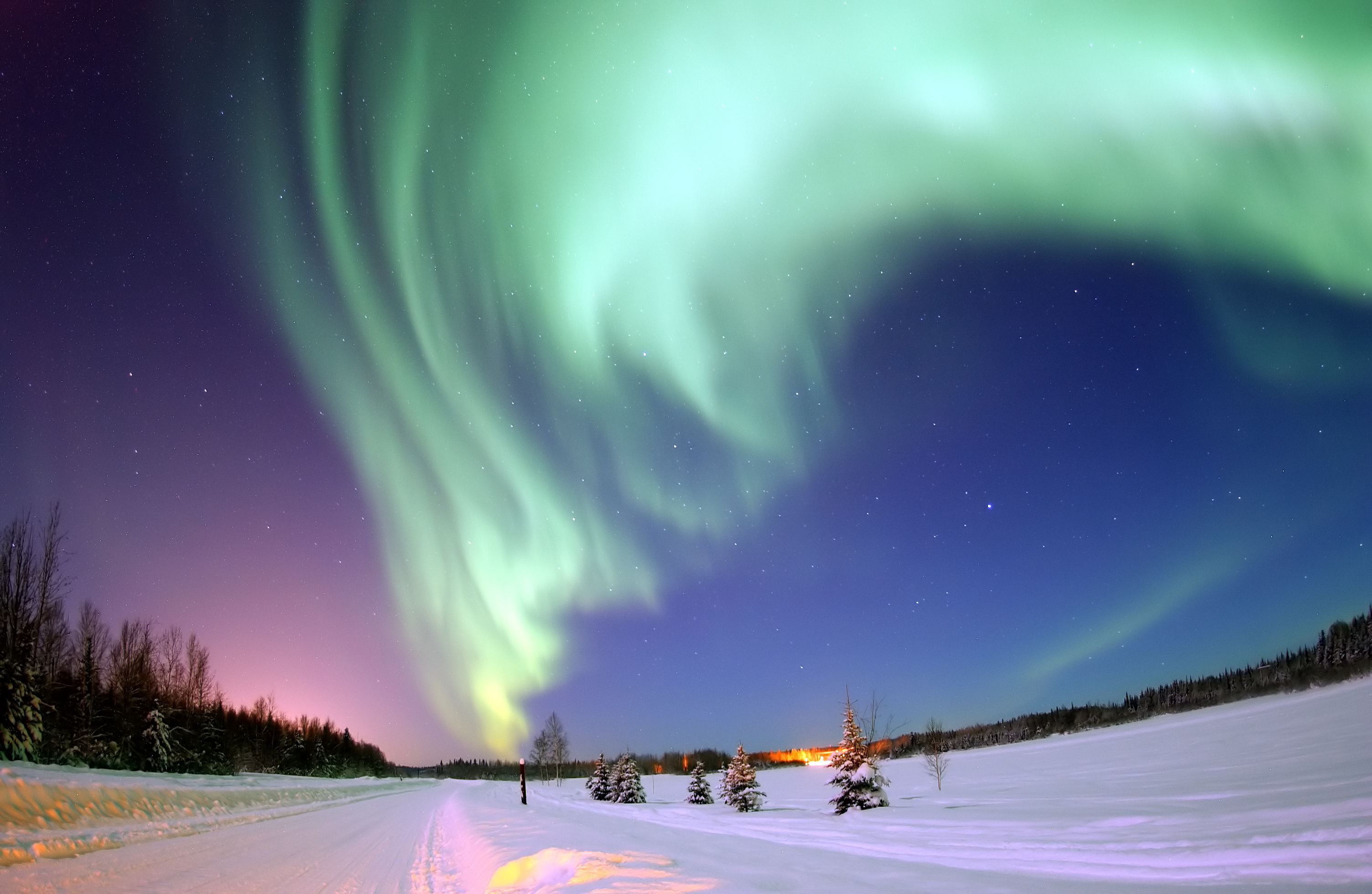
A moderate G2 geomagnetic storm hit Earth on October 10, 2026. It came from a burst of solar material called a CME. Now a weaker G1 storm is expected on October 13. The northern lights may show up across the northern United States tonight.
What happened
NOAA's Space Weather Prediction Center reported that a coronal mass ejection arrived at Earth on October 10. A CME is a large burst of material and magnetic fields from the sun. A sudden jump of 56 nT was measured at a magnetometer station in Niemegk, Germany. NOAA issued a G2 (Moderate) storm warning valid until 23:59 UTC on October 10. It also kept a G2 watch in place for October 11.
Space.com reported that four CMEs were heading toward Earth around October 9 and 10. They came from a busy sunspot region named AR4549. One erupted on October 8 during a powerful M-class solar flare. Early analysis suggested the fourth CME could catch up with the third one on its way to Earth.
When CMEs pile up like this, the storm can grow stronger.
During G2 storms, auroras have been seen as far south as New York and Idaho in the past, according to Space.com. USA Today reported that the October 11 storm could put the lights over northern and upper Midwest states.
The same report named viewing areas stretching from New York west to Idaho.
Why it matters
A geomagnetic storm happens when solar material disturbs Earth's magnetic field. This disturbance lets the aurora appear farther south than usual. That is why so many people across the northern US are searching for viewing chances right now.
The colors of the sky come from gases in the air, and the same gases make the sky blue and paint the aurora green and red. The sun sends charged particles toward Earth all the time. What causes the northern lights is the meeting of these particles with Earth's upper atmosphere.
NOAA rates these storms from G1 (minor) to G5 (extreme). G1 means Kp 5. Kp is a scale from 0 to 9 that measures global magnetic activity over three hours. The October 10 storm was G2, which is stronger.
The October 13 forecast is G1. That is weaker, but it is still enough for a real show.
What happens next
A G1 storm is forecast for October 13. According to JNP Travel, which cites NOAA's Space Weather Prediction Center, a fast solar wind stream from a coronal hole will push the Kp index to 5 early on October 13. The peak is expected between 06:00 and 09:00 UTC.
That timing lands on late Monday night for US viewers. In Alaska, it is roughly 10 pm to 1 am local time. In the Rockies, it is roughly midnight to 3 am Mountain time.
The storm does not switch off at once, so the hours around the peak are also worth watching.
At Kp 5, the auroral oval reaches about 56.3 degrees of corrected geomagnetic latitude. The best seats are Yellowknife in Canada, Fairbanks in Alaska, and Tromso in Norway. All of them have many hours of true darkness on October 13. Banff and Jasper in the Canadian Rockies also sit inside the zone.
They offer almost 9.5 hours of astronomical darkness.
For the northern tier of the contiguous US, Kp 5 brings a low-on-the-horizon show at best. Northern Washington, Idaho, Montana, North Dakota, Minnesota, northern Wisconsin, and Michigan's Upper Peninsula may see light near the northern horizon. You need a dark rural site and a clear view to the north.
City lights will wash out a weak display. A camera helps too. It can record faint bands that the naked eye misses.
In the UK, the Met Office forecast says Scotland, Northern Ireland, and parts of northern England could see the aurora between October 10 and October 13. Forecaster Greg Dewhurst told Brit Brief that the October 13 night could bring lights farther south into central areas. Clear skies are needed.
The moon will not be a problem. The moon on October 13 is a 3 percent waxing crescent. That means almost no moonlight.
The moon is sometimes visible during the day, but tonight it is nearly invisible, so the sky will be as dark as it gets.
Cloud cover is the real enemy. Check the local cloud forecast before you drive out. Also check a live aurora app for the current Kp.
A forecast is a probability, not a promise. Kp 5 is a planetary average, so local activity can spike higher or fizzle lower.
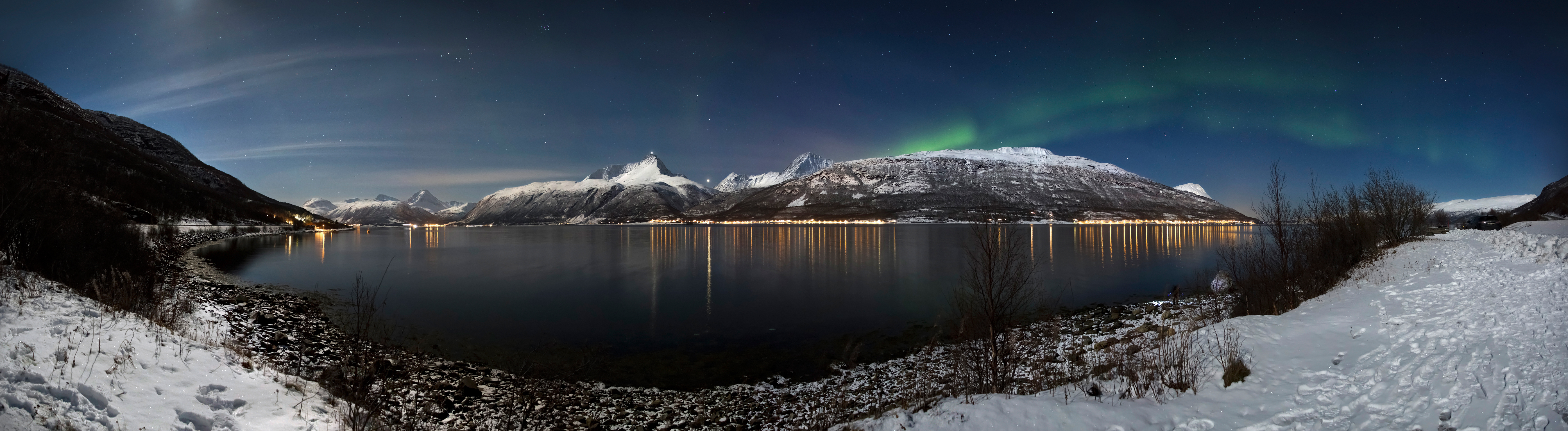
If you miss tonight, more chances may come. Solar activity often stays high for a year or two after the sun's peak. The sun's activity crossed its maximum in October 2024, according to JNP Travel.
That puts 2026 inside the active window. The months from late August through April are the standard aurora season in the northern hemisphere.
The bottom line is simple. Tonight is worth a look if you live in the northern US or Canada and the sky is clear. Head somewhere dark.
Face north. Keep checking the sky. The lights do their show only once, and then they move on.
Related stories

Why diamond is hard and graphite is soft when both are carbon
Diamond and graphite are both pure carbon, yet diamond is 10 on the Mohs scale and graphite is 1 to 2. The difference is not the atoms;

Why Hot Water Can Freeze Faster Than Cold: The Mpemba Effect Explained
Hot water can freeze faster than cold under specific conditions. The Mpemba effect, named for a 1963 schoolboy experiment, still divides

How Magnets Work at the Atomic Level: Spins, Domains, and Iron
Magnetism comes from electrons: their spin and orbits make each atom a tiny magnet. In iron, quantum forces align these atomic magnets into