
Mars rock with leopard spots may hold a clue to ancient life
Key takeaways
- A Mars rock called Cheyava Falls holds spots that may point to ancient microbes.
- The core sample, named Sapphire Canyon, sits sealed in a tube on Mars.
- NASA cancelled the return mission, so the sample has no ride home yet.
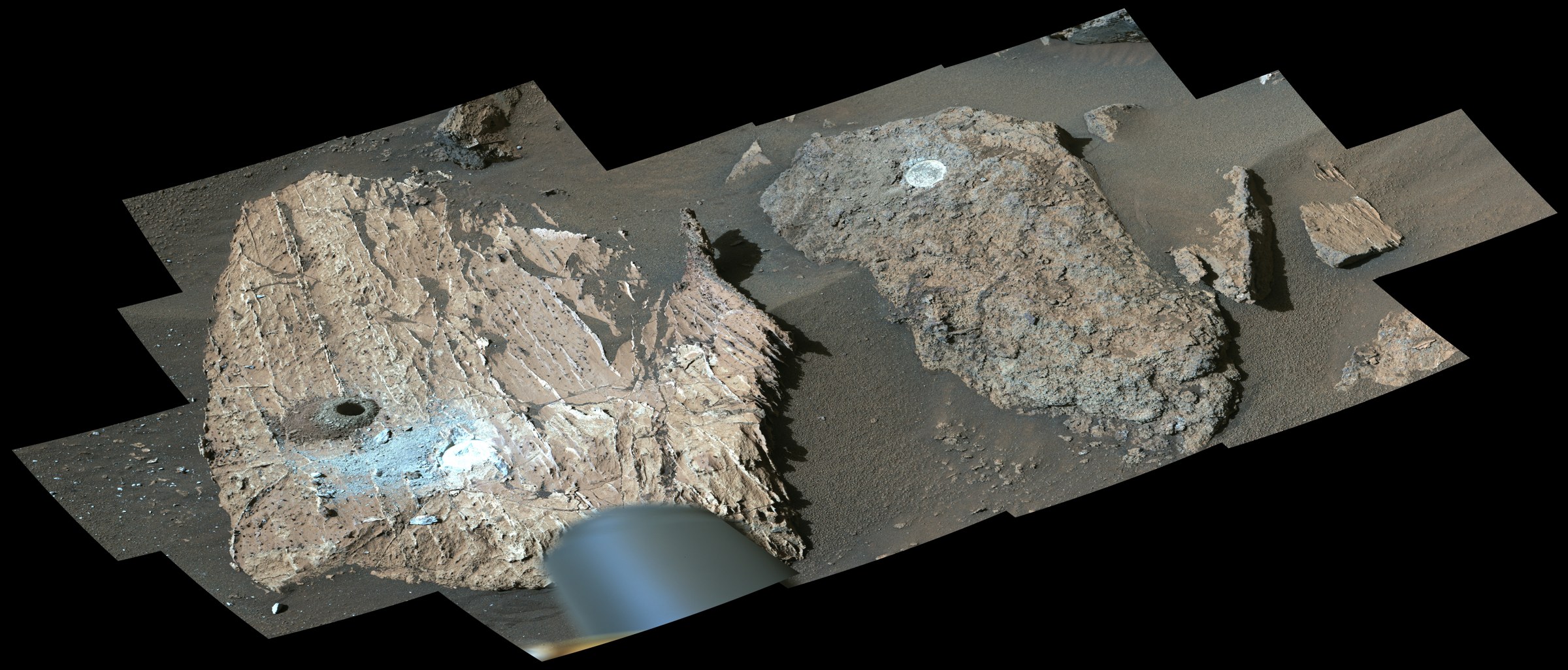
A rock on Mars may hold a clue to ancient life. The rock is called Cheyava Falls. It has spots like a leopard's coat.
Scientists say the spots may be a sign of ancient microbes. They also say the spots may not be. Only lab tests on Earth can settle it.
The sample from the rock is called Sapphire Canyon. It is about the size of a chalk stick. It sits sealed in a tube on Mars.
It has no ride home yet. NASA cancelled the mission that would have fetched it.
What happened
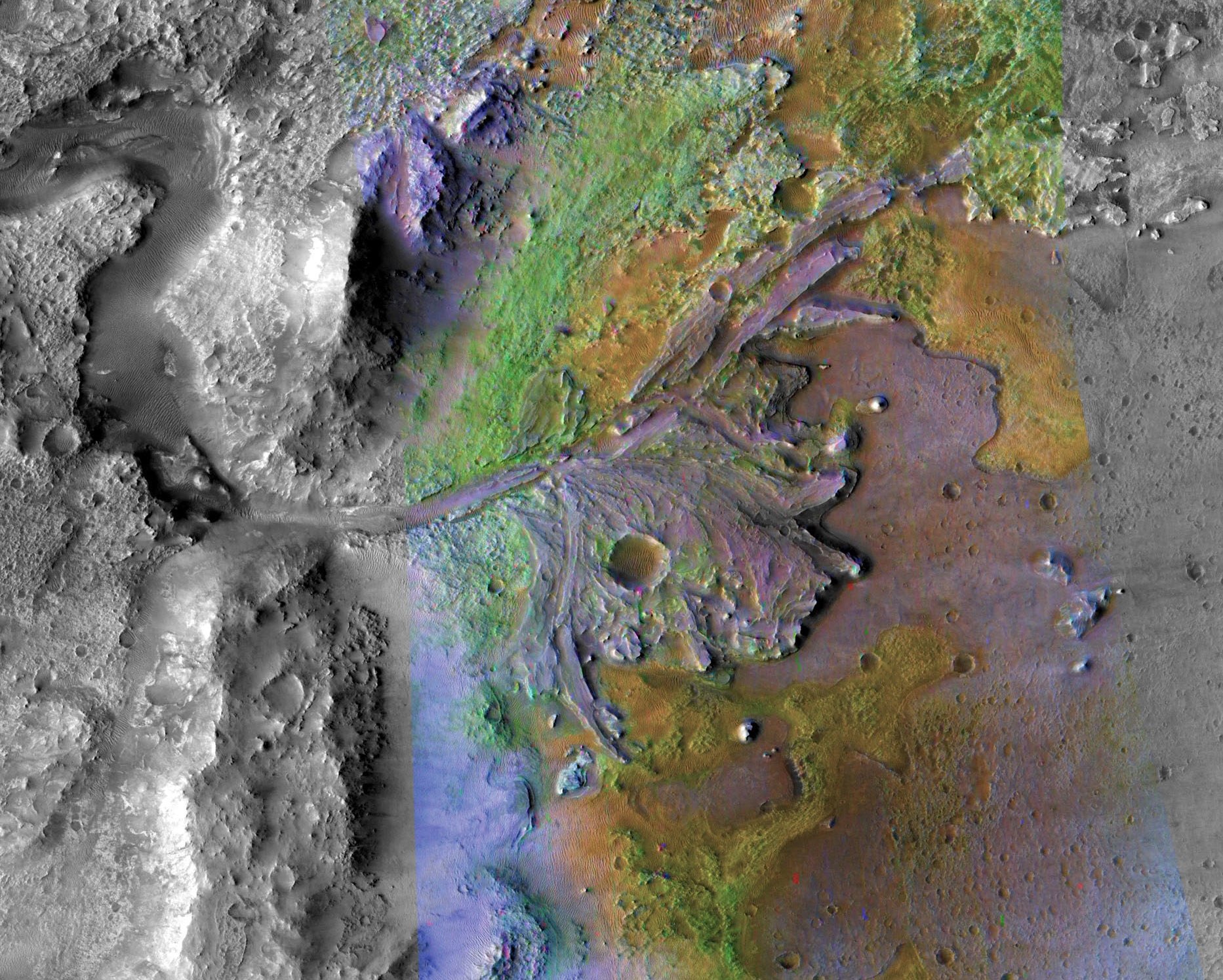
NASA's Perseverance rover landed in Jezero Crater in February 2021. The crater once held a lake. Rivers fed that lake more than 3 billion years ago. The rover came to hunt for rocks shaped by water.
Such rocks have the best chance to hold signs of past life.
In July 2024, the rover found Cheyava Falls. The rock sits at the edge of Neretva Vallis. That valley once carried water into the lake.
The rock is shaped like an arrowhead. It measures about 3.2 feet by 2 feet. Its red face holds tiny spots.
The team calls them leopard spots. Smaller specks, less than a millimeter wide, are called poppy seeds.
The rover drilled a core from the rock. It named the core Sapphire Canyon. The core went into a sealed tube.
The tube sits inside the rover's body. It waits there today.
In September 2025, a study in Nature reported the first deep look at the rock. Joel Hurowitz of Stony Brook University led the team. The study found the spots hold two iron minerals.
They are vivianite and greigite. The mudstone around them holds organic carbon. The carbon seems to have reacted with the mud at low heat.
That reaction came after the mud settled on the lake floor.
Adrian Broz is a member of the Perseverance science team. He works at Purdue University. He said this is the first find that counts as a "potential biosignature" on Mars.
A biosignature is a sign that may come from life. It is not proof of life. It needs more study.
Michael Tice is a geobiologist at Texas A&M University. He co-wrote the paper. He said the patterns are easy to explain with early Martian life.
He said they are very hard to explain with geology alone. NASA files the find as a potential biosignature. That label means maybe life, maybe not.
Why it matters
On Earth, spots like these form in soils where microbes feed. Microbes eat organic matter buried in mud. As they feed, they leave bleached halos and spots.
The Mars spots look much like those marks. That match is why scientists are excited.
The rock's chemistry fits the story too. The mudstone holds organic carbon, sulfur, phosphorus, and rusted iron. Hurowitz said that mix could have fed microbes.
It could have been a rich source of energy for tiny life forms.
But non-life routes can also make vivianite and greigite. NASA lists three ways. High heat can do it.
Acid can do it. Organic compounds can drive it. The Bright Angel rocks show no signs of heat or acid.
It is not known if the organic matter could drive that reaction at low heat.
Sulfur is the sticking point. Some non-life routes to the sulfur marks need high heat. The rover's data suggests the rocks were never heated that way.
Tice said if that holds, we must take the life idea seriously. The spots could come from bacteria. They may have lived in mud in a Martian lake long ago.
Still, no one on the team claims to have found life. Hurowitz told Reuters the rover's data alone cannot rule out non-life chemistry. Katie Stack Morgan is the Perseverance project scientist at NASA's Jet Propulsion Laboratory.
She rated the non-life paths as less likely. She said they cannot be ruled out.
Earth labs could settle it. Labs on Earth are far more sensitive than rover tools. They could read isotopes in the organic matter.
They could hunt for microfossils. They could test the highest heat the rock ever faced. The rover's tools were picked for a different job.
They were meant to scout samples for return, not to give final answers.
Scientists learned this lesson before. The Allan Hills 84001 meteorite came from Antarctica in 1984. Some first thought it held signs of ancient life. Later work showed that geology alone could make marks that look like life signs.
That is why the team wants the real rock in real labs.
What happens next
The sample has no ride home. The Mars Sample Return program would have fetched it. NASA and the European Space Agency ran the program.
It drew fire for cost and complexity. The budget grew to $11 billion at most. The return date slipped to 2040. NASA paused the program in 2024. Then it cancelled it.
NASA spent about $2.5 billion on it.
NASA says it is looking at simpler, cheaper return paths. These may include commercial or international help. NASA leaders have not shown a clear plan.
NASA Administrator Jared Isaacman says he wants the samples back. He said the haul could bring the biggest science breakthrough in human history. He has not said how or when.
China may get there first. Its Tianwen-3 mission aims to launch in 2028. It aims to bring Mars samples home in 2031. The plan uses two launches. A drill can reach 2 meters under the surface.
The team is narrowing 86 landing sites. Jezero Crater is not on the list. China's samples would come from a different place.
Perseverance keeps working. It has filled 33 tubes with rock, dust, and air samples. It has dropped 10 samples at a depot on Mars.
A future mission could pick them up. The Sapphire Canyon tube still rides aboard the rover.
The question stays open. Did microbes once live in a Martian lake? Or did plain chemistry fake the signs of life?
The rock that could answer sits in a tube on Mars. It waits for a ride that does not yet exist.
For more space science in plain words, see our SpaceX cargo launch to the space station. To learn how we date deep time, read how scientists know Earth is 4.5 billion years old. And for another sky wonder, see what causes the northern lights.
Related stories

Why diamond is hard and graphite is soft when both are carbon
Diamond and graphite are both pure carbon, yet diamond is 10 on the Mohs scale and graphite is 1 to 2. The difference is not the atoms;

Why Hot Water Can Freeze Faster Than Cold: The Mpemba Effect Explained
Hot water can freeze faster than cold under specific conditions. The Mpemba effect, named for a 1963 schoolboy experiment, still divides

How Magnets Work at the Atomic Level: Spins, Domains, and Iron
Magnetism comes from electrons: their spin and orbits make each atom a tiny magnet. In iron, quantum forces align these atomic magnets into