
Why Does the Moon Look Bigger Near the Horizon? Scientists Explain
Rive News / Research desk
Research desk | Rive News
Key takeaways
- The moon's angular diameter stays near 0.5 degrees all night. Photographs prove it never actually grows near the horizon.
- The leading explanation is the Ponzo illusion. Your brain reads the horizon as farther away, so it scales the same-sized moon up.
- We see the sky as a flattened dome. Clouds overhead are about 5 km away, while horizon clouds are 100+ km away. This strengthens the size misjudgment.
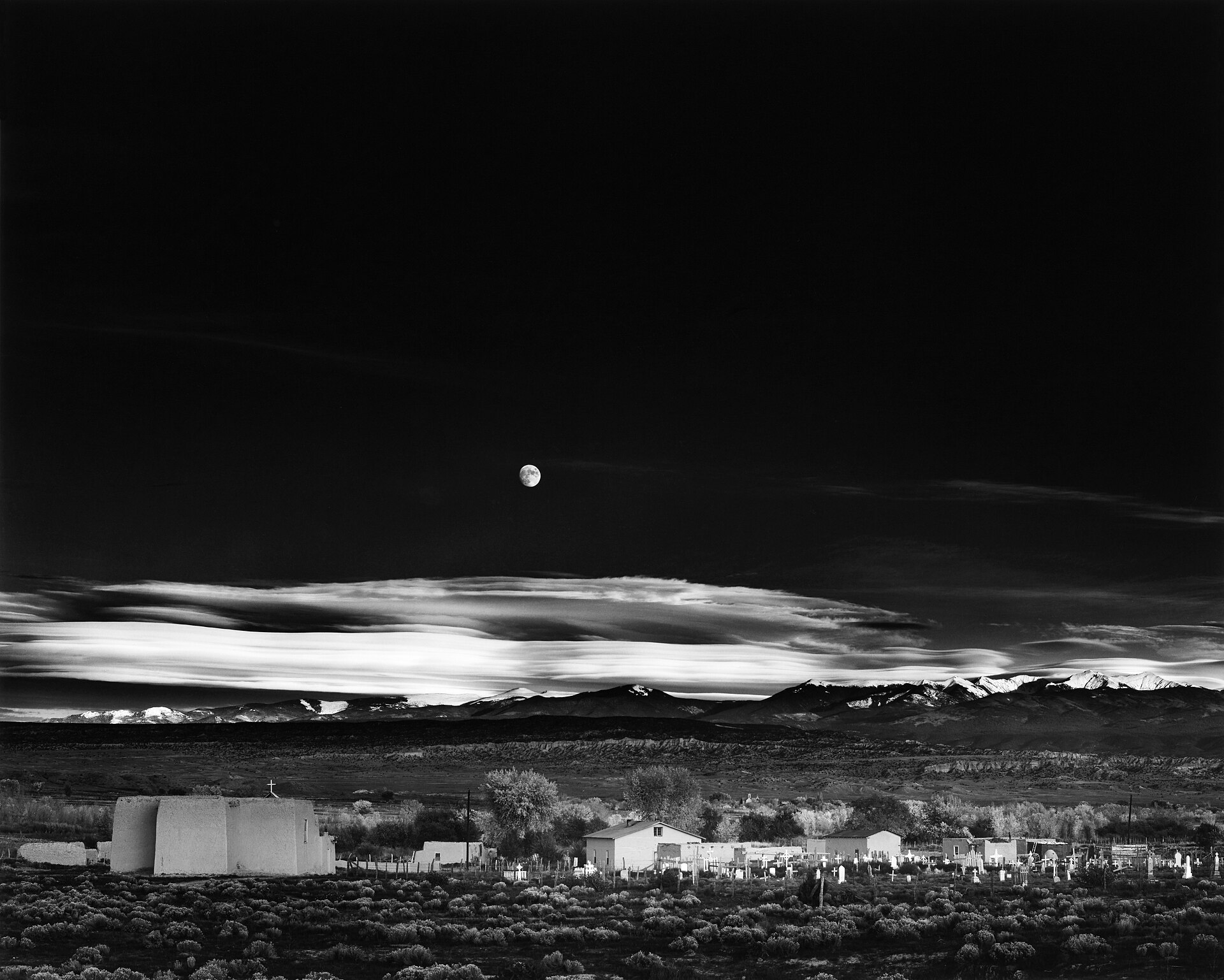
A full moon rising over the horizon can look enormous. It looks close enough to touch. It looks twice the size of the pale disk you saw overhead last week. It feels so real that people reach for their phones to capture it. Then the photo shows a tiny white dot. The camera is not broken. The moon never changed size. The whole effect happens inside your head.
The moon illusion is one of the oldest known tricks of human perception. Cultures across history have recorded it. It is still not fully explained. This article takes a closer look at why the moon looks bigger near the horizon. It covers the proof that it is an illusion, the Ponzo illusion at its heart, the flattened sky dome that strengthens it, and the bottom line for skywatchers.
The proof: the moon never changes size
Start with the measurement. It settles the question before the theories begin. The moon's angular diameter stays nearly constant at about 0.5 degrees. That is roughly half the width of your pinky held at arm's length. Science Notes' astronomy coverage gives this number. National Geographic puts it at about 0.52 angular degrees. Across different full moons, the diameter varies from 29.43 arcminutes at apogee to 33.5 arcminutes at perigee. That is a variation of around 14%. It comes from the oval shape of the moon's orbit, per Wikipedia's summary of the research.
But during a single night, the size does not grow. In fact, the moon is about 1.5% farther away when it sits on the horizon than when it is overhead. So it is slightly smaller in angular size at the horizon. The change runs opposite to what we perceive.
NASA makes the proof something anyone can repeat. "Photographs prove that the Moon is the same width near the horizon as when it's high in the sky," the agency's moon illusion page states. Take a photo at moonrise. Take another when the moon is high. Keep the same zoom. The disk measures identically side by side. Hold up your outstretched index finger next to the moon. Your fingernail and the moon are about the same size, at the horizon and overhead alike. Looking through a paper tube also collapses the illusion. So does bending over and viewing the moon upside down between your legs. These tricks strip away the depth cues your brain was using.
The camera mismatch is itself the evidence. A standard smartphone camera has a field of view around 70 to 80 degrees. The moon's half-degree disk fills less than one percent of the frame. That is roughly what it fills on your retina. The camera records the angular reality faithfully. Your brain inflates the moon when the conditions are right. If the atmosphere were acting as a magnifying lens near the horizon, the camera would record a physically larger moon there. It does not.
The Ponzo illusion at the heart of it
The leading explanation centers on a classic of perception psychology: the Ponzo illusion. Italian psychologist Mario Ponzo first showed it in 1913. Gizmodo's science coverage retells it. Draw two converging lines, like railroad tracks running into the distance. Draw two identical horizontal bars across them, one near the top and one near the bottom. The upper bar looks longer. Both are exactly the same length.
The illusion works because your brain reads the converging lines as parallel lines running into the distance. If the upper bar looks farther away yet makes the same-sized mark on your retina, your brain concludes it must be physically larger. You perceive it as larger. Size constancy is the brain's normally useful habit of adjusting perceived size for distance. Here it misfires.
Now apply that logic to the moon. When the moon sits near the horizon, it appears against trees, buildings, hills, and roads. These give your brain a rich set of depth cues. They tell your brain the horizon is far away. The moon makes the same half-degree mark on your retina as always. Your brain does its Ponzo math. Same retinal size plus greater perceived distance equals a physically larger object. So it looks huge. When the moon climbs into the empty sky, the depth cues vanish. The perceived distance shrinks. The illusion fades.
Scientific American's explainer adds the crucial second half of the mechanism. We do not see the sky as a true hemisphere. Experiment after experiment shows we see the horizon as farther away. We see the sky as a flattened bowl overhead, with the top of the sky closer to us. This makes evolutionary sense. On a cloudy day, the clouds over your head really are closer, perhaps five kilometers above you. The clouds near the horizon can be more than 100 kilometers distant. We have evolved to think of the sky as flattened that way. The moon illusion rides on top of that flattened shape.
A thousand years of wrong and right answers
People have theorized about the moon illusion since ancient times. The history is a catalog of near-misses. In the fourth century B.C., Aristotle suggested Earth's atmosphere might enlarge the horizon moon. He compared it to the way water magnifies objects under it. Ptolemy and Cleomedes offered similar ideas in the second century A.D. National Geographic retells this. We now know the atmosphere does nothing of the sort. It changes the moon's color through scattering. That is why the horizon moon often glows orange. But it does not magnify the disk.
The closest early hit came around 1,000 years ago. The medieval thinker Ibn al-Haytham, a pioneer of optics, examined the moon illusion. He correctly noted that a fixed-size object will look smaller if perceived as closer and bigger if perceived as farther away. Scientific American reports this. He thought trees and other objects made the moon appear closer and therefore bigger. We now know that is backwards. But the core insight was essentially right. Perceived distance drives perceived size. He had it a thousand years before modern psychology formalized it.
Modern researchers still debate the details. Some stress the apparent-distance theory described above. Others point to the relative-size effect. That is where the moon looks large against small foreground objects. Still others point to explanations involving how the eyes focus. NASA is candid about the state of play: "Even though we've been observing it for thousands of years, there's still not a satisfying scientific explanation for exactly why we see it." What is settled is that the effect is perceptual, not physical. The Ponzo-style distance scaling is the heart of it.
The illusion is not moon-specific. The sun looks huge at sunset for the same reason. Constellations near the horizon can seem stretched. Any object viewed against rich horizon depth cues gets the same mental magnification. The moon just happens to be the most dramatic example. Partly that is because we watch it rise.
Frequently asked questions
Is the moon actually closer to Earth when it looks huge on the horizon?
No. The moon is about 1.5% farther away at the horizon than overhead. That makes it very slightly smaller in angular terms. The "supermoon" effect is different. At perigee the moon can appear up to 14% larger. That is a monthly-cycle phenomenon, not a nightly one.
Why do photos never capture the giant moon I see?
Your camera records angular size faithfully. The moon's 0.5-degree disk fills less than 1% of a typical smartphone frame. The magnification happens in your visual processing, after light hits your retina. No camera applies that perceptual scaling. Telephoto lenses can make the moon look large. That is mechanical zoom, not the illusion.
Does the atmosphere magnify the moon at all?
No. The atmosphere changes the moon's color through Rayleigh scattering. That is why it looks orange or red near the horizon. But it does not enlarge the disk. NASA notes the moon may even appear slightly squashed vertically near the horizon. The atmosphere acts like a weak lens. That is the opposite of magnification.
Why does looking through a paper tube kill the illusion?
The tube removes the surrounding depth cues. Those are the trees, buildings, and horizon line your brain uses to judge distance. Without those cues, the Ponzo-style scaling has nothing to work with. The moon snaps back to its true apparent size.
Do animals experience the moon illusion?
That is genuinely unknown. The illusion depends on human-like depth perception and size constancy processing. Testing it in animals is difficult. What we know is that every human culture that recorded the phenomenon describes the same enlarged horizon moon.
The bottom line
The moon looks bigger near the horizon because your brain does distance math and gets fooled. The Ponzo illusion, shown by Mario Ponzo in 1913, shows how perceived distance inflates perceived size. Your brain reads the horizon as far away. Partly this is because we see the sky as a flattened dome. It scales the moon's unchanging half-degree disk up to match.
The proof fits in your pocket. Photograph the moon at moonrise. Photograph it again overhead at the same zoom. The disk measures identically. The giant moon is not in the sky. It is in the oldest observatory there is: the one behind your eyes.

---
Topics: moon, astronomy, optical illusions, perception, space
Author bio: Rive News is the research desk behind Rive News's evergreen explainers, covering science, astronomy, and how the world works from public sources.
Latest in Science
- Why the Moon Is Sometimes Visible During the Day
- Why the Sky Is Blue but Space Is Black
- Why the Sky Turns Orange at Sunrise and Sunset
- Why You Get Static Shocks in Winter
Subscribe for one science explainer each week, sourced from real research.
Corrections: spotted an error? Rive News publishes corrections at the top of the article. Standards: every factual claim links to a named public source; no invented quotes, statistics, or experts.
Related stories

Why diamond is hard and graphite is soft when both are carbon
Diamond and graphite are both pure carbon, yet diamond is 10 on the Mohs scale and graphite is 1 to 2. The difference is not the atoms; it i

Why Hot Water Can Freeze Faster Than Cold: The Mpemba Effect Explained
Hot water can freeze faster than cold under specific conditions. The Mpemba effect, named for a 1963 schoolboy experiment, still divides phy

How Magnets Work at the Atomic Level: Spins, Domains, and Iron
Magnetism comes from electrons: their spin and orbits make each atom a tiny magnet. In iron, quantum forces align these atomic magnets into