
How Noise Cancelling Headphones Actually Work, Step by Step
By Rive News
Research desk | Rive News
Key takeaways
- ANC headphones fight noise with noise: a mirror-image wave that cancels sound by destructive interference.
- Three mic layouts exist: feedforward (outside), feedback (inside), and hybrid (both).
- ANC excels at steady low-frequency drone and struggles with sudden, high-pitched sounds.
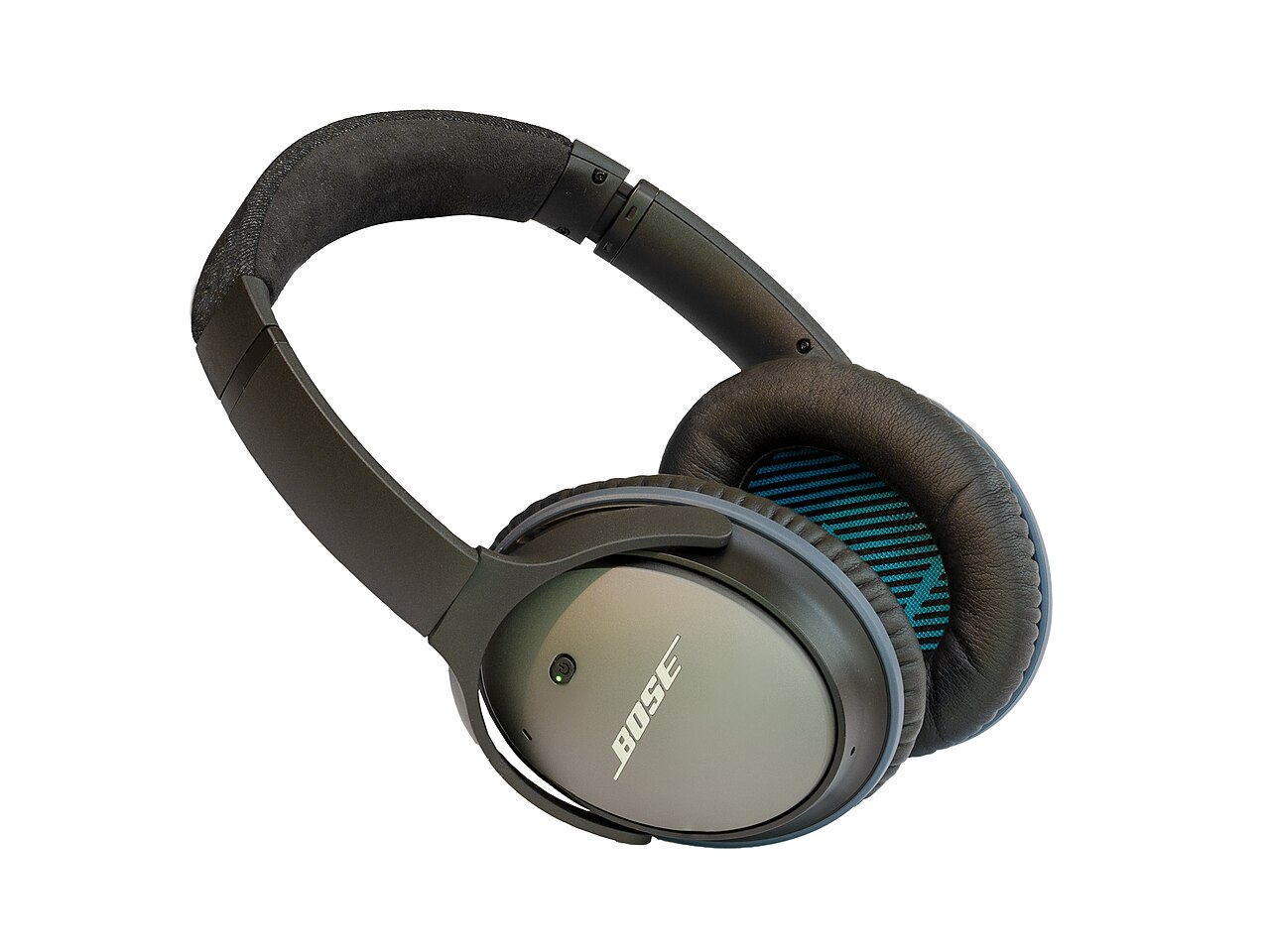
Image Credits: Wikimedia Commons
Put on noise cancelling headphones in a loud cabin. The engine roar melts away, even with no music playing. It feels like magic, but it is physics plus fast electronics.
The headphones do not block the sound the way a wall does. They build a second sound that erases the first.
This article explains the trick in plain steps. It covers how the headphones listen, how they build anti-noise, and why the trick works brilliantly on airplane engines and badly on crying babies.
Passive first: the part that needs no battery
Before any electronics kick in, headphones already reduce noise physically. Thick earcups, a tight seal, and dense materials block sound the way earplugs do. This is passive noise isolation. It handles high-frequency sounds like hissing and clatter reasonably well.
ANC builds on top of that. The physical seal gives the electronics a quieter starting point. That makes the active cancellation job easier. A good seal matters as much as the chip inside. Even the best ANC struggles with sound leaking around a poor fit.
The core trick: fighting sound with sound
Every sound is a wave of pressure moving through air. It has peaks and troughs. Take a wave and add its exact mirror image, peak meeting trough. The two cancel out.
Physicists call this destructive interference. It is the whole secret of active noise cancellation.
ANC headphones run a three-step loop, thousands of times per second. First, tiny microphones built into the headphones sample the noise around you.
Second, a digital signal processor (DSP) analyzes that noise in real time. It generates an inverse wave, the mirror image of what the mics heard. Third, the headphone speakers play that inverse wave alongside your music.
When the timing is right, the anti-noise meets the real noise at your ear. The two largely erase each other. Your headphones fight noise with more noise, just perfectly timed. The DSP in modern sets does this analysis in under a millisecond. That is fast enough to keep the mirror wave aligned with the incoming sound.
Timing is everything. If the anti-noise does not closely match the surrounding sound, cancellation weakens. That is one reason ANC performs most consistently on predictable, steady noise. It does less well on sounds that change quickly, as Shokz's explainer notes.
Feedforward, feedback, and hybrid: where the mics sit
Not all ANC listens the same way. The three layouts differ in microphone placement. Each has tradeoffs.
Feedforward ANC places microphones on the outside of the earcup or earbud. They catch incoming noise before it reaches your ear. That gives the processor a head start. The downside: external mics are sensitive to wind. That is why windy walks can make some earbuds hiss.
Feedback ANC places microphones inside the earcup, close to the ear. They measure what actually reached you and correct the anti-noise in a loop. This is precise. But the correction happens after the noise arrives, so it reacts a touch later.
Hybrid ANC uses both. Outside mics catch the noise early. Inside mics verify what got through. The processor combines both streams. Premium models from Bose, Sony, and Apple typically use hybrid systems. That is why they cancel across a broader range of frequencies than budget single-mic designs.
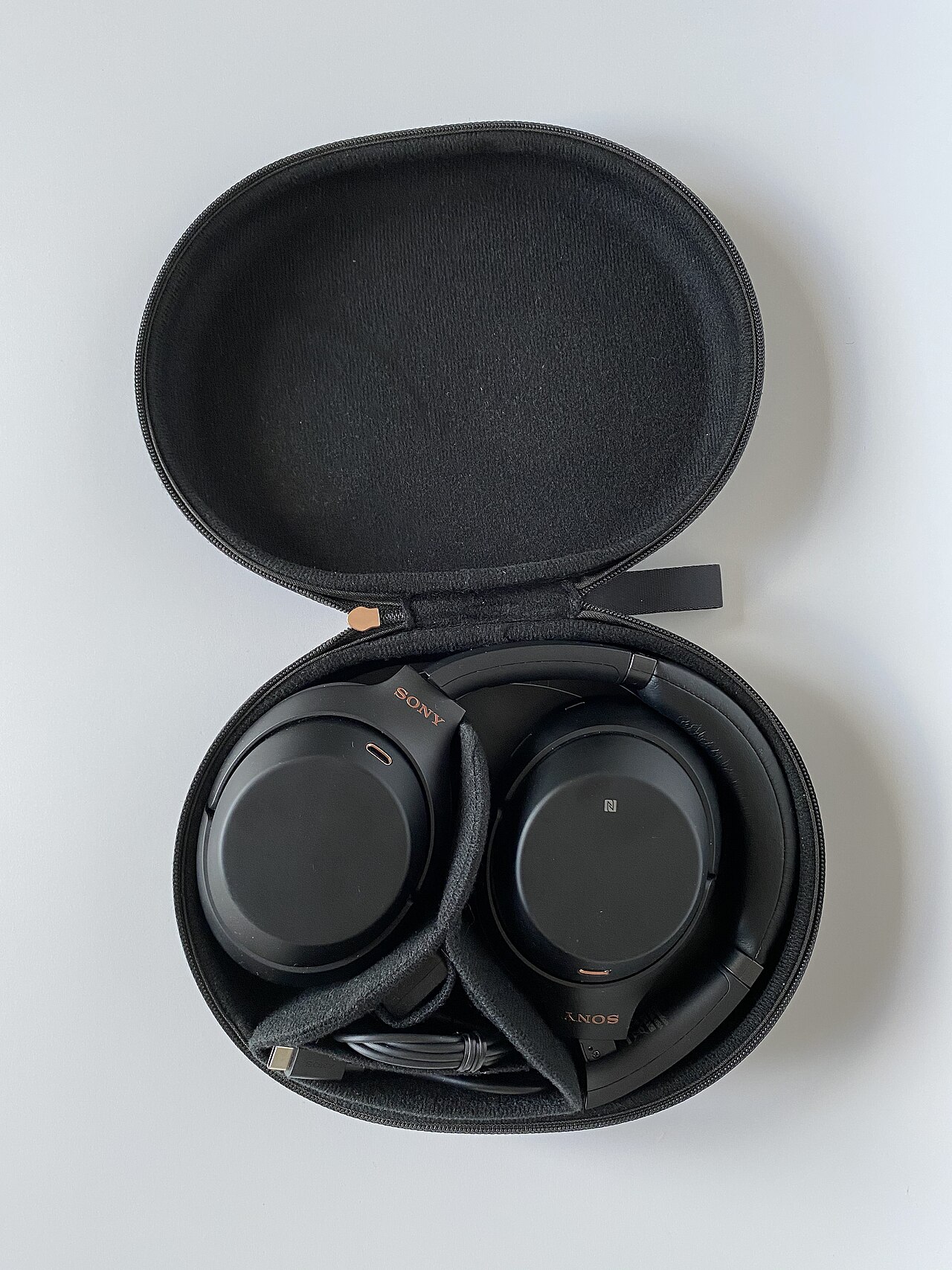
Image Credits: Wikimedia Commons
Why engine drone vanishes but voices survive
ANC is a specialist, not a generalist. It excels at constant, low-frequency sounds: airplane engines, train rumble, air-conditioner hum, office HVAC. These waves are long, slow, and predictable. That gives the DSP time to build an accurate mirror wave.
It struggles with sudden, high-frequency, or unpredictable sounds: voices, claps, alarms, slamming doors. A human voice changes shape dozens of times per second. The wavelengths involved are short. A tiny timing error turns cancellation into no cancellation at all. Combined with passive isolation, good ANC headphones can cut overall noise by roughly 30 to 40 dB. That feels dramatically quieter. But perfect silence is not physically achievable with current technology.
One persistent worry deserves a clear answer: ANC is not harmful. It does not emit radiation or pump pressure into your ears. It simply lowers the ambient sound reaching your eardrum. That lets you listen at safer volumes, and that protects your hearing over time.
Image Credits: Wikimedia Commons
Frequently asked questions
Can noise cancelling headphones cancel 100% of noise?
No. Even the best systems leave some sound behind, especially sudden or high-pitched noise. About 30 to 40 dB of reduction is the practical ceiling for current technology.
Does ANC work without music playing?
Yes. The microphones and processor run independently of your audio. That is why the cabin hush appears the moment you switch ANC on, music or not.
Why does wind make my ANC earbuds hiss?
Feedforward microphones sit outside the earbud, where wind hits them directly. The processor tries to cancel the turbulence and sometimes amplifies the chaos instead. Most apps let you lower ANC or switch modes in wind.
Is active noise cancellation safe for hearing?
ANC itself is safe. By lowering background noise, it usually lets you turn the volume down. That is better for your ears than cranking music to drown out a jet engine.
The bottom line
Noise cancelling headphones are tiny physics labs strapped to your head. Microphones sample the world. A chip builds a mirror-image wave in under a millisecond. The two waves cancel at your eardrum. It works best on the steady drone of engines and worst on the chaos of conversation. Knowing that helps you pick the right pair for the noise you actually live with.
---
Rive News's research desk covers everyday science with cited studies and no hype.
Latest in science
- Why Do We Yawn, and Why Is Yawning So Contagious?
- Why Metal Feels Colder Than Wood at the Same Temperature
- How Passkeys Work, in Plain English
- Why Your Phone Gets Hot While Charging
Subscribe for one clear science explainer in your inbox every morning.
Rive News follows a corrections policy: factual errors are fixed promptly and noted. This article is for general information only.
Related stories

Why diamond is hard and graphite is soft when both are carbon
Diamond and graphite are both pure carbon, yet diamond is 10 on the Mohs scale and graphite is 1 to 2. The difference is not the atoms; it i

Why Hot Water Can Freeze Faster Than Cold: The Mpemba Effect Explained
Hot water can freeze faster than cold under specific conditions. The Mpemba effect, named for a 1963 schoolboy experiment, still divides phy

How Magnets Work at the Atomic Level: Spins, Domains, and Iron
Magnetism comes from electrons: their spin and orbits make each atom a tiny magnet. In iron, quantum forces align these atomic magnets into