
Why stars appear only at night, not daytime
By Rive News / Research desk | Rive News / Published October 29, 2026 at 9:00 AM PKT
Key takeaways
- Stars shine through the day too; they do not switch off at sunrise or appear at sunset.
- Sunlight scattered by air molecules turns the daytime sky into a bright blue screen.
- That bright screen overwhelms faint starlight, so only the Sun, Moon, and brightest planets show by day.
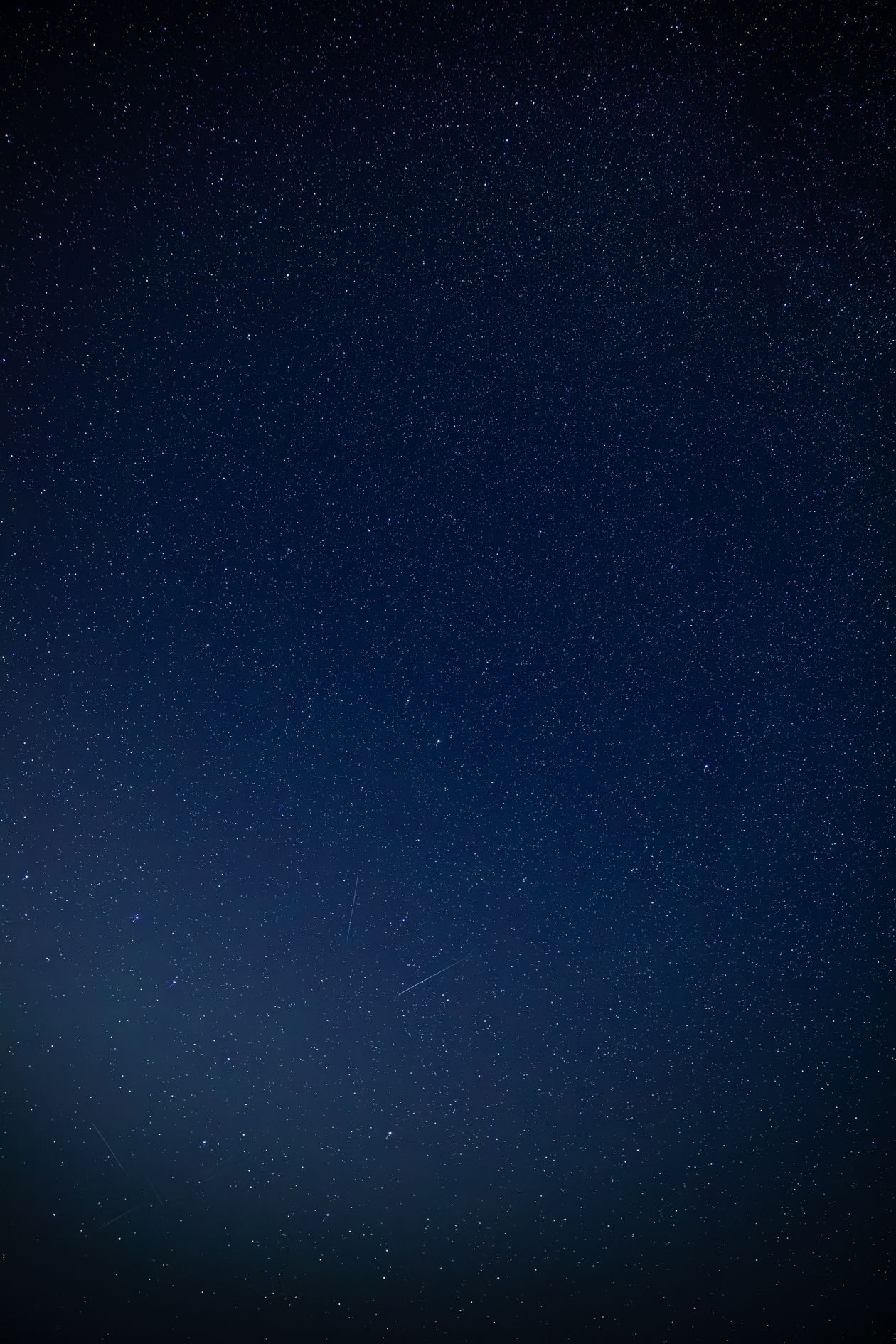
[Countless stars fill a dark night sky.] Photograph: Pexels
Image Credits: Pexels
The stars do not come out at night. They were there all along, shining through the afternoon, hidden behind a glare so strong that human eyes cannot pick them out.
Sunset does not switch them on. It switches the glare off.
The glare has two parts: the Sun itself, and the sky it lights up. This article explains how scattered sunlight builds a bright blue screen across the day sky, how large the brightness gap really is, why a few bright objects beat the glare, and what happens during the brief darkness of a solar eclipse.
The stars never leave
A star is a distant sun, pouring out light in all directions, day and night. Its light travels for years to reach Earth, and it arrives just as steadily at noon as at midnight. Nothing about sunrise changes the star.
What changes is the background. At night, the background is the near-black of space, so even faint points of light stand out. By day, the background is a glowing sky, and faint points vanish into it.
The comparison is like a candle beside a floodlight. The candle still burns, but your eye cannot separate its flame from the floodlight's wash. Turn the floodlight off and the candle reappears.
Nobody lit the candle in the meantime. It was burning the whole time.
Astronauts and high-altitude pilots see the proof directly. Above most of the atmosphere, the daytime sky looks black, and stars shine beside the Sun.
The stars were never a night-only phenomenon. Our thick lower atmosphere is what makes them look that way.
How the sky becomes a bright screen
Sunlight enters Earth's atmosphere and collides with nitrogen and oxygen molecules. Those tiny molecules scatter the light in all directions, a process called Rayleigh scattering. Shorter wavelengths scatter most strongly, which is why the scattered light looks blue.
The result is that the whole sky glows. Instead of a black backdrop with a single bright Sun, daytime observers face a luminous blue dome. Every patch of that dome sends scattered sunlight into the eye.
Starlight must compete with that dome. Most stars lose badly.
Their light is faint because they are trillions of kilometres away, while the Sun sits about 150 million kilometres from Earth. Distance dilutes starlight to a whisper, and the daytime sky shouts over it.
Astronomers measure brightness on the magnitude scale, where lower numbers mean brighter objects. The Sun scores about minus 26.7.
The brightest stars score around minus 1 to minus 4. The gap spans many orders of magnitude, which is why no ordinary star survives the daytime background.
Why twilight brings stars back in stages
Watch a clear sunset and the stars return in order of brightness. The brightest stars and planets appear first, while the sky is still blue-grey.
Fainter stars follow as darkness deepens. The faintest ones wait for full night.
That order is a direct test of the brightness explanation. If stars switched on at night, they would all arrive together. Instead, they emerge one brightness class at a time, exactly as a fading background would reveal them.
Astronomers divide twilight into stages. Civil twilight ends when the Sun sits about 6 degrees below the horizon.
At that point, the sky is dark enough for the brightest stars, but reading outdoors without artificial light gets hard. Astronomical darkness, when the Sun is 18 degrees down, is when the faintest stars finally show.
City lights add a second, human-made background. Streetlights scatter off haze and dust, creating a glow that hides faint stars even at midnight.
That is why a rural sky shows thousands of stars while a city sky shows dozens. The mechanism is the same as daylight, only weaker.
The bright exceptions that beat the glare
A few objects are bright enough to pierce the daytime sky. Venus is the classic example.
Near its brightest, it can appear as a small white point in a blue daytime sky, if you know where to look. Jupiter sometimes manages the same feat.
The Moon is the easiest daytime object after the Sun. It shines by reflected sunlight, and it sits close to Earth, so its light is strong.
Many people are surprised to see the Moon high in a morning sky. It was there all night too, but daylight makes it look out of place.
These exceptions confirm the rule rather than breaking it. They are visible by day precisely because they are bright enough, or close enough, to beat the scattered background. Ordinary stars are not.
Telescopes can find more daytime stars, because they gather more light and narrow the field of view, cutting down the background. Even so, astronomers prefer night for a reason. The daytime background never fully goes away while the Sun is up.
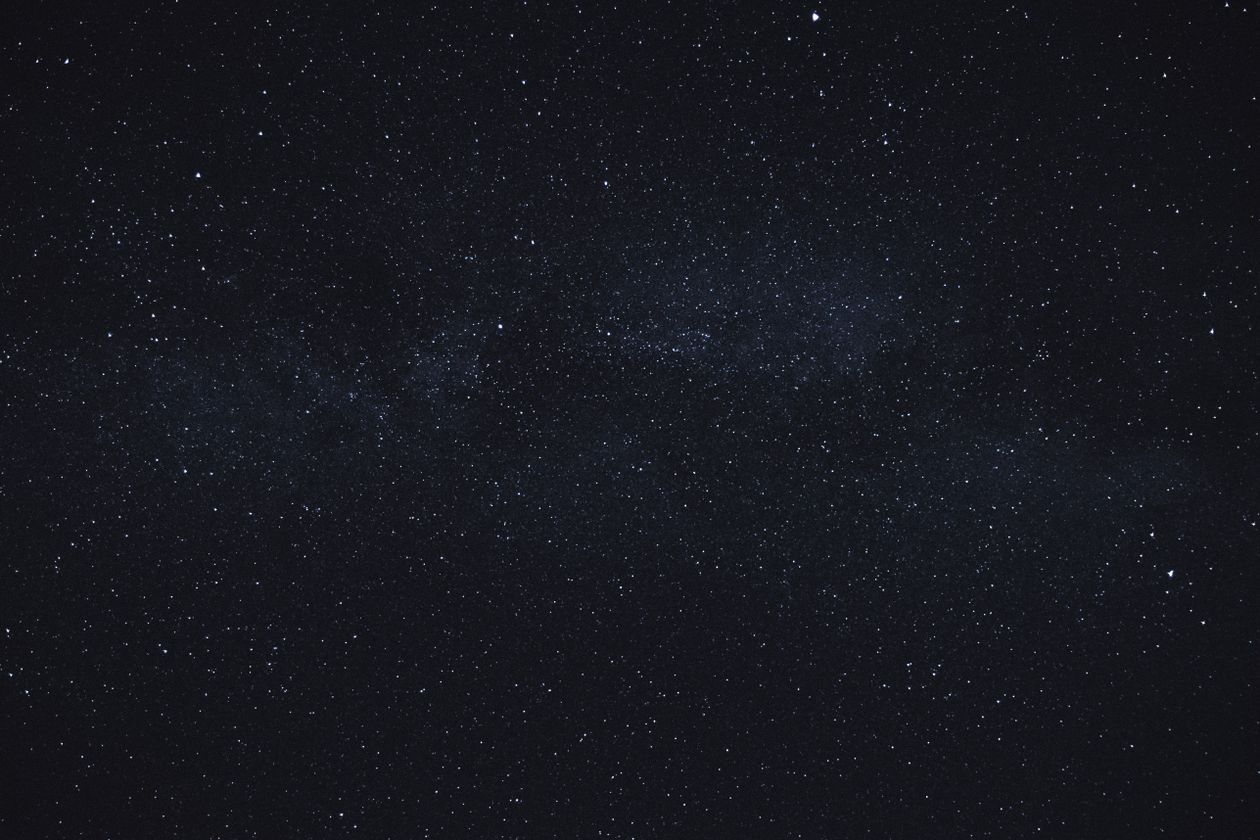
[A deep night sky packed with faint stars.] Photograph: Pexels
Image Credits: Pexels
The eclipse exception
A total solar eclipse offers the most dramatic proof that stars shine by day. When the Moon slides directly in front of the Sun, it blocks the source of the scattered daylight. Within seconds, the sky darkens to a deep twilight blue.
Bright stars and planets pop into view in the middle of the day. Observers during totality have reported seeing Sirius, the brightest star in the night sky, along with Venus and Jupiter.
The stars did not rush into position for the eclipse. The Moon simply turned the floodlight off for a few minutes.
The effect is local and brief. Outside the narrow path of totality, the sky stays bright, because scattered sunlight still floods in from surrounding areas. Only inside the Moon's shadow does darkness fall far enough for stars to show.
High-altitude balloons and aircraft offer a gentler version of the same test. Climb above most of the scattering air and the sky darkens, even at noon. The higher you go, the more stars appear, because less air sits between you and space to scatter sunlight.
What this means for stargazers
If you want to see faint stars, darkness is the tool, not magnification. A dark site matters more than a large telescope for most beginners. Let your eyes adapt for 20 minutes, avoid phone screens, and the Milky Way's faint band may appear where the city sky showed nothing.
The Moon's phase matters too. A full Moon brightens the night sky with its own scattered light, washing out faint stars much like a weaker version of daylight. The darkest nights fall around the new Moon, when the Moon is absent from the night sky.
That is also why astronomers schedule faint-object observations around the new Moon. They are not being fussy. They are dodging the same background problem that hides stars by day, scaled down to moonlight.
Frequently asked questions
Do stars disappear during the day?
No. Stars shine continuously. Daylight hides them because scattered sunlight makes the sky far brighter than the faint points of starlight.
Why is the sky blue instead of black during the day?
Air molecules scatter sunlight, most strongly at short blue wavelengths. That scattered light fills the whole sky, turning it into a bright blue screen.
Can any star be seen in daytime?
With the naked eye, essentially no ordinary star beats the daytime background. Venus, Jupiter, and the Moon can, because they are far brighter or closer than the stars.
Why do stars appear during a solar eclipse?
The Moon blocks the Sun, cutting off the scattered daylight. With the background darkened, bright stars and planets become visible even at midday.
The bottom line
We see stars only at night because night removes the competition. By day, the Sun's light scatters through the atmosphere into a bright blue dome, and that dome drowns out the faint light of distant stars.
The stars never left and never switched off. They waited behind the glare, and darkness lets them through.
Next time someone says the stars come out at night, you can correct them gently. The stars were out all day. Night just turned the sky dark enough to notice.
Tags: stars, daylight, atmosphere, astronomy
Rive News's research desk covers everyday science questions with sourced explainers, not lab reports.
Related
- Why the sky is blue but space is black
- Why the sky turns orange at sunrise and sunset
- What causes the northern lights to appear
Subscribe for one plain-English science explainer each morning.
Rive News publishes sourced explainers; claims are checked against public sources before publication.
Related stories

Why diamond is hard and graphite is soft when both are carbon
Diamond and graphite are both pure carbon, yet diamond is 10 on the Mohs scale and graphite is 1 to 2. The difference is not the atoms;

Why Hot Water Can Freeze Faster Than Cold: The Mpemba Effect Explained
Hot water can freeze faster than cold under specific conditions. The Mpemba effect, named for a 1963 schoolboy experiment, still divides

How Magnets Work at the Atomic Level: Spins, Domains, and Iron
Magnetism comes from electrons: their spin and orbits make each atom a tiny magnet. In iron, quantum forces align these atomic magnets into