
What is the speed of light and why it matters
By Rive News / Research desk | Rive News / Published October 24, 2026 at 9:00 AM PKT
Key takeaways
- Light in a vacuum travels at exactly 299,792,458 meters per second, about 186,282 miles per second.
- Nothing with mass can reach or beat it: approaching c demands ever more energy, and reaching it would take infinite energy.
- The speed limit protects causality itself; it also keeps GPS accurate and shapes how we see the universe.
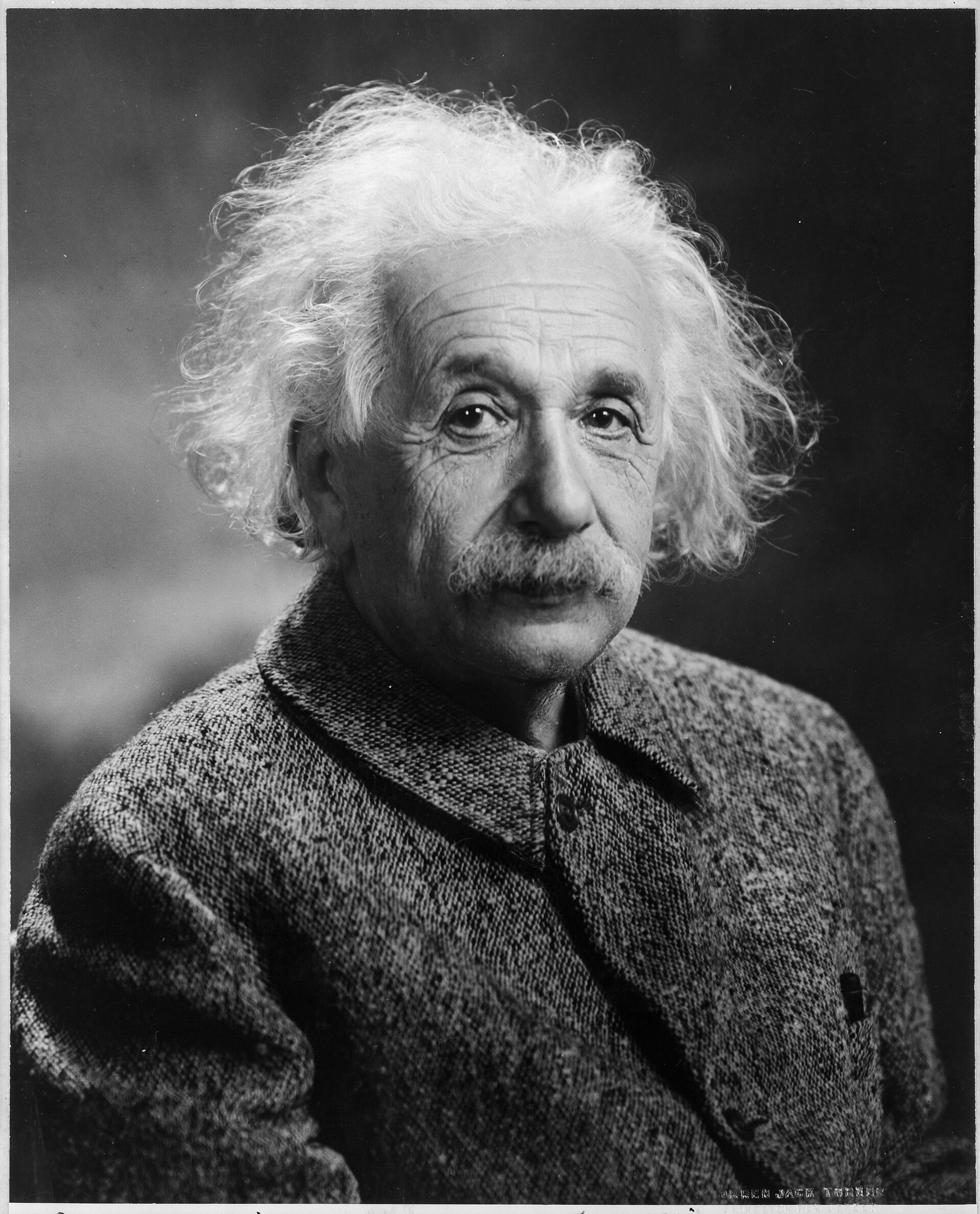
[Albert Einstein, whose 1905 theory of special relativity made the speed of light a constant of nature. Photograph: Library of Congress collection]
Image Credits: Wikimedia Commons
The speed of light in a vacuum is exactly 299,792,458 meters per second. It is not just a fast number. It is the universe's speed limit, woven into space and time themselves, and nothing carrying mass or information can exceed it.
This article explains what the speed of light is, how scientists first measured it, why Einstein made it the foundation of relativity, why nothing can go faster, and why it matters for technology like GPS.
What the speed actually is
The figure 299,792,458 meters per second is exact, not approximate. Since 1983, the meter itself has been defined by it: one meter is the distance light travels in a vacuum in 1/299,792,458 of a second. We did not measure the speed and then fix it; we fixed it, and the meter follows.
In more familiar units, that is about 186,282 miles per second, or roughly 1.08 billion kilometers per hour. Light could circle the Earth about seven and a half times in a single second. Sunlight, which feels instant, actually left the Sun about 8 minutes and 20 seconds before it reaches your eyes.
Light slows down in materials like water and glass, but the vacuum value is the one that matters for physics. It is denoted c, and it appears in equations across electromagnetism, relativity, and quantum theory. The Indian Express science review calls it "a constant that underpins space, time, and causality itself," which is a fair summary of its status.
How we learned light has a speed at all
For most of history, light was assumed to be instantaneous. In the early 1600s, Galileo tried to measure it with shuttered lanterns and an assistant on a distant hill, per the Indian Express account. The delay was imperceptible, so he concluded only that light must be extraordinarily fast.
The first proof that light's speed is finite came in 1676. Danish astronomer Ole Rømer was timing the eclipses of Io, one of Jupiter's moons. He noticed the eclipses ran late when Earth was moving away from Jupiter and early when Earth was moving closer.
Rømer reasoned that the moons were not changing. The travel time of their light across the changing Earth-Jupiter distance was. His estimate, about 220,000 kilometers per second, was rough, but it was revolutionary: light had a measurable velocity.
Two centuries later, French physicist Hippolyte Fizeau made the first precise terrestrial measurement using a toothed cogwheel and a mirror.
Then the Michelson-Morley experiment of 1887 tried to detect Earth's motion through the supposed ether by comparing light speeds in different directions. It found nothing.
No matter the direction, no matter the season, light arrived at the same speed. That null result was the crack that broke classical physics open.
Why Einstein made it a law of nature
Einstein did not explain why the speed of light is constant. He accepted it as a fundamental property of the universe and built special relativity around it, as the Einstein-Online reference puts it. The theory rests on two postulates: the laws of physics are the same for all observers in uniform motion, and the vacuum speed of light is the same for every inertial observer, regardless of how the source or observer moves.
The consequences are strange because they follow from that one stubborn fact. If light's speed cannot change, then space and time must flex instead. Moving clocks tick slower (time dilation), moving objects shorten (length contraction), and mass and energy turn out to be two forms of the same thing, expressed in E=mc², where c is the speed of light.
The Indian Express recounts Einstein's own lifelong fascination: "For the rest of my life, I want to reflect on what light is." He spent the rest of his career doing exactly that.
Why nothing can go faster
Here is the barrier, in plain terms. As an object with mass accelerates toward the speed of light, it requires more and more energy to gain each extra bit of speed. Reaching c itself would require infinite energy.
Since infinite energy does not exist, no massive object can ever reach it, let alone pass it.
The limit also guards causality, the principle that causes must come before effects. The Science Times review explains the logic: if information could travel faster than light, signals could arrive before they were sent, producing paradoxes. The speed limit is what keeps the universe's cause-and-effect ordering intact.
What about the apparent exceptions? Distant galaxies recede from us faster than light, but that is space itself expanding, not objects moving through space.
Quantum entanglement shows instant correlations between particles, but those correlations cannot carry a message. No information travels faster than light.
The Einstein-Online explainer states the local rule plainly: no object, no matter, and no information can overtake light.
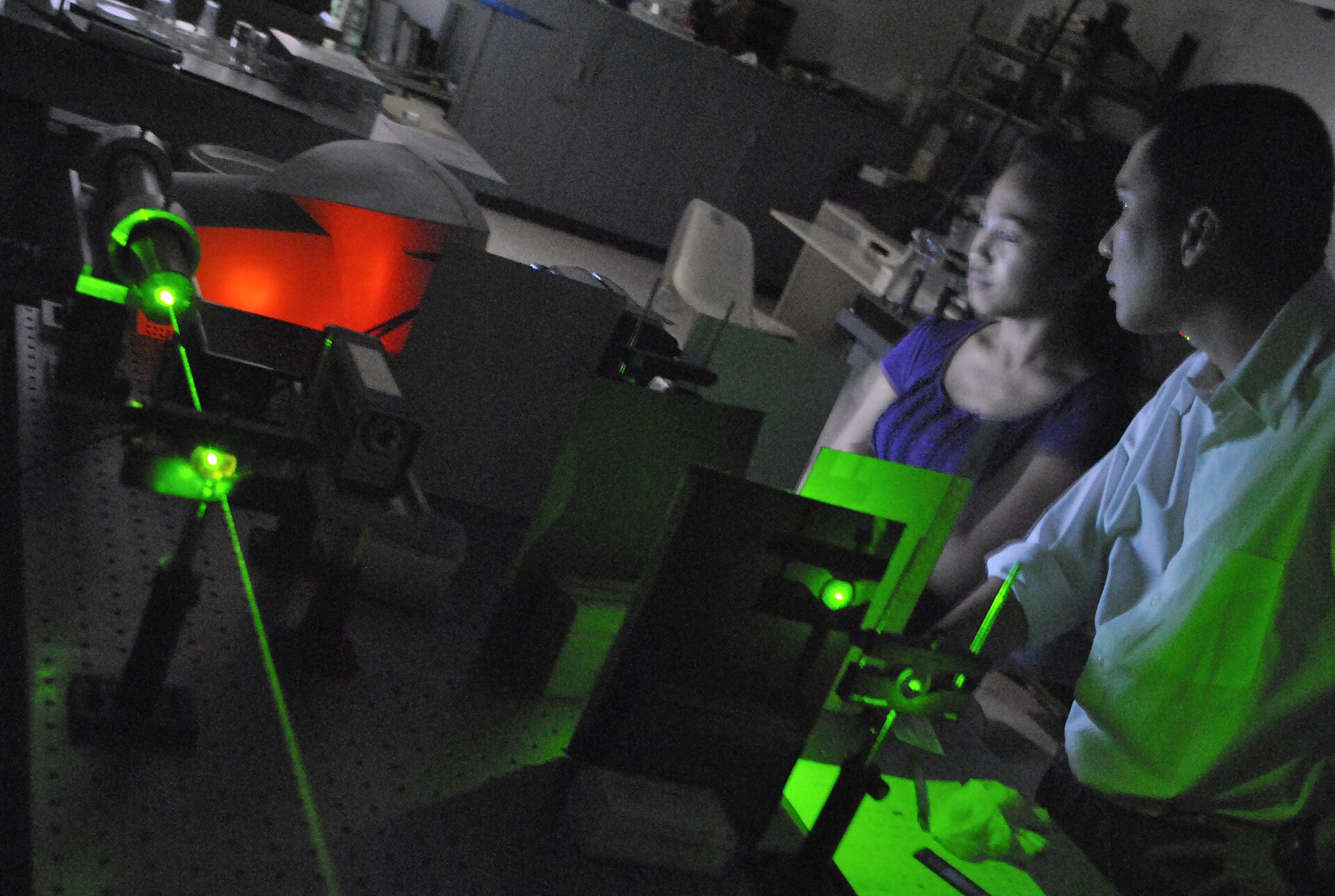
[A laser experiment in a photonics laboratory. Light's speed is the same for every observer, no matter how the observer moves. Photograph: Ateneo de Manila University]
Image Credits: Wikimedia Commons
Why it matters: GPS runs on relativity
The speed of light is not just a cosmic fact; it is an engineering constraint. GPS satellites carry atomic clocks and locate your phone by timing how long their radio signals take to arrive. Light-speed timing means nanosecond errors become meter-scale position errors.
Relativity shifts those satellite clocks every day. Orbiting at about 14,000 km/h, their clocks run about 7 microseconds per day slower from special relativity, according to the Perimeter Institute's explainer.
Weaker gravity at altitude makes them run about 45 microseconds per day faster from general relativity. The net gain is roughly 38 microseconds per day.
Without correction, that drift would pile up position errors of about 10 kilometers per day, making GPS useless within days. Engineers handle it by tuning each satellite's clock to run slightly slow on the ground before launch, canceling the relativistic gain. Your phone's map is, in a real sense, a daily working test of Einstein's theories.
The speed limit shapes astronomy too. Because light takes time to travel, looking far away means looking into the past.
The galaxies in deep-field images are seen as they were billions of years ago. Every telescope is a time machine, and c sets the conversion rate.
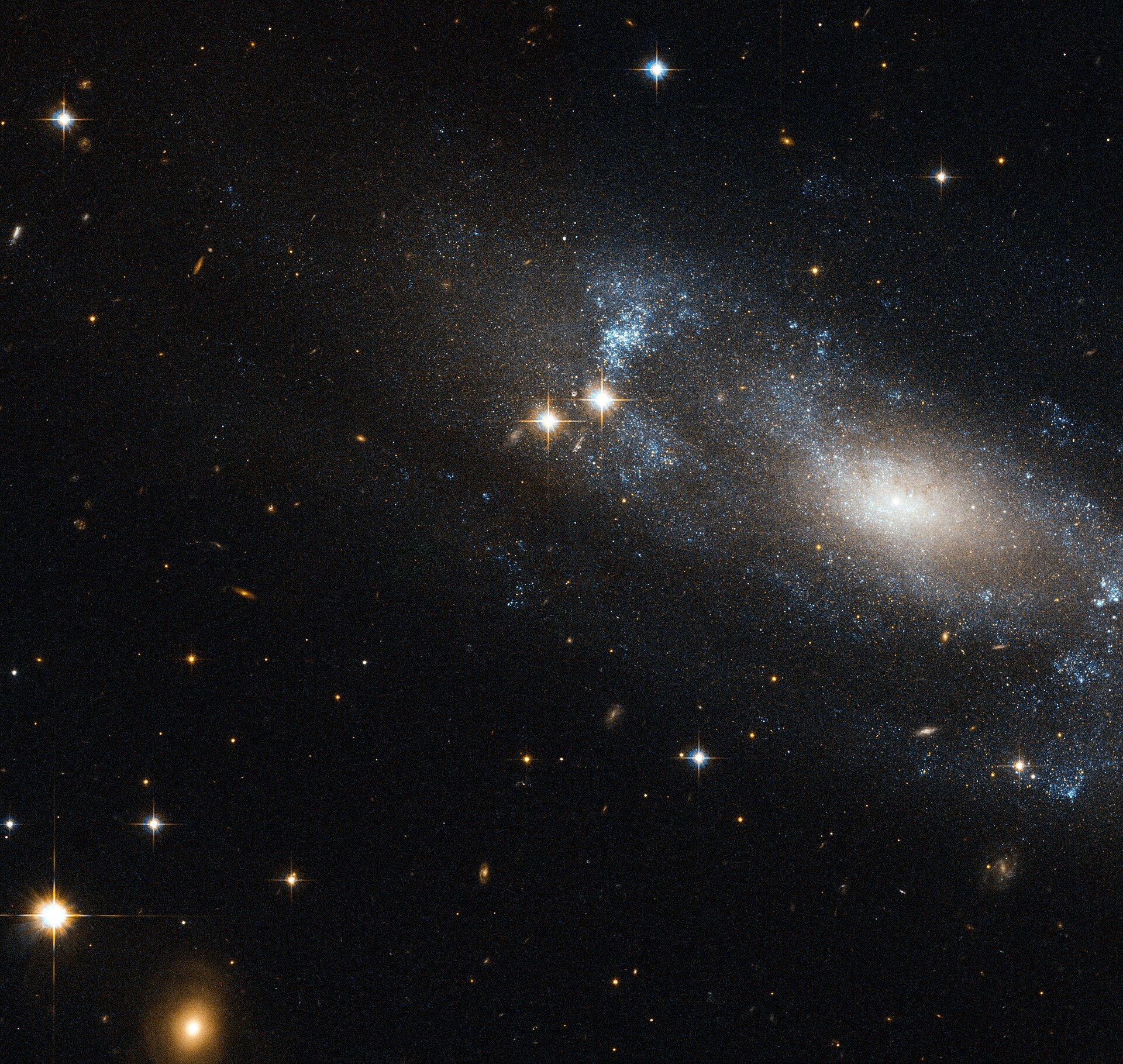
[A loose spiral galaxy. Even at light speed, crossing one would take tens of thousands of years. Photograph: unknown photographer]
Image Credits: Wikimedia Commons
FAQ
Who first measured the speed of light accurately?
Ole Rømer made the first finite measurement in 1676 from Jupiter's moon Io, estimating about 220,000 km/s. Hippolyte Fizeau made the first precise Earth-based measurement in 1849. The modern exact value was fixed by definition in 1983.
Does light slow down in water?
Yes. The 299,792,458 m/s figure applies only to vacuum. In water, glass, or air, light travels slower because it interacts with the material.
Physics puzzles like why hot water sometimes freezes faster than cold show how counterintuitive everyday physics can get.
If nothing beats light, how does the universe expand faster than light?
Expansion is not motion through space. Space itself stretches, carrying galaxies apart, and relativity's speed limit applies to movement within space, not to the stretching of space. Nothing in that process carries information faster than c.
Why is it called c?
The symbol comes from the Latin celeritas, meaning swiftness. It stuck because the constant appears in Maxwell's equations of electromagnetism before Einstein, as the speed of electromagnetic waves, which light turned out to be.
The bottom line
The speed of light is 299,792,458 meters per second, fixed by definition and constant for every observer. Nothing with mass can reach it, because the energy cost climbs to infinity, and nothing carrying information can beat it, because causality itself depends on the limit.
It matters because the number is load-bearing: it defines the meter, corrects your GPS, and turns every telescope into a look back in time. The universe has a speed limit, and everything from satellites to galaxies obeys it.
Tags: physics, speed of light, relativity, Einstein
Rive News's research desk covers physics explainers, space science, and the history of measurement.
Related
- What Is Gravity in Simple Words
- Why does the earth have seasons? The 23.5-degree tilt
- Why Does Hot Water Sometimes Freeze Faster Than Cold Water
Get one science explainer in your inbox every week. Subscribe to the Rive News newsletter.
This article follows the Rive News research standards: named sources, verifiable numbers, no invented quotes. Corrections: [email protected].
Related stories
Why diamond is hard and graphite is soft when both are carbon
Diamond and graphite are both pure carbon, yet diamond is 10 on the Mohs scale and graphite is 1 to 2. The difference is not the atoms;

Why Hot Water Can Freeze Faster Than Cold: The Mpemba Effect Explained
Hot water can freeze faster than cold under specific conditions. The Mpemba effect, named for a 1963 schoolboy experiment, still divides
How Magnets Work at the Atomic Level: Spins, Domains, and Iron
Magnetism comes from electrons: their spin and orbits make each atom a tiny magnet. In iron, quantum forces align these atomic magnets into