
How do trees survive winter without leaves?
Key takeaways
- Dropping leaves is a controlled shutdown: the tree reabsorbs chlorophyll and nutrients, seals each leaf stem with an abscission layer, and drains its pipes before freezing.
- Trees make their own antifreeze by converting starches into sugars that lower the freezing point inside living cells.
- Ice is forced to form between cells, not inside them, so freezing water squeezes cells instead of bursting them.
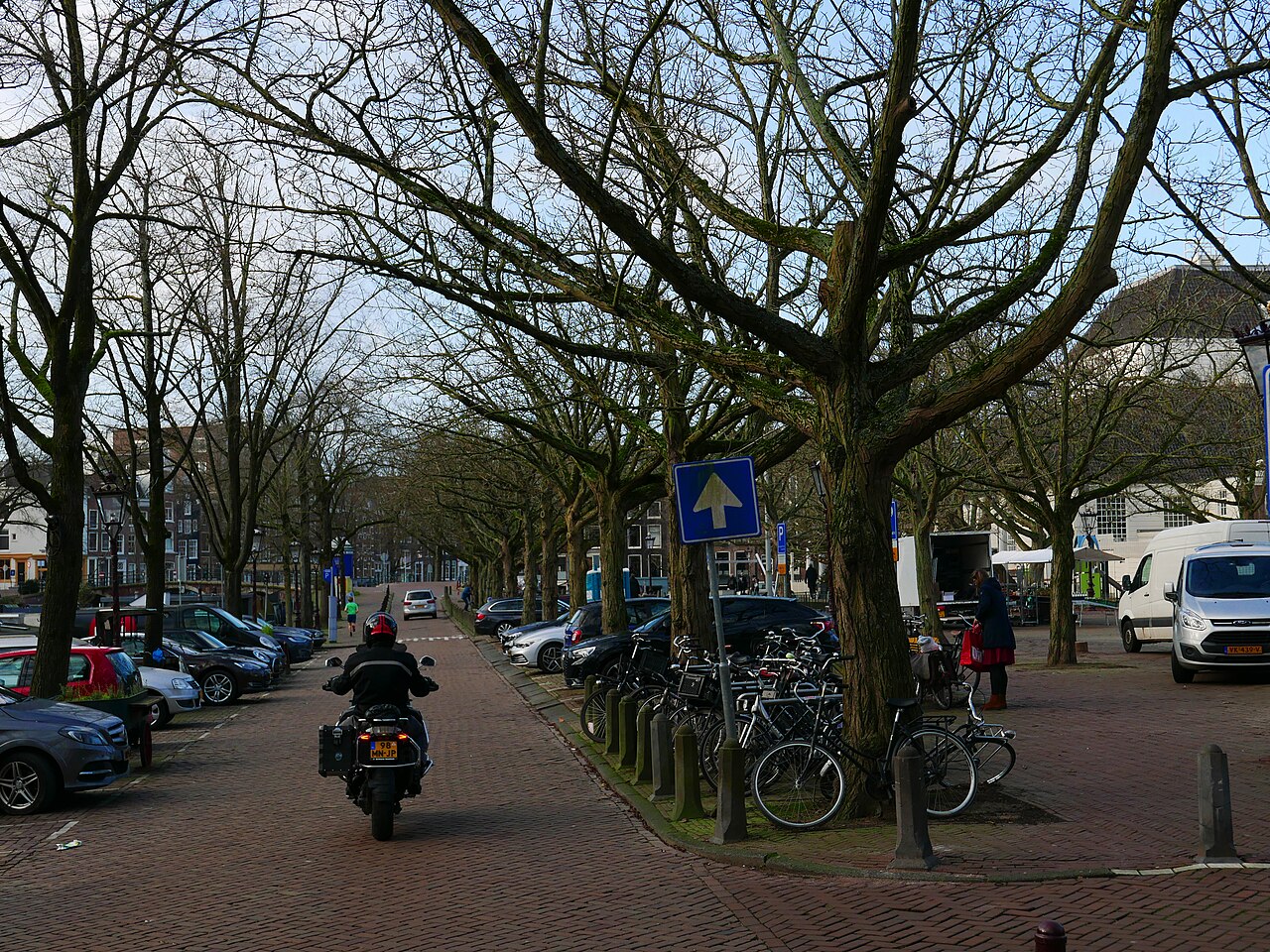
A bare tree in January looks dead, but it is running a clever cold-survival program. Leaves are the most vulnerable part of the tree in winter, and shedding them is a deliberate act of self-preservation.
This article explains why trees drop their leaves in the first place, how they manufacture antifreeze inside their cells, how they control where ice forms, what evergreens do differently, and how dormancy finally ends in spring.
Why trees drop their leaves at all
Leaves are a liability in freezing weather. Each leaf is mostly water, and water expands when it freezes. If ice crystals formed inside leaf cells, the cell walls would rupture and the leaves would die anyway.
There is also a plumbing problem. During the growing season, evaporation from tiny pores on leaf undersides pulls water up through tiny vessels in the wood, like suction through a straw. If those pipes stayed full in winter, freezing water would crack them and block flow with air bubbles.
So deciduous trees, maples, oaks, and their relatives, perform an orderly shutdown each fall. Hormonal changes triggered by shorter days stop growth, break down chlorophyll, and pull its nutrients back into the trunk and roots for storage. The yellow and red fall colors are simply the pigments left visible once the green chlorophyll is gone.
When the shutdown finishes, the tree seals each leaf stem at a layer of special cells called the abscission layer. The leaf drops, and the seal keeps pathogens and cold out of the twig.
Turning starch into antifreeze
Once the leaves are gone, the tree protects its living tissue. According to the Friends of Iroquois National Wildlife Refuge, cells in the trunk and branches push some of their water out into the surrounding wood while taking in starches and sugars.
This creates an antifreeze effect inside the cells with an insulating jacket of ice outside them. As more water leaves the cells, the remaining sap becomes thick and syrupy with sugars, which lowers its freezing point below the surrounding temperature.
Researchers at Purdue University's Department of Forestry and Natural Resources describe the cell mechanics: trees shift to more flexible cell membranes, convert stored starch into soluble sugars, and let the cell contents thicken. In extreme cold, the liquid inside cells becomes so thick it avoids full crystallization, a glass-like state scientists call vitrification.
Trees also produce antifreeze proteins that help stop ice crystals from forming at all. Between the sugars and the proteins, living cells can survive temperatures far below the freezing point of plain water.
Controlling where ice forms
Trees cannot stop ice entirely, so they control where it goes. Ice needs a starting point, a speck of dust or a molecule it can form around. Trees produce proteins that act as ice nucleators and send them into the spaces between cells.
When ice begins forming around those nucleators, it draws liquid water out of the neighboring cells. The cells shrink slightly instead of bursting, and the ice stays in the harmless spaces between them.
Insulation helps too. According to Purdue researchers, dead cells make up about 99 percent of a mature tree's woody volume. That dead wood acts like a blanket around the thin living layer beneath the bark, buffering temperature swings. Bark itself resists wind and cold, though a bare trunk in deep winter is still far colder than comfortable for a human hand.
What evergreens do differently
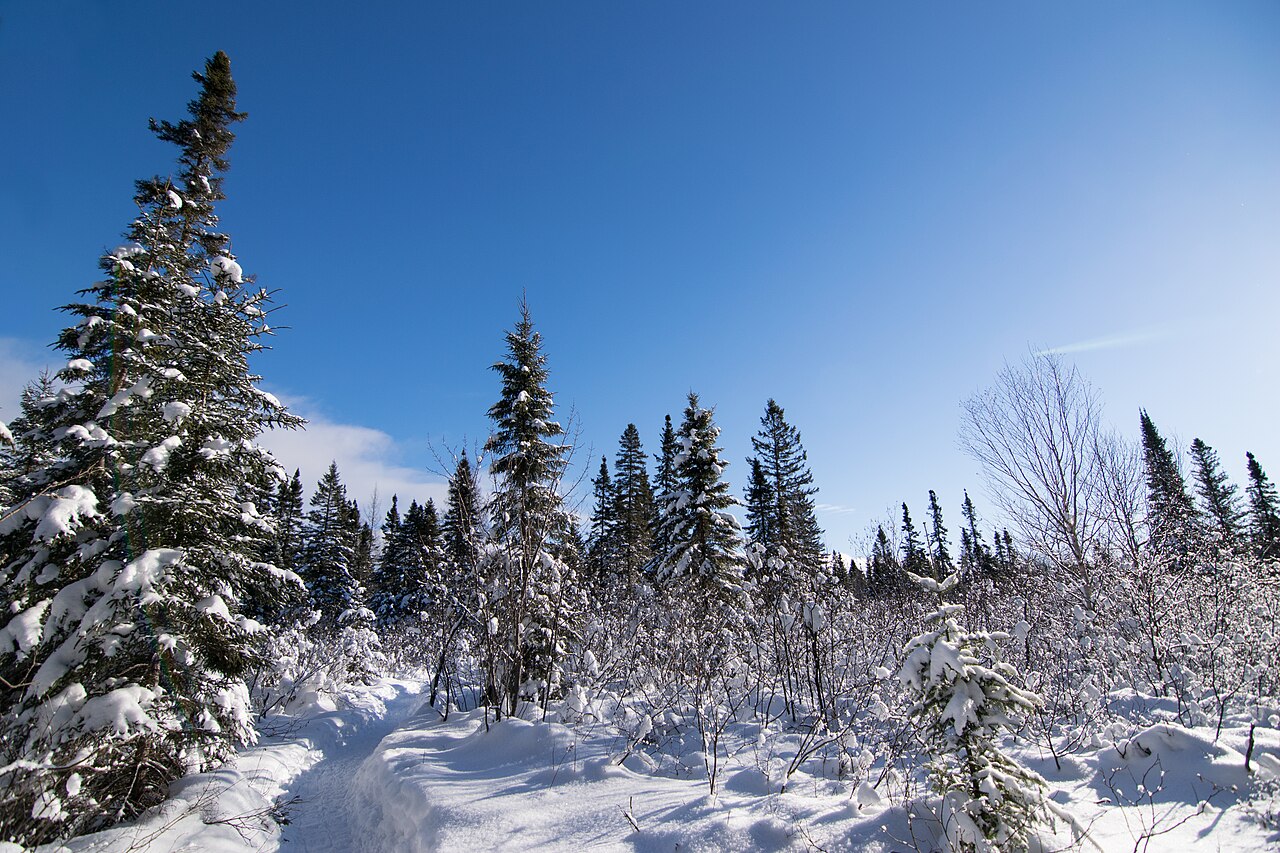
Pines, spruces, and firs keep their needles all winter, and they have their own toolkit. Their needles carry a thick waxy coating that locks in moisture and resists freezing, with far fewer pores than a broad leaf.
The small, narrow shape of needles minimizes surface area exposed to wind and cold. It also sheds snow instead of collecting it, so branches are less likely to snap under heavy loads.
Inside, evergreens run the same antifreeze chemistry: natural sugars and proteins that lower the freezing point of cell fluids. Their flexible branches bend under snow weight rather than breaking. And as long as the ground is not completely frozen, their roots can still absorb small amounts of water.
The two stages of winter sleep
Dormancy is not one long nap. Trees first enter endodormancy, a deep internally controlled sleep that will not break even if a warm spell arrives. During this phase, the tree must accumulate a set number of chill hours, temperatures just above freezing, before it will consider waking.
This is an evolved safety measure. A tree that budded out during a January thaw would lose its tender new growth to the next freeze. Chill hours act as a calendar: only after enough cold has passed does the tree trust that winter is really over.
Then comes ecodormancy, a standby mode where the tree waits for outside conditions to allow sap to rise. The transition out of dormancy is called deacclimation. If a hard freeze hits during deacclimation, damage can be severe, which is why late spring frosts are so destructive to fruit crops.
Waking up in spring
Rising temperatures reverse the whole process. Cells reabsorb water, the syrupy sap thins, ice between cells melts, and metabolism ramps up. Buds swell, protected all winter by tough bud scales, and new leaves unfold.
Those first leaves run on the nutrients the tree stored in its roots and trunk the previous fall. That is why the fall shutdown matters so much: the tree that reabsorbed its chlorophyll properly has more reserves to spend in spring.
FAQ
Do trees feel cold?
Not the way animals do. Trees have no nervous system, so there is no sensation of cold. What they experience is cellular stress from freezing, which they manage through chemistry and structure.
Can a winter be too cold for trees?
Yes. Every species has a cold-hardiness limit. Arctic and boreal species survive temperatures below -40°F, but a warm-climate tree planted too far north will die when its cells cannot concentrate enough antifreeze to prevent internal ice.
Why do some trees keep their leaves in winter?
Evergreens invest in tough, waxy needles built to survive freezing instead of dropping and regrowing foliage. The strategy pays off in cold, nutrient-poor regions where regrowing a full canopy each year would cost too much energy.
Do trees need water in winter?
Some, from their roots, when the soil is not frozen. But most of the tree is simply not transpiring without leaves, so its water needs drop to almost nothing.
The bottom line
A leafless tree is not passive. It drained its pipes, sealed its leaf stems, stocked its cells with sugar antifreeze, and put its most vulnerable tissue into a chill-hour-locked sleep. Evergreens do the same job with wax-coated needles and flexible branches.
The next time you walk past a bare tree in January, remember that it is not waiting out winter. It is surviving it on purpose, chemistry and all.
If you enjoy seasonal science, read why the sky turns orange at sunrise and sunset or why the moon is sometimes visible during the day. For the garden side of the story, see how companion planting actually works.
Topics: trees, winter dormancy, plant biology, nature, seasons
Rive News is a research desk covering practical home and lifestyle topics. Articles are written from publicly verifiable sources.
Latest in Science
- Why is the sky orange at sunrise and sunset?
- Why is the moon sometimes visible during the day?
- What is the difference between a theory and a hypothesis?
- Why do we have leap years every four years?
Subscribe for one practical explainer every morning.
Corrections: spotted an error? We fix verified mistakes within 24 hours of notification.
Related stories

Why diamond is hard and graphite is soft when both are carbon
Diamond and graphite are both pure carbon, yet diamond is 10 on the Mohs scale and graphite is 1 to 2. The difference is not the atoms;

Why Hot Water Can Freeze Faster Than Cold: The Mpemba Effect Explained
Hot water can freeze faster than cold under specific conditions. The Mpemba effect, named for a 1963 schoolboy experiment, still divides

How Magnets Work at the Atomic Level: Spins, Domains, and Iron
Magnetism comes from electrons: their spin and orbits make each atom a tiny magnet. In iron, quantum forces align these atomic magnets into