
Why does time feel faster as you get older?
Key takeaways
- The feeling is real and measured: studies across several countries find most adults sense the years accelerating with age.
- Your brain judges past time by how many new memories it stored, and adult life produces fewer of them than childhood.
- New experiences, new skills, and unfamiliar places appear to stretch time back out by giving memory more to hold.

The feeling that the years accelerate with age is one of the most widely reported experiences in psychology. Photograph: Gianluca Miscione/Wikimedia Commons
Image Credits: Wikimedia Commons
Ask a room of adults whether the years feel faster than they used to, and most hands go up. It is one of the most common complaints about aging, right next to the knees.
Psychologists have measured it, and the effect holds up. But the reason it happens is still debated, with several theories competing to explain the same familiar sensation.
This article explains what the studies found, how your brain keeps two different clocks, the holiday paradox, the proportion idea, why routine speeds everything up, whether you can slow time down, and the bottom line.
The feeling is real and measured
This is not just nostalgia talking. A landmark 2005 study by Marc Wittmann and Sandra Lehnhoff surveyed 499 people aged 14 to 94. It found consistent evidence that older adults perceive time as moving faster over long spans like a decade.
The finding has traveled well. It has been replicated in the Netherlands, New Zealand, Canada, and Japan, according to a research roundup by Societal News. Depending on how researchers ask the question, between 65 and 84 percent of people report perceiving time as accelerated.
A more recent study made the effect concrete. Psychologist Ruth Ogden led a survey of 918 adults in which 77 percent agreed that Christmas seems to arrive more rapidly each year, Psychology Today reports. Only 9 percent disagreed.
Her co-researchers asked an Iraqi sample the same question about Ramadan and got a very similar response.
So the acceleration is cross-cultural. Whatever causes it, it is not a quirk of one holiday or one country.
Your brain keeps two different clocks
Here is the distinction that unlocks everything else. Psychologists separate prospective time, how long something feels while it is happening, from retrospective time, how long it feels when you look back.
The two often disagree. A boring meeting drags in the moment but leaves almost no trace afterward. A packed vacation flies by day to day, yet feels enormous in memory months later.
Scientific American explains the mechanism: the brain encodes new experiences into memory but not familiar ones, and our retrospective judgment of time is based on how many new memories we created over a period.
That is why the two clocks diverge with age. Childhood is dense with firsts, so it feels endless in retrospect. Adult life repeats itself, so years compress when you look back at them.
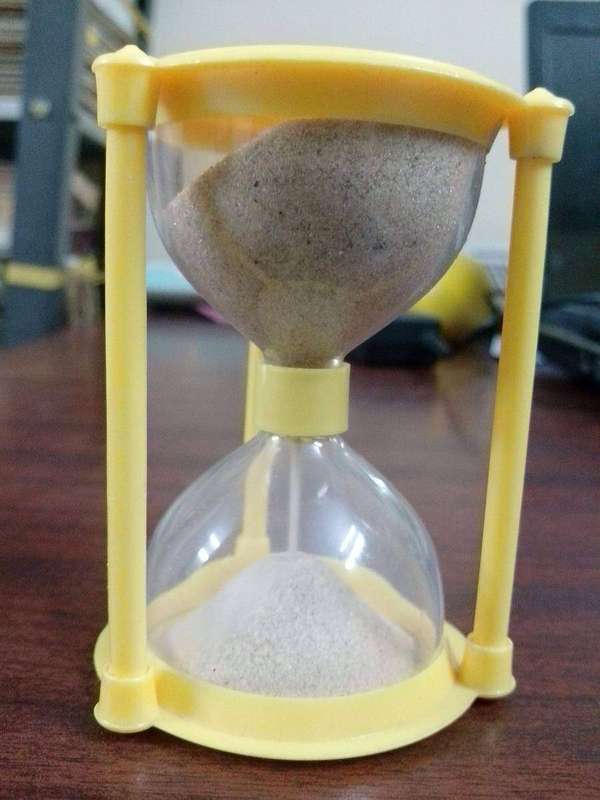
Time feels different in the moment than in memory: a packed week flies by, then feels long when you look back. Photograph: Thamizhpparithi Maari/Wikimedia Commons
Image Credits: Wikimedia Commons
The holiday paradox
Science writer Claudia Hammond gave the central puzzle its best-known name: the holiday paradox. A two-week vacation feels like it vanishes while you are living it, then seems to have lasted ages when you remember it.
The paradox resolves through the two clocks. Novelty speeds up prospective time because your attention is absorbed. The same novelty slows retrospective time because it leaves a thick trail of memories.
Hammond's point, as summarized by Scientific American, is that this is a clue to aging itself. From childhood to early adulthood we collect fresh experiences and learn countless new skills. As adults, our lives become more routine and we encounter fewer unfamiliar moments.
The result is a memory imbalance. Our early years are overrepresented in autobiographical memory and seem to have lasted longer. Our recent years are underrepresented and feel thin.
The proportion idea
The oldest explanation is also the simplest. At age 10, a year is one-tenth of your life. At age 50, it is one-fiftieth.
Each year is a shrinking fraction of your total experience, so each feels shorter.
This proportional theory dates back to the 19th century and still gets cited in textbooks. It is elegant, but psychologists note it cannot be the whole story. It predicts a smooth, steady acceleration, while people's reports are lumpier than that.
Still, proportion likely contributes. A first grader's summer really is a bigger share of everything they have ever known than a retiree's summer is. The math of a life makes the units feel smaller.
Why routine speeds everything up
Routine is the great compressor. When days repeat, the brain stops recording. Your commute, your lunch, and your evening scroll all blur into a single template marked ordinary Tuesday.
Psychology Today describes the mechanism: as we age, perception becomes more automatic and we grow desensitized to our surroundings. We absorb less information, and time is less stretched with information.
This also explains why the pandemic years felt so strange. Lockdowns stripped novelty from daily life, and many people reported that months collapsed into a featureless blur. Remove new inputs and the retrospective clock has nothing to count.
The novelty theory recently took a hit, though. A 2026 study published in Memory and Cognition directly tested whether fewer or dimmer memories explain the acceleration. It found no relationship between the number or vividness of autobiographical memories and the sense of time speeding up. Older adults in the study actually rated their memories as more vivid than younger adults did.
That result does not kill the theory, but it complicates it. The leading alternative now points to working memory: as the brain's capacity to encode new information efficiently declines with age, time leaves fewer mental traces and retrospectively feels faster.
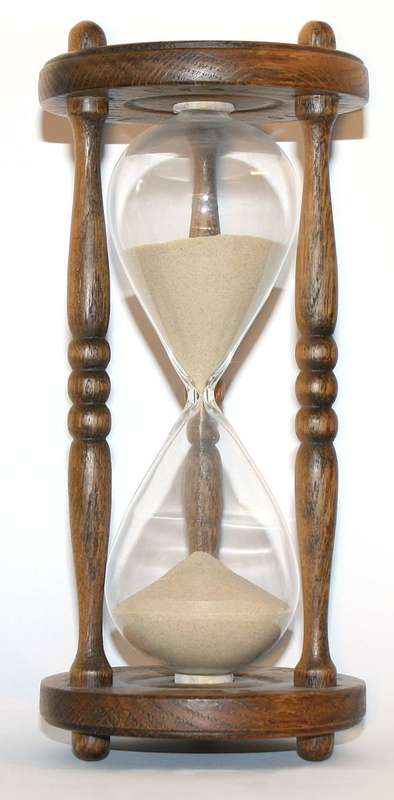
Routine compresses memory: when days repeat, the brain stops recording and the years blur together. Photograph: User:S Sepp/Wikimedia Commons
Image Credits: Wikimedia Commons
Can you slow time down?
The research suggests yes, at least for the retrospective clock. The prescription is novelty: learn new skills, visit unfamiliar places, and take on cognitively challenging tasks.
Scientific American puts it directly: you can alter your perceptions by keeping your brain active, continually learning skills and ideas, and exploring new places. Each new experience is raw material for the memory system that judges how long a period was.
Mindfulness helps the other clock. Directing deliberate attention to the present moment appears to expand perceived duration while it is happening. A walk where you actually notice the street feels longer than one spent scrolling.
Managing chronic anxiety may help too. Trait anxiety correlates with the sense of time accelerating, according to the Societal News roundup. A calmer nervous system seems to keep steadier time.
None of this stops aging. But it suggests the speedup is not a fixed sentence. It responds to how you spend your attention.
Frequently asked questions
Is it normal for time to feel faster every year?
Yes. Between 65 and 84 percent of people report it, depending on the study, and the effect shows up across cultures. It is one of the most widely replicated findings in time-perception research.
Why did childhood summers feel so long?
Because they were packed with firsts. Your brain encoded a huge number of new experiences, and your retrospective judgment of that period is built from those memories. More memories, longer summer.
Does this mean my memory is getting worse?
Not necessarily. The 2026 Memory and Cognition study found older adults rated their memories as more vivid than younger adults did. The issue appears to be encoding efficiency and routine, not memory quality.
Can anything actually slow down the feeling?
New experiences, new skills, unfamiliar places, and mindfulness practices all have research support. They work by giving your brain more to encode, which stretches the retrospective sense of duration.
The bottom line
Time feels faster with age because your brain measures the past in memories, and routine starves it of new ones. The effect is real, measured, and cross-cultural.
The hopeful part is that the clock responds to novelty. Learn something, go somewhere new, and pay attention while you are there. Your future self will remember it as a longer year.
---
About the author: Rive News is a research desk covering science topics with explainers built from public sources.
Latest in Science
- Why is the sky orange at sunrise and sunset?
- Why does ice float but most solids sink?
- Why is the ocean salty but lakes are not?
- How Do Scientists Measure the Age of the Universe?
Subscribe for weekly science explainers grounded in public sources.
Found an error? Corrections are welcome at the Rive News desk and are logged with the publish date.
© 2026 Rive News. All rights reserved.
Related stories

Why diamond is hard and graphite is soft when both are carbon
Diamond and graphite are both pure carbon, yet diamond is 10 on the Mohs scale and graphite is 1 to 2. The difference is not the atoms;

Why Hot Water Can Freeze Faster Than Cold: The Mpemba Effect Explained
Hot water can freeze faster than cold under specific conditions. The Mpemba effect, named for a 1963 schoolboy experiment, still divides

How Magnets Work at the Atomic Level: Spins, Domains, and Iron
Magnetism comes from electrons: their spin and orbits make each atom a tiny magnet. In iron, quantum forces align these atomic magnets into