
Why Do Climbers Chalk Their Hands Before Every Climb?
Key takeaways
- Climbing chalk is magnesium carbonate, a mineral that actively attracts and binds moisture on the skin.
- Sweat forms a slippery film between skin and rock; chalk absorbs it so skin makes direct, high-friction contact.
- More chalk is not better: a thick powdery layer can become a slippery barrier, and research on friction is mixed.
Watch any climber at a crag or gym and you will see the same ritual: dip into the chalk bag, clap the excess off, then climb. It looks like habit, and partly it is, but there is real chemistry behind it. Chalk solves a specific problem that every climber faces the moment their palms start to sweat.
This article explains why climbers chalk their hands, including how sweat kills friction, what magnesium carbonate does to moisture, when chalk backfires, and the forms it comes in.
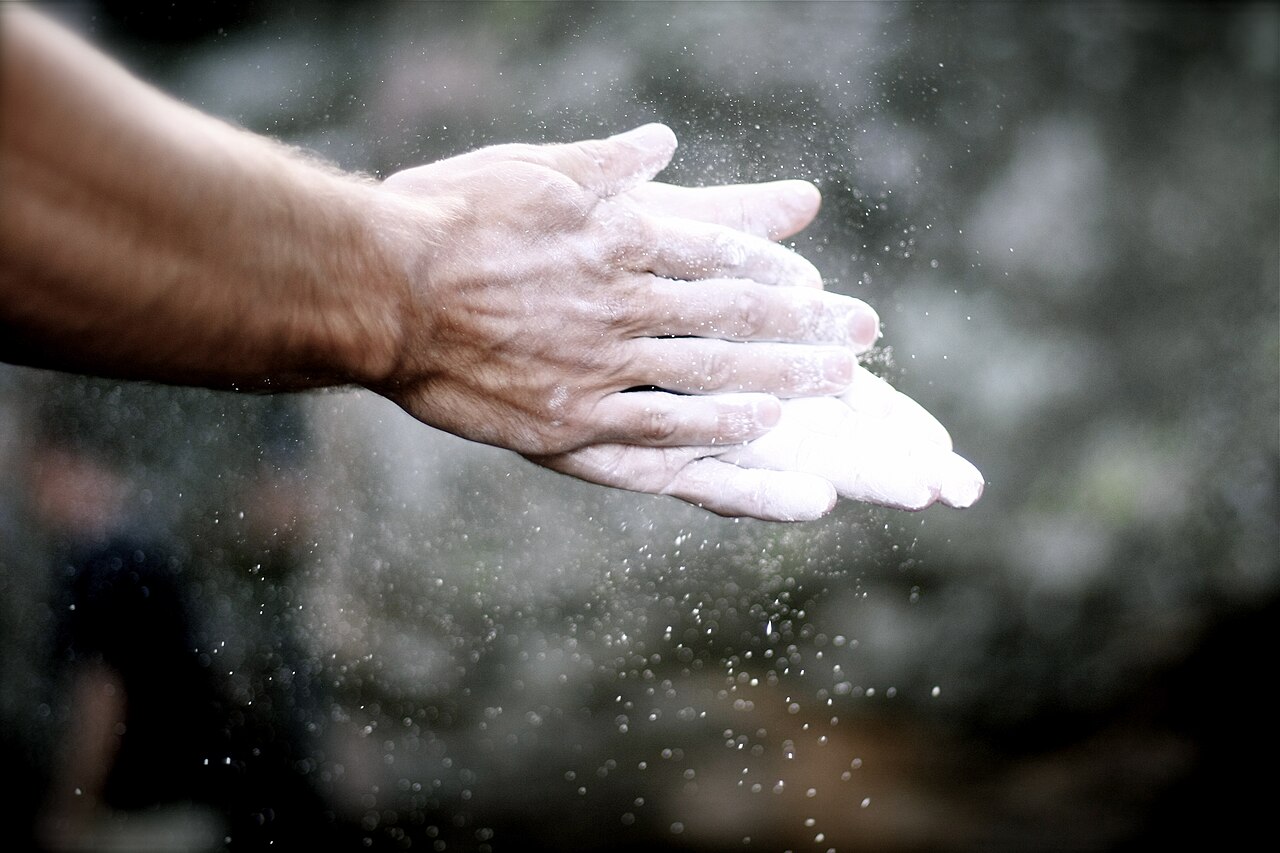
Sweat is the enemy of grip
Climbing is a friction sport. Your hands stay on the rock only if the contact between skin and hold generates enough friction to hold your weight.
Sweat breaks that contact. As the climbing coaches at Boulder Planet explain, sweat creates a thin film between your skin and the hold, and that film reduces friction. The hand slides a fraction of a millimeter, and on a small edge, that is the difference between sticking the move and falling.
Your hands are built to sweat under stress. Palms are packed with eccrine sweat glands that fire up with exertion and nerves, the same glands behind shaky hands when you are nervous.
On a hard route, both fire at once. Without something to manage the moisture, every grip gets slicker the harder you try.
That is the whole job of chalk: moisture control. It does not make you stronger, and it does not glue you to the rock. It keeps your hands dry so your strength actually reaches the hold.
Magnesium carbonate: the moisture-eating mineral
Climbing chalk is magnesium carbonate, MgCO3, a white mineral that occurs naturally as magnesite in rock. Climbers borrowed it from gymnastics in the 1970s, and it has been the standard ever since, according to the gear maker Mammut's guide.
Its trick is a property called deliquescence: it actively attracts and binds moisture. Mammut describes it as a substance that absorbs the sweat on your palms for a more stabilized and improved grip.
The chemistry is unusually stubborn. As Rice University materials science professor Andrew R.
Barron told Outside magazine, magnesium carbonate is insoluble in water, so it does not dissolve. While calcium carbonate, old-fashioned blackboard chalk, absorbs moisture but also dissolves in water, magnesium carbonate stays dry to the touch and keeps absorbing. Climbing Anchors explains the mechanism: magnesium carbonate absorbs water at the molecular level to form hydrated magnesium carbonate, which is why the powder feels dry even while it is drinking your sweat.
That is also why classroom chalk would be useless on a climb. It would turn to paste the moment your palms sweated.
The payoff is measurable, if complicated. A guide from Indoor Climbing Gym summarizes three studies: one found chalk increased the friction coefficient by 18.7 percent on limestone and 21.6 percent on sandstone among 11 experienced climbers.
Another, with 19 experienced recreational climbers, found no significant change in measured friction but recorded longer hang times after chalk use, 62.9 seconds versus 49.3 seconds. A third study of 15 participants on three rock types actually found chalk decreased measured friction. The honest conclusion is narrow: chalk manages sweaty hands, but surface, moisture, and application matter, and it is not a magic friction booster in every condition.
Too much of a good thing: when chalk backfires
There is a failure mode every beginner learns the messy way. A thin layer of chalk dries the skin.
A thick, powdery layer creates a slippery barrier between skin and hold, reducing friction instead of increasing it. Boulder Planet's advice is to spread chalk on fingers and palms, then slap or blow off the excess. A visible cloud usually means most of the chalk missed your hands anyway.
This is why experienced climbers chalk up sparingly and often rather than caking it on once. It is also why many gyms restrict loose chalk: the dust gets into the air and coats every hold in the building, making the problem worse for everyone.
Liquid chalk, a mix of magnesium carbonate and alcohol, was partly an answer to this. Once the alcohol evaporates, it leaves a very dry, thin, long-lasting layer that clogs the pores without polluting the air, according to Mammut.
One caution from Climbing Anchors: some liquid chalks contain rosin, which leaves a sticky, permanent coating on outdoor rock. Those formulas belong indoors only.
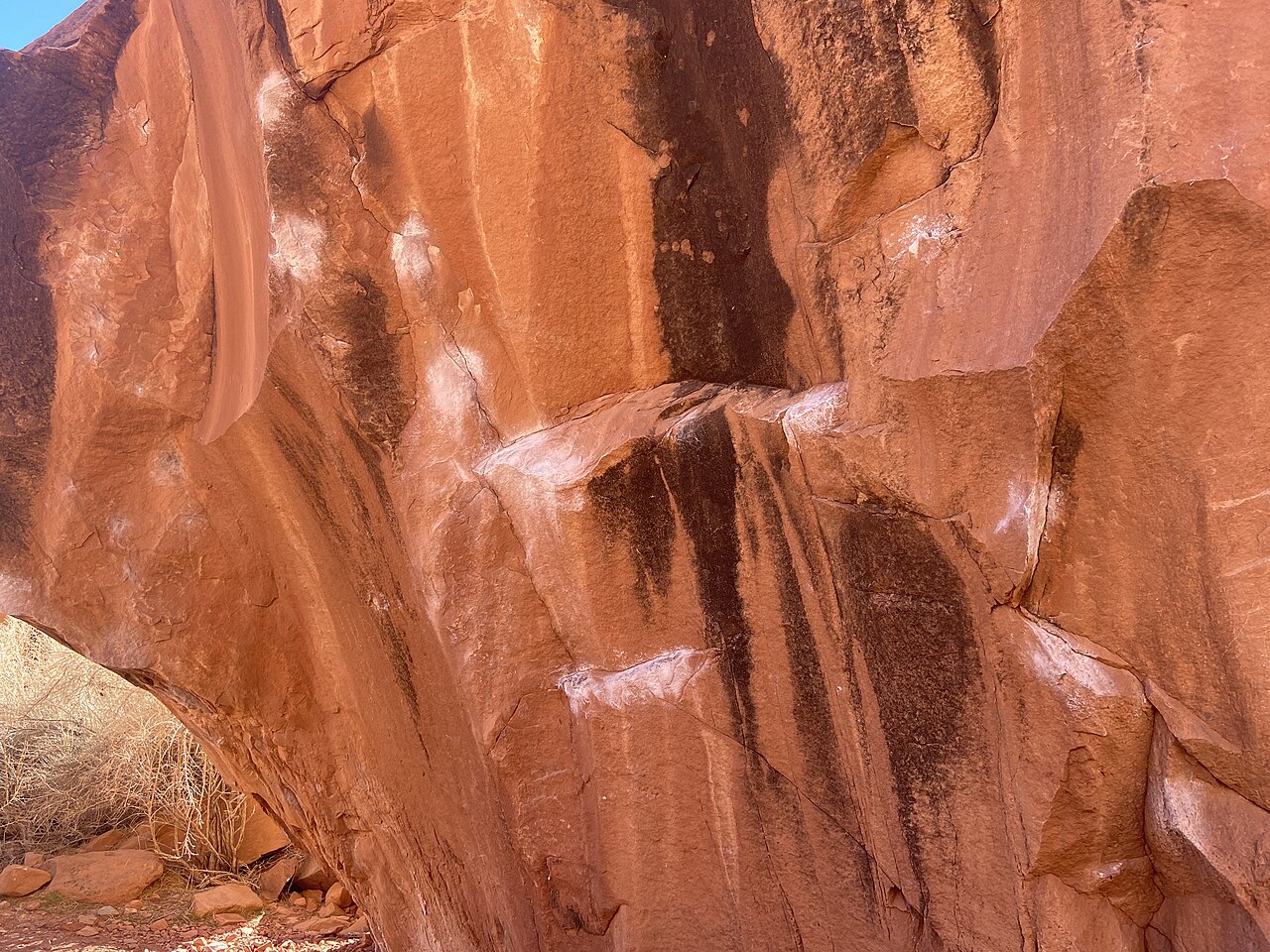
The forms of chalk: powder, block, liquid
Nearly all climbing chalk starts as the same ingredient, magnesium carbonate, but it ships in several forms. Loose powder is the classic: fast to apply, easy to overdo.
Block chalk is compressed powder you crumble yourself, which gives precise application and suits route climbers who re-chalk at rest stances. Chalk balls, powder inside cloth sacks, release a controlled puff and are the most common choice in gyms that allow them.
Liquid chalk is magnesium carbonate suspended in alcohol, sometimes with drying agents. It offers the longest-lasting coverage and the least airborne dust, though the alcohol is harsh on dry or sensitive skin. Grain size matters too: finer chalk absorbs sweat faster because of its greater surface area, while grittier chalk handles humidity and heavy perspiration better.
None of them replace the fundamentals. As the Indoor Climbing Gym guide puts it, chalk does not replace footwork, body position, clean holds, or rest.
It is moisture management at the contact between skin and hold, and nothing more. Like weights that feel heavier at the end of a set, grip fades with fatigue, and no powder changes that.
Frequently asked questions
Does climbing chalk actually make you stronger?
No. Chalk does not boost muscle power.
It improves friction by keeping your hands dry, which helps you use your strength more effectively and climb with more confidence. The effect is real but indirect.
Is climbing chalk the same as classroom chalk?
No. Climbing chalk is magnesium carbonate, which is insoluble in water and keeps absorbing sweat while staying dry. Classroom chalk is calcium carbonate, which dissolves in water and would turn to paste on sweaty hands.
Can you climb without chalk?
Yes, and many climbers with dry hands do. Chalk is a tool for moisture management.
If your hands are not prone to sweating, it adds little. In humid conditions or on sweaty days, it makes a genuine difference.
Why do some climbing gyms ban loose chalk?
Loose powder creates airborne dust and coats holds across the gym, which can reduce friction for everyone and irritate airways. Many gyms require liquid chalk or chalk balls instead.
The bottom line
Climbers chalk their hands because sweat is a friction killer and magnesium carbonate is a moisture eater. The white powder soaks up the slippery film on your palms so skin meets rock directly, which is where grip lives.
Use a thin layer, reapply as needed, and respect the gym rules. Chalk will not make you stronger, but on a sweaty day it can be the difference between sending and slipping.
Latest in Sports
- Why Do Tennis Players Grunt?
- England Red Roses Name Team Changes for USA Clash
- Santos vs Palmeiras: Neymar Suspended
- Man City vs Brighton: Carabao Cup Preview
Subscribe to the Rive News newsletter for one clear sports explainer in your inbox every morning.
Image Credits: Wikimedia Commons / Abbottportraits; Wikimedia Commons / Aszx5000 (public domain)
Related stories
Why Is Altitude Sickness Worse for Some People?
Altitude sickness hits some people harder because of genetics, ascent speed, and prior history, not fitness level. Here is what raises risk
Why Do You Get Blisters When Hiking and How to Prevent Them
Friction plus moisture plus heat equals a blister. Learn why hiking breeds all three, and the boots, socks, and tape system that keeps
How to choose hiking boots for beginners: fit, features, and break-in
Beginners should buy for fit first: snug everywhere, tight nowhere, with a thumb's width at the toes. Here is how to size, test,