
What to eat before a morning match or race: timing and meals
Key takeaways
- Eat your main pre-match meal three to four hours before the start, built around carbohydrates with moderate lean protein and low fibre.
- Overnight fasting drains liver energy stores, so early starters need a smaller top-up of simple carbs about an hour before the gun.
- Race morning is never the time to experiment: eat only foods you have tested in training.
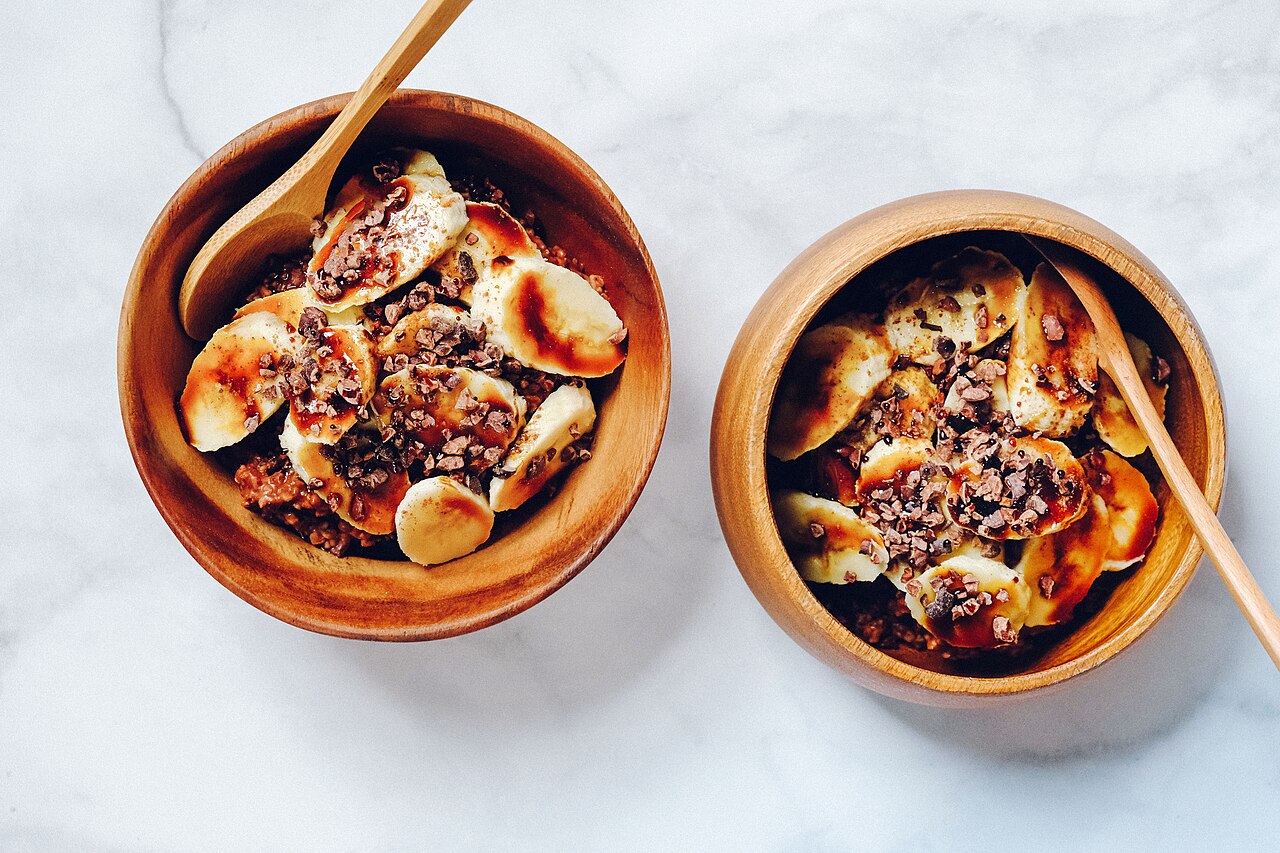
A bowl of oatmeal with banana and honey, a classic carbohydrate-rich meal for race morning.
Image Credits: Wikimedia Commons, uploaded by Netha Hussain
The night before a morning match or race sets the table, but the morning meal decides how you feel at the start line. Eat too much and you feel heavy.
Eat too little and your energy fades before half time. Eat the wrong things and your stomach makes the decisions for you.
The core idea is simple. Your muscles run on glycogen, the stored form of carbohydrate, and an early start means those stores are partly depleted after a night of sleep. The pre-match meal refills them.
This article explains what to eat before a morning match or race, including when to eat, what the meal should contain, how to handle very early starts, and the foods to avoid on the day.
When to eat before a morning match
The standard guidance from sports nutritionists at Johns Hopkins Medicine is to eat the main pre-competition meal three to four hours before the event. That gives the food enough time to digest, so the stomach is settled and the energy stores are full when you start.
If your match or race is very early in the morning, the night before becomes part of the plan. Focus on a carbohydrate-rich dinner, then add a smaller pre-competition snack in the morning rather than forcing down a full breakfast at 5am.
For a mid-morning start, a full breakfast three hours out is ideal. For a 7am race, most athletes eat a proper meal the evening before and rely on a light top-up closer to the start. The principle stays the same: the closer the start, the smaller and simpler the food.
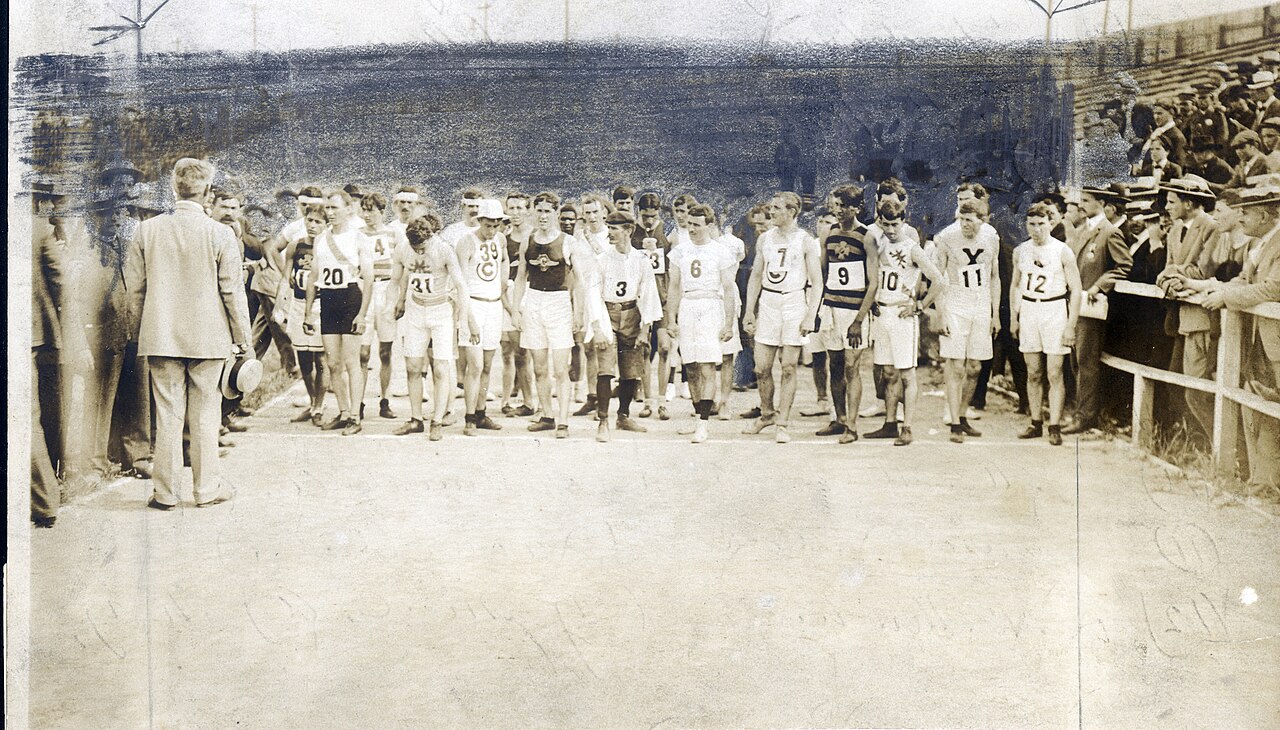
Runners at the start of the 1904 Olympic marathon, where pre-race fuelling mattered just as much as it does today.
Image Credits: Wikimedia Commons, uploaded by Fæ
What to eat before a morning match or race: the right foods
The pre-competition meal should be about half carbohydrates, prioritising lower-fibre choices, with a moderate amount of lean protein. That is the formula recommended by Johns Hopkins Medicine nutritionists.
Good carbohydrate choices include oats, white rice, bread, bananas, potatoes and pasta. Lean protein options include eggs, chicken, tofu, lentils or fish. Protein helps with satiety and muscle repair after the event, but carbohydrate is what fuels the performance itself.
A few proven combinations:
- Porridge made with water, topped with banana and honey
- White toast with jam and a glass of orange juice
- White rice with scrambled eggs
- A bagel with a light spread and a sports drink
If a full meal does not sit well with you, a smoothie can serve as a balanced alternative. Because it is blended, it is easier to digest, and it can carry the same mix of carbohydrate and protein as solid food. Drink enough fluids alongside the meal so you start the event hydrated, but avoid drinking huge volumes right before the start.
Early starts: the one-hour option
Early starts need their own maths. Sports nutrition guidance suggests aiming for about 1 gram of carbohydrate per kilogram of body weight for each hour available before the race. A 65kg runner with one hour to go needs roughly 65 grams of quick-digesting carbs.
In the final hour, keep it simple: easily digestible carbohydrates with minimal fibre, fat or protein. A banana, white bread with honey, a handful of dates, or a sports drink all work. Research cited by running coaches suggests that around 30 grams of simple carbohydrate taken 5 to 15 minutes before exercise can boost performance, though some athletes prefer to skip this last top-up.
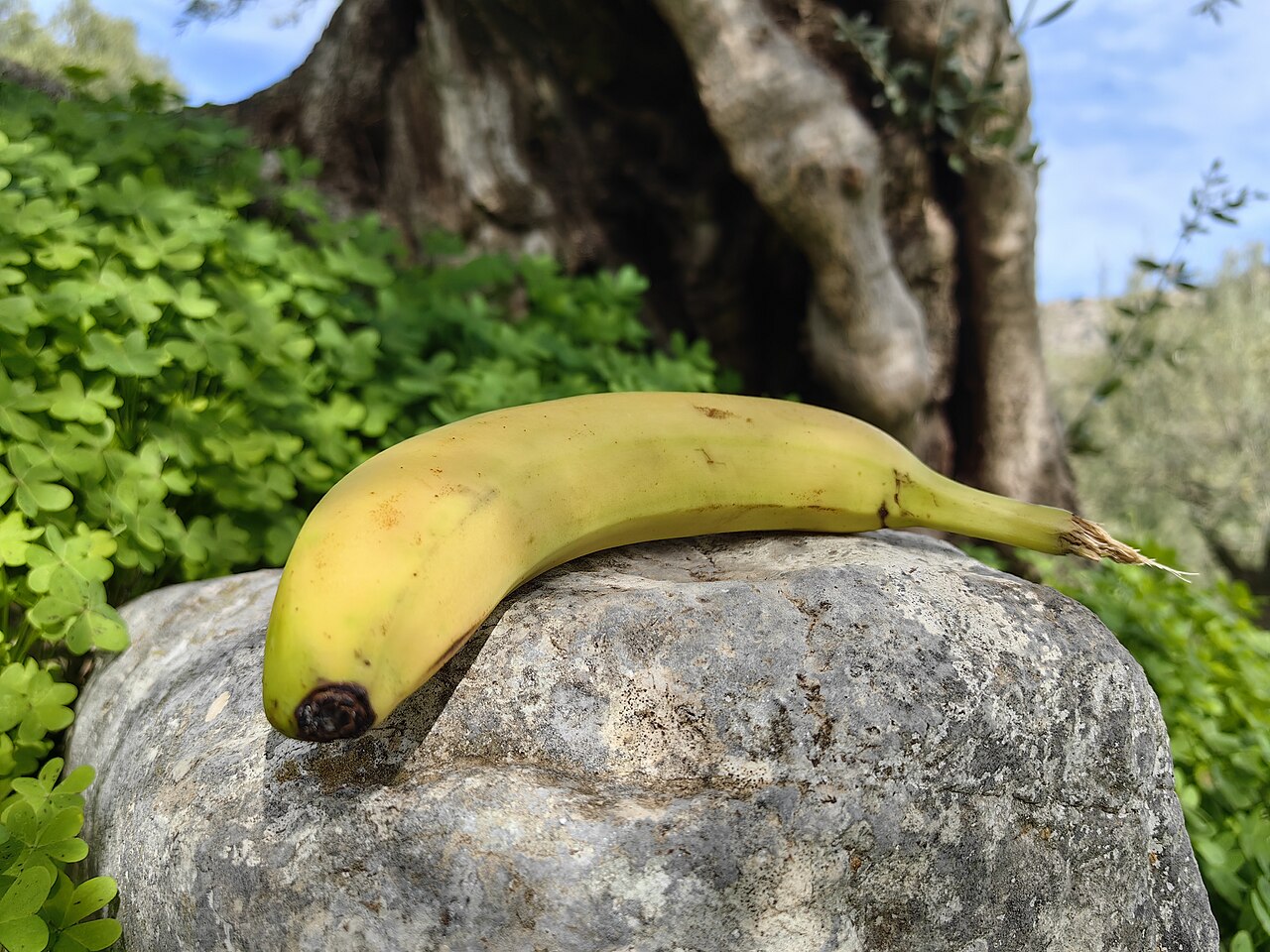
Bananas provide about 27 grams of carbohydrate each, making them an ideal last-hour top-up.
Image Credits: Wikimedia Commons, uploaded by Petro Stelte
Keep fibre under about 5 grams and fat under about 15 grams in the final meal. Both slow digestion and raise the risk of stomach trouble once you start moving. Triathlon nutrition guidance uses the same limits for race morning.
What to avoid on match morning
The golden rule is the simplest: never try new foods on race day. Stick to foods you have eaten during training, because an unfamiliar meal can cause digestive upset exactly when you cannot afford it.
Avoid high-fibre foods such as bran, beans, raw vegetables and heavy wholegrain cereals in the final meal. Skip fatty breakfasts like fried food or heavy pastries, which sit in the stomach. Avoid spicy food and anything you know makes you gassy.
Be careful with dairy if you are sensitive to it, and go easy on caffeine if you are not used to it. A normal morning coffee is fine for regular drinkers; a triple espresso is not a race-day experiment.
It is also worth remembering that nutrition is only one part of feeling good at the start. An upset stomach needs gentler food choices altogether, and stomach cramps on the run often turn out to be a side stitch rather than a food problem. Learning how to stop your side hurting on a run helps you tell the two apart.
Frequently asked questions
Should I eat a big dinner the night before?
A carbohydrate-focused dinner is smart, with foods like pasta, rice or potatoes alongside lean protein. Keep fat and fibre moderate and avoid spicy or heavy dishes. It tops up the glycogen stores that an early breakfast cannot fully refill.
Is it okay to race on an empty stomach?
For short, easy efforts some athletes do it, but for a match or a race of any intensity it usually costs performance. Overnight fasting depletes liver glycogen, and even a banana and a sports drink an hour before is better than nothing.
Are energy gels a good pre-race choice?
They work as a top-up in the final hour, giving about 22 to 25 grams of carbohydrate each, but they are not a substitute for a real meal. Test any gel brand in training first, since some cause stomach cramps in sensitive runners.
How much water should I drink before the start?
Drink steadily through the morning so your urine is pale yellow, then stop chugging large volumes in the last 30 minutes. Sports drinks count toward both fluids and carbs. Overdrinking right before the start mostly leads to bathroom queues.
The bottom line
Eat a carbohydrate-rich meal three to four hours before the start, top up with simple carbs if kickoff is early, keep fibre and fat low, and eat nothing you have not tested in training. Do that, and the only thing you need to think about on the start line is the race itself.
Rive News is the site's research desk, covering sports and health topics from public nutrition sources.
Latest in Sports & Outdoors
- What to do when you twist your ankle playing sport
- Why footballers wear shin guards
- How to watch a match tactically instead of just following the ball
- How runners get a side stitch and how to prevent it
Subscribe for one practical sports and outdoors tip every morning.
© 2026 Rive News. Reporting follows public-source verification standards.
Related stories

Why Is Altitude Sickness Worse for Some People?
Altitude sickness hits some people harder because of genetics, ascent speed, and prior history, not fitness level. Here is what raises risk

Why Do You Get Blisters When Hiking and How to Prevent Them
Friction plus moisture plus heat equals a blister. Learn why hiking breeds all three, and the boots, socks, and tape system that keeps
How to choose hiking boots for beginners: fit, features, and break-in
Beginners should buy for fit first: snug everywhere, tight nowhere, with a thumb's width at the toes. Here is how to size, test,