
How to improve your balance for any sport: 8 drills
By Rive News / Research desk | Rive News / Published October 20, 2026 at 9:00 AM PKT
Key takeaways
- Balance runs on proprioception, your nervous system's sense of where your body is in space.
- Single-leg stands are the foundation: aim for 30 seconds per side with eyes open, then 10 seconds with eyes closed.
- Two or three short sessions a week beat one long one, and research links this training to fewer ankle sprains.
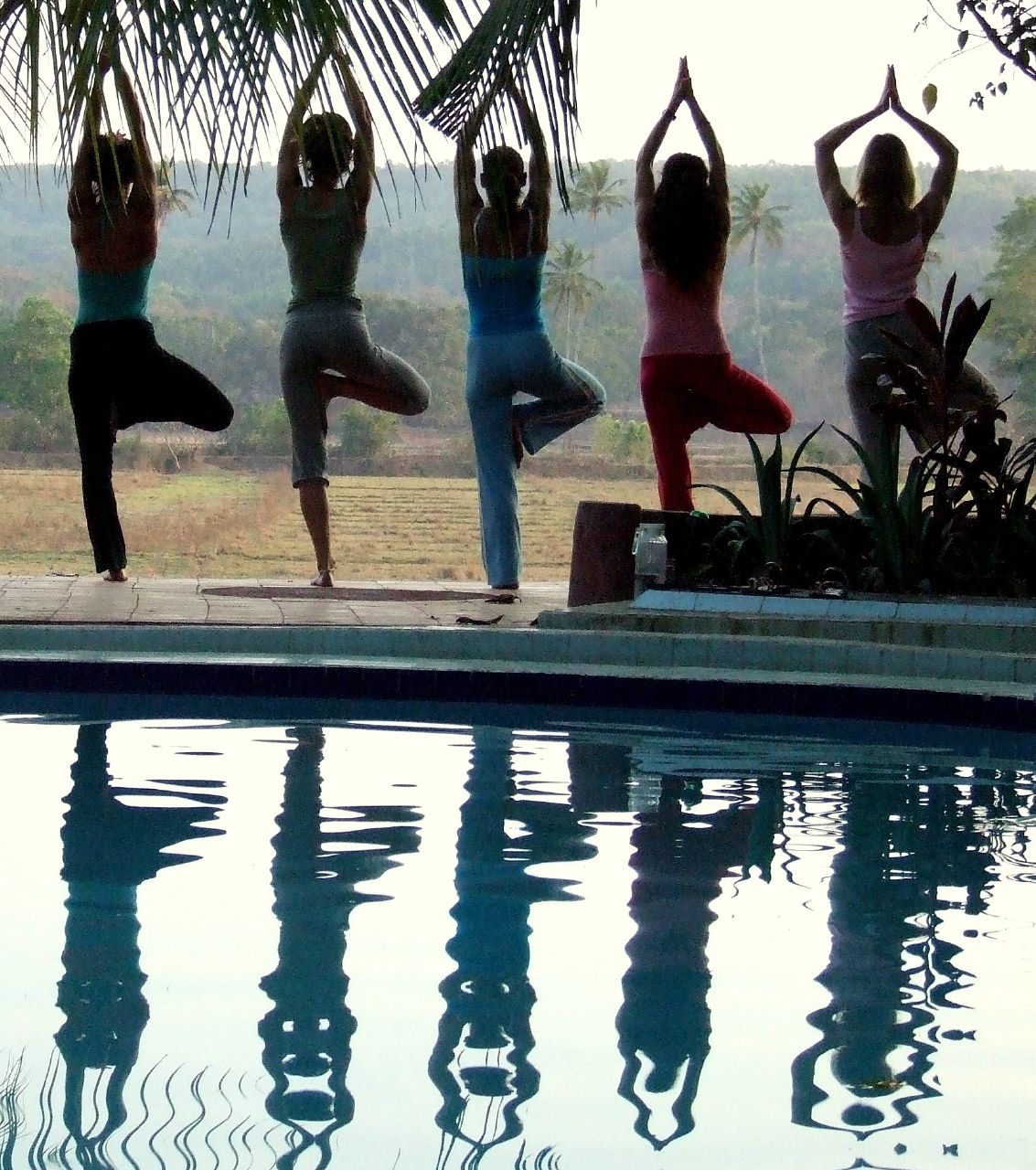
The tree pose, a classic single-leg balance hold. Standing on one leg trains the stabilizers around the ankle, knee, and hip.
Image Credits: Wikimedia Commons
Balance is the quiet skill behind almost every sport. A footballer changes direction, a runner lands on uneven ground, and a basketball player absorbs contact, all without falling. The system running all of this is called proprioception: your nervous system's constant sense of where your body parts are and how they are moving.
The good news is that proprioception is trainable. A few minutes of deliberate balance work, done regularly, measurably improves stability and cuts injury risk. A 2023 study in the Journal of Orthopaedic Research found that proprioceptive exercises significantly reduced the risk of recurrent ankle sprains, as summarized by Nottingham Physio.
This article explains how to improve your balance for any sport, including why balance matters, the drills that build it, how to measure progress, and how to fit training into your week.
Why balance matters in sport
Most sports happen on one leg at a time. Running is a series of single-leg landings. Kicking, throwing, and changing direction all load one side while the other moves freely.
If your stabilizers cannot react fast, the joint takes the hit.
Weak balance shows up as rolled ankles, clumsy landings, and slow reactions to unexpected contact. Strong balance shows up as clean cuts, stable landings, and confidence on uneven surfaces. The NFL and Premier League clubs build proprioceptive drills into their prehab routines for exactly this reason.
Balance also declines with age and detraining, but it responds quickly to practice. TRX Training notes that measurable improvement can arrive within a month of daily short practice. Consistency matters far more than session length.
The drills that build balance
Start with the simplest drills and progress only when the easy version feels solid. Quality beats wobble: stay controlled, keep breathing, and use a wall or chair for support when trying something new.
1. Single-leg stand. Stand on one leg with the knee slightly bent and hold for 30 to 60 seconds per side, doing 3 to 4 holds per side. Progress by closing your eyes, standing on a cushion, or moving your arms.
2. Single-leg clock reach. Balance on one leg and reach the free foot toward imaginary clock positions: 12, 3, 6, and 9 o'clock. The reaches force your ankle and hip to stabilize through motion, which transfers directly to sport.
3. Heel-to-toe walking. Walk in a straight line placing the heel of each step directly against the toes of the other foot. This challenges spatial awareness during motion, which static holds never train.
4. Single-leg Romanian deadlift. Hinge forward on one leg while keeping the hips square and the standing knee soft. This builds hamstring and glute strength inside a balance challenge, linking stability to real athletic movement.
5. Lateral bound and stick. Jump sideways and land on one leg, holding the landing still for 2 to 3 seconds before the next rep. This teaches your body to absorb force in a controlled position, exactly what a cutting maneuver demands.
6. Eyes-closed balance. Remove visual input during a simple single-leg stand and let the proprioceptive system do more of the work. Start near a wall, since this is much harder than it sounds.
7. Tai chi or yoga poses. Slow, controlled practices build body awareness alongside flexibility. Tree pose and warrior pose are especially useful for single-leg stability and calm under load.
8. Reactive partner drill. Have a partner call out unpredictable directions while you shuffle, cut, or reach. Sport is reactive, so at least one drill should train balance under surprise.
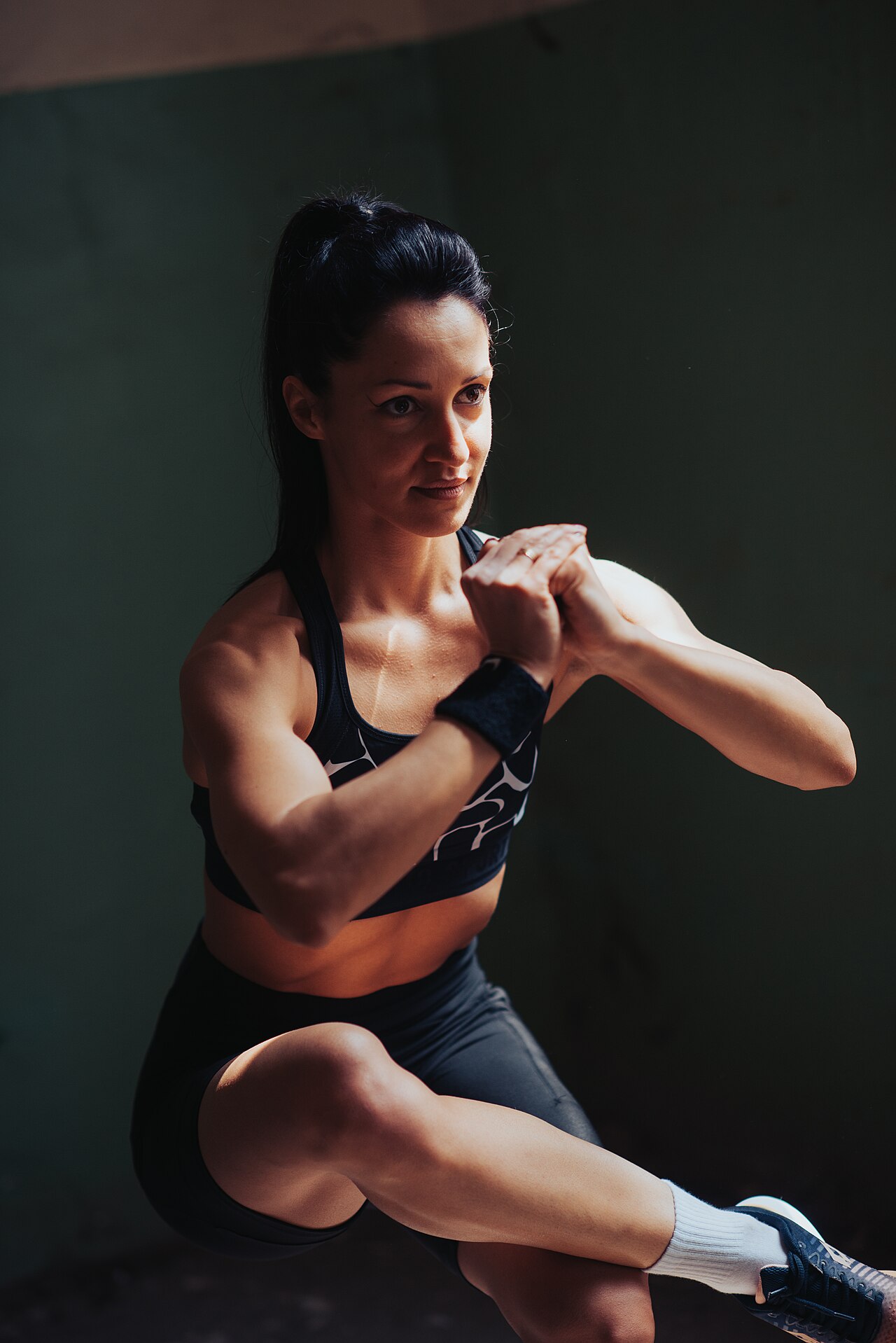
A single-leg squat in the gym. Adding strength to balance work builds control you can use under load.
Image Credits: Wikimedia Commons
How to measure your progress
Balance improves quietly, so use simple benchmarks to see it happening. TRX Training cites a useful standard: younger and fitter adults should target 30 seconds per side with eyes open as a baseline, and work toward 10 seconds with eyes closed. Hitting both comfortably means your balance is in good shape for your age.
Retest every two to four weeks under the same conditions: same surface, same time of day, same footwear or barefoot. Write down your times. Small gains, like 5 extra seconds with eyes closed, confirm the training is working before sport performance changes show up.
Film yourself on the harder drills if you can. Watching a lateral bound landing often reveals a wobbling knee or a collapsing arch that you cannot feel in the moment. Video turns vague effort into specific fixes.
Fitting balance into your week
Two or three short sessions per week are enough for most people. Slot balance work into the warm-up of existing strength sessions or use it as a finisher. You do not need a dedicated balance day.
A practical weekly template looks like this:
- Warm-up: 2 minutes of single-leg stands while your heart rate rises.
- Main: pick two harder drills, like clock reaches and lateral bounds, for 5 minutes.
- Finisher: 1 minute of eyes-closed stands or a short yoga flow.
Keep the total dose small and frequent. A 2019 review in Frontiers in Physiology noted that balance training should complement strength and plyometric work rather than replace it. Random wobble-board sessions without a plan deliver far less than a short, repeatable routine.
Anyone with a history of falls, dizziness, or major joint problems should clear new exercises with a physician first, and seniors should always keep a sturdy support within reach. Protecting your ankles during this work keeps the training itself safe.
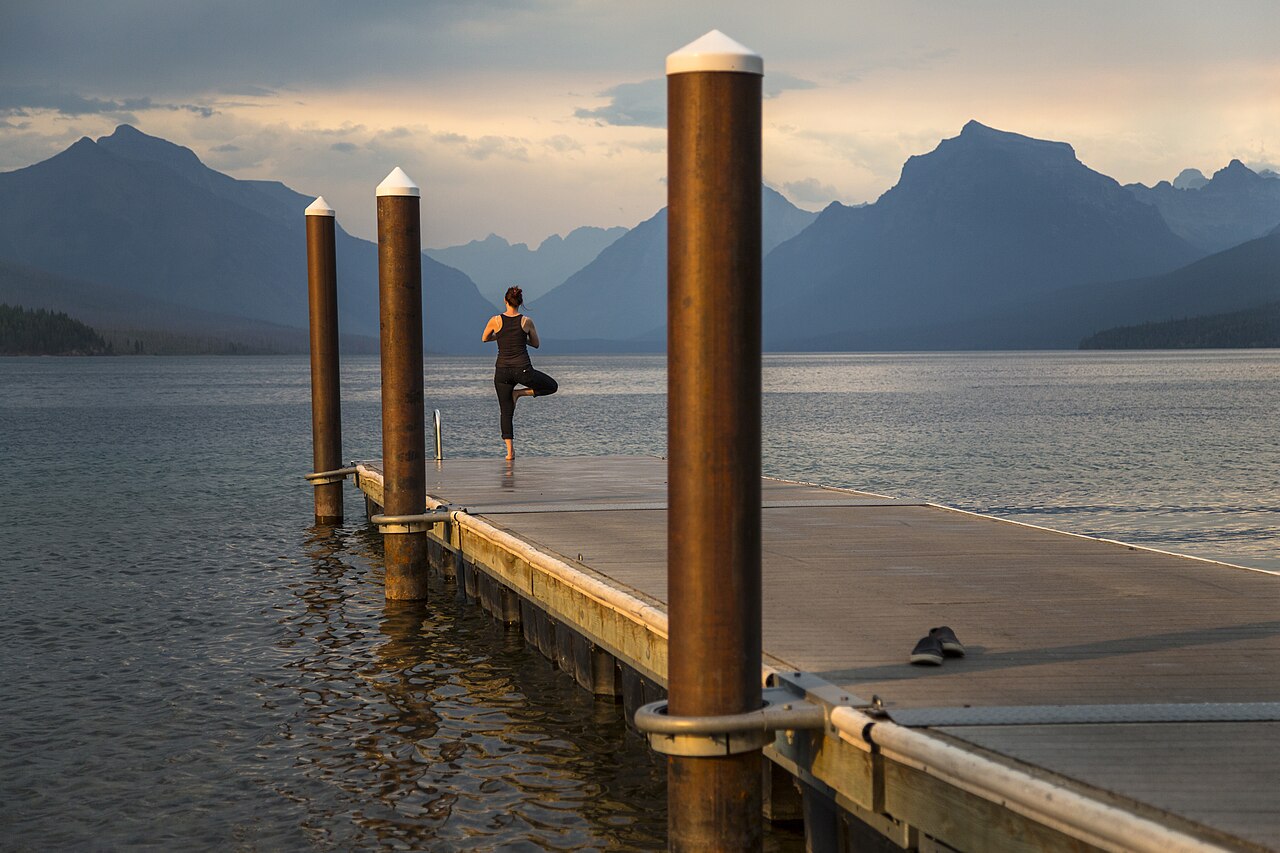
Tree pose practiced outdoors. Balance trained on varied surfaces transfers better to real sporting conditions.
Image Credits: Wikimedia Commons
How long does it take to improve balance?
Most people see measurable gains within a month of consistent short practice. A few minutes daily, or two to three focused sessions per week, is enough to move the standard benchmarks.
Is balance training safe for older adults?
Yes, with sensible regressions. Train near a counter or wall, skip explosive variations, and clear new exercises with a physician if you have a history of falls. The CDC lists balance training among the most effective fall-prevention measures.
Do I need a wobble board or BOSU ball?
No. Bodyweight drills like single-leg stands and clock reaches build the foundation, and a cushion or folded towel works as an unstable surface. Tools add variety later, but they are not required.
Can balance training really prevent injuries?
Evidence points that way for ankles. The 2023 Journal of Orthopaedic Research study summarized by Nottingham Physio found proprioceptive exercises significantly cut recurrent ankle sprain risk. A 2024 systematic review also linked this training to better coordination and motor learning.
The bottom line
Balance is not a gift; it is a trainable skill built on proprioception. Single-leg stands, reaches, and controlled landings teach your nervous system to react faster than your conscious mind can.
Start with 30 seconds per side, progress to eyes-closed work, and train two or three times a week. Within a month, your landings, cuts, and confidence will all look different.
Pick one drill from this list and do it today during your warm-up. Small, frequent practice is what builds lasting stability, and knowing whether your overall training is working helps you keep the routine honest.
Rive News is a research desk that turns sports science and clinical guidance into plain-English explainers for everyday athletes.
Latest in Sports
- Why do runners get a side stitch and how to prevent it
- What is the difference between football boots and running shoes
- What to do when you twist your ankle playing sport
Get one practical sports tip in your inbox every week: subscribe to the Rive News newsletter.
© 2026 Rive News. Published October 20, 2026.
Related stories

Why Is Altitude Sickness Worse for Some People?
Altitude sickness hits some people harder because of genetics, ascent speed, and prior history, not fitness level. Here is what raises risk
Why Do You Get Blisters When Hiking and How to Prevent Them
Friction plus moisture plus heat equals a blister. Learn why hiking breeds all three, and the boots, socks, and tape system that keeps
How to choose hiking boots for beginners: fit, features, and break-in
Beginners should buy for fit first: snug everywhere, tight nowhere, with a thumb's width at the toes. Here is how to size, test,