
What is the difference between football boots and running shoes?
By Rive News / Research desk | Rive News / Published October 20, 2026 at 9:00 AM PKT
Key takeaways
- Football boots grip grass with studs, while running shoes cushion forward motion on hard roads with flat, foam soles.
- A boot has a thin upper for ball feel and a stiff outsole plate; a running shoe has thick cushioning and a heel-to-toe drop.
- Swapping them raises injury risk: boots slip on pavement, and running shoes slide on wet grass.
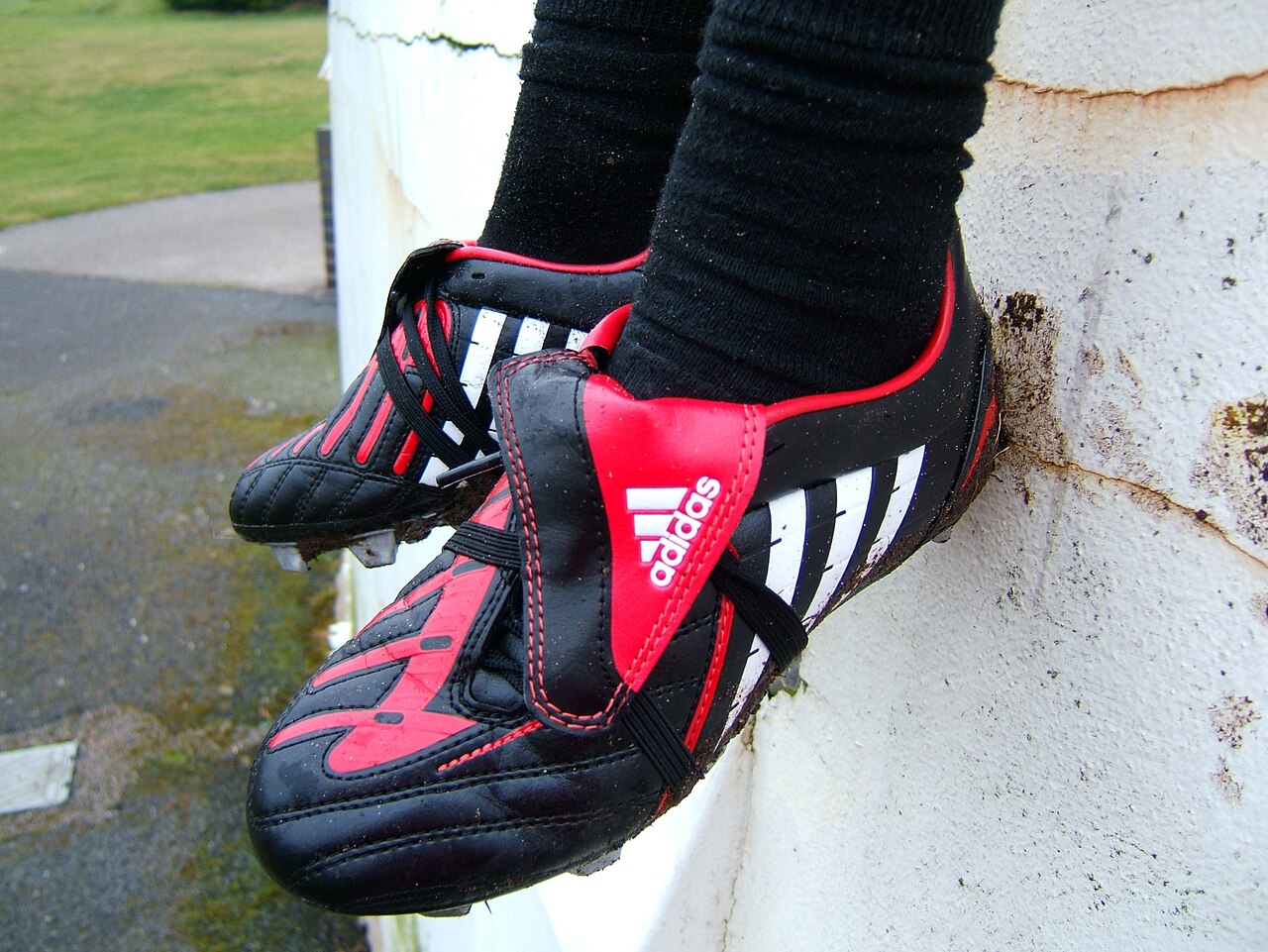
A pair of football boots. The studs on the sole dig into grass to create grip for sprints and sharp turns.
Image Credits: Wikimedia Commons
Football boots and running shoes look similar at a glance, but they are built for opposite jobs. Boots are designed for grip on grass, kicking, and constant changes of direction. Running shoes are designed for repetitive forward motion on hard, flat surfaces.
The design split starts from the ground up. Every major difference between the two comes from the surface they touch and the way the athlete moves on it.
This article explains the difference between football boots and running shoes, including the sole, the upper, how each fits, and what goes wrong when you wear the wrong one.
The sole: studs versus cushioning
The sole is the biggest difference between the two types of footwear. It decides where each shoe can safely be used.
Football boots carry studs or cleats on the sole, which are short protrusions that dig slightly into turf. They act like anchors, letting a player sprint, stop, and change direction without sliding, as TechnoSports explains. Grass turns slippery fast, especially when wet, and a flat sole would offer almost no traction there.
Stud designs come in several systems matched to pitch conditions. Firm-ground boots use conical or bladed studs for dry grass. Soft-ground boots use longer, often metal studs for muddy pitches.
Artificial-ground boots use shorter, more numerous studs for synthetic turf, and turf trainers use many small rubber nubs. Wearing the wrong type for the surface can reduce grip and raise injury risk, according to the same source.
Running shoes take the opposite approach. Their soles are flat, wide, and packed with foam cushioning, usually EVA, that absorbs the shock of each footstrike on roads and pavements. Instead of studs, they use a rubber tread pattern for grip on hard surfaces.
The midsole also has a heel-to-toe drop, meaning the heel sits higher than the forefoot. This geometry suits the rolling motion of a running stride. Football boots have almost no cushioning and a nearly flat profile, because cushioning would dull ball feel and waste energy on a soft pitch.
The upper: ball feel versus protection
The upper is the part of the shoe that touches the ball, and it shows the second big design split.
Football boots use a thin upper made of leather or lightweight synthetics. The thinness gives the player a close feel of the ball for passing, dribbling, and shooting. Modern boots often use kangaroo leather or engineered synthetics to keep the upper light while improving touch, ProWolf reports.
Anatomy matters here. A football boot combines the studded sole with a stiff outsole plate that transfers energy, a shaped collar for fit, and a thin insole. Everything serves agility and ball control rather than comfort over distance.
Running shoes use a thick, breathable mesh upper with generous padding around the heel and ankle. The padding locks the heel in place and prevents blisters over long distances. There is no need for ball feel, so designers prioritize airflow, comfort, and weight distribution instead.
Put simply, a boot is built to feel the ball, and a running shoe is built to forget about the feet.
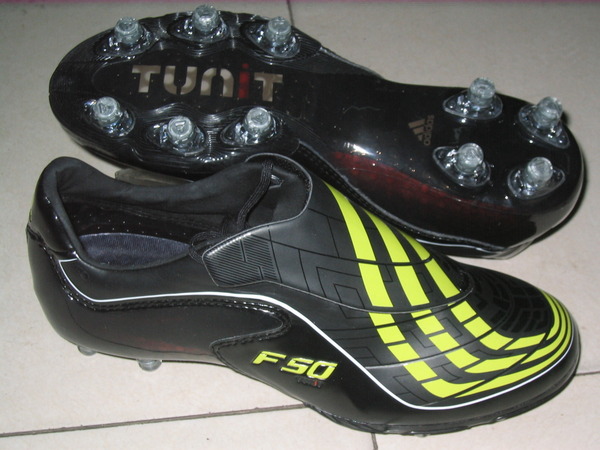
An Adidas F50 football boot. The stiff outsole plate and stud pattern are built for traction on grass, not for road running.
Image Credits: Wikimedia Commons
How each shoe fits and moves
Fit philosophy differs because the sports load the foot differently.
Football boots fit snugly, almost like a second skin. A tight fit stops the foot sliding inside the boot during cuts and tackles, which keeps striking accurate. Many players size down for a locked-in feel, and narrow lasts from brands like Nike suit slim feet while wider options suit broader feet.
Running shoes need a thumb's width of space in front of the toes. Feet swell during long runs, and cramped toes lead to blisters and black toenails. The fit is secure at the heel and midfoot but roomy at the front.
Weight follows the same logic. Soccer boots are kept as light as possible so players can sprint and change direction quickly. Running shoes accept more weight in exchange for cushioning and support structures that protect joints over thousands of footstrikes.
One more difference is lateral support. Football involves constant sideways cuts, so boots brace the foot against side-to-side forces. Running is mostly a straight-line motion, so running shoes focus on forward flexibility and heel stability instead.
What happens if you wear the wrong one
The two shoes are not interchangeable, and swapping them has real consequences.
Running shoes on a wet grass pitch give poor traction. Without studs, every sprint and turn risks a slip, and a slip at speed can strain a knee or ankle. This is why ankle injuries are so common in field sports played in the wrong footwear.
Football boots on roads or pavements are worse. The studs make walking awkward and inefficient, and the hard, uncushioned sole sends shock straight into the feet and knees. Metal studs on concrete can also be genuinely dangerous, since they slide with almost no grip.
Boots also wear out fast off the pitch. Studs designed for turf get ground down on hard surfaces, and the thin upper offers little protection against pavement abrasion. Using boots only on grass keeps them effective and safe for much longer.

A jogger in running shoes on the road. Cushioned flat soles suit repetitive forward strides on hard surfaces.
Image Credits: Wikimedia Commons
Can I play football in running shoes?
You can kick a ball around casually, but running shoes give poor grip on grass and no protection for the foot during tackles. For regular play, boots with the right studs are much safer.
Can I run in football boots?
No, this is a bad idea. The studded sole is unstable and inefficient on pavement, the lack of cushioning punishes your joints, and the snug fit can cause blisters over distance.
Are soccer cleats and football boots the same thing?
Yes, mostly. Americans say "cleats" and Britons say "boots," but both mean the studded shoes worn for football. Strictly speaking, the cleats are the studs themselves, not the whole shoe.
Do I need different boots for artificial turf?
Ideally, yes. Artificial-ground boots use shorter, more numerous studs that grip synthetic fibres without catching. Long firm-ground studs on turf can stick and twist the knee, according to equipment guides.
The bottom line
Football boots and running shoes solve different problems. Boots trade cushioning for studded grip and ball feel on grass. Running shoes trade grip for foam cushioning and a smooth rolling stride on hard roads.
Match the shoe to the surface and the movement, and both will do their job well. Cross them over, and you lose performance while gaining injury risk.
If you play regularly, check your studs before each season and make sure the rest of your kit protects you too. The right boots are only one part of staying safe on the pitch.
Rive News is a research desk that turns sports science and equipment knowledge into plain-English explainers for everyday athletes.
Latest in Sports
- Why do runners get a side stitch and how to prevent it
- What to do when you twist your ankle playing sport
- How to improve your balance for any sport
Get one practical sports tip in your inbox every week: subscribe to the Rive News newsletter.
© 2026 Rive News. Published October 20, 2026.
Related stories

Why Is Altitude Sickness Worse for Some People?
Altitude sickness hits some people harder because of genetics, ascent speed, and prior history, not fitness level. Here is what raises risk
Why Do You Get Blisters When Hiking and How to Prevent Them
Friction plus moisture plus heat equals a blister. Learn why hiking breeds all three, and the boots, socks, and tape system that keeps
How to choose hiking boots for beginners: fit, features, and break-in
Beginners should buy for fit first: snug everywhere, tight nowhere, with a thumb's width at the toes. Here is how to size, test,