
How to Learn to Swim as an Adult Without Embarrassment
Key takeaways
- Adults learn to swim by building comfort and trust first, with floating and breathing before any stroke work.
- Beginner adult classes are normal and common, and instructors expect nervous first-timers.
- Most learners see clear progress within 6 to 10 lessons when they practice regularly between classes.

You are not the only adult who cannot swim
If you are an adult who cannot swim, you are far from alone. Plenty of adults missed lessons as children, grew up far from pools, or had a bad experience in the water that stuck. Some never had access to lessons at all.
Others put it off for years and then felt too embarrassed to start. That embarrassment is the real obstacle, not the water.
The good news is simple. It is never too late to learn. Adult beginner classes exist in most cities, and their instructors expect nervous first-timers.
Blue Wave Swim, a London swim school, puts it plainly: many adults come to lessons after difficult experiences with water, and private lessons give them time and space to build confidence gradually, without pressure or embarrassment.
This article explains how to learn to swim as an adult without embarrassment, including how lessons actually work, what to wear, and how to handle the fear that shows up in the first few sessions.
Why adult lessons feel different from kids lessons
Children in swim class mostly want to play. Adults arrive with analysis, self-consciousness, and a long memory of every awkward moment near water. LiveAbout notes that two issues dominate adult teaching: adults may feel embarrassed that they have not yet learned, and adults tend to overthink details, which can slow down the basics.
Good instructors know this. US Masters Swimming advises that the very first step is developing trust, before going near the water. That means talking through your experience around water and what you want from lessons.
The instructor is there to guide, not to push. Patience and empathy are part of the method, not a bonus.
Adults also want to know why things work. Instructors who teach adults explain body position, buoyancy, and breathing in detail. That knowledge demystifies the process and makes progress feel logical instead of mysterious.
Pick the format that fits your nerves
You have three main choices: private, semi-private, or group lessons.
Private lessons give you one-to-one attention. Nobody watches you except the instructor. This format suits adults with strong fear, a bad past experience, or a tight schedule.
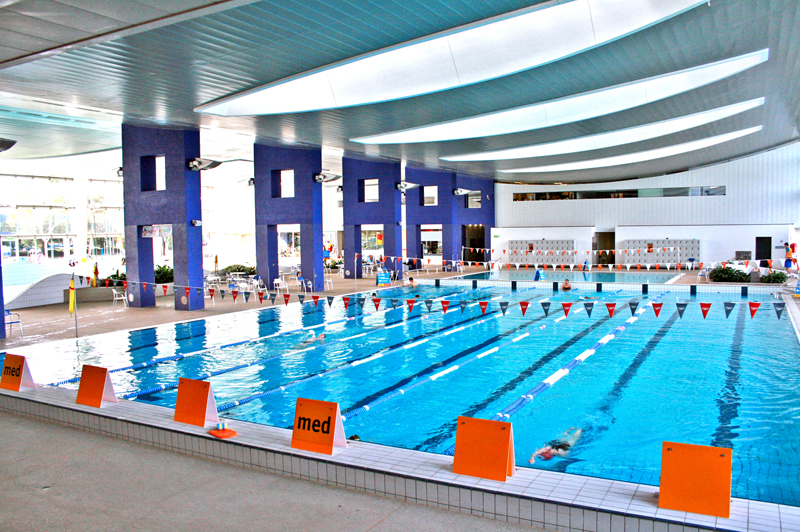
Blue Wave Swim runs private lessons in a 25 metre heated pool in Wimbledon, with private changing facilities, a setup aimed squarely at nervous beginners.
Semi-private lessons pair you with one or two other learners. You still get plenty of attention, and you split the cost.
Group lessons put you with other adult beginners. That can feel scary at first, but many learners find the group reassuring. Everyone in the class is there for the same reason.
Nobody is watching your technique with a critical eye. Most people in the pool are focused on their own progress, not yours.
If embarrassment is your main worry, private lessons are the lowest-exposure start. If cost matters more, a small adult-only group class is a strong choice. Avoid one thing: learning alongside children in a crowded pool.
Livestrong advises against it, since adult beginners already feel self-conscious without an audience of confident kids.
What to bring and wear
Keep it simple. You need a swimsuit that fits well and stays put, goggles, and a swim cap if you have longer hair. Goggles matter more than beginners expect.
They keep water out of your eyes, let you see underwater, and make face-in-the-water practice far less stressful. US Masters Swimming lists goggles among its first tips for adult students.
Dress in a way that makes you feel comfortable, not in whatever looks sporty. A rash guard or swim shirt is fine if it helps you relax. Bring a towel, a water bottle, and a plastic bag for wet gear.
Skip the nose clips and ear plugs unless an instructor suggests them. Most beginners do fine without extra kit.
Arrive a few minutes early so you can find the changing rooms, the pool edge, and your instructor without rushing. Rushing raises your heart rate before you even touch the water.
The learning order: comfort first, strokes last
Adult programs follow a sequence that surprises many beginners. Strokes come last, not first.
Step one is breathing and relaxation. Instructors teach controlled breathing, inhaling above water and exhaling below, to reduce panic and build calm. You will practice putting your face in the water, blowing bubbles, and standing in the shallow end until that feels ordinary.
Step two is floating and balance. Floating teaches body position and balance, the foundation for every stroke. You will start with a back float, lying on your back and letting the water support you, with your lungs full of air acting as a flotation aid.
A front float follows, holding the wall, leaning forward, and putting your face in so only the back of your head shows. US Masters Swimming says to teach floating and gliding before attempting any stroke.
Step three is kicking and arm movement. Once floating feels steady, you will practice gentle kicks and arm strokes, often with a kickboard at first. Freestyle usually comes first, with breathing on both sides.
Life jackets are fine at this stage. LiveAbout notes that instructors may let students wear life jackets while learning basic strokes, since the goal is comfort, not competition.
Step four is building endurance. Short laps, rhythm, and combining breathing with movement come together here.
Step five is deep-water confidence. With regular practice, deeper water starts to feel as manageable as the shallow end. That is a major milestone, and it arrives gradually, not in one leap.
How long it takes
There is no fixed number, but KJ Aquatics reports that most learners see significant progress within 6 to 10 lessons, especially when paired with independent practice between classes. That progress means real milestones: floating without panic, moving across the pool, and breathing in rhythm. Full lap swimming takes longer, and that is normal.
Consistency matters more than intensity. One lesson a week plus one practice swim beats a frantic month of daily sessions followed by nothing. Practice sessions do not need to be long.
Progress is rarely a straight line. Some weeks feel flat. A skill that felt solid can wobble after a break.
Instructors expect this. The learners who finish are the ones who keep showing up, not the ones who never struggle.
Handling embarrassment in the moment
Embarrassment usually peaks before the first lesson, then fades fast. A few tactics help it fade faster.
Name the fear to your instructor. Say you are nervous, or that you feel embarrassed. Instructors hear it constantly, and it lets them adjust the pace.
A compassionate, experienced instructor makes all the difference, and a good one will never mock a beginner.
Start in shallow water where you can touch the bottom. Control comes from knowing you can stand up at any moment. That single fact calms most beginners more than any technique.
Focus on one small task at a time. Blow bubbles. Float for five seconds.
Glide to the wall. Small wins stack up, and each one replaces a little embarrassment with evidence that you can do this.
Reframe the story you tell yourself. Replace "I cannot swim" with "I am learning to swim. " The first sentence is a verdict.
The second is a process. KJ Aquatics suggests exactly that mindset shift, and it works because it is true.
Remember that nobody at the pool is grading you. Other swimmers are counting laps, watching their own children, or working on their own technique. The lifeguard is watching the water, not judging your stroke.
Safety rules that protect beginners
Never practice breath-holding alone, and never swim alone as a beginner. Always swim where a lifeguard or a responsible person is present. If a pool feels too deep, too crowded, or too cold, say so.
A good instructor will adjust.
Do not let anyone push you into deep water as a joke or a shortcut. Forced immersion does not teach swimming. It teaches fear, and it can be dangerous.
Real progress comes from gradual exposure with support, not from shock.
If you panic in the water, stand up if you can, or roll onto your back and float. Floating on your back lets you breathe naturally and call for help. Instructors teach this early precisely because it is the recovery position every beginner should know.
The same calm-water habits apply in open water, so read our guide on how to stay safe swimming in open water before your first lake or sea swim.
Finding the right instructor

Look for certified instructors, such as Red Cross, Lifesaving Society, or national coaching certification holders, depending on your country. Certification covers technique, safety, and communication, not just stroke mechanics. Ask whether the school runs adult-only beginner classes, and how large the groups are.
Smaller groups mean more personal attention.
Ask about the pool too. A warm pool with a shallow entry and a quiet lane helps beginners far more than a cold, noisy competition pool. Ask whether you can watch a class first, or meet the instructor before booking a block.
Most schools welcome that.
If an instructor rushes you, dismisses your fear, or teaches children and adults with the same script, find another one. The right instructor treats your pace as the plan.
FAQ
Can I really learn to swim as an adult?
Yes. Adults learn at any age with structured lessons and patient instructors. Confidence grows gradually through consistent practice and supportive coaching.
How do I get over the embarrassment of being a beginner?
Pick an adult-only class or private lessons, tell your instructor you are nervous, and start in shallow water. Embarrassment fades once you see other adults learning the same skills.
Do I need to be fit to start swimming lessons?
No. Swimming itself builds fitness, and beginner lessons move at a gentle pace. Tell your instructor about any health conditions or mobility limits so they can adapt the sessions.
What if I panic in deep water?
Roll onto your back, float, and breathe. Floating on your back lets you breathe naturally and call for help. Instructors teach this early, and it is the skill to practice until it feels automatic.
The bottom line
Learning to swim as an adult is not a confession. It is a skill, and skills can be learned at any age. Find an instructor who works with adult beginners, start with breathing and floating in shallow water, and give yourself 6 to 10 lessons to see real progress.
The embarrassment is real, but it is also temporary. The confidence you gain in the water stays.
Tags: swimming, adult lessons, water confidence, beginners
Latest in Sports
- Stay safe swimming in open water
- How to prevent blisters on long walks
- How to improve stamina for football without a gym
- Trail running vs road running: what changes
Subscribe for one practical sports and fitness guide in your inbox each week.
Related stories

Why Is Altitude Sickness Worse for Some People?
Altitude sickness hits some people harder because of genetics, ascent speed, and prior history, not fitness level. Here is what raises risk

Why Do You Get Blisters When Hiking and How to Prevent Them
Friction plus moisture plus heat equals a blister. Learn why hiking breeds all three, and the boots, socks, and tape system that keeps

How to choose hiking boots for beginners: fit, features, and break-in
Beginners should buy for fit first: snug everywhere, tight nowhere, with a thumb's width at the toes. Here is how to size, test,