
How to Prevent Chafing on Long Runs: 9 Proven Methods
Key takeaways
- Chafing starts as skin-on-skin or skin-on-fabric friction plus sweat, and it can begin after just 5 or 6 miles.
- A dermatologist advises applying balm or Vaseline to hot spots before running and wearing snug, moisture-wicking synthetics instead of cotton.
- Men should tape or cover nipples before long runs. There is no comfortable mid-run fix once nipple chafing starts.

Runners celebrate at the finish of a community marathon, the kind of long effort where chafing prevention matters most. Photograph: Shixart1985
Image Credits: Wikimedia Commons (CC BY 2.0, Shixart1985)
What chafing actually is
Chafing is skin damage caused by repeated friction. On a run, that friction comes from three sources: skin rubbing against skin, skin rubbing against fabric, and fabric seams dragging across skin. Sweat and rain make everything worse because wet skin softens and grabs.
Many runners assume chafing only strikes in marathons. It does not. As one running coach notes, even 5 or 6 miles can produce serious chafing in the usual spots. That distance catches plenty of casual runners off guard.
The usual hot spots are the inner thighs, groin, underarms, nipples, the sports bra band, the waistline, and the feet. Each one has a specific cause and a specific fix, which is why a single product rarely solves the whole problem.
This article looks closer at how to prevent chafing on long runs: the skin science, the clothing choices, the pre-run routine, and what to do when chafing starts mid-run.
Why sweat makes it worse
Friction alone can irritate skin, but moisture is the accelerant. Wet fabric clings and drags instead of sliding, and sweat contains salt that stings raw skin.
Here is the counterintuitive part. According to dermatologist Dr. Engelman, quoted in Runner's World, dry skin is actually more prone to rubbing than well-moisturized skin. "Making skin more pliable with moisturizers and lotions will reduce friction," she says. So the goal is not bone-dry skin. It is smooth, lubricated skin under dry clothing.
That distinction shapes the whole prevention strategy. Treat the skin with balm, and treat the clothing with moisture-wicking fabric.
1. Ditch cotton
Cotton is the number-one clothing culprit. It absorbs sweat, gets heavy, sticks to the skin, and rubs like sandpaper once soaked.
Replace it with technical fabrics: polyester, nylon, merino blends, or purpose-built running fabrics like CoolMax. These wick moisture away from the skin and dry fast. This applies to shirts, shorts, socks, underwear, and sports bras alike.
As Engelman puts it: "Forego loose, ill-fitting cotton clothing because that just traps in moisture." Snug synthetics that cling to the body are the safer choice.
2. Apply anti-chafe balm before every long run
Lubrication is the simplest, most reliable prevention. Before a run, apply a lubricating balm to every hot spot: inner thighs, underarms, nipples, groin, and anywhere straps or seams sit.
The classic option is petroleum jelly. Purpose-built alternatives include Body Glide sticks and hypoallergenic friction balms such as Elizabeth Arden Eight Hour Cream. Some runners prefer talcum powder to absorb moisture, though powder washes away faster in heavy sweat.
If you are going long, stash a travel-size tube of balm in your shorts pocket. Reapplying mid-run is normal on marathon distance.
3. Fix the fit: seams, tags, and loose gear
Even sweat-wicking clothes can chafe if the seams sit in the wrong place. When possible, wear seamless and tagless gear. Cut out tags you cannot remove, and check shorts for inner seams that bunch at the thigh.
Fit matters as much as fabric. Shirts that are too loose flap and drag. Sports bras that are too snug dig into shoulder blades and rib cages. Shorts that ride up turn into a thigh-chafing machine by mile six. If your shorts creep upward on training runs, switch to longer inseams, compression shorts, or shorts with built-in liners.
4. Protect your nipples (especially men)
Nipple chafing, sometimes called runner's nipple, is one of the most painful and most common issues for long-distance runners, particularly men. Shirt fabric rubbing across the nipples for two hours can leave them raw or bleeding.
Prevention is the only real cure. Options include nipple tape, adhesive bandages, purpose-built nipple guards, or a smear of balm under a snug technical shirt. Apply the protection before you feel any irritation. Once nipple chafing starts mid-run, there is no comfortable fix until you are done.
5. Choose compression or longer shorts
Inner-thigh chafing is a skin-on-skin problem first and a clothing problem second. If your thighs touch when you run, they will rub.
Compression shorts or running shorts with longer liners keep the fabric, not your skin, doing the moving. Anti-chafe balm on the inner thighs adds a second layer of defense. For runners who wear split shorts, pairing them with compression liners underneath is the standard solution.
6. Sort out your socks and shoes
Feet chafe too. Wet socks, sock seams, and shoes that let the foot slide create blisters and raw spots on ankles and toes.
Wear moisture-wicking socks, not cotton. Make sure they are smooth and unfolded inside the shoe. If a particular spot on your foot chafes repeatedly, the shoe fit is the likely cause, and our guide on friction and moisture blister prevention covers the mechanics in depth.
7. Test everything before race day
Never wear new gear on a long run or race day. Shirts, shorts, socks, bras, and packs all need a test run at shorter distances first.
Check a new hydration vest or belt for bounce and strap rub on the shoulders and ribs. Adjust straps until the pack is snug but not digging in, and dab balm under chest straps. New gear has not earned your trust yet.
8. Run the 60-second pre-run check
Before a long run, take one minute to scan the trouble spots. Are your shorts staying down or already creeping up? Do your nipples need tape? Is anything digging, bunching, or sitting too tight? Are your socks dry and smooth? Is anything on your body brand new?
If you find a problem before the run, fix it before the run. Add balm, change shorts, tape up, adjust straps. The body usually whispers before it screams, and mile six is a bad place to learn that.
9. Know what to do when chafing starts
If you feel the burn starting mid-run, do not push through and hope it resolves. It will not. At the next stopping point, apply lubricant directly to the irritated area. If you have tape, cover it. Wet skin chafes faster, so in rain or heavy sweat, reapply more often than you think you need to.
Post-run, clean the area gently with mild soap and water. Avoid tight clothing while it heals and let the skin breathe. Most chafing resolves within a day or two with proper care. If the skin is broken and shows redness, swelling, or pus, see a doctor.
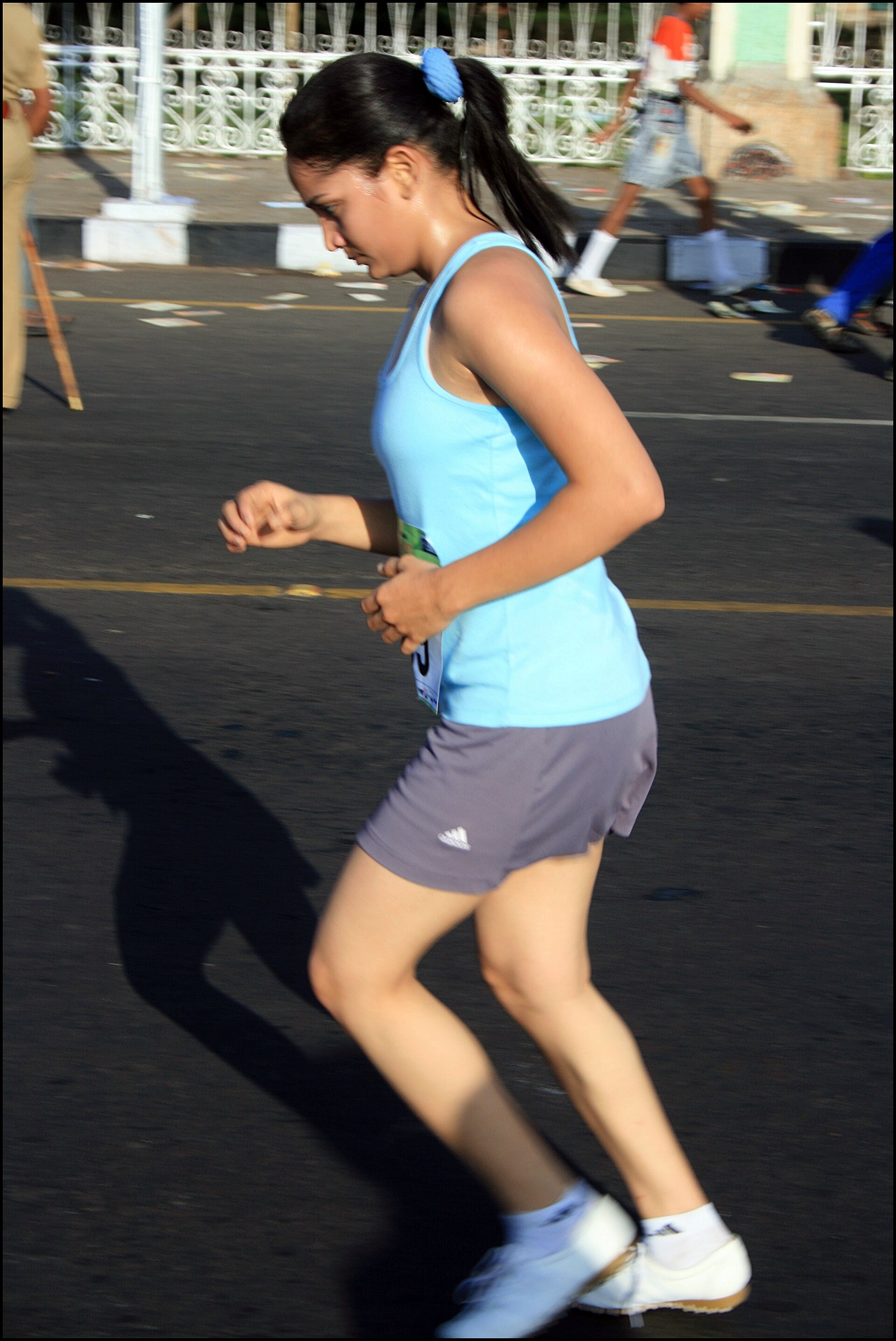
A runner pushes through the Chennai Marathon, where heat and sweat make chafing prevention essential. Photograph: Rajkumar R
Image Credits: Wikimedia Commons (CC BY-SA 2.0, Rajkumar R)
Frequently asked questions
Does Vaseline really prevent chafing when running?
Yes, as a friction reducer. Dermatologists recommend a pre-run layer of petroleum jelly, balm, or powder on hot spots such as thighs, underarms, and nipples. It creates a slippery layer between skin and clothing that cuts down rubbing.
Why do I chafe even in expensive running clothes?
Fit and seams are usually the cause. Even sweat-wicking gear chafes when tags, seams, or loose fabric drag across skin, or when a waistband or vest strap sits in the wrong place. Check the fit, not just the fabric.
Is chafing dangerous or just painful?
Mostly painful. Surface chafing heals in a day or two with gentle cleaning and loose clothing. Broken skin can get infected, so watch for redness, swelling, or pus and see a doctor if those appear.
How do I stop thigh chafing without wearing long shorts?
Compression liners under your shorts plus anti-chafe balm on the inner thighs is the standard fix. If the skin-on-skin contact persists, longer inseams or compression shorts are more reliable than balm alone.
The bottom line
Chafing is a friction problem with a moisture problem riding on top. The fix is straightforward: lubricate the skin before you run, wear snug moisture-wicking fabrics instead of cotton, fix seams and fit, and protect the known hot spots like nipples and inner thighs. Do the 60-second check before every long run, and never test new gear on race day.
Building up your distance? Read our guide on what counts as a good 5K time for a beginner to set realistic pace goals, and check how to fuel without stomach trouble before your longer efforts.
---
Rive News is a research desk publishing explainers from public sources. Corrections: contact the editorial desk.
Latest in Sports
- What Is a Good 5K Time for a Beginner
- Blisters from Hiking: Friction and Moisture Prevention
- Why Athletes Cramp Despite Drinking Water
Subscribe for weekly running and outdoor explainers.
Related stories

Why Is Altitude Sickness Worse for Some People?
Altitude sickness hits some people harder because of genetics, ascent speed, and prior history, not fitness level. Here is what raises risk

Why Do You Get Blisters When Hiking and How to Prevent Them
Friction plus moisture plus heat equals a blister. Learn why hiking breeds all three, and the boots, socks, and tape system that keeps

How to choose hiking boots for beginners: fit, features, and break-in
Beginners should buy for fit first: snug everywhere, tight nowhere, with a thumb's width at the toes. Here is how to size, test,