
What Is a Good 5K Time for a Beginner? Real Benchmarks
Key takeaways
- Most beginners finish a 5K between 35 and 50 minutes. Run-walk beginners may take 45 to 60.
- Finishing under 40 minutes is a strong start. Breaking 30 minutes is impressive for a beginner.
- Global race data puts average 5K times at roughly 35 minutes for men and 41 minutes for women.
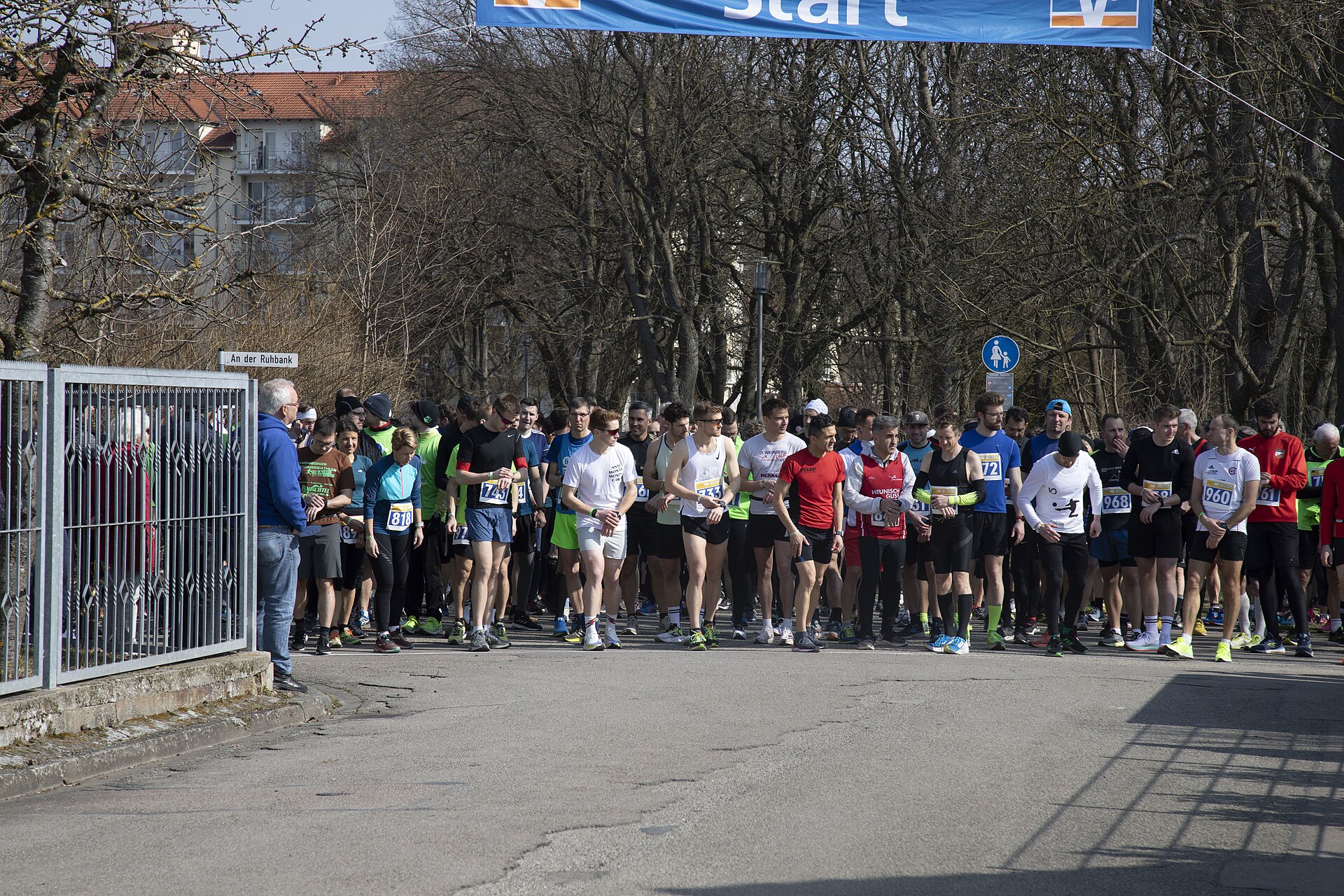
Runners take off at the start of a 5K race, the most popular entry-level race distance. Photograph: Sgt. Jason Greaves / U.S. Army
Image Credits: Wikimedia Commons (Public domain, U.S. Army)
The short answer
A good 5K time for a beginner is 35 to 50 minutes. That range covers most first-time runners who finish the race. Many of them take walk breaks along the way. Finishing under 40 minutes is a strong result. Breaking 30 minutes as a beginner is genuinely impressive.
That number needs context to be useful. A 48-minute finish with walk breaks is a complete success for a first race. A 32-minute finish means the runner did some training. A time under 25 minutes is uncommon for a true beginner. All three runners should be happy, because they were playing different games.
This article looks closer at what counts as a good 5K time for a beginner. It covers the real benchmarks by experience level, what the averages really mean, the pace math, and how to set your own goal.
Beginner 5K times by type
Not all beginners are the same. Running guides split beginners into rough groups:
- Run-walk beginners: 45 to 60 minutes. You are focused on finishing, and walk breaks are part of the plan. Completely normal for a first race.
- New beginners: 40 to 50 minutes. You can run most of the distance but are still building endurance.
- Trained beginners: 30 to 40 minutes. You did weeks of steady running before race day.
- Strong beginners: 25 to 30 minutes. You trained well before the race and likely have an athletic background.
- Sub-25 beginners: under 25 minutes. Uncommon for a true beginner.
If your first 5K time starts with a 4 or even a 5, that does not mean you failed. It usually means you paced carefully, took walk breaks, or are still building your aerobic base. That is your basic fitness engine, and it grows with steady running.
What the averages say
Large race databases help set expectations. Find Your Edge, citing data from large race databases, puts the global average 5K time at 35:20 for men and 41:30 for women. These averages include runners with at least some training. Complete beginners run slower than these numbers.
UK parkrun data tells a similar story. Community-reported parkrun results put the UK average around 28 to 32 minutes. But parkrun draws a more regular running crowd than the average first-timer race.
The Bronte Harbour Classic, a Canadian 5K event, sums it up well: the average recreational 5K time is 30 to 35 minutes, while a good time for a beginner is under 40 minutes. Trained runners usually aim for 20 to 30 minutes, depending on age and experience.
The milestone times that matter
Beginners love round numbers, and a few of them truly matter.
Breaking 40 minutes is the first real mark. It means you ran most of the distance at a steady pace. Run The Day, a running resource, rates under 40 minutes as a great start.
Around 30 to 35 minutes puts a beginner above average. This usually takes a few months of steady training.
Breaking 30 minutes is the milestone that changes how running feels. A 30-minute 5K means averaging 9:39 per mile or 6:00 per kilometer. For many runners, it is the first time a run feels like actual racing rather than just surviving.
Why your first 5K is about finishing, not the clock
Race day adds surprises that training cannot fully copy: crowds at the start, a faster opening pace than planned, nerves, and new courses. Almost every beginner starts too fast and pays for it in the final kilometer.
The smarter goal for a first race is about the process: run your own pace, take planned walk breaks if you need them, and finish feeling like you could have gone a bit further. Learning how the distance feels is the real prize. The time is just a starting point for the next race.
Age and sex shift the numbers too. Win Sports, compiling data from large US road races, lists beginner 5K ranges of 35:00 to 40:00-plus for men and 40:00 to 45:00-plus for women. Use these as rough context, not as grades.
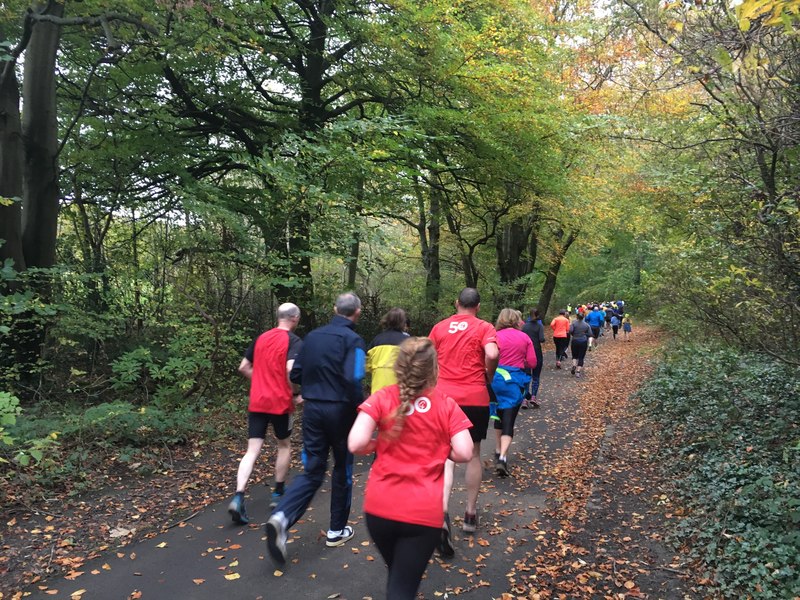
Runners at a Pollok parkrun, the free weekly 5K events that are the most common first races for beginners. Photograph: Graham Hogg
Image Credits: Wikimedia Commons (CC BY-SA 2.0, Graham Hogg)
How to set your goal time
Start from your training. If you can comfortably run 20 minutes without stopping, a 40-to-45-minute 5K with a couple of walk breaks is realistic. If you have been running three times a week for two months, a time under 40 minutes is within reach.
A practical method: time a relaxed 3K run in training. Double that time and add 10 to 15 percent for race-day tiredness. That number is your honest target.
Do not set your goal from social media. Comparing your first race to someone's fifth year of training is the fastest way to ruin a good result.
Three ways to get faster
Beginners improve quickly because the early gains come cheap. Three levers do most of the work.
Run more often. Three to four easy runs a week builds your base fitness faster than one long heroic effort. Consistency beats intensity at this stage.
Add one faster session. After six to eight weeks of easy running, add one weekly session with short faster intervals. One minute fast, two minutes easy, repeated six to eight times, is a standard beginner workout.
Learn pacing. Most beginners start races too fast. In training, practice negative splits: run the second half of a run slightly faster than the first. Race-day patience alone can shave minutes off a debut time.
Our guide on how to prevent chafing on long runs is worth a read as your distances grow, since even 5 or 6 miles can cause chafing.
Frequently asked questions
Is 45 minutes good for a beginner 5K?
Yes. Many run-walk beginners finish between 45 and 60 minutes, and finishing strong is the whole point of a first race. A 45-minute finish with planned walk breaks is a solid result.
What pace is a 35-minute 5K?
A 35-minute 5K means running 7:00 per kilometer, or about 11:15 per mile. A 40-minute 5K is 8:00 per kilometer. A 30-minute 5K is 6:00 per kilometer.
How long does it take a beginner to break 30 minutes?
With three to four runs a week, many beginners get there in three to six months. It varies with age, athletic background, and consistency. It is a training milestone, not a talent test.
Should beginners walk during a 5K?
Planned walk breaks are a real strategy. They often produce faster, more enjoyable first races than running until you collapse. There is no rule against walking.
The bottom line
A good beginner 5K time is 35 to 50 minutes, with under 40 minutes counting as strong and under 30 as impressive. But the honest benchmark for a first race is simpler: finish, learn pacing, and want to do it again. The clock can wait until race two.
Planning your training? See our guide on how to prevent chafing on long runs and why athletes cramp despite drinking water before your longer runs.
---
Rive News is a research desk publishing explainers from public sources. Corrections: contact the editorial desk.
Latest in Sports
- How to Prevent Chafing on Long Runs: 9 Proven Methods
- Why Athletes Cramp Despite Drinking Water
- Hiking vs Trekking: What Each Term Really Means
Subscribe for weekly running and outdoor explainers.
Related stories

Why Is Altitude Sickness Worse for Some People?
Altitude sickness hits some people harder because of genetics, ascent speed, and prior history, not fitness level. Here is what raises risk

Why Do You Get Blisters When Hiking and How to Prevent Them
Friction plus moisture plus heat equals a blister. Learn why hiking breeds all three, and the boots, socks, and tape system that keeps

How to choose hiking boots for beginners: fit, features, and break-in
Beginners should buy for fit first: snug everywhere, tight nowhere, with a thumb's width at the toes. Here is how to size, test,