
Why do running shoes have a heel to toe drop?
Key takeaways
- A heel to toe drop is the millimeter difference between a shoe's heel stack and forefoot stack, and it tilts your foot to shift load between joints.
- Higher drops (8-12 mm) ease the Achilles and calves but load the knees more; lower drops (0-4 mm) do the reverse.
- No drop is universally best: match the number to your foot strike, injury history, and ankle mobility.
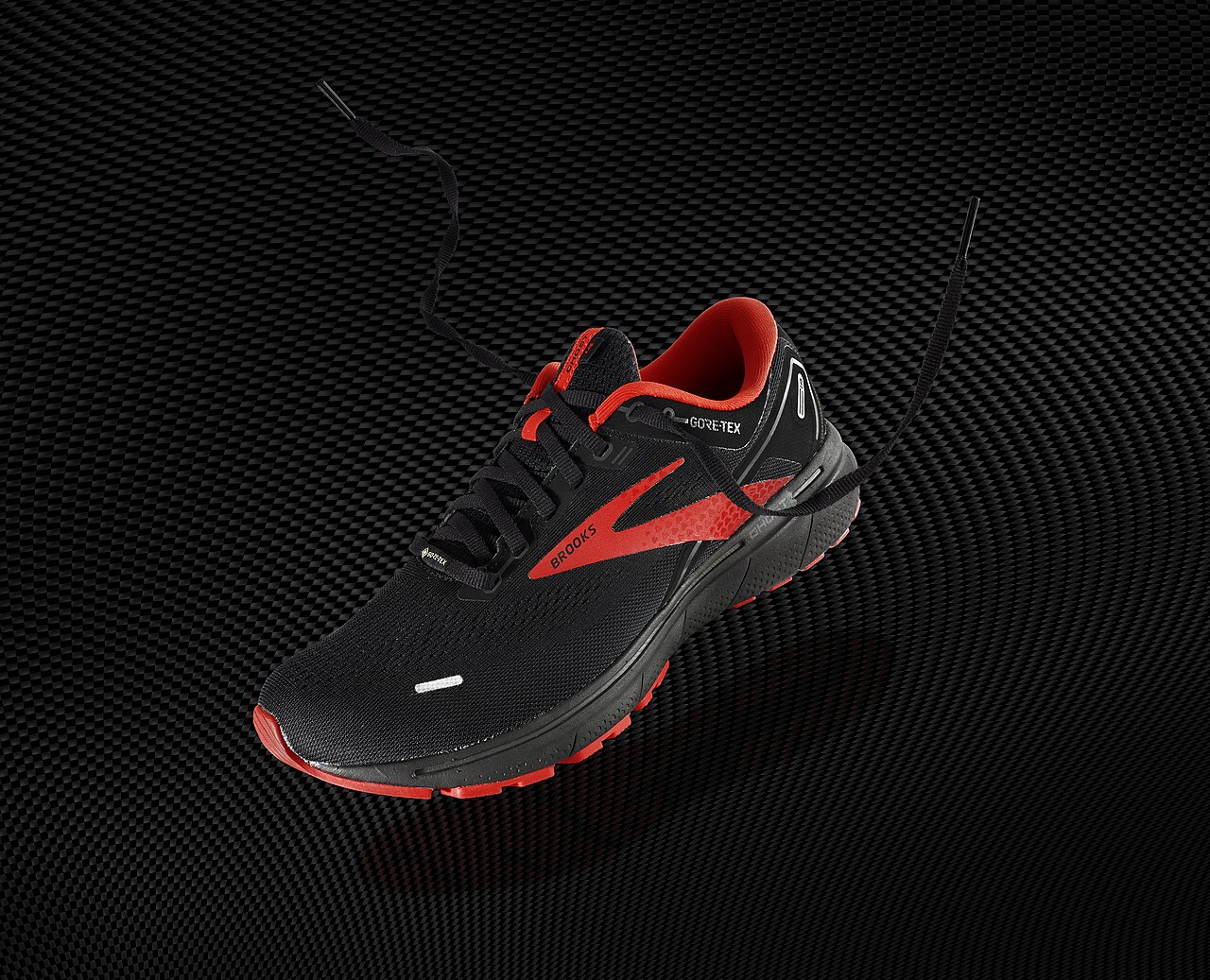
Why do running shoes have a heel to toe drop? Because a few millimeters of tilt under your foot quietly redistributes the forces of every stride. The drop, also called offset or heel differential, decides whether your knees or your Achilles absorb more of the pounding.
This article explains what drop actually measures, how the standard categories differ, and how to choose a number that fits your body rather than the marketing.
What the drop number really measures
Heel to toe drop is the difference in height between the heel stack and the forefoot stack, measured in millimeters. A shoe with 30 mm of midsole under the heel and 22 mm under the forefoot has an 8 mm drop. If both stacks are equal, the drop is zero, no matter how much total cushioning the shoe carries.
Drop is not the same as stack height. Stack is the total amount of midsole material.
A maximalist shoe can tower 40 mm off the ground yet still be zero-drop, like the Altra Olympus.
A thin racing flat can carry a 10 mm drop. Podiatrist Tom Biernacki, whose clinic publishes detailed drop guides, stresses that drop, stack height, and cushion firmness are three independent variables that shoppers confuse constantly.
The number matters because it sets the resting angle of your foot. A higher heel lifts the ankle into a slightly shortened position, changing which tissues take up slack at footstrike.
The four drop categories
Running shoes cluster into four bands, and knowing them makes spec sheets readable.
Zero drop means 0 mm: the heel and forefoot sit at exactly the same height. Altra built its brand on this geometry, and Xero Shoes follows the same philosophy. Zero-drop shoes maximally load the Achilles tendon and calves, demand the most ankle dorsiflexion range of motion, and carry the highest stress-fracture risk during the adaptation period.
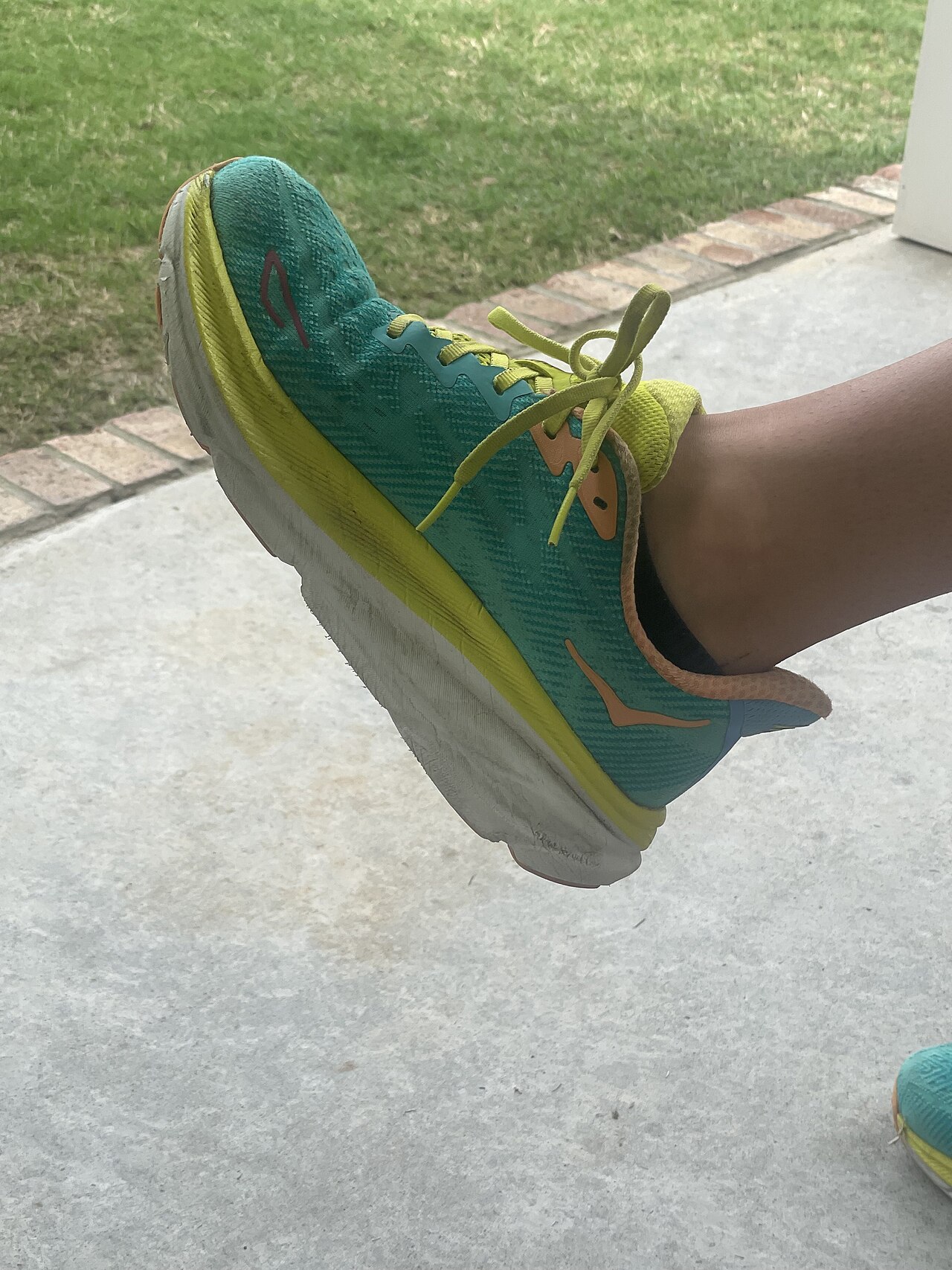
Low drop covers roughly 0 to 4 mm, sometimes stretched to 6 mm. The Hoka Clifton at 5 mm and many New Balance Fresh Foam models sit here. These shoes encourage midfoot or forefoot loading while keeping a small cushion of heel elevation.
Standard or moderate drop spans 8 to 10 mm. This is the traditional running shoe range.
The ASICS Gel-Nimbus at 10 mm and the Brooks Ghost, often listed around 12 mm, are the archetypes. Most recreational runners land here, and most running stores steer beginners toward it.
High drop means 12 mm and up. Traditional stability shoes like the Brooks Adrenaline GTS at 12 mm live in this band. Fewer new models push past 10 mm today, but high-drop designs still dominate the injury-recovery niche.
The biomechanical trade-off
Drop is a lever that moves load up and down the leg. Understanding the trade is more useful than memorizing categories.
Higher-drop shoes shorten the Achilles and calf at footstrike, reducing tension on the tendon and eccentric demand on the calf muscles. That makes them the clinical choice for runners managing Achilles tendinopathy, calf tightness, or limited ankle mobility. The cost is paid at the knee: higher drops shift ground reaction forces toward the heel, increasing loading at the knee and hip.
Lower-drop shoes reverse the equation. By bringing the heel closer to the ground, they reduce knee loading and encourage a landing nearer the midfoot, which many runners experience as smoother. The cost lands on the posterior chain: calves, Achilles, and sometimes hamstrings work harder, especially during the transition weeks.
Neither direction is healthier in the abstract. As one 2026 guide summarized it, drop alters how load is spread across your joints and nudges your foot strike, but it does not decide whether you run well or get hurt. Runners with sore knees often feel worse in very low drops, while runners with cranky Achilles often feel worse in very high ones.
Drop, foot strike, and the limits of the nudge
Shoe marketing loves to promise that a low drop will transform a heel striker into a forefoot striker. The reality is more modest.
A high drop does invite heel striking: the raised heel makes landing on the heel the path of least resistance, like sitting back into the stride. A low or zero drop rewards a forward landing, since there is less heel to land on. But studies and coaching experience agree that most runners keep the foot strike they already have regardless of the shoe.
Pace complicates the picture further. Many runners land further forward when they speed up and further back when they slow down, in the same pair of shoes. The shoe nudges; the runner decides.
One claim worth retiring: no study has demonstrated that drop changes running performance. The shoe factors tied to performance are weight, cushioning, and the energy return of the foam and carbon-plate combination. Drop is about comfort and load management, not speed.
How to choose your drop
Start from your injury history, not from ideology. If your knees complain on long runs, a lower drop may redistribute load away from them.
If your Achilles or calves are the problem, a higher drop gives them relief. Runners with no pain history can usually run happily in the standard 8 to 10 mm range.
Transition gradually. Moving from a 12 mm trainer to a zero-drop shoe overnight is one of the most reliable ways to earn Achilles tendinopathy or a metatarsal stress fracture. Podiatrists generally recommend stepping down in 4 mm increments and rotating the lower-drop shoe in for short runs first.
Mind your ankle mobility. Zero and low drops demand more dorsiflexion range of motion at footstrike. If your ankles are stiff, the low-drop shoe will borrow that range from somewhere else, often your Achilles.
Finally, keep the rest of the shoe in view. A 10 mm drop in a soft, rockered trainer feels nothing like a 10 mm drop in a firm, flat one. Drop is one variable in a system, and the system is what your legs actually feel.
Frequently asked questions
Is zero drop more natural than a high drop?
It more closely replicates barefoot foot angles, but "natural" does not mean safer. Zero-drop shoes maximally load the Achilles and require the greatest ankle mobility, so they suit adapted runners better than beginners.
Can I run a marathon in zero-drop shoes?
Yes, many runners do, including ultramarathoners. But marathon training piles on mileage, so the transition should be complete well before race day, with months of gradual adaptation.
Does drop affect shoe sizing or fit?
No. Drop changes the foot's angle inside the shoe, not its length or width. Fit the shoe to your foot shape first, then consider the drop number.
Should beginners start with a mid drop?
Most running specialists recommend 6 to 8 mm for beginners. It balances heel support with a natural stride, sits in the most common daily-trainer range, and keeps both the knees and the Achilles in moderate territory.
The bottom line
Running shoes have a heel to toe drop because a few millimeters of tilt steer impact forces toward your knees or toward your calves and Achilles. Pick the direction that spares your vulnerable tissues, transition in small steps, and remember that drop manages comfort and load, not speed.
Latest in Sports & Outdoors
- How to start running when you hate running
- Why your shins hurt when you start running
- How to prevent blisters on hikes
Subscribe to the Rive News newsletter for one practical sports explainer every week.
Related stories

Why Is Altitude Sickness Worse for Some People?
Altitude sickness hits some people harder because of genetics, ascent speed, and prior history, not fitness level. Here is what raises risk
Why Do You Get Blisters When Hiking and How to Prevent Them
Friction plus moisture plus heat equals a blister. Learn why hiking breeds all three, and the boots, socks, and tape system that keeps
How to choose hiking boots for beginners: fit, features, and break-in
Beginners should buy for fit first: snug everywhere, tight nowhere, with a thumb's width at the toes. Here is how to size, test,