
Why Tennis Courts Play Differently on Clay, Grass, and Hard
Key takeaways
- Clay is the slowest surface: its rough top layer grips the ball, cutting a 67 mph shot's speed by about 43% and kicking it up high.
- Grass is the fastest: the ball skids low across the blades at around 45 mph, giving players the least reaction time.
- Hard courts sit in between, and their speed is tunable by changing how much sand goes into the acrylic top layer.
Watch the same two players on three different courts and you will see three different sports.
On clay, rallies stretch into long grinding exchanges. On grass, points end in a blink. On hard courts, the game lands somewhere in between.
The players did not change, and the ball did not change. The ground did.
Tennis has a curious rulebook gap: the court must be a rectangle 78 feet long and 27 feet wide with a one-inch center service line, but there are zero rules about what the surface is made of. The International Tennis Federation currently recognizes more than 160 kinds of courts, from crushed brick to wood to asphalt. That freedom is exactly why the same shot behaves so differently from one surface to the next.
This article explains the physics behind the three main surfaces, clay, grass, and hard court: how friction steals ball speed, why bounce height matters as much as pace, and why your eyes exaggerate the differences.
Clay: the slow, high-bouncing grinder
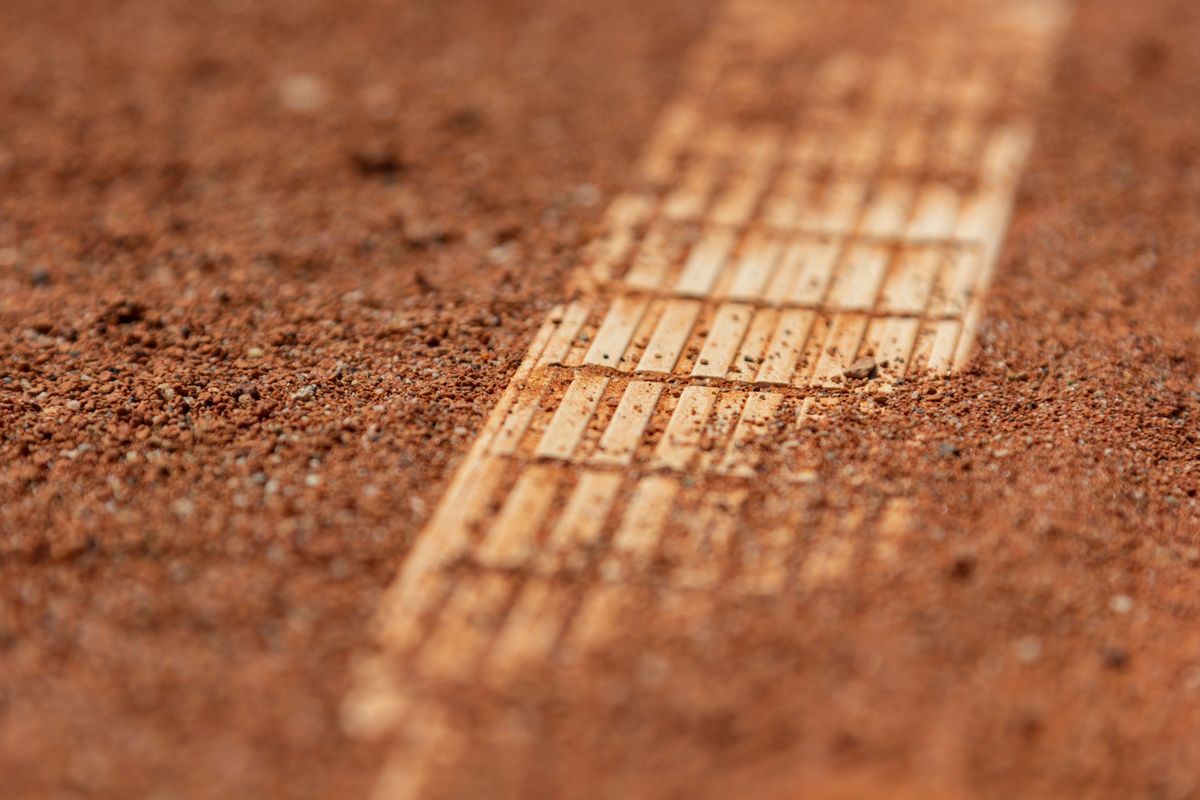
Clay is the slowest of the three main surfaces, and the reason is friction. The loose top dressing of a clay court grips the tennis ball on impact.
A 67 mph shot can slow down by nearly 43 percent upon contact, according to surface analyses cited by TennisGuide.
The crushed particles dig into the ball's cloth, acting like sandpaper and converting the ball's horizontal speed into a high vertical bounce.
That high bounce is clay's signature. It gives players more time to reach the ball but forces contact at shoulder height or above, which favors heavy topspin players who can push opponents behind the baseline. Rallies stretch out, points demand patience, and sliding becomes part of footwork, because the same loose particles that grip the ball roll underfoot like ball bearings, as physicist Rod Cross of the University of Sydney describes it.
The most famous clay is at Roland Garros, built in 1928 to host France's Davis Cup defense. The courts are not actually clay at all: they are white limestone frosted with a few millimeters of powdered red brick dust, about 40,000 kilos of crushed house bricks reapplied each year, according to BNP Paribas's We Are Tennis. Grounds crews water and sweep the surface between sets, and the ball leaves a visible mark, which is why clay tournaments do not use electronic line-calling.
Grass: the fast, skidding lawn
Grass is the fastest surface, and it plays that way for the opposite reason: low friction and a low bounce. The ball skids across the blades rather than digging in, so a shot on a fresh grass court maintains around 45 mph, roughly 15 to 20 percent faster than the same shot on clay.
The low "angle of rebound" is what makes grass feel even faster than it is. The ball stays flat after the bounce, rushing at the player instead of sitting up. Serve-and-volley players thrived here for a century because split-second reflexes beat grinding from the baseline, and the soft, slippery surface rewards attacking the net.
Modern grass is slower than the grass of the past. In 2001, Wimbledon switched to 100 percent perennial ryegrass and increased soil compaction, deliberately taming the speed.
The surface also changes during a tournament: early in the fortnight the ball zips through, but by the second week the worn baseline areas expose dirt that plays more like brick.
It remains the only Grand Slam still played on grass, and the only one where footing can betray a player mid-stride.
Hard courts: the customizable middle ground
Hard courts are the medium-fast compromise, and they are also the most adjustable.
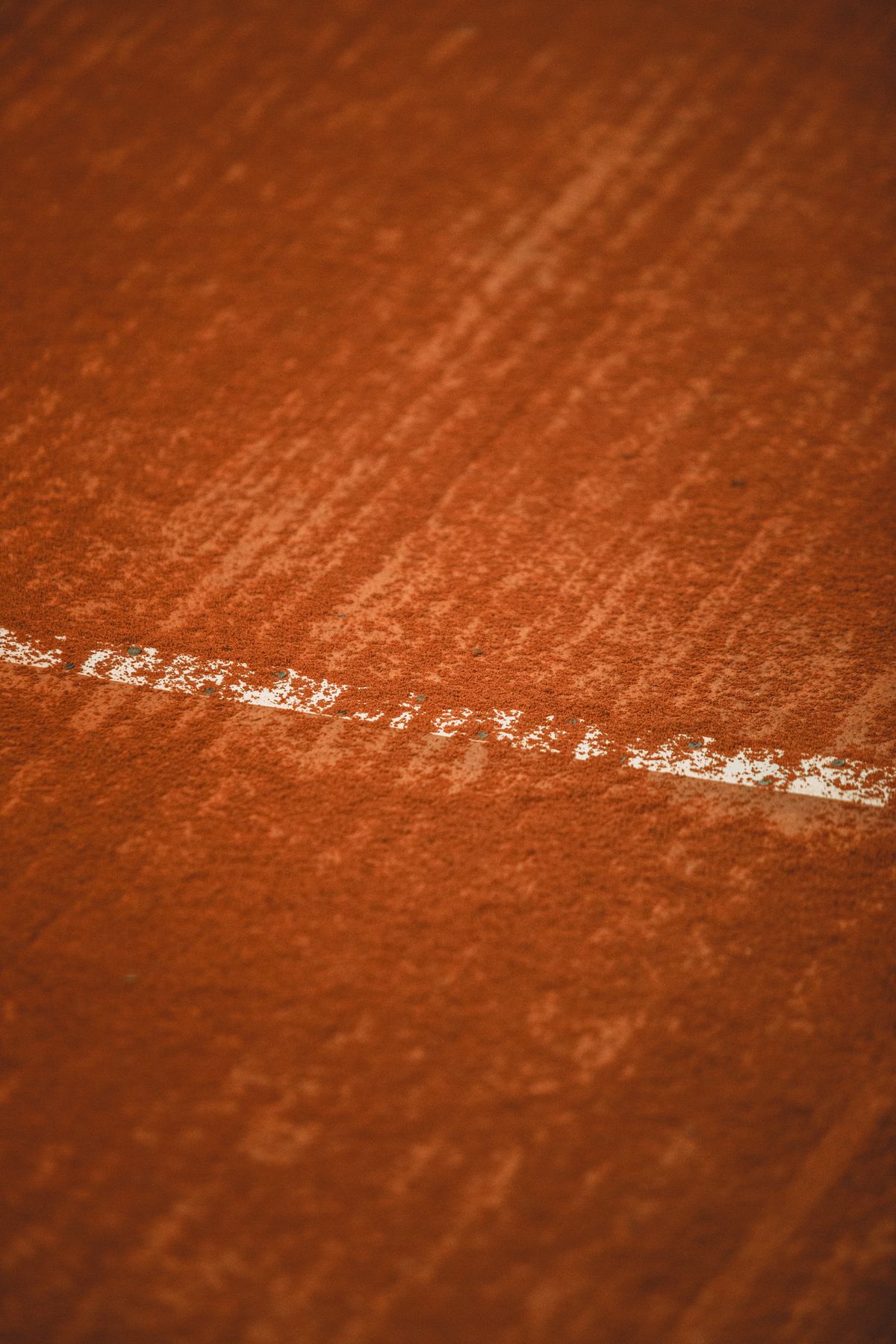
A hard court is an asphalt or concrete base coated with layers of acrylic paint, and its speed depends heavily on how much sand is mixed into that paint. More sand means more friction and a slower court; less sand means a quicker one.
There are at least 45 different kinds of hard court, some of which play slower than clay.
The bounce on hard courts is high and highly predictable, which rewards all-around players with versatile games. The uniform surface gives a true bounce every time, so players can set up shots with confidence. The trade-off is the body: there is no sliding as on clay, and the excellent grip demands sharp stops and starts that punish knees and ankles over a long season.
The two hard-court Grand Slams tune their surfaces differently.
The Australian Open uses a cushioned acrylic system, currently GreenSet, with moderate friction and a slightly energy-absorbing layer that protects joints. The US Open moved to Laykold in 2020, typically the faster of the two hard-court Slams, engineered to return more energy to the ball.
Evening humidity in New York can still slow the ball's flight through heavier air, even though the surface friction never changes.
Why your eyes lie about court speed
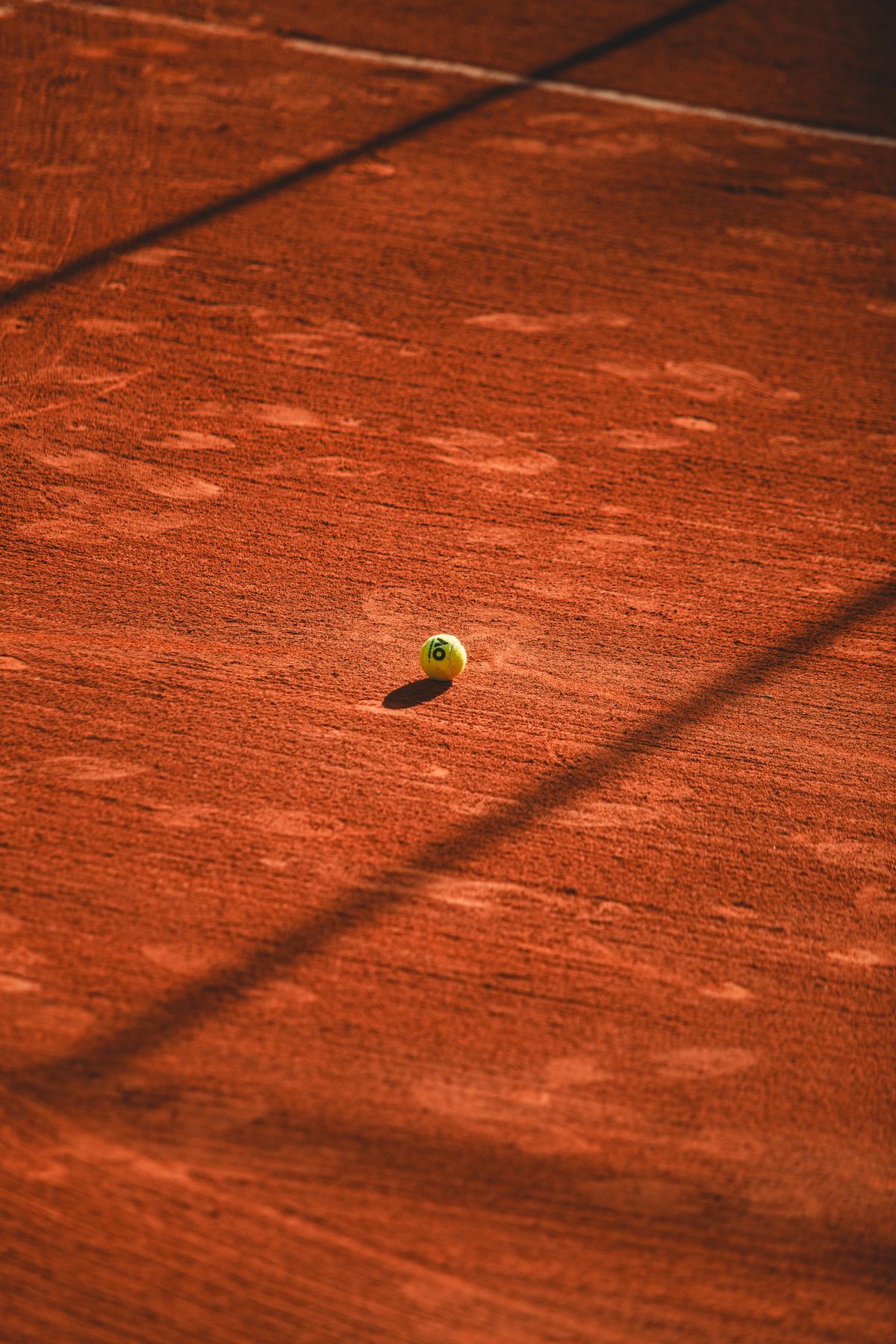
Here is the strangest finding in tennis physics: the rebound angle shapes perceived speed more than actual ball velocity does. Hard courts and grass courts often produce nearly the same post-bounce ball speed, yet grass feels far faster because the ball comes off low.
Physicist Howard Brody of the University of Pennsylvania put it plainly in his classic book Tennis Science for Tennis Players: "The eye and brain are much better at gauging an angle than observing a slight change in ball speed. If the ball comes off the court at a low angle after the bounce, you conclude that the court is fast because you must act faster."
The International Tennis Federation measures speed more rigorously with the Court Pace Index, derived from two physical constants: the coefficient of restitution, which measures how much energy remains in the ball after the bounce, and the coefficient of friction, which measures how much the surface slows the sliding ball. Rod Cross's measurements show that on a smooth surface the ball loses about 20 to 30 percent of its horizontal speed, while on a rough one it loses 40 to 50 percent. On clay, where the ball grips instead of sliding, the slowdown lands at the high end of that range.
Frequently asked questions
Which surface is hardest on the body?
Hard courts take the biggest toll. The high-friction surface stops players dead and loads the joints on every change of direction, which is why many veterans schedule rest around the hard-court swings. Clay is the kindest, since sliding dissipates force, and breathing and pacing matter as much as footwork in long clay rallies.
Why do some players dominate only on clay?
Clay rewards heavy topspin, patience, and sliding footwork, a specialized skill set. Players who grow up on the surface learn to construct points over many shots, while flat hitters who rely on quick winners lose their biggest weapon to the slow, high bounce.
Has Wimbledon really slowed down?
Yes. The 2001 switch to 100 percent perennial ryegrass with denser soil compaction measurably slowed the courts, and heavier modern balls added to the effect. Serve-and-volley, once the only way to win there, is now a rarity.
Why don't grass courts use electronic line calling like hard courts?
Tradition and surface behavior both play a role, but the practical point is that grass wears unpredictably and the ball's skid makes mark-reading harder. Clay leaves clear ball marks, so officials read those instead of calling for electronics. If you have ever wondered why tennis players grunt on every shot, the physical demand of adjusting to these surfaces is part of the answer.
The bottom line
Clay slows the ball and kicks it high, grass keeps it fast and flat, and hard courts split the difference with a speed the builders can dial in. The next time a match looks like a different sport from one tournament to the next, check the ground first. The surface is a silent third player in every point, and now you know its game.
Image Credits: Pexels / Bastian Riccardi; Daniel Neves Cotta
Latest in Sports
- Why tennis players grunt
- Why you breathe through your mouth when running hard
- Why your heart pounds after you stop sprinting
- Why you feel tired after a long drive even though you sat still
Subscribe for one plain-English sports science explainer like this every morning.
Related stories
Why Is Altitude Sickness Worse for Some People?
Altitude sickness hits some people harder because of genetics, ascent speed, and prior history, not fitness level. Here is what raises risk
Why Do You Get Blisters When Hiking and How to Prevent Them
Friction plus moisture plus heat equals a blister. Learn why hiking breeds all three, and the boots, socks, and tape system that keeps
How to choose hiking boots for beginners: fit, features, and break-in
Beginners should buy for fit first: snug everywhere, tight nowhere, with a thumb's width at the toes. Here is how to size, test,