
AI disproves 27-year computer science rule, OpenAI and Anthropic say: proofs unreviewed
Web StoryWatch this story in 15 seconds →Key takeaways
- OpenAI and Anthropic both say their AI models disproved the exponential time hypothesis (ETH), a rule from 1999 about hard logic puzzles.
- Neither claim is peer-reviewed yet. The proofs are posted on GitHub and checked by machine, but no person has fully verified them.
- Hundreds of papers assumed the rule was true. The scientists who created the rule are now leading the review of its fall.
OpenAI and Anthropic both claim their AI models broke a 27-year-old computer science rule this week. The rule is called the exponential time hypothesis, or ETH. It says some logic puzzles cannot be solved much faster than by trying every option.
Both companies posted machine-checked proofs. No human expert has fully verified them yet.
What happened
On October 26, OpenAI announced that its AI had disproved ETH. Hours later, Anthropic posted its own proof, according to Skimwire. Both labs say the core idea was found on October 16. Both published their proofs on GitHub.
Each proof comes in two forms: plain English and a format that a machine can check.
To see why this is big, you need to know what ETH says. It is about a puzzle called 3-SAT. The puzzle is a set of true-or-false questions.
You must find answers that fit all the rules. ETH says solving it takes exponential time. That means each new question can double the worst-case work.
It is like guessing a long password. Every new letter multiplies the number of tries. ETH said there is no real shortcut.
Two scientists, Russell Impagliazzo and Ramamohan Paturi, proposed the idea in 1999 with Francis Zane. Since then, hundreds of papers have used it.
Researchers proved other problems are hard by saying: "If ETH is true, this problem is hard too."
So the rule became a base for a whole field.
Anthropic's version has a clear date. The company says an internal Claude model found the core idea on October 16. It used 14 million output tokens. No human helped, the company says.
The paper is called "A 2^o(n) Time Algorithm for 3-SAT." It is posted on a site called Hexagon. The claim is a step-by-step method that solves 3-SAT in "sub-exponential" time.
That is faster than exponential time, but still very slow. The paper says the result does not settle the famous P vs NP question. It also says nothing changes for real-world use.
The new method only beats brute force for puzzles with over 10 billion variables. Brute force already fails at 100 variables, the paper notes.
The README is blunt: the result "says nothing about solving formulas in practice."
OpenAI's version follows the same path. The company says its model found the disproof on October 16. It was checked in a proof-checking program called Lean on October 17. Lean checks every logic step of a proof. OpenAI says it will not take academic credit for the work.
It asked outside scientists to lead the review instead. It also announced two more results: one math proof and one physics proof.
The review group has a strange twist. It is led by Impagliazzo and Paturi of UC San Diego and Ryan Williams of MIT. These are the very people who created ETH.
They signed no secrecy deals. They work for free. Their findings are their own, OpenAI says.
OpenAI also promised to fund a conference about the result.
Why it matters
If the claims hold, decades of research need a second look. Hundreds of papers assumed ETH was true. Those papers would not be wrong, exactly.
But their proofs would no longer stand. Researchers would need to check which results survive without the rule.
The human cost is real. Peter Jonsson of Linköping University told WIRED that much of his work is now "dead." His paper will be presented at a big computer science meeting in two weeks.
He expects many talks to open with "ETH is false, half of my paper does not work." Daniel Lokshtanov of UC Santa Barbara estimates that 50 of his papers could be pointless or need a rethink.
He called the result "a giant bomb dropped into the middle of the field."
He added that it is "really cool and terrible at the same time."
But a big warning is needed. No human has fully checked either proof yet. WIRED reported that earlier this month OpenAI shared 722 manuscripts about 400 problems.
Some proofs in that batch were wrong. So the new claims need slow, careful review before anyone treats them as fact. Machines like Lean check the logic steps.
But people must still check what the steps actually prove. Anthropic itself notes this limit.
Two rival labs finding the same result on the same day is striking. Anthropic says its work was independent. That makes the claim harder to dismiss.
It also raises the stakes if it turns out wrong. One fear is already answered, though. Williams told TechCrunch that OpenAI checked whether the new method breaks internet security.
The answer was a reasonably confident no, Skimwire reports. Your passwords and bank logins are safe.
Thore Husfeldt leads the algorithms group at the IT University of Copenhagen. He called the result a "once-in-a-generation" moment. He first wrote a version of the rule that is now disproved.
He said being a mathematician is like walking in a dark room. Now, he said, someone turned on floodlights.
That mix of fear and joy sums up the field this week.
What happens next
The review group plans a virtual meeting before the end of the year, WebProNews reports via Skimwire. The real question is whether human experts can understand the proofs. It is not enough that Lean accepts them.
Researchers like Jonsson will revisit their papers one by one. New questions will open up if the fall is confirmed. The field could enter a fast new phase.
If the claims fail, the episode is still a warning. AI models are now writing original research. The chips that power them are in huge demand.
The models can produce proofs faster than humans can check them. Science needs new rules for that world. Machines can check each logic step.
People must still judge what the steps mean.
One week, two labs, one giant claim. The proofs are posted and the checks are running. The verdict belongs to the humans who wrote the rule in the first place.
Related stories
Apple plans two October launches: smart home hub, OLED MacBook Pro
Apple set October 13 for a smart home launch with a new hub, Apple TV 4K and HomePod mini, then October 27 for OLED MacBook Pro models
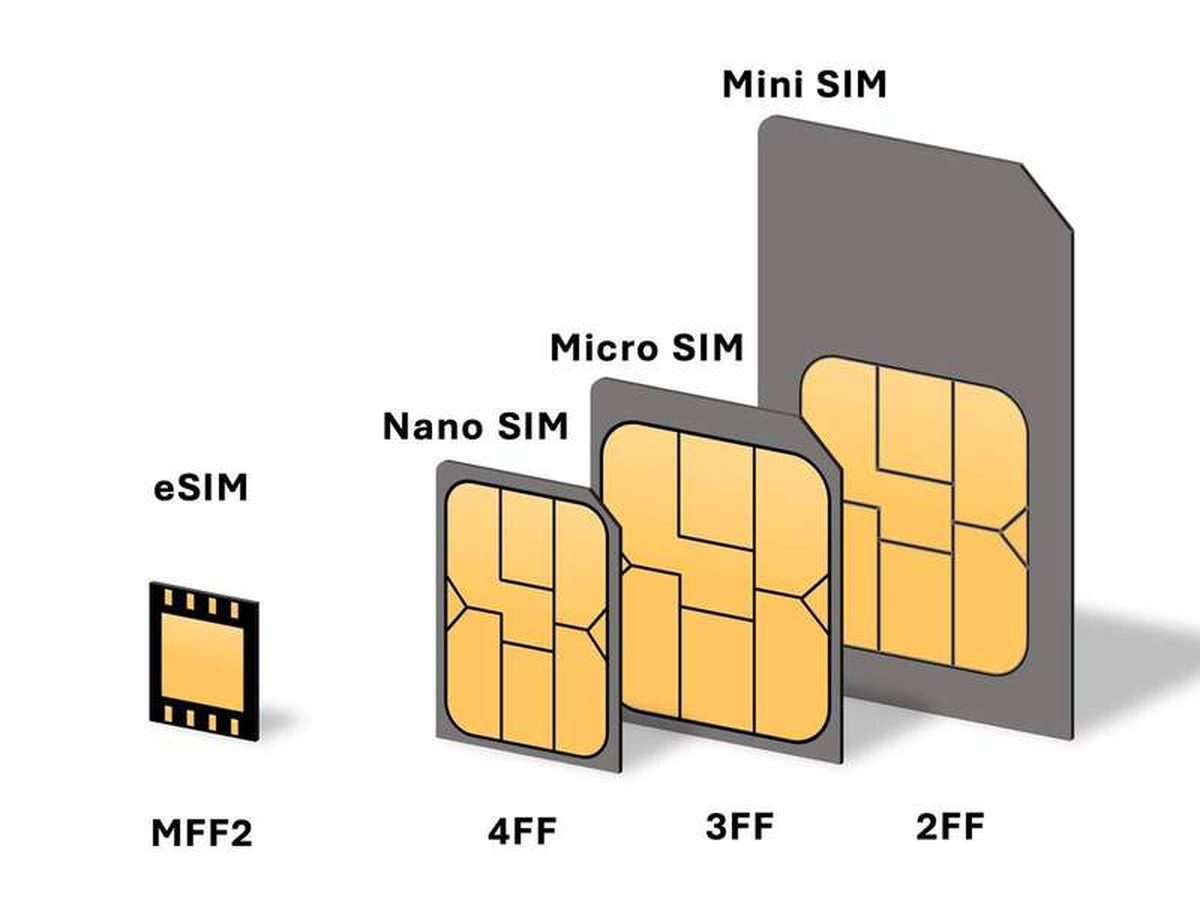
How to Check If Your Phone Supports eSIM in 30 Seconds
Dial *#06# and look for an EID number to confirm eSIM support in under 30 seconds. This guide also walks through the iPhone and Android
eSIM vs iSIM: what is the difference?
An eSIM is a dedicated chip on the phone's board, while an iSIM lives inside the processor itself. Qualcomm's Snapdragon 8 Gen