
eSIM vs iSIM: what is the difference?
Key takeaways
- An eSIM is a dedicated chip soldered onto the phone's circuit board; an iSIM builds the SIM function directly into the main processor.
- Qualcomm's Snapdragon 8 Gen 2, announced at MWC 2023, was the first commercial chip with certified iSIM support.
- For users, both work the same way: carrier plans are downloaded over the air, with no physical card to swap.

SIM cards have shrunk for decades, from full-size cards to nano-SIM. The eSIM removed the card entirely. Illustration: Jbond2018/Wikimedia Commons
Image Credits: Wikimedia Commons
SIM cards have been shrinking for thirty years: from the credit-card-sized original, to mini, to micro, to the nano-SIM at 12.3 by 8.8 millimeters. The eSIM took the next step by removing the removable card altogether.
Now there is another step. The iSIM, short for integrated SIM, folds the SIM's job into the phone's main processor. This article explains SIM technology, including what eSIM is, what iSIM changes, how the two compare, and what it means for your next phone.
What is eSIM?
An eSIM, or embedded SIM, is a small chip soldered directly onto the device's circuit board during manufacturing. Its technical name is eUICC, short for embedded universal integrated circuit card.
It does the same job as the plastic card it replaces: it identifies you to your mobile carrier so your line can be switched on. The difference is how you change carriers. Instead of swapping a physical card, you download a carrier profile over the air, usually by scanning a QR code or using your carrier's app.
Removing the card slot saves space inside the phone and removes an opening where dust and water can enter. The eSIM still occupies its own dedicated chip and its own spot on the motherboard, though. That leftover spot is what the iSIM targets.
What is iSIM?
The iSIM, or integrated SIM, takes the SIM function off the separate chip and builds it into the system-on-chip itself, the main processor that already runs the phone. Its technical name is iUICC, short for integrated universal integrated circuit card.
The technology reached commercial reality at Mobile World Congress 2023, when Qualcomm announced that its flagship Snapdragon 8 Gen 2 processor carried iSIM support. Developed together with Thales, it was certified compliant with the GSMA standard, making it, in Qualcomm's words, the world's first commercially deployable iSIM.
The idea had been proven a year earlier. In 2022, Vodafone, Qualcomm, and Thales demonstrated iSIM working in a specially modified Samsung Galaxy Z Flip 3, showing that a phone could connect to a network with no SIM hardware outside the processor.
Like the eSIM, the iSIM follows the GSMA Remote SIM Provisioning standard. That means your carrier still sets up your line wirelessly. From where you sit, nothing about signing up or switching carriers changes.
How eSIM and iSIM compare
The headline difference is size. According to Thales, an iSIM is about 98 percent smaller than an eSIM, measuring less than one square millimeter. SamMobile puts it another way: compared with a nano-SIM, an iSIM is roughly 100 times smaller.
That space saving matters most where space is scarcest. In a flagship phone, the freed area can go to a bigger battery or better speakers. In a smartwatch, smart glasses, or a VR headset, it can make cellular connectivity possible at all.
Power is the second difference. Thales reports that an iSIM uses up to 70 percent less energy than a conventional SIM or eSIM, because it draws from the processor's own power rather than a separate component. For wearables and IoT sensors running on tiny batteries, that is a meaningful gain.
Cost is the third. With fewer components and a simpler design, Thales says an iSIM is about 50 percent cheaper to make than an eSIM. Whether phone makers pass that saving to buyers is another question; T3 dryly advised readers not to hold their breath.
On security, the two are peers. The GSMA-certified iSIM in the Snapdragon 8 Gen 2 offers the same security level as eSIM, according to Qualcomm's announcement. Both keep credentials in tamper-resistant hardware and both are managed remotely by carriers under the same standard.
There is one trade-off worth knowing. Building the SIM into the processor is more complex during chip design, which can slow a manufacturer's time to market compared with dropping in a standard eSIM chip. That engineering cost is why eSIM remains the common choice while iSIM ramps up.
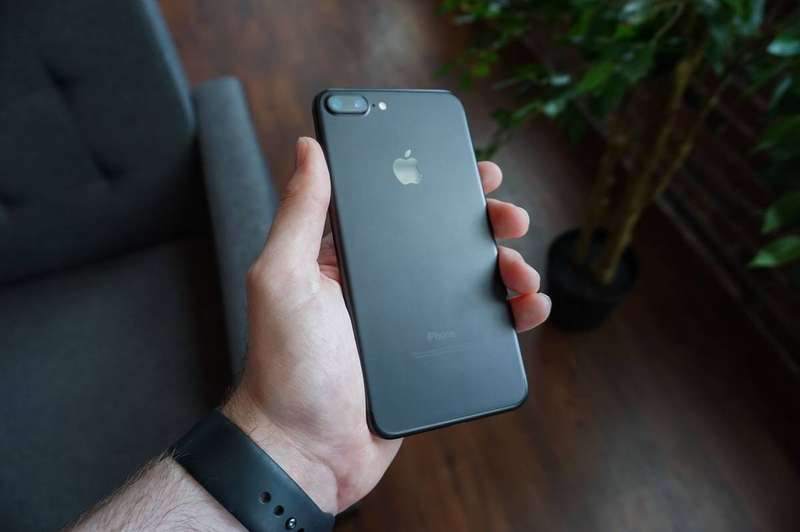
For the person holding the phone, eSIM and iSIM behave the same: plans download over the air with no card to swap. Photograph: Dennis Cortés cortes/Wikimedia Commons
Image Credits: Wikimedia Commons
Why it matters to you
In the short term, it mostly does not change your life. As T3 put it, an eSIM lives on a dedicated chip while an iSIM lives in the main processor, and they both do the job speedily and securely, so from a user point of view there is no real difference.
The impact arrives indirectly. Smaller, cheaper, lower-power SIMs let manufacturers put cellular connections into smaller devices: watches, glasses, trackers, and the countless sensors of the Internet of Things. Analyst figures cited by Qualcomm at the 2023 announcement projected hundreds of millions of iSIM devices within a few years, with IoT as the main driver.
It also continues a trend you have already lived through. Physical SIM slots are disappearing from phones year by year, and the iSIM is the endgame of that arc: connectivity as a feature of the chip itself, not a component bolted alongside it.
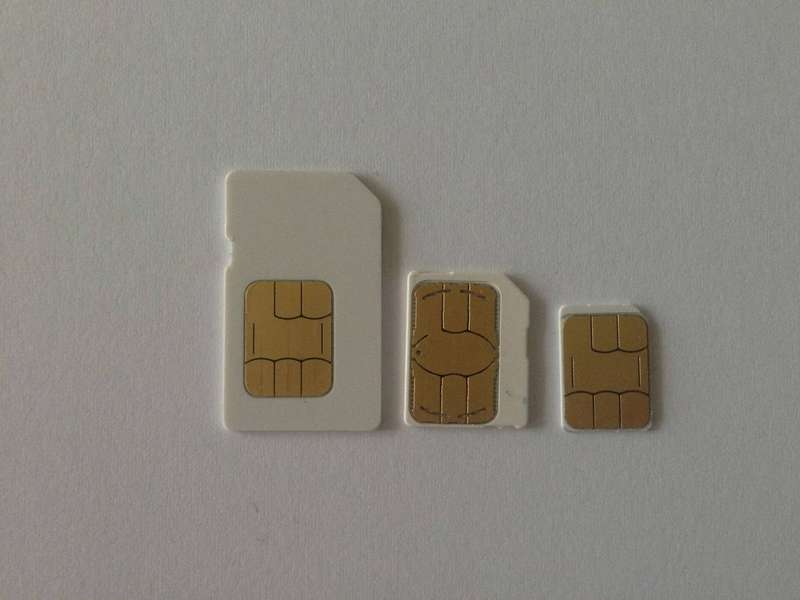
The evolution of SIM formats: each generation shrank the card, and the iSIM removes the card hardware entirely. Photograph: Bidouille82/Wikimedia Commons
Image Credits: Wikimedia Commons
Frequently asked questions
Do I need to do anything to use iSIM?
No. If your phone supports it, your carrier sets up your line over the air exactly like an eSIM. There is no card to buy, insert, or swap.
Is iSIM more secure than eSIM?
Not in any way that matters to users. Qualcomm's certified iSIM meets the same GSMA security standard as eSIM, with credentials held in tamper-resistant hardware. Both are a step up from a removable card, which can be physically stolen.
Will iSIM replace physical SIM cards?
It continues the trend, but physical SIMs are not gone yet. Many phones still ship with a nano-SIM slot alongside eSIM, and carrier support varies by country. The iSIM speeds up the shift rather than finishing it overnight.
Can iSIM be used in smartwatches and IoT devices?
That is its natural home. Because it needs no separate chip and sips power, the iSIM fits devices too small or too battery-constrained for an eSIM, from watches to industrial sensors.
The bottom line
An eSIM is a SIM chip soldered to the board. An iSIM is the SIM function built into the processor itself, which makes it far smaller, cheaper, and more power-efficient.
You will not notice the difference when you sign up for a plan. You will notice it in the smaller connected devices that start appearing because the SIM no longer needs its own hardware.
Rive News is the research desk of this publication, covering what industry announcements and standards bodies say about everyday technology.
Related stories
- Why is cramming ineffective for long-term learning?
- How to tell if brake pads need replacing before they fail
- How to choose hiking boots for beginners: fit, features, and break-in
- Why do I get cramps in my feet but not my legs?
Subscribe to the newsletter for one technology explainer like this every week.
Related stories

Apple plans two October launches: smart home hub, OLED MacBook Pro
Apple set October 13 for a smart home launch with a new hub, Apple TV 4K and HomePod mini, then October 27 for OLED MacBook Pro models

How to Check If Your Phone Supports eSIM in 30 Seconds
Dial *#06# and look for an EID number to confirm eSIM support in under 30 seconds. This guide also walks through the iPhone and Android
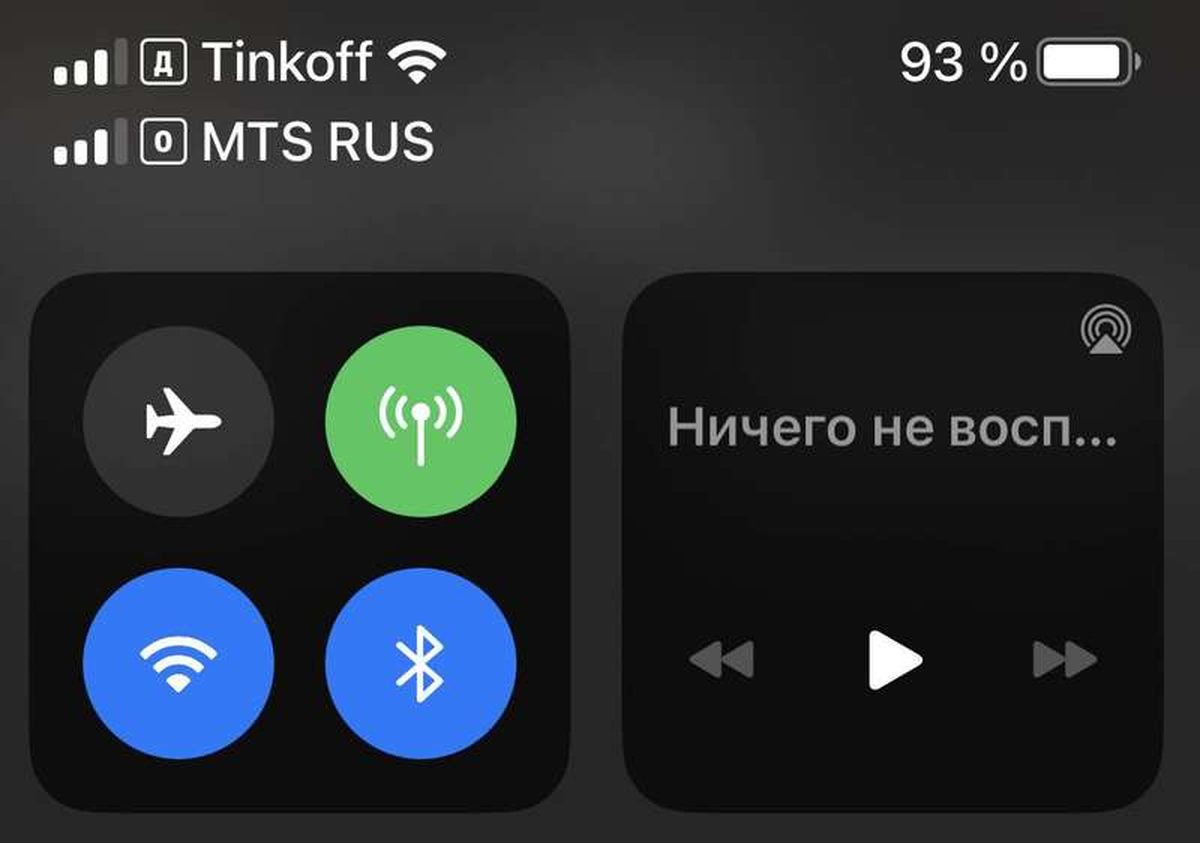
How dual eSIM works on iPhone: two active lines explained
iPhone 13 and later can run two eSIMs at once and store eight or more plans. How dual eSIM works on iPhone, which models support it,