
How to tell if brake pads need replacing before they fail
Key takeaways
- A high-pitched squeal when braking is often the wear indicator, a small metal tab designed to touch the rotor when pads get thin.
- New pads measure 10 to 12mm thick; most mechanics recommend replacement at 3mm or less.
- You can eyeball pad thickness through the wheel spokes with a flashlight, but have a professional confirm anything you are unsure about.
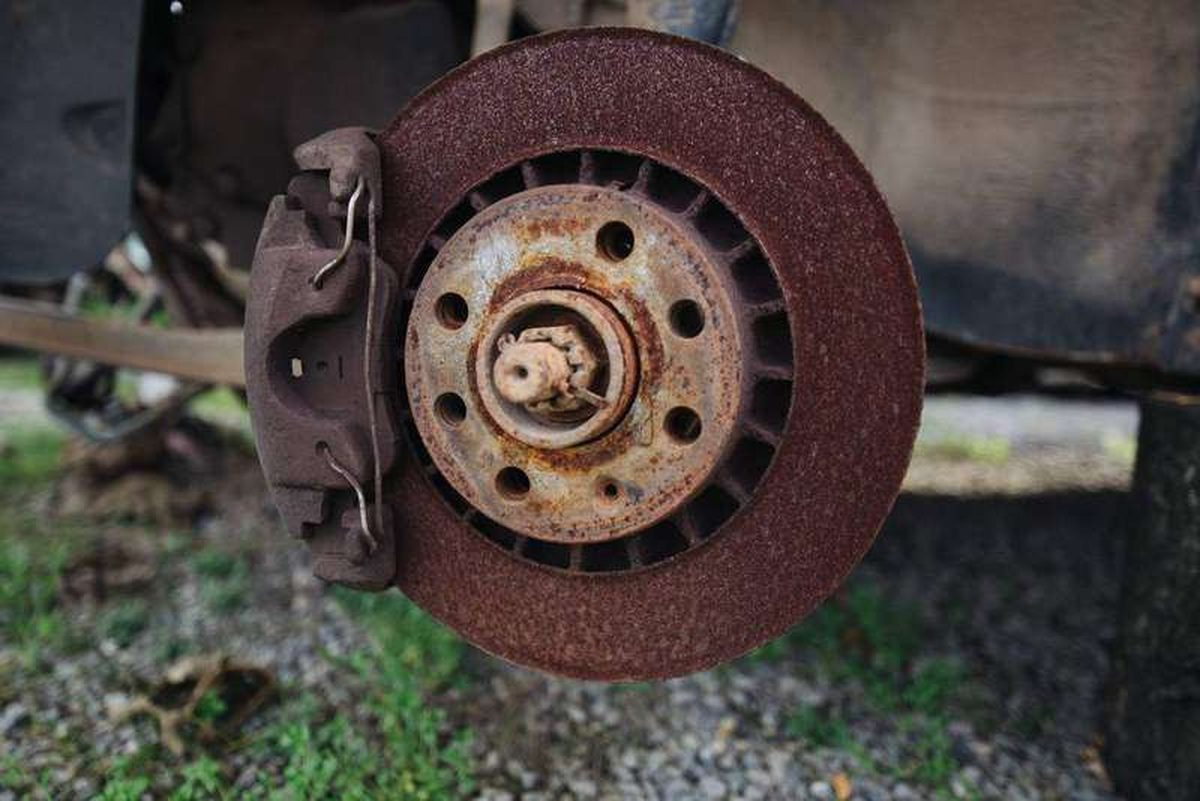
A disc brake assembly behind a wheel: the pads sit inside the caliper, pressed against the rotor. Photograph: Shixart1985/Wikimedia Commons
Image Credits: Wikimedia Commons
Brake pads are the part of your car that actually does the stopping. Pressing the pedal squeezes the pads against the spinning brake rotor, and friction slows the wheel. The pads are designed to wear down over time.
That wearing down is normal, but worn-out pads are not just noisy. They lengthen stopping distances and can damage the rotors, which turns a cheap pad swap into an expensive repair. This article explains brake pads, including how they wear, the warning signs of worn pads, how to check pad thickness yourself, and when to get a professional inspection.
How brake pads wear down
A brake pad has two parts: a friction lining bonded to a metal backing plate. Every stop scrapes a tiny amount off the lining. New pads typically start at 10 to 12mm of friction material, according to a thickness guide published by Tagore Auto Parts.
Mileage varies a lot. City driving with constant stop-and-go traffic wears pads faster than highway cruising. Front pads usually wear first, because weight shifts forward during braking and the front axle does most of the work.
Many pads include a built-in warning device. HowStuffWorks describes the wear indicator as a small metal tab designed to come into contact with the rotor once the pad wears to a certain point.
When it touches, it produces a deliberate, high-pitched squeal. The car is telling you the pads are nearly done.
Pads do not always wear evenly. A sticking caliper (the clamp that holds the pads) can wear one pad faster than its partner. That is why mechanics check both the inner and outer pads, not just the one you can see.
Warning signs your brake pads are worn
Your ears are often the first diagnostic tool. A steady high-pitched squeal or screech when you press the pedal usually means the wear indicator tab has started touching the rotor.
Grinding is the next stage and a more serious one. A deep metallic grinding means the friction material is gone and the metal backing plate is scraping the rotor. Driving like this scores the rotor surface and can require rotor replacement alongside the pads.
Your feet and hands pick up other clues. If the car takes clearly longer to stop, the pedal feels lower or spongier than usual, or the steering wheel shakes under braking, the pads or the rotors they press against are likely compromised.
Some cars have an electronic pad-wear sensor that lights a dashboard warning. Not all cars have one, and sensors can be damaged or disconnected, so do not treat the absence of a warning light as proof your pads are fine.
Less brake dust on the wheels can also be a late-stage hint. HowStuffWorks notes that the heavier the car, the more dust the front wheels normally collect, and clearly less dust can mean the pads have worn to the backing.
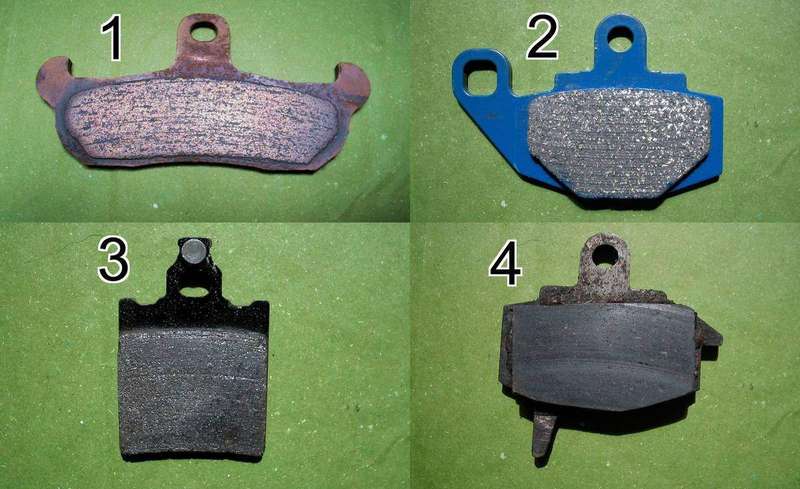
Close-up of brake pads: the friction lining is bonded to a metal backing plate. Photograph: A7N8X/Wikimedia Commons
Image Credits: Wikimedia Commons
How to check pad thickness yourself
You can often check disc brake pads without removing the wheel. Park on level ground, apply the parking brake, and turn the steering wheel fully to one side so you can see the front brakes better.
Shine a flashlight through the wheel spokes at the caliper, the large metal clamp over the rotor. The outside brake pad sits between the caliper and the rotor.
You want the thickness of the friction material, not the metal backing plate. SlashGear's inspection guide suggests eyeballing the distance between the rotor and the pad's metal plate.
A useful visual reference: 3mm is about the thickness of two US pennies stacked together. If the friction material looks to be around 3mm or less, the pads need replacing.
At 3 to 4mm, they are worn and you should schedule an inspection soon. At 6 to 8mm, they are in good shape and just need routine monitoring.
Some pads have a wear-indicator slot cut into the center of the friction material. If that slot is nearly or completely gone, the pad is at the end of its life.
Check both sides of the car if you can. Some calipers have an inspection window on the back that lets you glimpse the inner pad. Compare pads left to right: if one is much thinner than the other, mention it to the mechanic, because uneven wear can signal a caliper problem.
Never touch the components right after driving. Brakes get extremely hot, and burns are easy. Let them cool fully before any inspection.
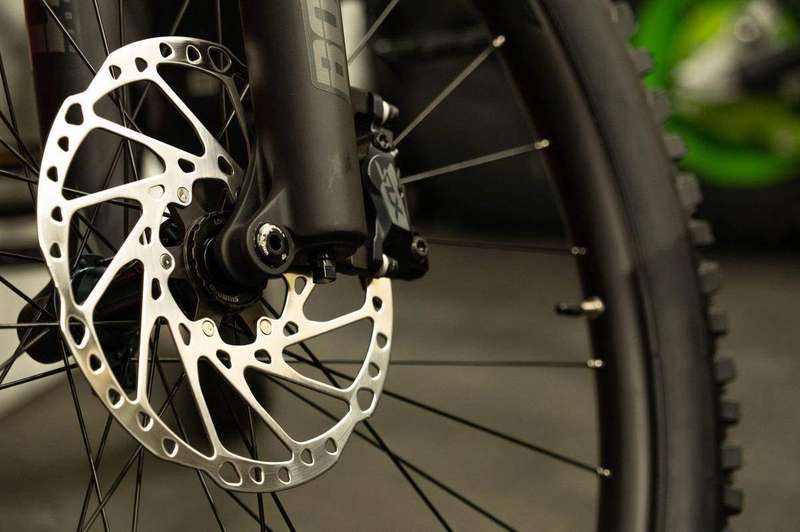
A disc brake rotor with the caliper and pads in place. Photograph: Alextredz/Wikimedia Commons
Image Credits: Wikimedia Commons
When to call a mechanic
A visual check tells you the thickness, not the whole story. Book a professional inspection if you hear grinding, if the car pulls to one side when braking, if the pedal feels soft or sinks, or if any pad measures at or below 3mm.
Ask the mechanic to check the rotors too. Pads that wore too long can leave the rotor scored, glazed, or below its minimum thickness, in which case pads alone will not fix the problem.
If you are unsure what you are looking at through the wheel spokes, that uncertainty is itself the answer. A brake inspection is inexpensive, and brakes are not the system to learn on by trial and error. HowStuffWorks puts it plainly: if you have never removed a caliper before, get a repair manual or take the car to a mechanic.
As a rough habit, glance at your pads every time you rotate your tires, typically every 5,000 to 8,000 miles. Catching wear at 3 to 4mm gives you time to plan the job on your schedule instead of discovering it as grinding on a highway.
Frequently asked questions
How thick should brake pads be?
New pads are about 10 to 12mm thick. At 6 to 8mm they are fine; at 3 to 4mm they are worn and due for an inspection; at 3mm or less they should be replaced. These figures are consistent across guides from Tagore Auto Parts and SlashGear.
Why do my brakes squeal only sometimes?
Light squealing in damp or cold weather can be temporary, caused by surface rust or moisture that clears after a few stops. A squeal that happens every time you brake, especially at low speed, is more likely the wear indicator and deserves a thickness check.
Is it safe to keep driving once the wear indicator starts squealing?
The squeal is an early warning, not an emergency, but it means replacement is due soon. Continuing to drive wears the pad to the metal backing, which grinds the rotor and raises the repair bill. Schedule the job within days, not months.
How often should brake pads be inspected?
Many mechanics suggest checking during every tire rotation or oil change, roughly every 5,000 to 8,000 miles. Front pads wear faster than rears, so do not assume all four corners match.
The bottom line
Worn brake pads announce themselves: a deliberate squeal from the wear indicator, thin friction material at 3mm or less, or longer stopping distances.
A flashlight check through the wheel spokes takes two minutes. If anything looks or sounds off, let a professional confirm it. Brakes are worth the appointment.
Rive News is the research desk of this publication, covering what trusted guides and manufacturer guidance say about everyday decisions.
Related stories
- Why is cramming ineffective for long-term learning?
- How to choose hiking boots for beginners: fit, features, and break-in
- eSIM vs iSIM: what is the difference?
- Why do I get cramps in my feet but not my legs?
Subscribe to the newsletter for one practical explainer like this every week.
Related stories

Why Does Tire Pressure Drop in Cold Weather?
Cold weather can cut tire pressure by 1 psi for every 10°F drop, thanks to the ideal gas law. Here is what happens inside the tire and what

Why Do Brake Rotors Warp, or Do They Actually?
Mechanics rarely see a truly warped rotor. The shudder usually comes from uneven pad deposits a few thousandths of an inch thick. Here

How to Buy a Used Car Without Getting Scammed: The Checklist
Over 450,000 cars a year have rolled-back odometers, NHTSA says. This checklist covers VIN checks, title washing, and the inspection that