
What is a digital wallet, and how it differs from a banking app
By Rive News / Research desk | Rive News / Published October 27, 2026 at 9:00 AM PKT
Key takeaways
- A digital wallet is built for paying: tap-to-pay, online checkout, and sending money to people.
- A banking app is built for managing accounts: balances, transfers, bill pay, deposits, and statements.
- Money in a wallet may sit with a card issuer or a partner bank, while money in a bank account is FDIC-insured up to $250,000.
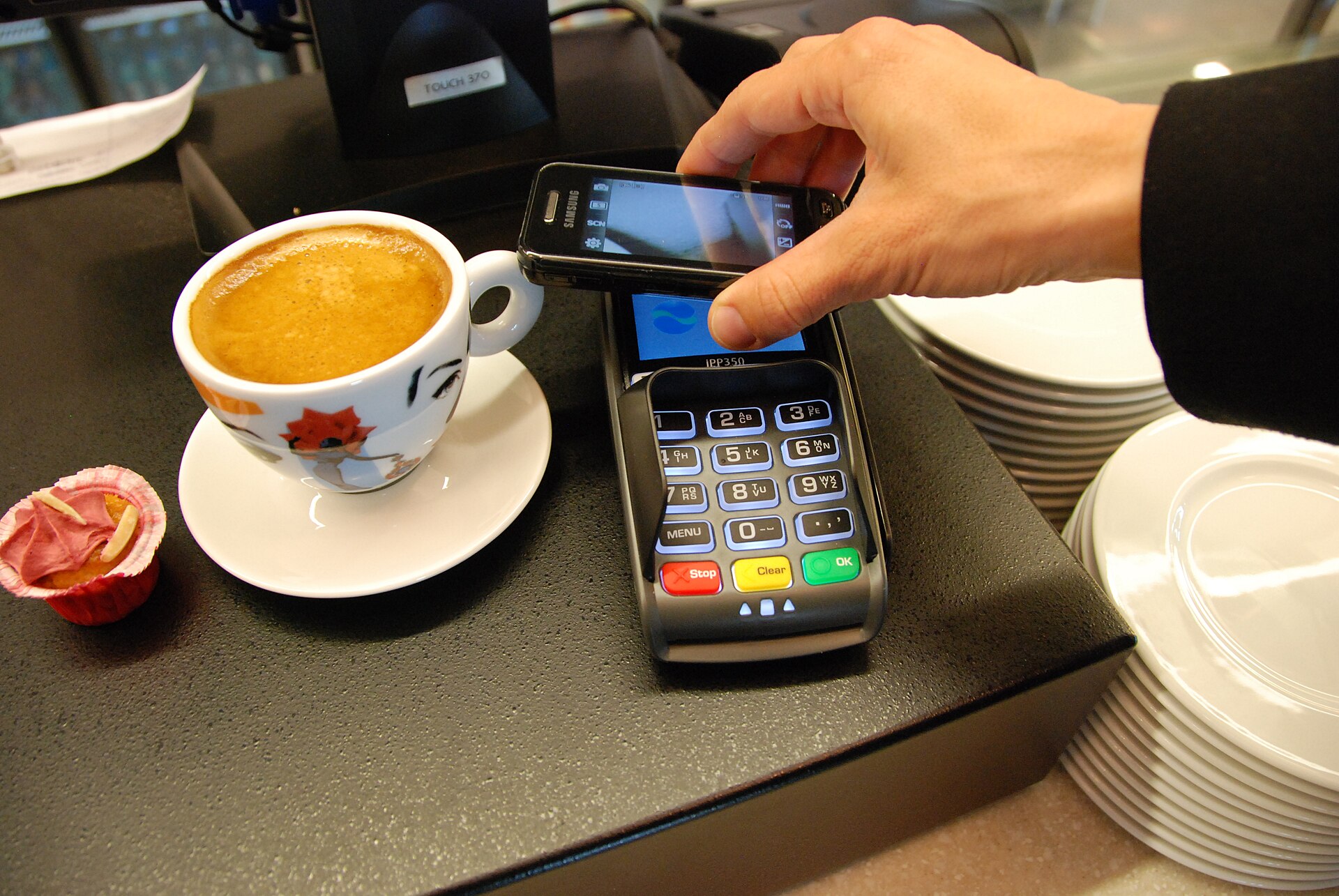
A person paying with a mobile phone, the classic digital wallet moment. Photograph: the mobile payment
Image Credits: Wikimedia Commons
This is general educational information, not financial advice.
A digital wallet is an app that stores payment credentials on a phone or watch so the owner can pay without a physical card. A banking app is an app issued by a bank that opens the owner's accounts for everyday management. People use the two names as if they mean the same thing, but they serve different jobs.
This article explains what a digital wallet is, how it works, and how it differs from a banking app. It covers the types of wallets, the security behind tap-to-pay, where money actually sits, and which app fits which task.
What a digital wallet is
A digital wallet, also called a mobile wallet or e-wallet, holds encrypted versions of debit cards, credit cards, and sometimes gift cards, tickets, and passes. Apple Pay, Google Wallet, and Samsung Wallet are pass-through wallets: they carry tokenized card credentials to the checkout without holding the funds themselves. PayPal and Cash App are staged wallets: they draw from a linked source before paying.
Stored-value wallets such as GCash hold a balance inside the app itself.
In a store, most wallets pay through near-field communication, or NFC. The phone and the terminal exchange data when held within a few inches of each other, and the payment completes with a tap. Online, the wallet fills in payment details at checkout so the buyer never types a card number.
Wallets also store more than cards. Boarding passes, loyalty cards, event tickets, transit passes, and car keys can live in the same app. That breadth is part of the appeal: one app replaces several items that once filled a pocket.
How tap-to-pay stays secure
The key protection is tokenization. When a card is added to a wallet, the wallet works with the card issuer to create a token, which is a substitute number tied to that device. The real card number is not stored on the phone and is not handed to the merchant during payment.
Biometric checks add a second layer. Most phones require a fingerprint, face scan, or passcode before a wallet payment goes through. Losing a phone therefore does not automatically hand over the cards inside it, since the finder still faces the device lock and the wallet authentication.
Wallets also limit what a stolen token can do. Tokens are tied to a device and a merchant context, so a captured token cannot simply be reused elsewhere like a copied card number. That design is why security guides describe tokenized payments as safer than swiping a physical card, even though no system is free of risk.
What a banking app is
A banking app is issued by a bank or credit union and connects directly to the owner's accounts. Its core jobs are checking balances, moving money between accounts, paying bills, depositing checks, and viewing statements. Many banking apps also handle card controls, loan applications, and messages to the bank.
The relationship is the difference. A banking app requires an account with that institution, and the app exists to serve that account. A wallet, by contrast, can work with cards from several banks, or in some cases without a traditional bank account at all.
Banking apps have also absorbed some wallet features over time. Some banks now let customers tap to pay from inside the banking app, or link the bank card to a separate wallet. That overlap confuses the comparison, but the core jobs stay distinct: the banking app manages the account, while the wallet moves the payment.
Where the money actually sits
This is the test that clears up most confusion. In a pass-through wallet, money stays with the bank or card issuer, and the wallet only carries credentials. In a staged or stored-value wallet, a balance may sit with the wallet provider or a partner bank, and the rules for that balance depend on the provider.
In a banking app, money sits in the owner's bank account. In the United States, deposits in an insured bank are covered by the Federal Deposit Insurance Corporation up to $250,000 per depositor, per insured bank, per ownership category. Wallet balances do not automatically carry that same coverage unless they sit in an FDIC-insured partner account.
Readers should check the provider's terms for any balance they keep in a wallet. A wallet used only for tap-to-pay with a bank card carries the bank's protections for the underlying card. A wallet holding a large stored balance deserves a closer look at who holds the funds and what happens if the provider fails.
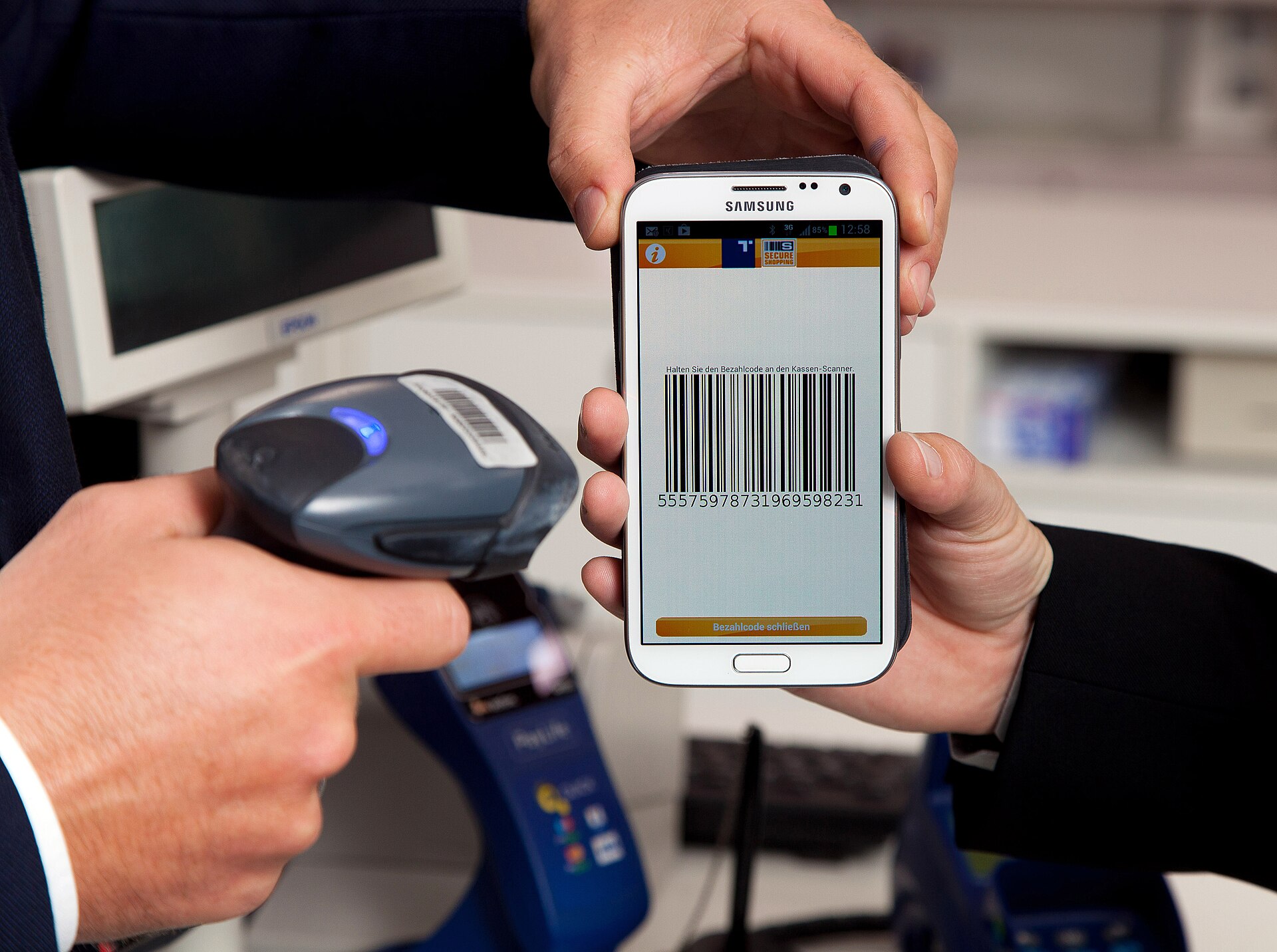
A mobile payment shown on a phone screen. Photograph: the mobile payment
Image Credits: Wikimedia Commons
Side-by-side comparison
Purpose separates the two tools first. Wallets exist for fast payments and transfers, while banking apps exist for full account management. A wallet answers the question of how to pay right now, while a banking app answers the question of where money stands.
Capability follows purpose. Wallets offer tap-to-pay, online checkout, peer-to-peer transfers, and stored passes. Banking apps offer balances, transfers, bill pay, check deposits, loan servicing, and statements.
Some features overlap, such as sending money to a friend, but the banking app covers the wider financial relationship.
Issuers differ too. Wallets come from tech companies, fintech firms, card networks, and retailers. Banking apps come from banks and credit unions, which are regulated as deposit-taking institutions.
That difference shapes the support, the complaints process, and the protections behind each app.
Which app fits which task
Reach for the wallet at the checkout, in a taxi, or when splitting a bill with a friend. Its speed is the point: one tap, one biometric check, and the payment is done. Travelers also benefit, since tickets and passes can sit beside payment cards in the same app.
Reach for the banking app when money needs managing rather than moving. Checking whether a paycheck arrived, paying a bill, moving savings, or reviewing a statement all belong there. Disputing a transaction also starts more naturally in the banking app, since the account record lives with the bank.
Most people end up using both, and that is the normal pattern. The wallet handles the moment of payment, while the banking app handles the account behind the card. Problems arise only when one app is expected to do the other's job, such as checking an account balance in a pass-through wallet that never held the account.
Frequently asked questions
Can a digital wallet replace a bank account?
Not on its own, in most cases. A pass-through wallet needs cards to carry, and those cards come from banks or card issuers. Some staged and stored-value wallets let users receive and hold funds without a traditional account, but they still lack the full services of a bank account, such as check deposits and insured savings.
Is a digital wallet safer than a physical card?
In the tap-to-pay case, yes in one important respect: the merchant never receives the real card number, thanks to tokenization. Biometric checks add protection that a plastic card lacks. The wallet still depends on the phone staying locked and updated, so a weak passcode or outdated software weakens the whole setup.
Why do some wallets ask for a bank account while others do not?
Pass-through wallets only need a card, so they ask for card details and issuer verification. Staged and stored-value wallets hold or move funds themselves, so they may ask for a linked bank account, a debit card, or identity checks. The onboarding matches the money model behind the wallet.
What happens to my wallet if I lose my phone?
The owner can usually suspend or remove cards from the wallet through the device maker's account page or by calling the card issuer. Tokenization means the finder cannot simply read a card number off the device. Acting quickly still matters, since the phone itself may hold other sensitive access.
The bottom line
A digital wallet is the payment tool, and a banking app is the account tool. Wallets store credentials and move money fast through NFC and tokenization, while banking apps open the accounts where money lives. Use both for what each does best, and check where any stored balance sits before treating a wallet like a bank.
Tags: digital wallet, mobile banking, payments
Rive News is a research desk that writes plain-language explainers from public sources, with no invented experts or first-hand claims.
Related
- Debit versus credit card: what changes for daily spending
- How does a credit card grace period actually work?
- How banks make money on free checking accounts
- What is a budget that sticks for irregular income?
Subscribe for one plain-language technology explainer each week.
Rive News publishes explainers from cited public sources; corrections are welcome and noted on the article.
Related stories

Apple plans two October launches: smart home hub, OLED MacBook Pro
Apple set October 13 for a smart home launch with a new hub, Apple TV 4K and HomePod mini, then October 27 for OLED MacBook Pro models

How to Check If Your Phone Supports eSIM in 30 Seconds
Dial *#06# and look for an EID number to confirm eSIM support in under 30 seconds. This guide also walks through the iPhone and Android

eSIM vs iSIM: what is the difference?
An eSIM is a dedicated chip on the phone's board, while an iSIM lives inside the processor itself. Qualcomm's Snapdragon 8 Gen