
How many eSIM profiles can a phone store?
Key takeaways
- Most iPhones can store 8 or more eSIM profiles, but only 1 or 2 can be active at once depending on the model.
- Samsung Galaxy and Google Pixel phones typically store 5 to 8 profiles, with just 1 or 2 active at a time.
- Stored profiles use no data and cost nothing to keep. You switch or delete them in your phone's cellular settings.
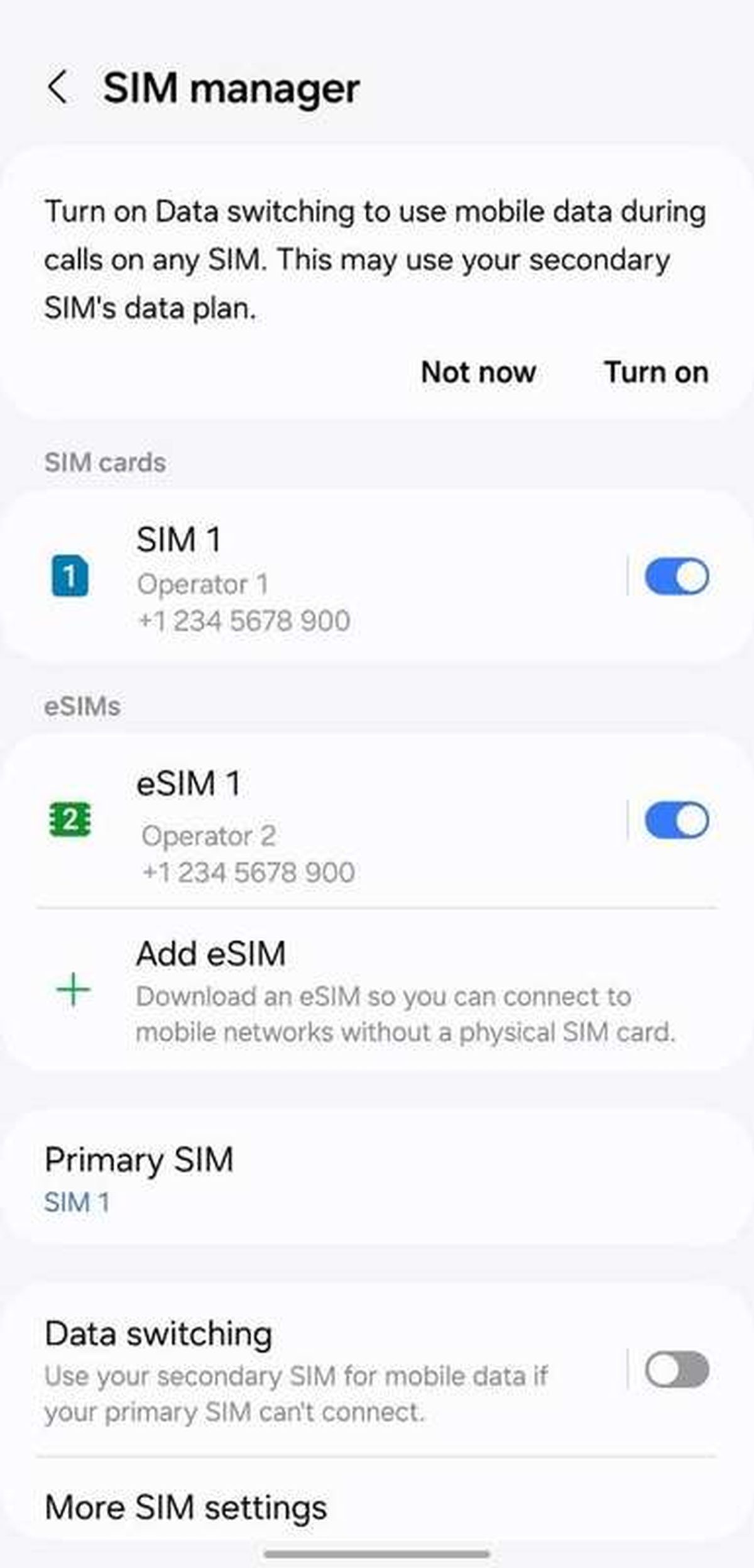
eSIM profiles live in the phone's settings, where you can store far more than you can use at once. Photograph: Sinafe/Wikimedia Commons
Image Credits: Wikimedia Commons
An eSIM profile is a carrier plan saved as software inside your phone. Instead of swapping plastic SIM cards, you download profiles and switch between them in your settings.
Phones can hold far more profiles than they can use at once. The gap between "stored" and "active" is the source of most confusion, and the numbers vary by brand and model.
This article explains what an eSIM profile is, how many profiles you can store, how many can be active at once, what happens when you hit the limit, and how to manage the profiles you have.
What is an eSIM profile?
An eSIM is a rewritable chip soldered inside the phone, and a profile is the carrier plan installed on it. Each profile holds the credentials that identify you to one carrier.
You get profiles by scanning a QR code from a carrier, tapping an activation link, or installing one through a carrier app. The download takes a couple of minutes over Wi-Fi or mobile data.
Think of stored profiles like contacts in your address book. They sit there quietly until you need them. Keeping many saved does not slow the phone or use mobile data.
How many eSIM profiles can you store?
iPhone owners get the most headroom. Per the Mac Observer's breakdown of Apple's support documentation, most iPhones that support eSIM can store 8 or more profiles. That covers every eSIM-capable model from the iPhone XS (2018) through the current lineup.
Samsung and other Android makers are less generous, and their published numbers vary. Red Bull MOBILE's eSIM help center says Samsung Galaxy, Google Pixel, and Huawei devices generally allow 5 to 7 stored eSIMs. The BitJoy's device table puts the typical Android range at 5 to 8 profiles.
Some newer models go further. Community Fibre's eSIM help page notes that the Samsung Galaxy S25 can store up to 20 profiles. That figure looks like the ceiling rather than the norm, so treat brand-level ranges as a guide and check your specific model.
Why do the numbers differ at all? Storage depends on the eSIM chip's memory and the phone's software. Apple has kept provisioning generous across generations, while Android makers set their own limits in firmware.
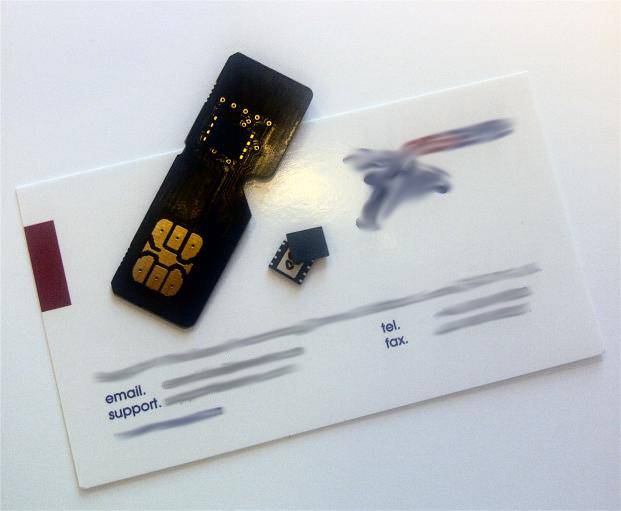
The eSIM chip holds multiple carrier profiles as software, with the exact count set by the phone maker. Photograph: Paul Marshall UK, Benboy00/Wikimedia Commons
Image Credits: Wikimedia Commons
How many eSIMs can be active at once?
This is the number that actually constrains you, and it is much smaller. On iPhone 13 models and newer, two eSIM lines can be active simultaneously, per Apple documentation summarized by the Mac Observer.
Older iPhones work differently. The iPhone XS, XR, 11, and 12 generations keep only one eSIM active at a time, used alongside a physical nano-SIM. If your phone still has a SIM tray, that tray plus one active eSIM is your dual-SIM setup.
On Android, the usual pattern is one active eSIM. Red Bull MOBILE's help center notes that Google Pixel 7 and later models can run two eSIM profiles at once if the carrier allows it. Samsung added dual active eSIM starting with the Galaxy S24 generation.
So the working rule: storage is plentiful, simultaneous use is not. Plan your travel and work lines around the active limit, not the storage limit.
Why the active limit matters more than storage
Two active lines cover the two setups most people actually need. A home line plus a travel data plan is the classic pairing, and it works on any recent iPhone or Pixel.
Work and personal numbers on one device is the other. With two active eSIMs, calls and texts reach both numbers without carrying a second phone.
Storage beyond that is a convenience. Keeping old travel profiles installed means you can reactivate a country plan on your next trip instead of scanning a new QR code. The profile itself costs nothing to keep.
One caution: some carriers expire profiles after long inactivity. If a travel profile from two years ago no longer activates, you will need a fresh code from the provider.
What happens when you hit the limit?
Your phone tells you. Trying to add a ninth profile on a phone that caps at 8 produces an error in the cellular settings screen. The fix is to delete a profile you no longer need.
Deleting is safe and instant. On iPhone, open Settings, then Cellular, tap the plan, and choose Remove. On Samsung, the path is Settings, then Connections, then SIM manager.
Deleting the profile usually does not cancel the plan. The plan and phone number typically stay with your carrier. You can reinstall the profile later, though some carriers charge a small fee for a new activation code, so check before deleting one you paid for.
A cleaner habit is to label profiles as you add them. Names like "Japan trip" or "Work line" make the settings screen readable when you are deciding which one to keep.
Frequently asked questions
Can stored eSIM profiles use mobile data?
No. Only the profiles you mark active can connect. Stored profiles are inert files that use no data, battery, or signal until you switch one on.
Does deleting an eSIM cancel my plan?
Usually not. Deleting removes the profile from your phone, but the plan and phone number typically stay with your carrier. You can reinstall the profile later, though some carriers charge for a new activation code.
How do I check how many profiles my phone has stored?
On iPhone, go to Settings, then Cellular, and count the plans listed under SIMs. On Samsung, open Settings, then Connections, then SIM manager. Each entry is one stored profile.
Can I have two active eSIMs from the same carrier?
That depends on the carrier. The phone hardware supports it on recent models, but some carriers restrict how their plans combine. Ask your carrier if you plan to run two of their lines at once.
The bottom line
Your phone can store many more eSIM profiles than it can use at once: 8 or more on iPhone, roughly 5 to 8 on most Android phones, with only 1 or 2 active at a time.
If you are curious, open your cellular settings and count your stored profiles. Deleting the ones from old trips takes a minute, and it leaves room for the next journey.
---
About the author: Rive News is a research desk covering consumer technology with explainers built from public sources.
Latest in Tech
- How to Check If Your Phone Supports eSIM in 30 Seconds
- How to transfer an eSIM to a new iPhone or Android phone
- eSIM vs physical SIM for international travel: what changes abroad
- Is eSIM Safer Than a Physical SIM Card?
Subscribe for weekly explainers that cut through tech jargon.
Found an error? Corrections are welcome at the Rive News desk and are logged with the publish date.
© 2026 Rive News. All rights reserved.
Related stories

Apple plans two October launches: smart home hub, OLED MacBook Pro
Apple set October 13 for a smart home launch with a new hub, Apple TV 4K and HomePod mini, then October 27 for OLED MacBook Pro models

How to Check If Your Phone Supports eSIM in 30 Seconds
Dial *#06# and look for an EID number to confirm eSIM support in under 30 seconds. This guide also walks through the iPhone and Android

eSIM vs iSIM: what is the difference?
An eSIM is a dedicated chip on the phone's board, while an iSIM lives inside the processor itself. Qualcomm's Snapdragon 8 Gen