
What Is End-to-End Encryption Really Protecting in Messaging Apps
Key takeaways
- End-to-end encryption protects message content in transit; only the sender's and recipient's devices hold the keys.
- Metadata (who you contacted, when, how often) is not covered by encryption and can be more revealing than content.
- Signal and WhatsApp use the same Signal Protocol for content, but collect very different amounts of metadata.
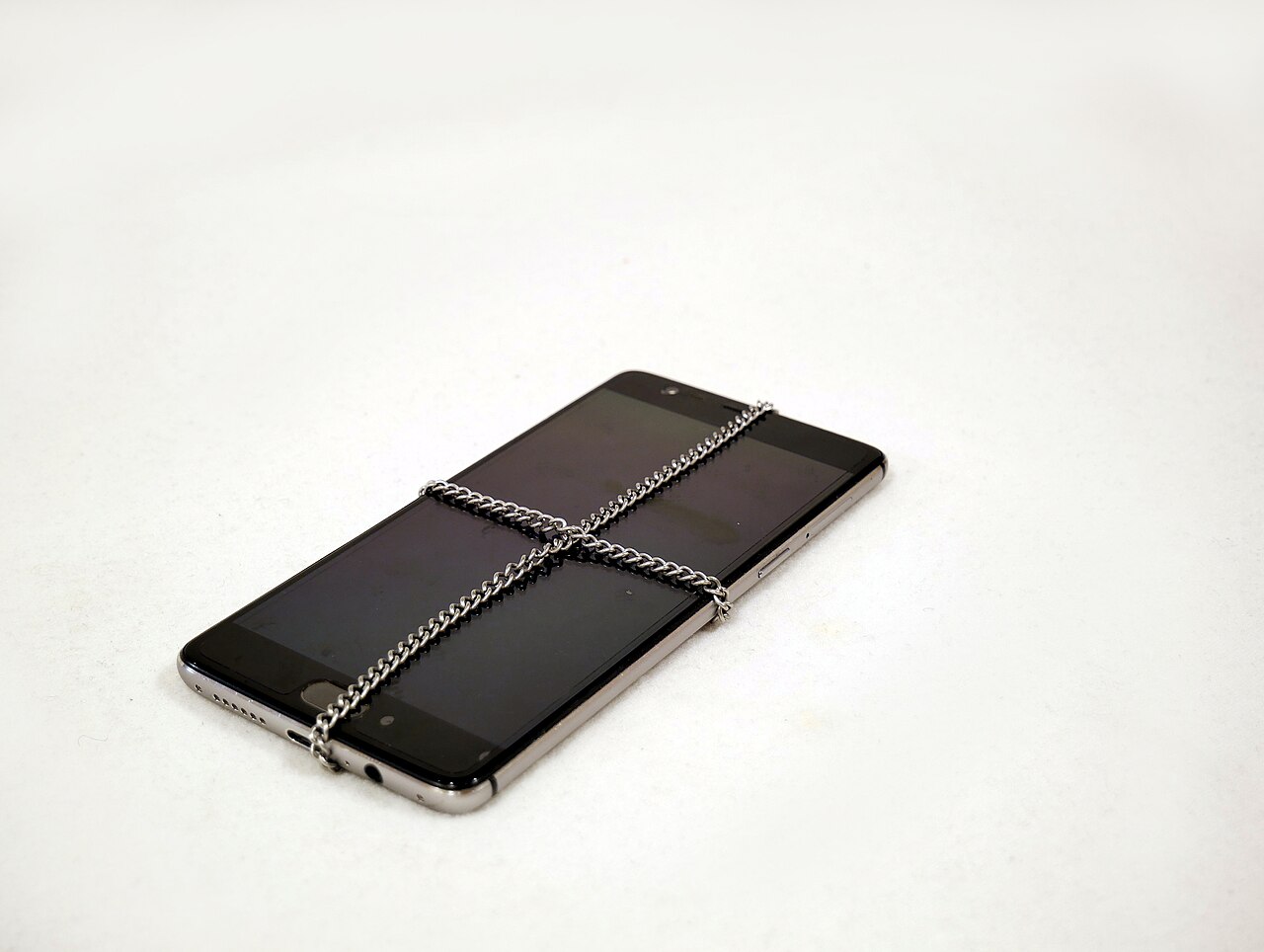
The lock icon next to your chat feels reassuring. It says the conversation is end-to-end encrypted, which sounds like a promise that nobody can read what you write. That promise is real, but it is narrower than most people think.
End-to-end encryption protects exactly one thing: the content of your messages while they travel between devices. Everything around that content, the who, when, and how often of your conversations, sits outside the encryption. Companies call this metadata, and it can reveal more about your life than the words ever could.
This article explains what the encryption actually covers, what it leaves exposed, and why Signal and WhatsApp, which use the same underlying protocol, end up as very different privacy tools.
What the encryption actually does
End-to-end encryption means your message is scrambled on your phone before it ever leaves. It travels across the network as an unreadable blob of ciphertext, waits on the company's servers in that scrambled form, and is only unlocked on the recipient's device. The server in the middle relays bytes it cannot read.
The machinery behind this is the Signal Protocol, which also underpins WhatsApp and Messenger's encrypted chats. It works through a Diffie-Hellman key exchange: the two phones each compute the same shared secret independently, without ever transmitting the key.
Each message then gets encrypted with a fresh key derived from that secret using a "ratcheting" mechanism, so compromising one message key does not expose past or future messages. Messages also carry a message authentication code that verifies they came from the claimed sender and were not modified in transit.
The protocol is a live document, not a historical artifact. The current specification revision is dated November 2025 and adds post-quantum ratcheting on top of the elliptic-curve design, according to MakeTechEasier. The point of all this engineering is one guarantee: when properly implemented, a message encrypted with the Signal Protocol cannot be read by the server operator, a network attacker, or anyone without access to the recipient's private key.
That guarantee is genuine. It is also the entire guarantee.
The metadata the encryption never hides
While the server ferries that opaque blob, it can see everything around it:
- The timestamp on the send.
- The account it came from and the account it went to.
- The size of the payload, which hints at whether it was a short text or a photo.
- The IP address behind each end, and therefore a rough location.
- Whether the two accounts have chatted before, and how often.
This is metadata, and as MakeTechEasier puts it, it is the part encryption was never designed to hide.
None of that requires reading a single decrypted word. A pattern of 3 AM messages between a journalist and an official, spiking around the day a story broke, tells a coherent story without any content at all. In many investigations, the metadata is more useful than the words would be.
Your mobile carrier keeps its own layer of records.
Cell-site location information shows which towers your phone connected to, and the US Supreme Court described in Carpenter v United States how those time-stamped records can reveal a person's movements over time.
An encrypted message still has to cross a physical network, and the messaging provider controls none of that layer.
Compromised endpoints sit outside the promise too. Malware on your phone, an unlocked handset, screenshots, and unencrypted cloud backups can all expose conversations that were perfectly encrypted in transit. Encryption protects the road, not the houses at either end.
Signal and WhatsApp: same cipher, different ledgers
Signal and WhatsApp both use the Signal Protocol to encrypt message content, and both do that part genuinely. The differences lie in what each operator stores around the encrypted payload.
WhatsApp's own guidance for law enforcement describes what it can provide. With appropriate legal process, it can return basic subscriber information, device data, and group information. Under a pen register or trap-and-trace order, it can begin collecting prospective routing information: sender, recipient, and timestamps for messages going forward.
What it cannot hand over is message content, because it cannot read it. The routing ledger is a different matter.
WhatsApp also keeps group membership visible to its servers, since the server needs to know who to deliver group messages to. Its backups are a known weak point: chat backups to Google Drive or iCloud are not end-to-end encrypted by default, which means a readable copy of your history can sit in cloud storage.
Signal is engineered to retain almost nothing. When the organization was served with a 2016 grand jury subpoena from the Eastern District of Virginia, it could produce only two facts: the day the account registered and the day it last connected, as documented in Signal's published subpoena responses. A March 2026 grand jury subpoena in the District of Columbia produced the same near-empty answer.
Signal stores no messages, no contacts, no groups, and no profile detail on its servers.
Signal has also built specific features to shrink its own visibility. Sealed sender conceals the sender's identity from Signal's servers during delivery.
Private contact discovery lets your device determine which contacts use Signal without revealing your address book. Its private groups use a zero-knowledge mechanism so the server never holds the group roster.
The practical upshot, as the dev.to comparison frames it: use Signal for conversations where the metadata of who you talk to is sensitive. WhatsApp's content encryption is real, but your contact graph and communication patterns are visible to the company behind it.
What encryption cannot do for you
Encryption cannot protect you from the person you are talking to. If the recipient screenshots the chat or forwards it, no cipher prevents that.
It cannot protect a phone that is seized unlocked or infected with spyware. It cannot hide the fact that you use the app, how often, or from which IP addresses.
It also cannot override legal compulsion against you personally. A court can order you to unlock your device in some jurisdictions. The company may have nothing to give, but the endpoint in your pocket is a different question.
Future quantum computers add a longer-term wrinkle. Encrypted messages captured today could theoretically be decrypted decades from now if the underlying math falls. Signal has introduced post-quantum ratcheting to get ahead of this, but the threat is real enough that intelligence agencies already harvest encrypted traffic for later.
None of this means encryption is useless. It means the promise is narrow, and that precision is what makes it useful. Proper end-to-end encryption keeps message content readable only at the endpoints, protecting the conversation from the provider, network operators, and passive eavesdroppers.
How to think about your messaging privacy
Start by matching the tool to the sensitivity. For everyday social chat, WhatsApp's content encryption is a genuine improvement over plain SMS. For anything where who you talk to matters, Signal's minimal metadata collection is the meaningful difference.
Turn on disappearing messages for sensitive threads, so the endpoint holds less history. Disable cloud backups for encrypted chats, or enable encrypted backups where offered. Keep your phone's lock screen and OS updated, because endpoint security is where most real-world message exposure happens.
And remember the boundary: the lock icon covers the words, not the trail around them. Privacy in messaging is a stack, and encryption is only one layer of it.
FAQ
Is WhatsApp really end-to-end encrypted?
Yes, for message content. WhatsApp uses the Signal Protocol, so the company cannot read your messages in transit. But it collects and can disclose metadata such as account info, group membership, device data, and, under court order, prospective routing records showing who messaged whom and when.
Can the police read my Signal messages?
Signal cannot hand over message content because it never has it. Its published subpoena responses show it can typically provide only the account registration date and last connection date. However, messages can still be read from your unlocked device or from the recipient's device.
Does encryption hide my messages from my phone company?
From reading the content, yes. The carrier sees encrypted traffic and knows which towers your phone used, plus connection timestamps. It cannot read the message bodies.
Do disappearing messages delete metadata?
No. Disappearing messages remove content from the devices after a set time, but the server's metadata about the exchange (timestamps, participants) follows the provider's normal retention, not the disappearing timer.
Is Telegram end-to-end encrypted?
Only in Secret Chats, which must be started explicitly and do not sync across devices. Regular Telegram chats are encrypted between your device and Telegram's servers, not end to end, so the company can access the content.
The bottom line
End-to-end encryption does one job well: it keeps the words of your messages readable only by you and the recipient. It was never designed to hide who you talk to, when, or how often, and the companies behind the apps differ enormously in how much of that trail they keep.
Choose the app that matches what you need hidden, lock down the endpoints, and treat the lock icon as a precise promise rather than a blanket one.
Latest in Tech
- Why do some messages show as green and others as blue?
- Why does your phone vibrate differently for calls and notifications?
- Zelda Ocarina of Time remake: Aonuma nervous
- Why does your phone dim the screen in sunlight even at full brightness?
Want one practical explainer like this in your inbox every morning? Subscribe to the Rive News newsletter.
Related stories

Apple plans two October launches: smart home hub, OLED MacBook Pro
Apple set October 13 for a smart home launch with a new hub, Apple TV 4K and HomePod mini, then October 27 for OLED MacBook Pro models
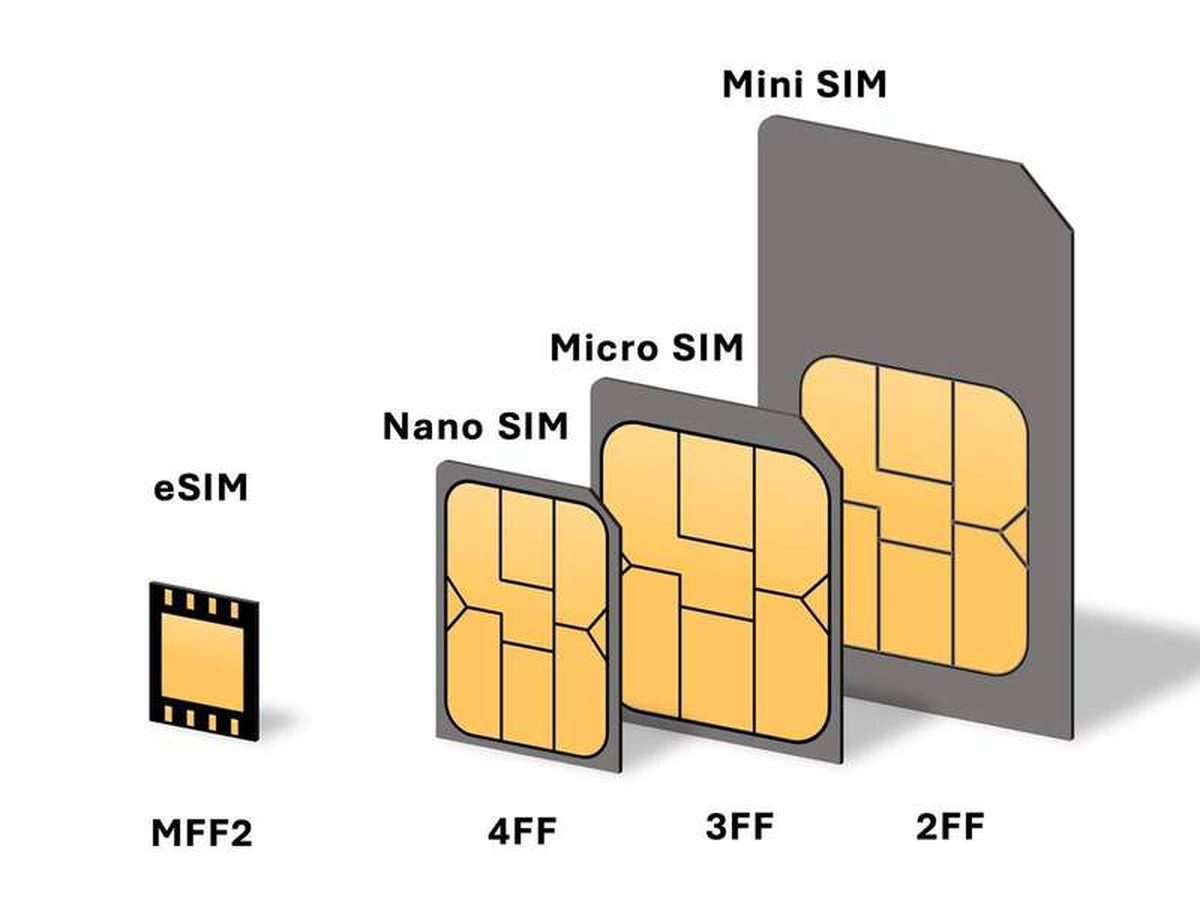
How to Check If Your Phone Supports eSIM in 30 Seconds
Dial *#06# and look for an EID number to confirm eSIM support in under 30 seconds. This guide also walks through the iPhone and Android
eSIM vs iSIM: what is the difference?
An eSIM is a dedicated chip on the phone's board, while an iSIM lives inside the processor itself. Qualcomm's Snapdragon 8 Gen