
How to Beat the Queues at Popular Tourist Spots in 2026
By Rive News / Research desk | Rive News / Published October 24, 2026 at 9:00 AM PKT
Key takeaways
- Book the first entry slot of the day, or a late-afternoon slot, because crowds peak in the middle of the day when tour groups arrive.
- Buy timed-entry tickets 2 to 4 weeks ahead (a month or more in peak season), and arrive 15 to 30 minutes early to clear security.
- Use alternate entrances, late opening nights, and city passes or memberships to skip the main queue without paying a premium.
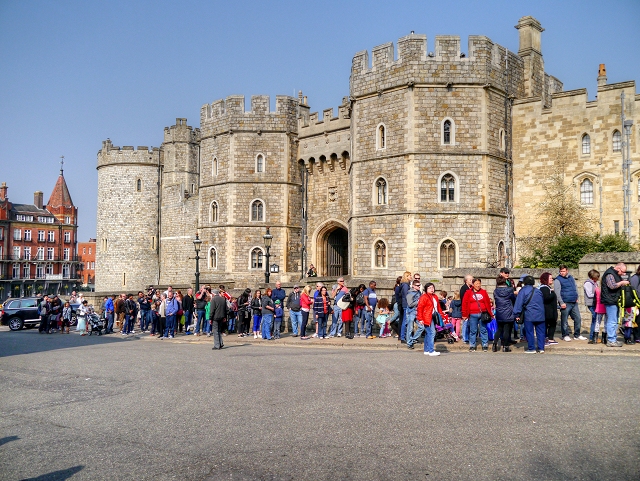
[Crowds lining Castle Hill below Windsor Castle on a busy day.] Photograph: Geograph contributor
Image Credits: Wikimedia Commons
The queue is part of the trip until it eats the trip. A two-hour line outside a museum means two hours you are not inside it.
This is the normal math of famous places: in 2025, Europe alone welcomed 793 million international tourists, according to UN Tourism's World Tourism Barometer, 4 percent more than 2024 and 6 percent above 2019 levels. The crowds are not a fluke. They are the baseline.
This article explains how to beat the queues at popular tourist spots, including the first-slot and late-afternoon timing split, timed-entry tickets booked ahead, alternate entrances and off-peak days, and virtual queues and memberships or city passes.
The two ends of the day: first slot or late afternoon
Most advice says go early. Travel guide author Rick Steves puts it as a rule: "At popular sights, it can help to arrive early or go late." The sharper version is to go at either end of the day.
He adds that the advice matters most "at places popular with cruise excursions and big-bus tour groups." The middle of the day is when the worst overlap happens: tour buses unload around mid-morning, cruise passengers follow their fixed timetables, and school groups stack in behind them. The first entry slot often opens before all of that machinery starts moving, while the late afternoon works because much of it is winding down by then.
Athens is the textbook example. Steves writes that cruise passengers swarm the Acropolis until about five in the afternoon, which is when he heads in, and he stays until the closing whistle. In Venice, he notes that Saint Mark's Square is nearly empty at seven in the morning but fills by midday.
Both ends share the same logic: crowds move in a daily wave, and the wave has a crest in the middle.
Late openings are the bonus round. Many museums in big cities stay open one or two evenings a week, and those evenings are quiet. London's Tate Modern, for instance, opens Friday evenings, which Steves describes as nearly solitary.
Check each attraction's own hours page before the trip and treat a late opening like a second early morning.
Book timed entry, and respect the booking window
Advance tickets are the single biggest queue killer. As Steves notes, guests who buy admission ahead of time walk through the entrance of most attractions instead of joining the long lines. The ticket carries an exact entry time, so the queue becomes a plan rather than a gamble.
The trick is booking far enough ahead. The travel site Orjange recommends buying 2 to 4 weeks before the visit for popular attractions, and 1 to 2 months ahead in peak season. Some places release tickets on a fixed schedule: the Colosseum's official timed tickets open about 30 days before the visit date, and the tightest slots sell out first.
Timed entry does not remove every wait. Security screening is separate from the ticket line and stays mandatory everywhere. Orjange advises arriving 15 to 30 minutes early for your time-slot window so security does not eat into it.
Have the ticket saved offline, since mobile signal near big entrances is unreliable. A skip-the-line ticket buys certainty of entry and a shorter line, not zero waiting, so plan around security rather than assuming you will walk straight in.
Do not stack two blockbuster sights back to back with no buffer. The Vatican Museums and the Colosseum in one morning leaves no room for the security line, the walk between them, or lunch.
One big timed entry per half day is a calmer rule.
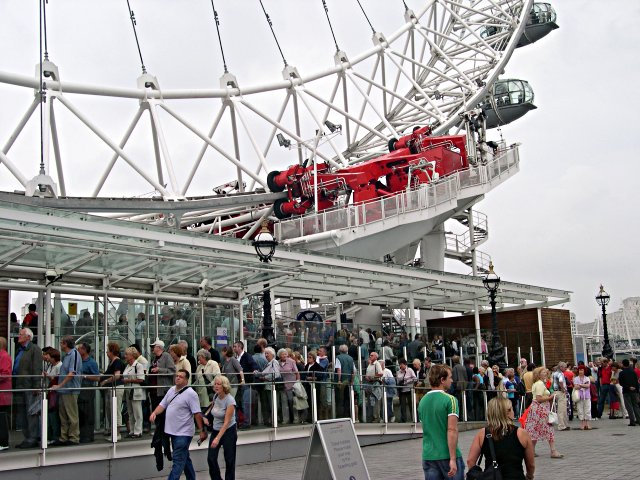
[Visitors queue for the London Eye, a timed-entry attraction where booking ahead makes the biggest difference.] Photograph: Geograph contributor
Image Credits: Wikimedia Commons
Alternate entrances and off-peak days
Big attractions often have more than one door, and the famous entrance is the crowded one. At the Louvre, pre-booked visitors can use a side gate instead of the main pyramid queue. In Rome, the Colosseum's Palatine Hill entrance typically has a shorter line than the main approach.
Look for the phrase "group entrance" or "pre-booked entrance" on the attraction's own site map.
Guided tours can also include a separate entrance. Vatican guided tours, for example, routinely bypass the standard line. A tour costs more than a ticket, but the time saved can be worth it at the most congested sites.
Then there is the calendar. Many European museums close one day a week, often Mondays, and the next open day absorbs the backlog. Steves learned this at Versailles, closed Mondays, so he warns that Tuesdays are always packed.
Pick the quiet middle of the week instead.
Free admission days deserve caution. Steves advises skipping them for the busiest sites, writing that in Rome "the Sistine Chapel feels like the Sardine Chapel when admission is waived once a month." The money saved on a ticket is rarely worth the mob.
If a free day is the only option, arrive at opening and have a backup plan ready.
One more calendar trap: do not visit the big names on the day the closed museums reopen. Monday and Tuesday openings after a closure day compress two days of demand into one. Shift the blockbuster to midweek and spend the reopening day on outdoor sights.
Virtual queues, memberships, and city passes
When the attraction offers a virtual queue, join it from your phone as early as allowed. Some theme parks and busy museums let you reserve a return time instead of standing in line. Disney's FastPass+ system, for example, historically allowed bookings up to 60 days ahead for on-site guests.
The names change; the principle does not.
Virtual first, physical line last.
Memberships beat single tickets for repeat visits. An annual pass or friends-of-the-museum membership usually includes a separate members' line, and some include guest passes. If your trip includes three or more museum days, compare membership prices against individual tickets before you fly.
City passes work the same way in concentrated form. Rome's Roma Pass, priced around €38 to €53, gives priority entry at two major museums plus public transport. The math only works if you will actually use the covered entries, so count the included sites against your real itinerary rather than buying the pass out of habit.
FAQ
Is it better to book the first slot or a late-afternoon slot?
Both beat midday: the first slot wins when you want the cleanest start and the best light for photos, while late afternoon wins when cruise and tour-bus crowds are leaving. Midday entries are the worst of both worlds.
How far ahead should I book skip-the-line tickets?
Aim for 2 to 4 weeks ahead for popular attractions year-round, per Orjange's guidance, and 1 to 2 months ahead in peak season. Places with fixed release windows, like the Colosseum's 30-day window, reward setting a calendar reminder.
Do guided tours really skip the lines?
Usually, yes. Tours at places like the Vatican Museums use separate group entrances that bypass the standard queue. Check the tour description for explicit priority-entry wording before paying the premium.
Are city passes worth it for beating queues?
Only if you will use them. A pass like Rome's Roma Pass covers priority entry at a fixed number of museums. List your actual planned visits first, then check whether the pass pays for itself in saved entry fees and time.
What if I could not get advance tickets at all?
Go late in the day and use the least famous entrance. In Athens, for example, heading to the Acropolis after the cruise crowds leave in the late afternoon works even without a perfect plan.
Arrive at opening as a second choice, since same-day lines are longest by late morning.
The bottom line
Queues at famous attractions follow a daily rhythm, and the quietest hours sit at the two ends of the day. Book timed-entry tickets weeks ahead, arrive early for security, pick the side door or the group entrance, and avoid reopening days and free-admission mobs. Your next step: list your trip's three biggest sights tonight and check each one's official booking page for release windows.
Tags: tourist attractions, queues, travel tips, tickets
Rive News's research desk compiles practical travel guides from verified public sources.
Related
- Why do flights get delayed, and what announcements really mean?
- How Does Travel Insurance Work and What Does It Cover
- How to sleep on a plane when you cannot fall asleep
- Why Cruise Ships Do Muster Drills Before Sailing
Subscribe for one practical travel guide every morning in your inbox.
Rive News publishes verified, source-checked travel explainers; this article cites its sources in the frontmatter.
Related stories

The 3-1-1 liquids rule for planes: what each number means
TSA's 3-1-1 rule limits carry-on liquids to 3.4-ounce containers in one quart bag. Where the 2006 rule came from, what counts, and how
Why Is Airplane Food So Bland at Altitude?
A 2010 Fraunhofer study found altitude cuts sweet and salty perception by up to 30 percent. Low humidity, cabin pressure, and noise all
Carry-on size limits: why airlines each set their own
Airlines set their own carry-on limits because the FAA only requires each carrier to have a policy, not one global size. Why 22 x 14 x