
Travel Adapter vs Voltage Converter: What Is the Difference
Key takeaways
- A travel adapter only changes plug shape so your plug fits a foreign outlet, and it does not change voltage.
- A voltage converter changes voltage, for example from 220-240V down to 110-120V, for single-voltage appliances.
- Most phone and laptop chargers are dual voltage (100-240V) and need only an adapter, while many hair dryers need a converter or a local device.
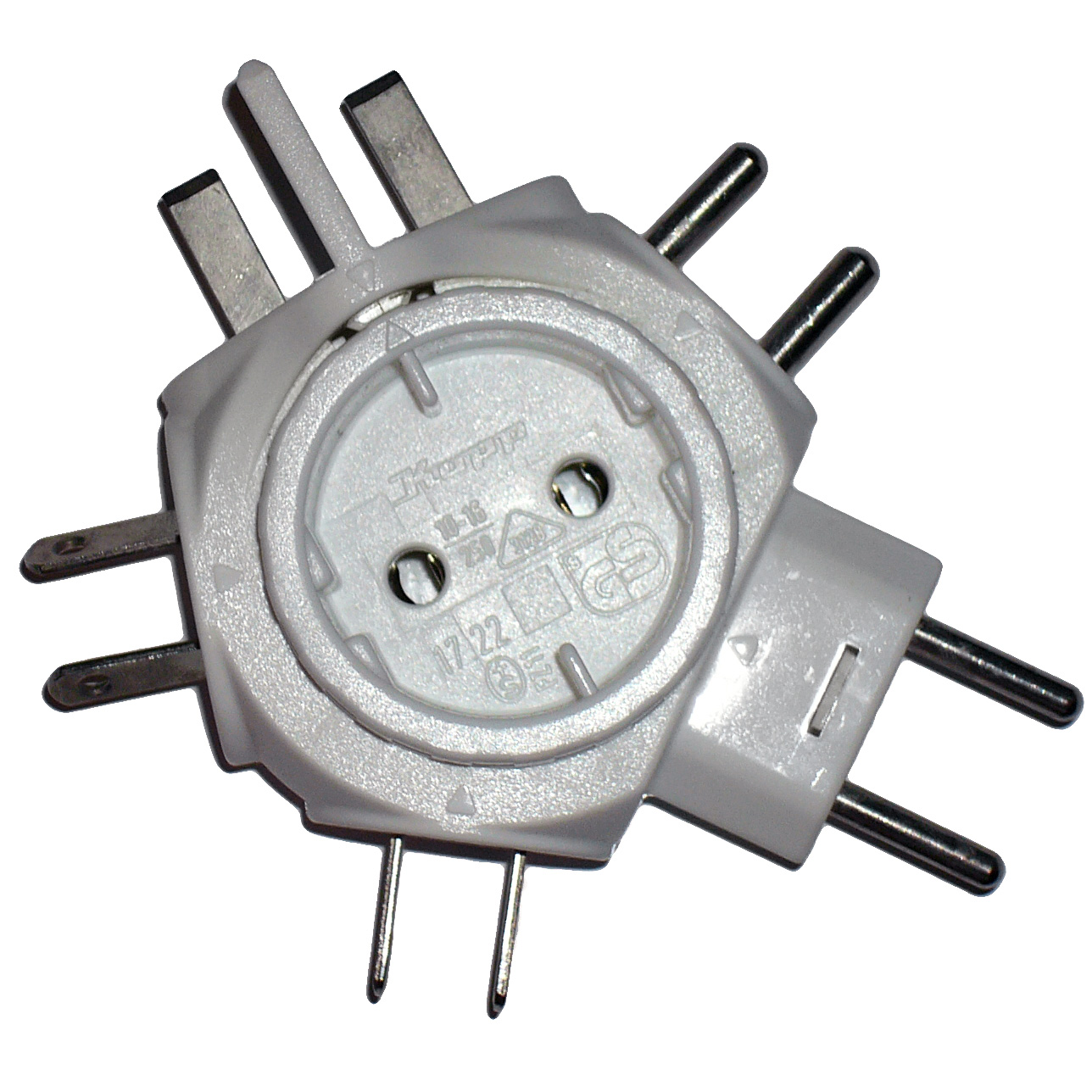
A travel adapter and a voltage converter solve two different problems, and mixing them up is one of the most common packing mistakes. The adapter fixes plug shape, while the converter fixes electricity.
Many travelers learn this the hard way. They plug a single-voltage appliance into a foreign outlet through an adapter, the plug fits, and the appliance burns out within seconds because the voltage was wrong.
This article explains what is the difference between a travel adapter and a voltage converter, including how to read device labels, when each tool is enough, and which devices should stay home.
The short answer
A travel adapter changes the physical connection between your plug and the wall outlet. It lets a flat-pin plug fit a round-pin socket, or a round-pin plug fit a flat-pin socket, and nothing more.
A voltage converter changes the electrical voltage coming out of the outlet. It steps voltage down, for example from 220-240V to 110-120V, or steps it up in the other direction, so a single-voltage appliance gets the voltage it was built for.
The two jobs are independent. Plug shape and voltage are separate attributes of a power system, and a country can share your plug shape while using different voltage, or share your voltage while using a different plug shape.
That is why the decision starts with the device label, not with the outlet. The label tells you what the device accepts, and the destination tells you what the outlet supplies.
Read the device label first
Every charger and appliance carries an input label, usually on the charger brick or on a plate near the power cord. That label is the whole test.
If the label says Input: 100-240V, 50/60Hz, the device is dual voltage. It accepts the voltage used in nearly every country, so a travel adapter alone is usually enough.
If the label lists a single voltage, such as 120V only or 230V only, the device is single voltage. It needs a converter when the destination voltage differs, plus an adapter if the plug shape differs too.
If the label is worn, missing, or unreadable, do not connect the device abroad. Buy a destination-certified charger or a dual-voltage replacement instead of guessing, since a wrong guess can destroy the device or start a fire.
Photograph the label before you pack. A photo on your phone beats squinting at tiny print in a hotel room, and it helps you check each device against the destination supply in one pass.
What a travel adapter does
A travel adapter is a small, light connector with metal contacts inside. It joins your charger plug to the local socket so electricity can flow, and it changes nothing about the electricity itself.
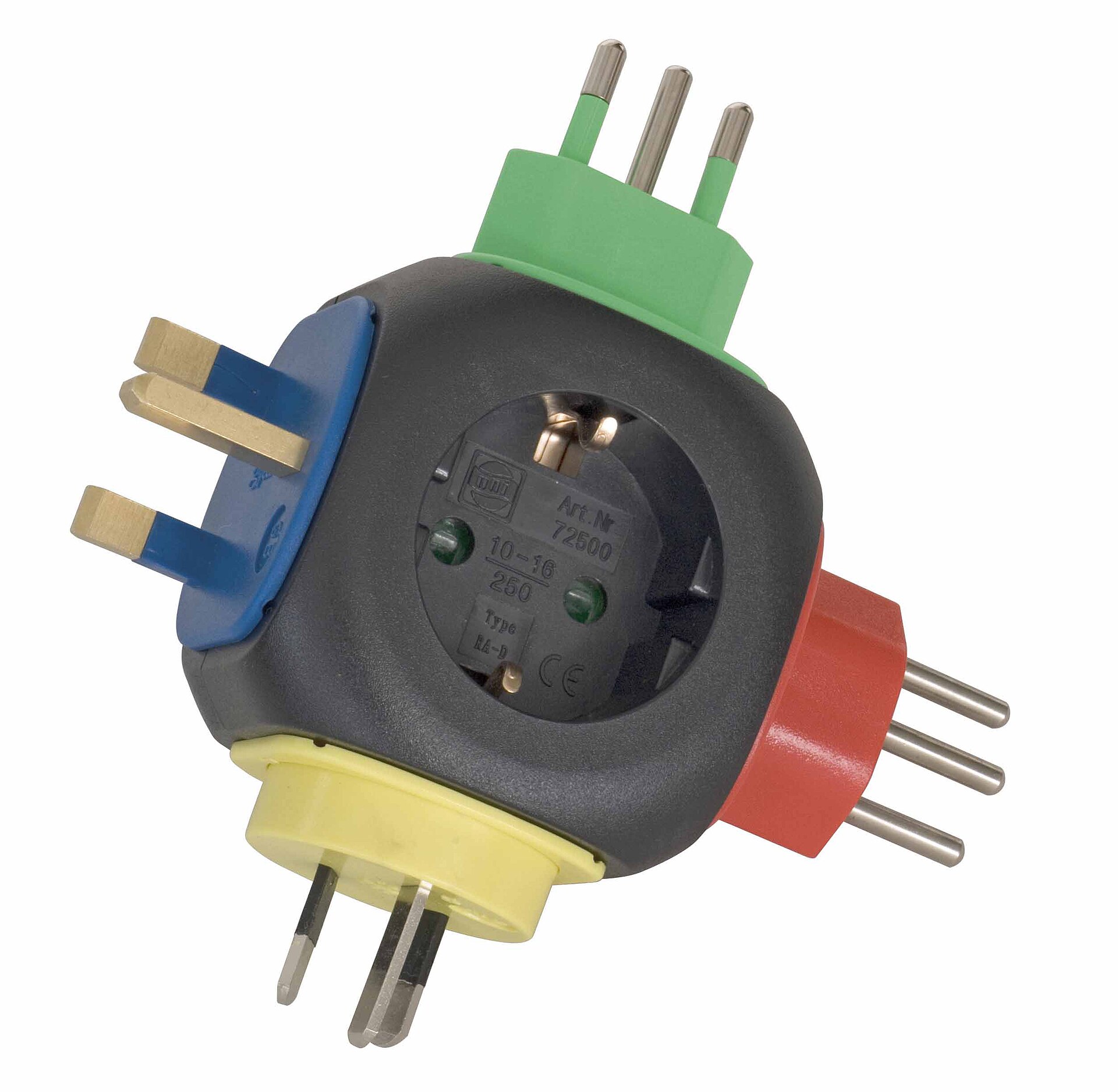
Adapters come in country-specific and universal forms. A country-specific adapter fits one plug type, while a universal adapter combines several plug types into one body, which suits trips across multiple countries.
Different regions use different plug types. Much of continental Europe uses Type C, E, and F, the United Kingdom uses Type G, Australia and New Zealand use Type I, and the United States uses Type A and B, according to Volta Charger.
An adapter must also fit firmly. A loose adapter can spark, overheat, or fall out of the socket, so travelers should avoid cheap adapters with wobbly pins or no safety marks.
Adapters have power ratings too. The adapter rating must exceed the load you connect, and travelers should never daisy-chain adapters or stack them to reach an awkward outlet.
What a voltage converter does
A voltage converter changes voltage within its rated input, output, wattage, and duty limits. A step-down converter turns 220-240V into 110-120V, while a step-up converter does the reverse.
Converters are bulkier and heavier than adapters because they contain transformers or electronic circuits that do the conversion. That weight is the first sign that you are carrying a converter rather than a simple adapter.
Wattage is the critical limit. The converter continuous rating must exceed the device wattage with margin, and high-heat appliances such as hair dryers, kettles, and irons often draw far more than a compact travel converter can handle.
Converters also have duty limits. Some are rated for short use only, and running a heater through a short-duty converter for an hour can overheat it, even if the wattage number looks close.
A converter still needs the right plug interface. Many converters need an adapter as well to fit the local socket, so travelers often need both tools for one single-voltage appliance.
The decision table
| Device | Travel adapter needed? | Voltage converter needed? |
| --- | --- | --- |
| Smartphone charger (100-240V) | Usually | No |
| Laptop charger (100-240V) | Usually | No |
| Tablet charger (100-240V) | Usually | No |
| Camera battery charger (100-240V) | Usually | No |
| Hair dryer (120V only) | Yes | Yes |
| Curling iron (120V only) | Yes | Yes |
| Electric kettle (single voltage) | Yes | Sometimes |
| Electric toothbrush | Usually | Check the maker |
The pattern is clear. Modern electronics are usually dual voltage, so they need only an adapter, while heating appliances are the devices that force the converter question.
That table follows Volta Charger guidance. It is a starting point, not a substitute for reading your own device label, since models vary.
The two traps: wattage and frequency
Wattage is the first trap. A phone charger draws roughly 20 to 50 watts, while a hair dryer can draw more than 2,000 watts, according to Rick Steves forum guidance cited in travel sources.
That gap explains why a converter that handles chargers fails on dryers. The dryer needs a converter rated well above its draw, and many travel converters top out far below that level.
Frequency is the second trap. Power grids run at 50 Hz or 60 Hz depending on the country, and some motor-driven or timing-dependent devices care about frequency even when voltage is converted.
A converter that changes voltage does not always change frequency. Clocks, turntables, and some motor appliances can run fast, slow, or hot on the wrong frequency, even with correct voltage.
The safe rule is simple. If the converter documentation does not address frequency for your device type, leave the device home and use a local one instead.
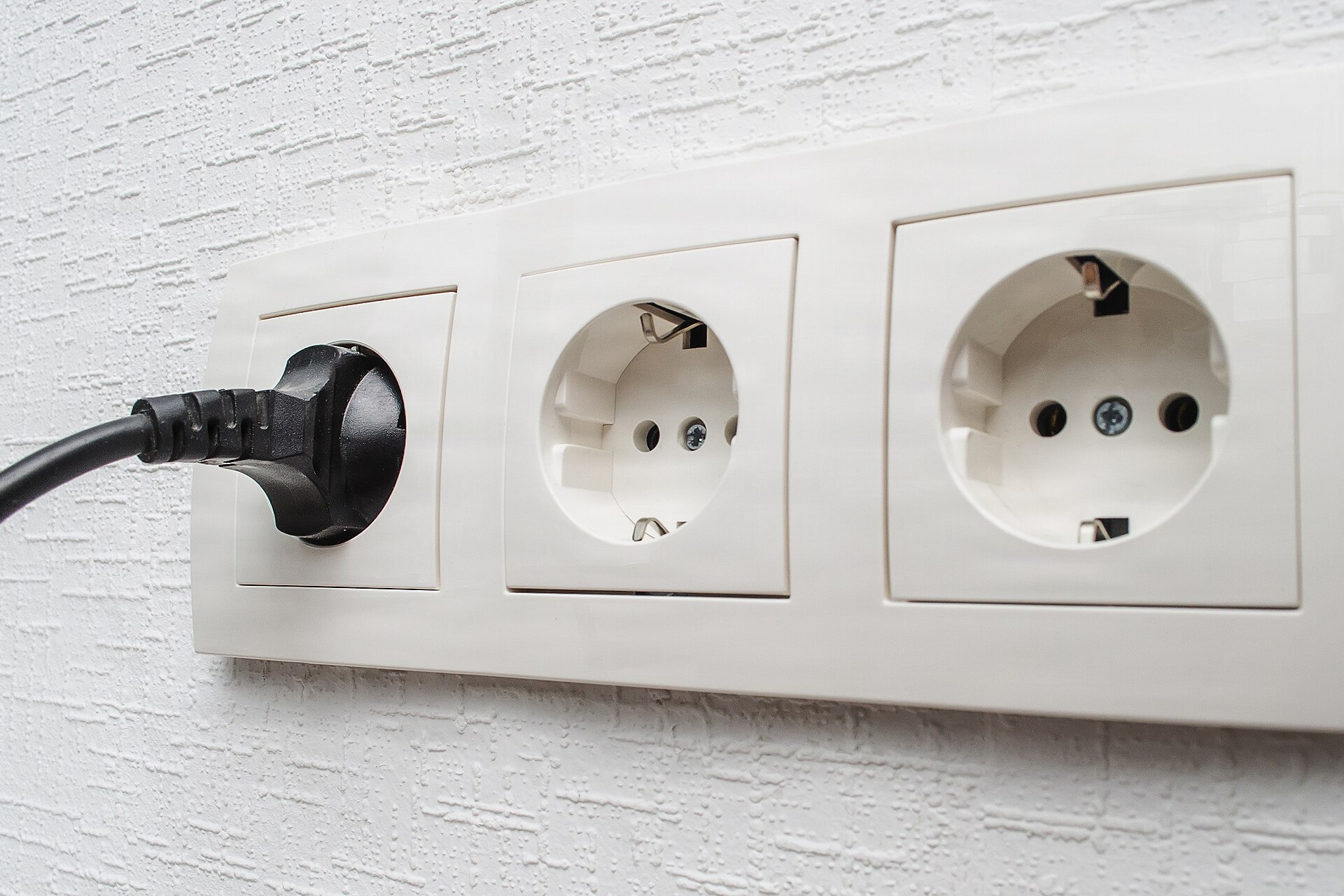
Grounding is a third detail worth checking. Never defeat an earth pin to make a plug fit, and make sure the adapter keeps grounding and shutter protection working, since a forced fit can remove a safety feature.
Worked examples
Take a United States to France trip. A phone charger labeled Input: 100-240V can handle France 230V electricity, so the only problem is plug shape, and a travel adapter solves it.
Now take an older 120V-only hair dryer on the same trip. Plugging it into a 230V outlet through an adapter alone could damage the appliance, so the traveler needs both a travel adapter and a voltage converter, or a better plan.
The better plan is usually to skip the dryer. Hotels commonly provide one, and a dual-voltage travel dryer plus an adapter is lighter and safer than a heavy converter for a single-voltage dryer.
A third example runs the other way. A 230V-only appliance brought to the United States needs a step-up converter to reach 230V from 120V, plus an adapter if the plug differs.
In each case, the label decides. The destination decides the plug, the label decides the voltage, and the wattage decides whether a converter is realistic at all.
What to pack
For a phone, tablet, and laptop trip, a rated grounded adapter is often enough, provided every supply accepts the destination voltage. Add the right charging cables, since the adapter alone does not charge anything. Keep the adapter in your carry-on, so a second screening on a layover does not separate you from it.
For a single-voltage low-power device, a converter can work only after voltage, frequency, load type, and continuous rating are verified. If any of those checks fails, the device stays home.
For a high-power hair dryer or kettle, using destination equipment is often safer and lighter than carrying a converter near its limits. Buy a dual-voltage model if you truly need your own, and pair it with an adapter.
Pack a fallback charger. A small USB-C charger with a local plug, or a destination-certified charger bought on arrival, covers the case where your main setup fails.
Inspect hardware before every trip. Discard loose, scorched, or cracked adapters rather than improvising abroad, and unplug adapters when not in use.
Frequently asked questions
Can a travel adapter convert voltage?
No. A travel adapter only changes plug shape so your plug fits a foreign outlet. It does not change the voltage coming from the wall, so a single-voltage device still needs a converter.
How do I know if I need a voltage converter?
Check the input label on the charger or appliance. If it says 100-240V, you usually need only an adapter. If it lists one voltage that differs from the destination voltage, you may need a converter.
What wattage converter do I need?
Pick a converter with a continuous wattage rating higher than the device wattage, plus a safety margin. High-wattage heating devices often exceed travel converter ratings, so local or dual-voltage equipment is usually the safer pick.
Are universal travel adapters safe?
Yes, when they are well built, certified, and used within their rated limits. Avoid adapters that feel loose, run hot, or lack visible safety certification, and never exceed the stated power rating.
Do I need both an adapter and a converter?
Sometimes. A single-voltage device in a country with different voltage and different plug shape needs both, since the converter fixes voltage and the adapter fixes plug shape.
The bottom line
A travel adapter fixes plug shape, and a voltage converter fixes voltage. Read the device label, match the destination supply, and respect wattage and frequency limits before you plug anything in.
For most trips, a good adapter plus dual-voltage chargers covers everything, and heating appliances are best left to the hotel. That small check before packing prevents the most expensive travel mistake, a fried device on day one, and it pairs with knowing why some layovers mean a second screening and why hotel check-in times exist.
Tags: travel adapter, voltage converter, travel gear, electricity
Latest in Travel
- Why do you go through security again on some layovers
- How does TSA PreCheck actually save time step by step
- Why do hotel check in times exist
- Why do cruise ships do muster drills before sailing
Subscribe for one practical travel explainer each week, with steps you can follow.
Related stories

The 3-1-1 liquids rule for planes: what each number means
TSA's 3-1-1 rule limits carry-on liquids to 3.4-ounce containers in one quart bag. Where the 2006 rule came from, what counts, and how

Why Is Airplane Food So Bland at Altitude?
A 2010 Fraunhofer study found altitude cuts sweet and salty perception by up to 30 percent. Low humidity, cabin pressure, and noise all

Carry-on size limits: why airlines each set their own
Airlines set their own carry-on limits because the FAA only requires each carrier to have a policy, not one global size. Why 22 x 14 x