
Why travel insurance matters even for short trips
By Rive News / Research desk | Rive News / Published October 26, 2026 at 9:00 AM PKT
Key takeaways
- Medical emergencies are the largest share of travel insurance claims, not lost luggage or delays.
- A short trip carries the same medical risk per day as a long one, and a single hospital stay can cost thousands.
- Cancellation cover protects money spent before departure, which is when most cancellation claims start.
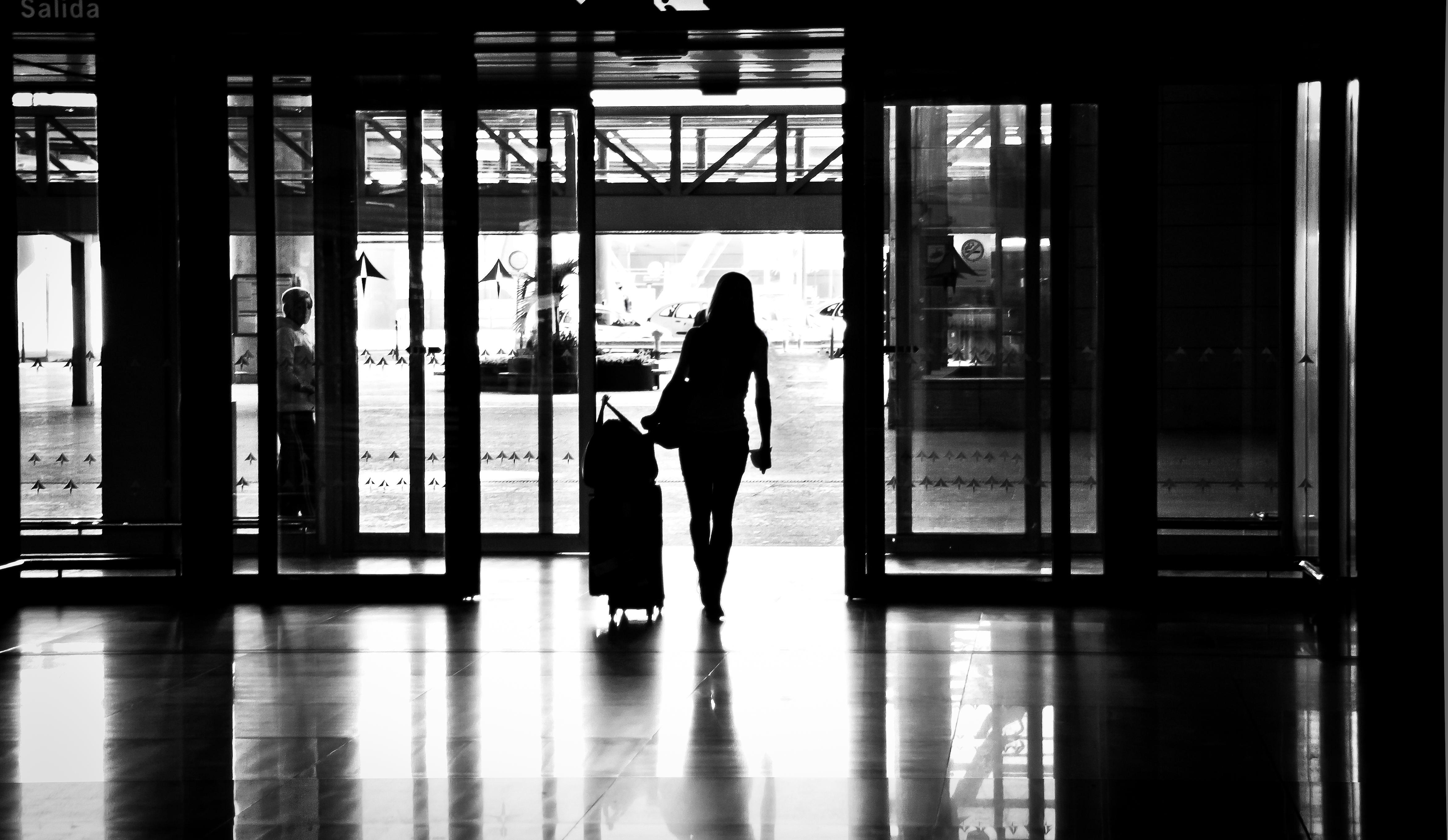
[A traveller with a rolling suitcase walking through an airport exit.] Photograph: Wikimedia Commons contributor
Image Credits: Wikimedia Commons
A two-night trip feels too small to insure. The flight was cheap, the hotel was a deal, and nothing is likely to go wrong in 48 hours. That reasoning is common, and the claims data says it is wrong in one specific way.
This article explains why you need travel insurance even for short trips, including what actually drives claims, what medical care abroad costs, how cancellation cover works, and what a short-trip policy typically costs.
The risk does not shrink with the trip
Trip length changes the number of days you are exposed, but it does not change the risk on any single day. A fall on a wet pavement, a sudden illness, or a family emergency back home can happen on day one of a two-day trip just as easily as on day ten of a longer one.
Claims data backs this up. Medical emergencies accounted for more than two-fifths of all travel insurance claims handled by the specialist provider Multitrip.com in 2025, according to Insurance Business.
Cancellation came second at 16 per cent, followed by loss of personal possessions at 10 per cent and travel delay at 9 per cent.
The same pattern shows up in industry-wide figures. Association of British Insurers member insurers settled more than 500,000 travel claims in 2024, worth 472 million pounds in total, one of the highest payout levels on record. Medical expenses accounted for 34 per cent of all cases, up from 29 per cent in 2023, costing insurers 262 million pounds at an average payout of 1,528 pounds.
The point is not that disaster is likely. It is that when something does go wrong, it is usually medical, and medical is the expensive category.
What medical care abroad actually costs
The average medical claim hides a wide range. Most are modest. A small number are enormous, and those are the ones that change lives.
In the Just Travel Cover claims analysis, emergency medical claims made up 56 per cent of all claims costs, with an average medical claim of 1,919 pounds. The largest single claim exceeded 51,500 pounds, after a traveller needed overseas hospital treatment, intensive care, and repatriation by air ambulance.
Destination matters a great deal. The same analysis found average medical claims above 9,000 pounds in Canada and nearly 7,000 pounds in the United States, with older travellers in Turkey averaging above 6,000 pounds. Even in popular European holiday destinations, treatment can run into thousands of pounds.
Air evacuation is the extreme end of the scale. According to Squaremouth data reported by MoneyGeek, evacuation claims make up less than 1 per cent of all cases, but several large evacuations pushed the 2022 average to 82,896 dollars, including one case that exceeded 223,000 dollars.
A short trip does not protect you from any of this. A hospital does not charge less because you planned to fly home on Sunday. And domestic health cover often stops at the border, leaving the full bill with the traveller.
Cancellation: the risk that starts before you leave
Cancellation cover is the part of travel insurance that protects money before the trip even begins. That timing matters for short trips, because the cost of a short trip is often paid in full well in advance: flights, a hotel, sometimes a rental car, all non-refundable.
Just Travel Cover's analysis of 2,392 claims found that nearly 89 per cent of cancellation claims costs were linked to illness, injury, family illness, or bereavement, while only 8 per cent related to travel disruption. The average cancellation claim in that analysis was 869 pounds.
The examples are ordinary, not dramatic. One family cancelled a trip to Turkey after their daughter was hospitalised, claiming almost 7,000 pounds.
Another family cancelled because their child contracted chickenpox just before departure, claiming 5,300 pounds. A traveller who needed emergency surgery before a trip claimed 12,562 pounds.
These are the events that no amount of careful planning prevents. Illness does not check the calendar, and a family emergency does not wait until after the holiday. Cancellation cover exists for exactly this window: the weeks between booking and departure, when the money is already spent and the trip has not happened yet.
What short-trip cover usually costs
Comprehensive travel policies typically cost 4 to 10 per cent of total trip costs, according to industry figures reported in 2025, or roughly 200 to 800 dollars for an average family trip. Medical-only policies for short trips typically run 30 to 200 dollars.
For a short trip, the premium is usually at the low end of that range, because the trip value is lower and the exposure window is shorter. A weekend trip costing 500 pounds might carry a premium of 20 to 50 pounds for a basic policy.
That ratio is the honest way to judge the purchase. The question is not whether 30 pounds is a lot of money. It is whether 30 pounds is a fair price to avoid a 1,500-pound average medical claim, a 5,000-pound cancellation loss, or, in the worst case, a five-figure hospital bill.
Some travellers already have partial cover and do not realise it. Credit cards, employer schemes, and annual policies sometimes include travel medical cover. The gap is usually in the details: low medical limits, exclusions for pre-existing conditions, or no cancellation cover at all.
Checking what you already hold before buying is sensible. Assuming you are covered without checking is not.
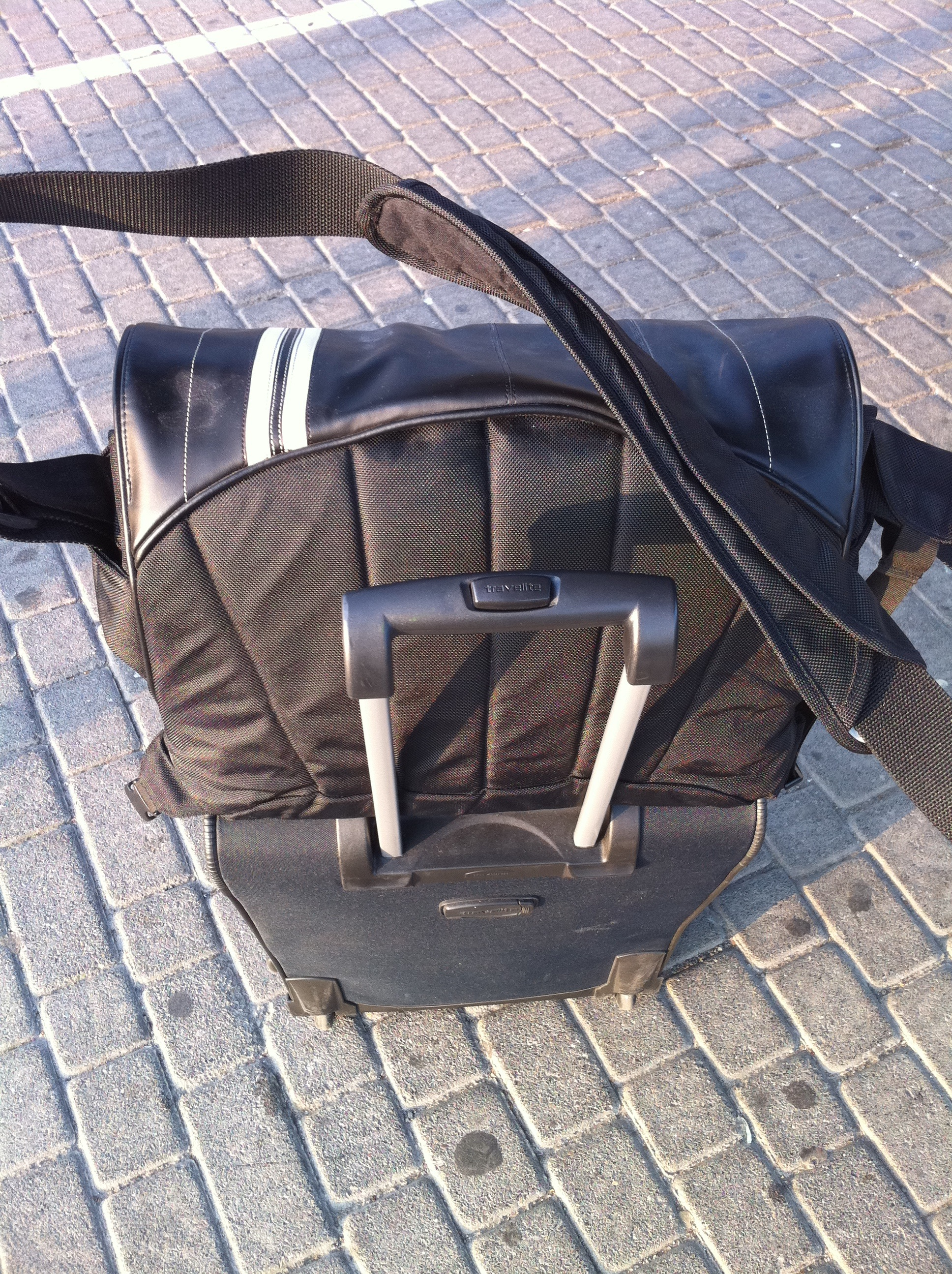
[A travel bag resting on top of a rolling suitcase.] Photograph: Wikimedia Commons contributor
Image Credits: Wikimedia Commons
What to check before buying
Four things decide whether a short-trip policy is actually useful.
First, the medical limit. A policy with a 10,000-pound medical limit sounds generous until it meets a 50,000-pound intensive care bill. Higher limits matter more than lower excesses for the catastrophic cases.
Second, repatriation. Getting home after a serious illness can cost more than the treatment itself. Air ambulance transport is the single most expensive item in travel claims, and a policy should cover it explicitly.
Third, cancellation terms. Check what counts as a valid reason: your illness, a travelling companion's illness, and close family bereavement are usually covered. Changing your mind is not, and neither is a work commitment in most standard policies.
Fourth, exclusions. Pre-existing conditions, adventurous activities, and alcohol-related incidents are common exclusions. A policy that excludes the activity you are travelling to do is not a bargain at any price.
The bottom line
Short trips carry the same per-day risks as long ones, and the claims data shows where the money goes: medical emergencies first, cancellation second, lost luggage a distant third. A short trip does not make a hospital bill smaller, and it does not stop a family emergency from cancelling the holiday.
For the price of a meal out, a short-trip policy covers the two risks that actually cost people real money. That is the math that makes it worth it, even for two nights away.
Tags: travel insurance, trip planning, medical cover
Rive News is a research desk that writes plain-language explainers from published studies and public sources.
Related
- How to deal with lost luggage and get compensation
- How to avoid roaming charges when travelling internationally
- What is a direct vs nonstop flight
- How to choose a travel backpack that fits airline size limits
Subscribe for one plain-language travel explainer each week.
Rive News publishes explainers based on public sources. Corrections are made promptly when a source is shown to be wrong.
Related stories

The 3-1-1 liquids rule for planes: what each number means
TSA's 3-1-1 rule limits carry-on liquids to 3.4-ounce containers in one quart bag. Where the 2006 rule came from, what counts, and how
Why Is Airplane Food So Bland at Altitude?
A 2010 Fraunhofer study found altitude cuts sweet and salty perception by up to 30 percent. Low humidity, cabin pressure, and noise all
Carry-on size limits: why airlines each set their own
Airlines set their own carry-on limits because the FAA only requires each carrier to have a policy, not one global size. Why 22 x 14 x