
Why Runways Have Numbers Like 27L: Magnetic Headings Explained
Key takeaways
- A runway number is its magnetic heading rounded to the nearest 10 degrees, with the trailing zero dropped.
- Each end of one runway gets its own number, 18 apart, because landings can come from either direction.
- L, C, and R mark left, center, and right parallel runways, and magnetic drift can force renumbering.
The numbers painted at the ends of runways are compass readings. A runway marked 27L points toward a magnetic heading of roughly 270 degrees, which is west.
The L means it is the left runway of two or more parallel strips. Pilots read the whole thing at a glance from the cockpit, and the number tells them which way they are facing.
This article explains how runway numbers are assigned, why one strip of pavement carries two different numbers, what the L, C, and R letters mean, and why airports sometimes have to repaint the numbers entirely.
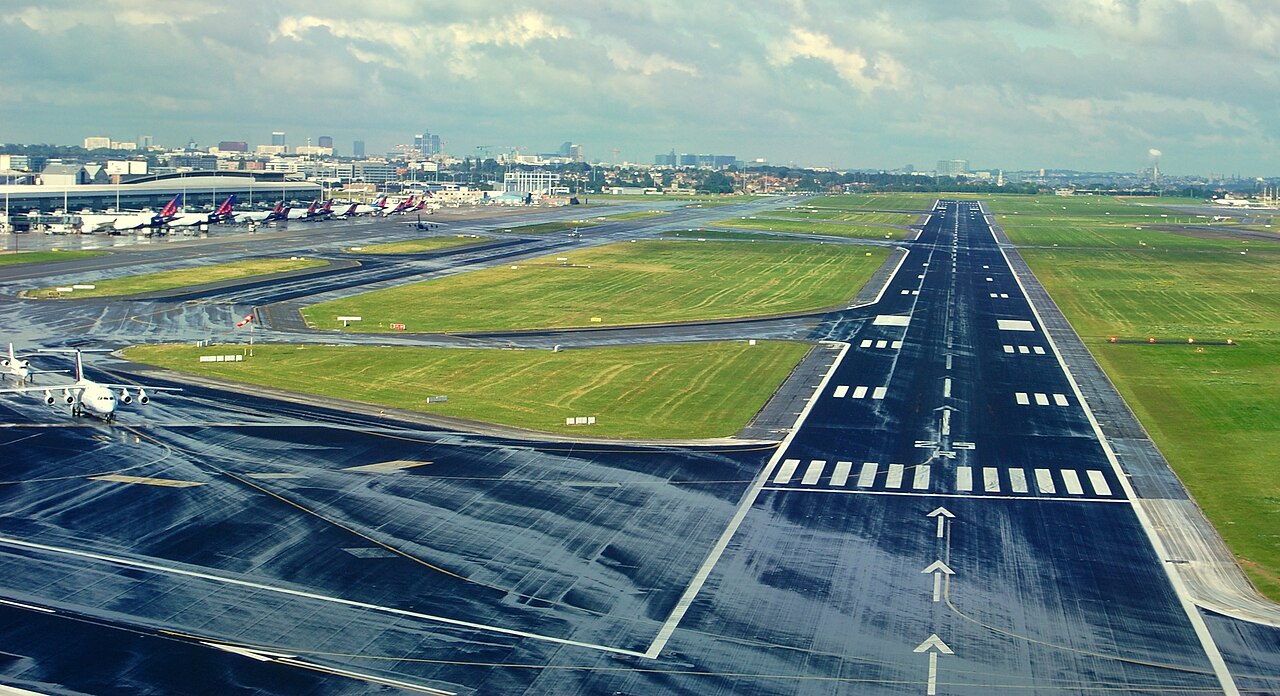
How a runway gets its number
Start with a compass. A compass is a circle divided into 360 degrees, with north at 0 (also written as 360), east at 90, south at 180, and west at 270. The runway number comes from the direction a pilot faces when using it, measured on a magnetic compass.
Take that magnetic heading, round it to the nearest 10 degrees, and drop the trailing zero. A runway aligned at 183 degrees becomes Runway 18. One aligned at 87 degrees becomes Runway 9. The number is always between 01 and 36, according to the FAA's Aeronautical Information Manual.
This gives you the simple map pilots memorize. Runway 36 points roughly north. Runway 9 points roughly east.
Runway 18 points roughly south. Runway 27 points roughly west. These are magnetic directions, which matter because aircraft compasses respond to Earth's magnetic field, not to true geographic north.
When the direction lands exactly between two numbers, the FAA lets it go either way. A heading of 185 degrees, for example, could be designated either 18 or 19. Pilots pronounce each digit separately on the radio: "runway two seven left," never "runway twenty-seven left."
Why one runway has two different numbers
A runway works like a two-way street. A plane can land from either end, and each end gets its own number based on the direction a pilot is traveling when approaching it. The two numbers always differ by 18, because the ends face in opposite directions and opposite directions are 180 degrees apart.
The number you see is the direction you are flying when you come in to land. A pilot approaching a single runway from the west sees Runway 9 and heads east.
A pilot approaching the same pavement from the east sees Runway 27 and heads west. Take off from Runway 18L and you are heading south; use the same strip from the other end and it is Runway 36R.
Pilots choose the runway based on wind. Controllers issue wind direction in magnetic degrees too, so a pilot can compare wind and runway number at a glance.
Land into the wind whenever possible: with wind from 180 degrees, out of the south, Runway 18 is the natural choice. When winds are light, below 5 knots, controllers use the designated calm-wind runway.
This also connects to how aircraft are built. Jetliners cruise at 35,000 feet partly because the thin air is efficient, and swept-back wings help them stay stable at those speeds. But every flight still ends the same way: aligned with a number painted on concrete.
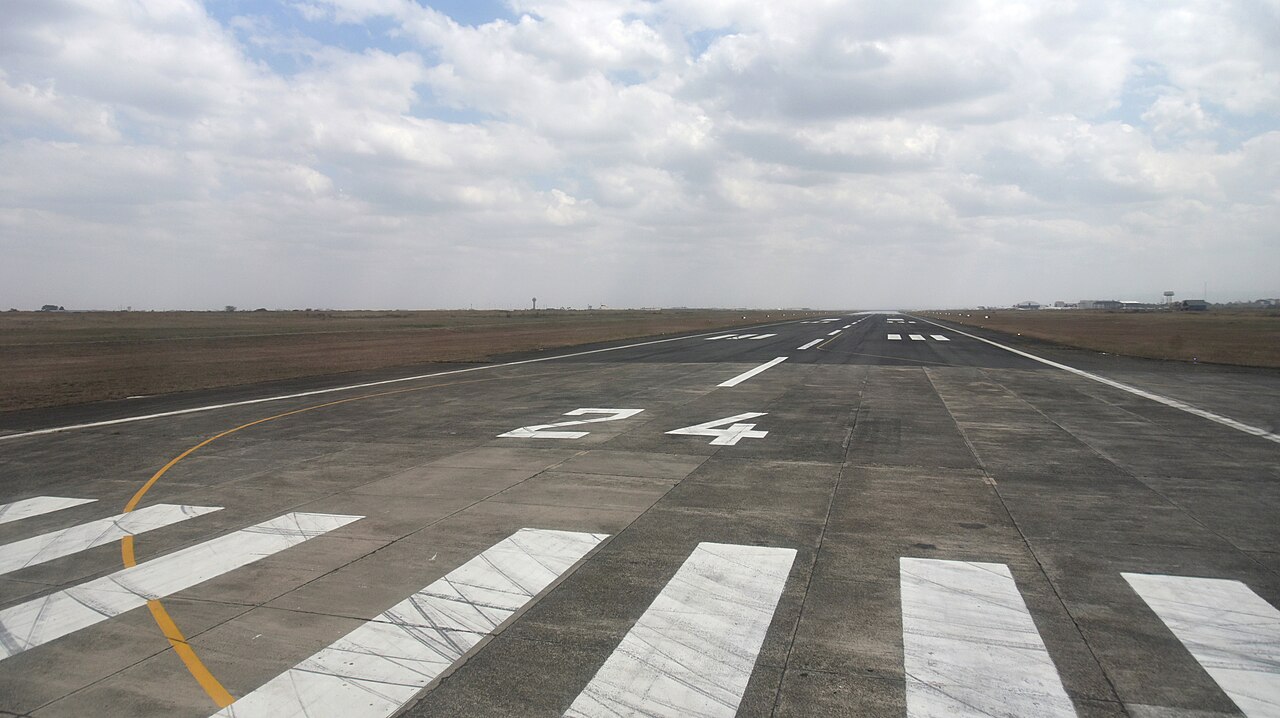
What the L, C, and R letters mean
Large airports often have two or three runways pointing the same way. Giving them identical numbers would create dangerous ambiguity on the radio, so the letters L, C, and R mark left, center, and right. The assignment is based on what the pilot sees from the direction of approach.
Two parallel strips become, for example, 18L and 18R. Three become 18L, 18C, and 18R, with C for center.
The same physical strip carries different letters at each end. A runway called 18L from the south is 36R when viewed from the north, because "left" flips with direction.
At the biggest airports, three parallel runways are not enough. Los Angeles, Atlanta, Dallas-Fort Worth, Denver, and Orlando all have four or more, and one set gets numbered 10 degrees away so every runway keeps a unique name. Dallas-Fort Worth has five parallel strips designated 17L, 17C, 17R, 18L, and 18R, all aligned near 175.4 degrees magnetic.
The letters matter far beyond runways. Every radio call from pilots, including the "heavy" suffix in callsigns, exists to keep instructions unambiguous in busy airspace. Runway letters serve the same purpose on the ground.

Why runways sometimes get new numbers
Runway numbers are not permanent. Earth's magnetic field is constantly shifting because of changes in the molten iron of the planet's core. As magnetic north drifts, a runway's magnetic heading drifts with it.
When the drift passes about 5 degrees, airports must repaint. The FAA rechecks runway designations roughly every five years, and airports at high latitudes near the poles see shifts more often. In 2009, Fairbanks International Airport in Alaska renamed Runway 1L-19R to Runway 2L-20R when the shift in magnetic north crossed the threshold.
Renumbering is a major operation. Paint, signs, approach charts, navigation databases, and controller phraseology all have to change together. Airports schedule it carefully so that the charts pilots carry match what is painted on the ground.
Why is 360 called 36 and not 0?
Compass headings run from 1 to 360 degrees, with 360 representing due north. Dropping the trailing zero from 360 gives 36. There is no Runway 00.
Why do opposite runway ends differ by 18?
Opposite directions are 180 degrees apart on a compass. Dropping the trailing zero from 180 gives 18. Add or subtract 18 from any runway number and you get the designation for the other end.
Can a runway number have more than one letter?
No. Letters only distinguish parallel runways: L for left, R for right, C for center. Airports with more than three parallel runways shift one set by a digit instead, like 17 and 18 at Dallas-Fort Worth.
Why magnetic north instead of true north?
Aircraft compasses align with magnetic north, and navigation systems are built around it. Numbering runways in magnetic headings means the painted number always matches what the pilot's instruments show on approach.
Does wind direction use the same system?
Yes. Controllers report wind direction in magnetic degrees, which lets pilots match the runway number against the wind at a glance and choose the best runway for landing into the wind.
The bottom line
Runway numbers like 27L are magnetic headings, rounded to the nearest 10 degrees with the zero dropped. The number names the direction of travel, the letters separate parallel strips, and each end of one runway gets its own number because planes land from both directions. When Earth's magnetic field drifts far enough, the numbers get repainted to match.
Latest in Travel
- Why Planes Cruise at 35,000 Feet
- Why Airplane Wings Are Swept Back
- Why Pilots Say Heavy After Their Callsign
- How Jet Lag Works Scientifically
Get one plain-English travel explainer in your inbox every morning. Subscribe for free.
Image Credits: Wikimedia Commons / Lucash; Wikimedia Commons; Wikimedia Commons / Michael F. Mehnert
Related stories

The 3-1-1 liquids rule for planes: what each number means
TSA's 3-1-1 rule limits carry-on liquids to 3.4-ounce containers in one quart bag. Where the 2006 rule came from, what counts, and how

Why Is Airplane Food So Bland at Altitude?
A 2010 Fraunhofer study found altitude cuts sweet and salty perception by up to 30 percent. Low humidity, cabin pressure, and noise all
Carry-on size limits: why airlines each set their own
Airlines set their own carry-on limits because the FAA only requires each carrier to have a policy, not one global size. Why 22 x 14 x