
How to travel with only a personal item bag: the system
By Rive News / Research desk | Rive News / Published October 24, 2026 at 9:00 AM PKT
Key takeaways
- A personal item must fit under the seat, typically around 40 x 30 x 15 cm; soft bags pass sizers best.
- Wear your bulkiest shoes and jacket, and pack a tight mix-and-match capsule of 2-3 tops.
- One planned wash mid-trip stretches the same bag from a long weekend to a full week.
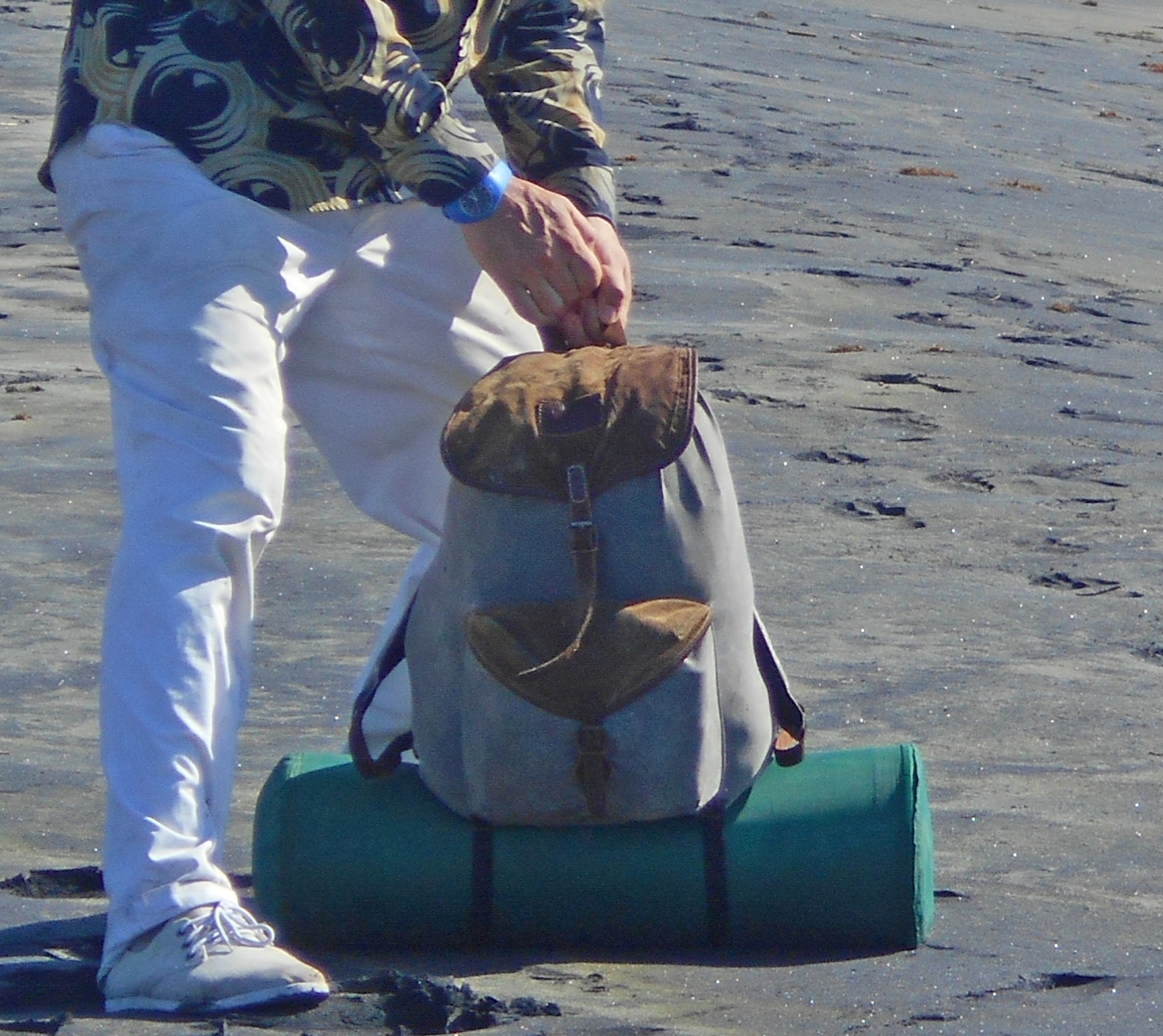
[A small backpack of the kind that fits under an airline seat as a personal item. Photograph: a small backpack]
Image Credits: Wikimedia Commons
Traveling with only a personal item means your entire trip fits in the bag that goes under the seat in front of you. No checked bag, no carry-on suitcase, no baggage carousel, no fees.
It sounds extreme until you see the system behind it. Minimalist travelers do not achieve it by suffering; they achieve it with three moves: wear the bulk instead of packing it, pack a small capsule wardrobe where everything matches, and wash once mid-trip instead of packing a week's worth of clothes.
"You learn what actually adds value to your journey," said Mark Rivera, a minimalist travel advocate quoted in Alibaba's packing research. The personal-item system is that lesson made practical. This article explains what counts as a personal item, the wear-the-bulk system, a packing list that actually fits, the wash-once system that extends the trip, and the mistakes that blow the whole plan.
What counts as a personal item
Airlines define a personal item as the smaller bag that must fit under the seat in front of you, distinct from the carry-on that goes in the overhead bin. Dimensions vary by carrier, and budget airlines enforce them most strictly. A widely cited reference box is 40 x 30 x 15 cm, about 18 liters, and the size-by-airline guides list carriers that use it, according to OneBagKit's personal-item packing guide.
Buy the bag from the airline's printed box, not from the bag's liter rating. A soft bag without a rigid frame is the safest choice because it gives a little at the sizer when packed.
Measure the bag again after packing, because depth grows as the bag fills, and keep everything inside: a jacket or bottle clipped to the outside counts toward the size. One frequent flyer quoted by OneBagKit put the standard bluntly after too many returns: the goal is a bag that will fit the sizer every single time, not one that should fit.
Check your specific carrier before every trip. Some gate agents wave borderline bags through; others charge fees on the spot. When in doubt, travel slightly under the limit rather than at it.
The wear-the-bulk system
The single highest-leverage move in personal-item travel is refusing to pack your heaviest items at all. Wear them.
Your bulkiest shoes, your warmest jacket, your heaviest trousers go on your body for the travel day, not in the bag. That one decision frees up a third or more of the bag's volume.
This is standard advice across minimalist packing guides, and Daily Passport's personal-item guide states it plainly: to save space, wear your bulkiest items, such as sneakers, boots, or a jacket, on the plane. Plan the travel-day outfit deliberately. It needs to work for the airport, the flight, and the walk to the hotel: comfortable, layered for cold cabins, and built around the one pair of shoes you are bringing.
Layering beats bulk. A soft knit, a tank, and a shawl or light jacket combine for warmth without the volume of one heavy coat, and layers adapt to the temperature swings between a freezing cabin and a warm arrival hall.
Pockets count too. A phone, earbuds, passport, and boarding pass riding in jacket pockets are items not taking up bag space.
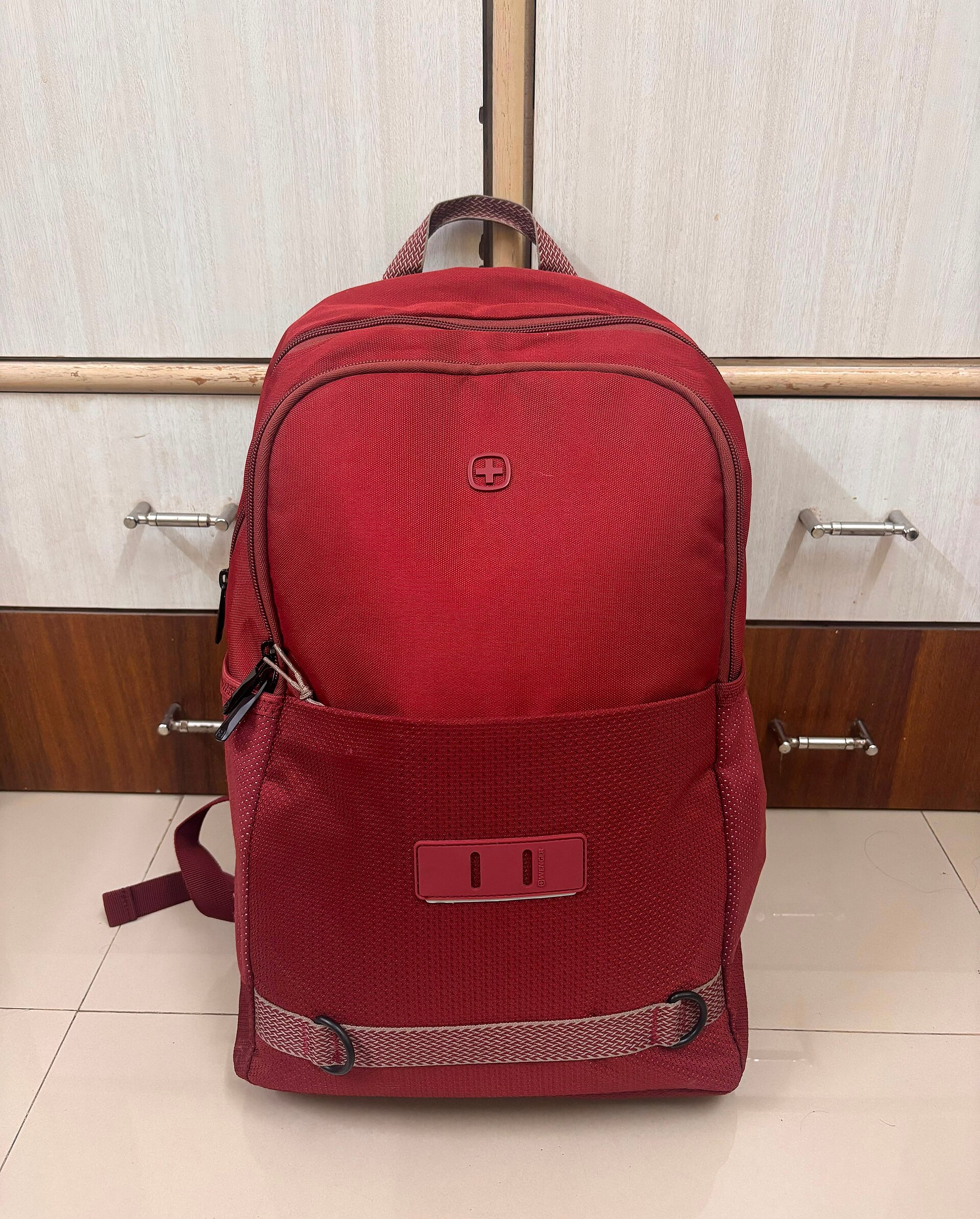
[A backpack designed for travel, shown packed and ready. Photograph: Sir Tragedy]
Image Credits: Wikimedia Commons
The packing list that actually fits
With the bulk on your body, the bag holds a tight capsule. OneBagKit's guide gives concrete lists that have been tested against real sizers. For two nights: 2 tops, 3 pairs of underwear, 3 pairs of socks, plus a sleep tee.
Wear the trousers, the jacket, and the only pair of shoes. That leaves room for a book or a small camera.
For three to five days, the list grows only slightly: 3 tops, 1 extra bottom, underwear and socks for 3 or 4 days, and a sleep tee, again with the bulkiest shoes and warmest layer worn. A spare bottom stays optional. The list flips to needing a bigger bag when the trip demands a second pair of shoes or a coat you will not wear on the plane; those are the two items that break the system.
Daily Passport's long-weekend version lands in the same place: 2 to 3 tops, 1 to 2 bottoms, one lightweight layer, underwear and socks for each day plus one backup set, and sleepwear. Toiletries go travel-size: toothbrush and toothpaste, deodorant, medications, a shampoo bar with a piece broken off into a small bag, and a moisturizer-sunscreen combo.
The TSA's 3-1-1 rule governs liquids: containers of 3.4 ounces (100 ml) or less, in one quart-sized clear bag, one bag per passenger. Solid toiletries like shampoo bars and deodorant sticks skip the rule entirely and save space.
Tech stays minimal: phone, charger, earbuds, and a power bank under 100Wh. A laptop stays home when a phone or tablet will do. Documents ride together: ID, boarding pass, cards, and a little cash.
[A backpack displayed as a museum piece, showing how pack design has evolved. Photograph: Alexto Production]
Image Credits: Wikimedia Commons
The wash-once system
The capsule above covers about four days. The wash is what stretches it to a week or more. Instead of packing seven sets of underwear and socks, which will not fit, you wash a few items once mid-trip and keep rotating.
The sink method is the standard. Pack a small laundry kit: a universal sink stopper or a spare plastic bag to plug the drain, a few ounces of travel detergent or a couple of soap leaves, and a short elastic laundry line. Wash underwear, socks, and a top in the evening; wring them in a towel; hang them overnight.
Quick-dry fabrics, especially merino wool and polyester blends, dry by morning in most climates. Cotton dries slowly and wrinkles badly, which is why packing guides consistently steer travelers toward wrinkle-resistant blends.
Choose fabrics with the wash in mind from the start. Merino wool resists odor across multiple wears, which means tops can go two or three days between washes.
Dark colors and busy patterns hide the minor stains and wrinkles that accumulate. Neutral, mix-and-match pieces mean every top works with every bottom, so three tops and two bottoms make six outfits, not three.
For trips beyond a week, plan around real laundry: a laundromat, a hotel service, or an accommodation with a machine. The personal-item system does not forbid laundry; it just moves the laundry off the packing list and onto the itinerary.
Mistakes that blow the system
Even experienced light packers make the same errors. The most expensive is the "just in case" outfit: the extra pair of shoes, the third sweater, the clothes for scenarios that will not happen. Every just-in-case item displaces something you will actually use, and at personal-item scale there is no slack to absorb it.
Full-size toiletries are the second classic failure. They violate the 3-1-1 rule, add weight, and eat volume. Transfer liquids to small leak-proof bottles or switch to solids.
The third is wrinkle-prone fabric. Cotton shirts look crisp when packed and misshapen by day two; blends hold their shape and dry faster after the mid-trip wash.
Two more are procedural. Skipping the trial run means discovering at the gate that the bag does not close or the sizer rejects it; pack at home, lift it, carry it, and confirm you can reach the essentials without unpacking everything.
And ignoring the airline's specific dimensions is how fees happen. Budget carriers are the strictest, and enforcement varies by airport and agent, so the bag that passed last month is not guaranteed to pass today.
Cut list, summarized from the guides: the second pair of shoes, full-size bottles, outfits for scenarios that will not happen, and a laptop when a phone or tablet suffices. Remove those four and most wardrobes fit.
Frequently asked questions
Can I really do a week with only a personal item?
Yes, with one wash mid-trip. The tested capsule covers three to five days as packed; a single sink wash of underwear, socks, and tops extends it indefinitely. Quick-dry fabrics and a small laundry kit are what make the math work.
What if my bag is slightly over the size limit?
Airlines vary in enforcement. Some gate agents wave borderline bags through; others gate-check them or charge fees. The safe play is a soft bag packed slightly under your carrier's printed dimensions, measured after packing.
Do I need packing cubes for a bag this small?
One small cube, or none, suits an under-seat bag. Cubes help separate clean from worn and compress slightly, but in an 18-liter bag they can also waste space. Try the trip both ways at home before deciding.
How do I handle cold-weather trips?
Wear the heavy coat and boots on travel days; that is the entire strategy. Pack thin thermal layers, which compress far better than one bulky sweater. If the trip genuinely needs a parka you will not wear on the plane, the personal-item system has reached its limit and a carry-on is the honest answer.
Is it safe to keep everything in one small bag?
Yes, with basic precautions. Use a bag with lockable zippers, keep it on your person rather than in overhead bins, back up document photos online, and consider travel insurance that covers loss or theft. A small bag you never let go of is safer than a big one you check.
The bottom line
Personal-item travel is not about deprivation. It is a system with three parts: the bulkiest things ride on your body, the bag holds a small capsule where everything matches, and one planned wash replaces half the wardrobe.
Skip the just-in-case items, respect the 3-1-1 rule, measure the packed bag against your airline's box, and do a trial run at home. The reward is the fastest airport exit there is: walk off the plane and keep walking.
Tags: packing light, personal item, budget travel, carry-on
Rive News is a research desk covering travel from published guides and airline policies. Packing lists above are adapted from cited sources.
Related
- Why do flights get delayed, and what announcements really mean?
- How does travel insurance work and what does it cover
- How to sleep on a plane when you cannot fall asleep
- Why cruise ships do muster drills before sailing
Get one plain-English travel explainer each week: subscribe to the Rive News newsletter.
Standards: packing lists adapted from cited guides; airline rules change, verify before flying; corrections welcomed and dated.
Related stories
The 3-1-1 liquids rule for planes: what each number means
TSA's 3-1-1 rule limits carry-on liquids to 3.4-ounce containers in one quart bag. Where the 2006 rule came from, what counts, and how
Why Is Airplane Food So Bland at Altitude?
A 2010 Fraunhofer study found altitude cuts sweet and salty perception by up to 30 percent. Low humidity, cabin pressure, and noise all
Carry-on size limits: why airlines each set their own
Airlines set their own carry-on limits because the FAA only requires each carrier to have a policy, not one global size. Why 22 x 14 x