
Why do brakes squeak on the first drive of the day?
Key takeaways
- A thin film of overnight rust on cast iron rotors causes most morning brake squeal, and it scrubs off within two to three stops.
- Semi-metallic brake pads are more prone to cold squeak than ceramic pads because of their higher metal content.
- A squeal that persists all day signals worn pads or glazed rotors, not harmless morning rust, and deserves a shop visit.
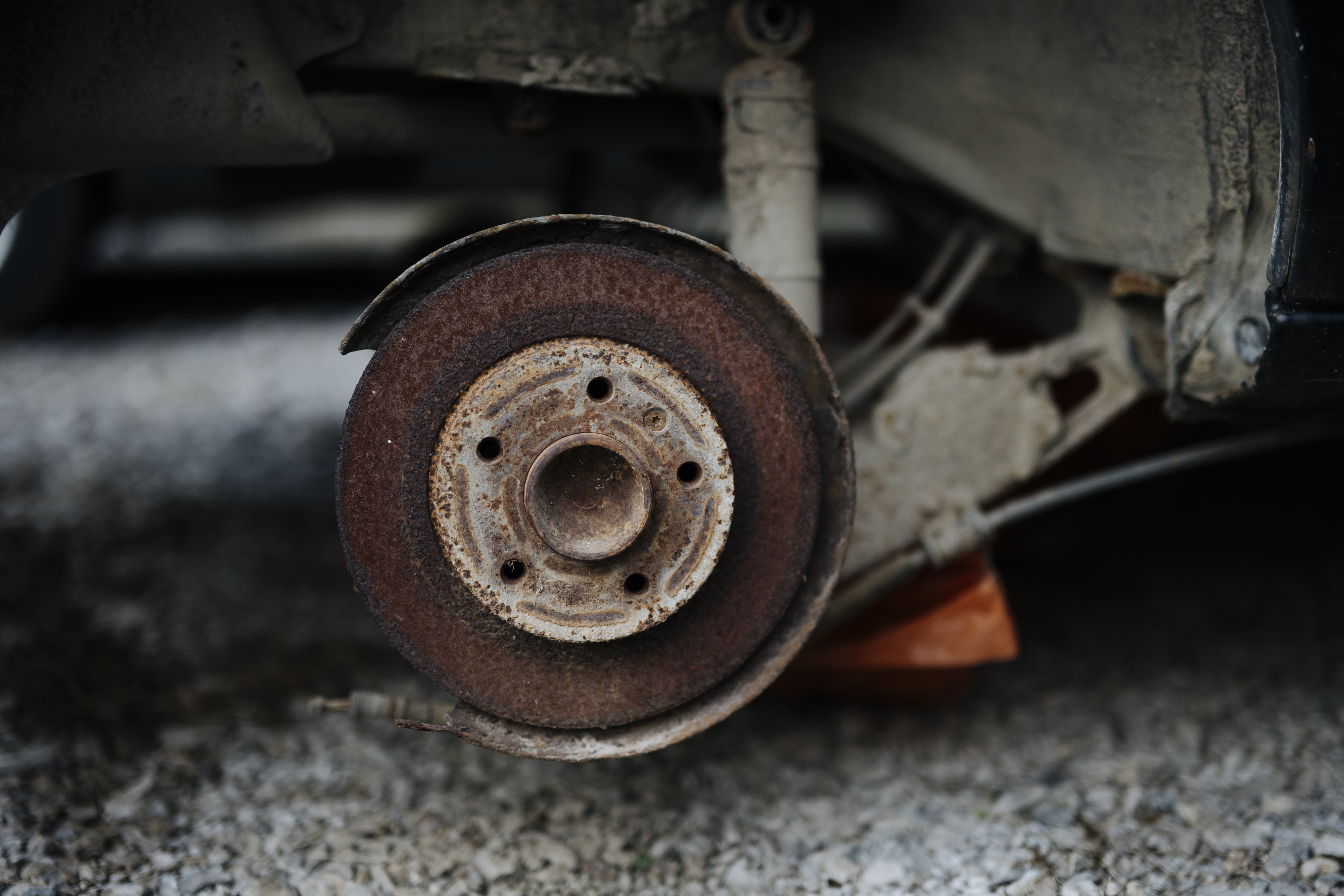
A rusted brake disc on a parked car shows the thin orange film that forms overnight. Photograph: Shixart1985/Wikimedia Commons
Image Credits: Wikimedia Commons / Shixart1985
That high-pitched squeal when you back out of the driveway is one of the most common sounds in car ownership. It shows up on the first one or two stops of the day, then vanishes for the rest of the drive. Most drivers hear it, worry briefly, and forget it by the time they reach the end of the street.
The sound is almost always harmless. Overnight moisture leaves a thin layer of rust on the brake rotors, and the first few brake applications simply scrape it off. Understanding why it happens makes it easy to tell the difference between a normal morning noise and a real brake problem.
This article explains what causes the first-drive squeak, why cast iron rotors are the culprit, how pad material changes the sound, and which noises mean it is time to see a mechanic.
Why the first stops of the day sound different
The squeal is a friction problem, not a mechanical failure. When the car sits overnight, atmospheric moisture settles on the exposed metal of the brake rotors.
Brake rotors are made from cast iron, a ferrous material that reacts rapidly with oxygen and moisture to form iron oxide, commonly known as rust. According to EngineerFix, this process, called flash rust, can begin within minutes of the car being exposed to rain or high humidity.
The film is extremely thin. EngineerFix reports that flash rust is often less than a thousandth of an inch thick, yet it is enough to change how the brake pad grips the rotor.
The pad is designed to bite into clean metal. When it meets the uneven oxide layer instead, the contact produces rapid, high-frequency vibration that the caliper assembly amplifies into the squeal you hear.
The noise is self-correcting. One or two brake applications polish the rotor surface back to a smooth finish, and the sound disappears.
That temporary pattern, loud on the first stop and gone by the third, is the signature of flash rust. Cars parked outside in humid or rainy weather rust faster than garage-kept cars, which is why the noise is worse after a wet night.
How cold pads and pad material change the sound
Temperature plays a supporting role in morning brake noise. Brake pads are engineered to work best within a specific temperature range, and their friction properties change when everything is near ambient temperature. According to EngineerFix, some performance-oriented or semi-metallic pads show lower initial bite and more vibration when cold, and the noise fades as friction heat brings the pads and rotors up to operating temperature.
Pad composition matters even more. Semi-metallic pads contain a high percentage of metal fibers, which makes them louder than ceramic pads because metal-on-metal contact transmits vibration more readily.
Ceramic pads run quieter when cold but can cost more. Knowing which compound your car uses helps set expectations: a semi-metallic-equipped car that chirps on a damp morning is behaving exactly as designed.
Drivers sometimes notice the squeal more when reversing out of a driveway. The light pedal pressure and low speed of that first reverse maneuver are the classic conditions for hearing the rust film being scrubbed away. None of this indicates worn parts.
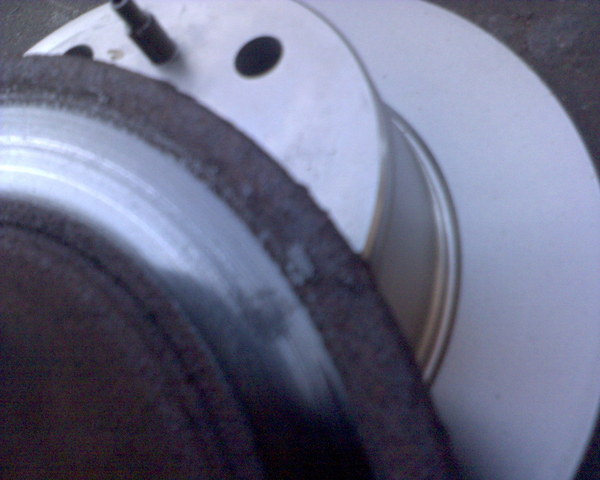
Brake discs are machined from cast iron, which is why their bare friction surfaces rust so quickly. Photograph: Gordonjcp/Wikimedia Commons
When a squeak stops being normal
The diagnostic test is simple: duration and consistency. A benign morning squeak vanishes after two or three light brake applications and never returns during the day. A noise that persists past that point is telling a different story.
The most common persistent squeal comes from the acoustic brake wear indicator, a small metal tab attached to the pad backing plate. According to EngineerFix, the tab is positioned to contact the rotor once the friction material wears down to a minimum safe thickness of about 2 mm.
That contact produces a loud, deliberate squeal every time you brake, regardless of temperature or weather. It is an engineered warning, not a defect.
A harsh, low-frequency grinding is more serious. Grinding means the friction material has worn completely through and the steel backing plate is rubbing directly against the rotor. That combination damages the rotor quickly and needs immediate attention.
YourMotorCare offers a practical rule: if the squeal disappears completely after the first three to four brake applications and does not return for the rest of the day, the brakes are almost certainly fine. If the squeal persists, returns after the car sits at traffic lights, or comes with grinding, pulling, or a spongy pedal, something else needs attention. Learning how to tell brake pads need replacing makes it easier to judge wear before a shop visit.
What to do about morning brake noise
For harmless flash rust, the best response is to let the brakes self-clean. Apply the brakes lightly a few times at low speed when you first set off.
The friction wipes the rust film away and warms the pads toward their operating temperature. There is no product to buy and no service to schedule.
Parking in a garage reduces the problem. EngineerFix notes that sheltered parking cuts the rotor's exposure to cold, damp air and high humidity, which slows overnight flash rust formation. Drivers who must park outside can expect more noise after rainy nights, and that is normal.
Avoid hard braking on a cold, damp rotor to "clean it faster." A few gentle stops do the job without glazing the pad surfaces. If you recently had pads replaced and the morning squeal is new, give the new pads a few hundred miles of normal driving to bed in against the rotors.
If the noise pattern changes, act on it. A squeal that appears mid-drive, lasts all day, or gets louder over weeks is not flash rust.
Have the pads and rotors inspected. Also note that a sharp squeal on startup can have other causes, covered in our guide to why a car makes a squealing noise when starting.
Is it safe to drive with squeaky brakes in the morning?
Yes, when the squeal follows the classic pattern: loud for the first two or three stops, then silent for the rest of the day. That is the sound of flash rust being removed, and braking performance is unaffected once the film is gone.
Why are my brakes louder after rain?
Rain accelerates flash rust. Wet rotors oxidize faster than damp ones, and a heavier film takes slightly longer to scrub off. The same mechanism applies after washing the car or driving through puddles.
Do ceramic brake pads squeak less?
Generally, yes. Ceramic pads contain less metal fiber than semi-metallic pads, so they transmit less vibration when cold. They still squeak over flash rust occasionally, but the noise tends to be quieter and shorter-lived.
Can rust damage my brake rotors?
Surface flash rust cannot. It is a microscopic film that the pads remove in the first stops. Deep, pitted corrosion from long-term storage is different and can require rotor resurfacing, but daily driving never lets rust reach that stage.
The bottom line
Morning brake squeal is the sound of physics, not failure. Cast iron rotors rust within hours of touching moisture, and the first stops of the day scrape that film away.
When the noise clears in two to three applications and stays gone, there is nothing to fix. Reserve your worry for squeals that persist, grinding, or changes in pedal feel. Those are the sounds that earn a trip to the shop.
Latest in Automotive
- How to tell your brake pads need replacing
- Why your car makes a squealing noise when starting
- How run-flat tires work and their tradeoffs
Subscribe for weekly car maintenance explainers in plain English.
Related stories

Why Does Tire Pressure Drop in Cold Weather?
Cold weather can cut tire pressure by 1 psi for every 10°F drop, thanks to the ideal gas law. Here is what happens inside the tire and what

Why Do Brake Rotors Warp, or Do They Actually?
Mechanics rarely see a truly warped rotor. The shudder usually comes from uneven pad deposits a few thousandths of an inch thick. Here

How to Buy a Used Car Without Getting Scammed: The Checklist
Over 450,000 cars a year have rolled-back odometers, NHTSA says. This checklist covers VIN checks, title washing, and the inspection that