
Why does my car make a grinding noise when starting in the morning?
By Rive News
Research desk | Rive News
Key takeaways
- Grinding at the moment you turn the key usually points to the starter motor: its pinion gear is failing to mesh cleanly with the flywheel.
- Grinding on the first brake press after a damp night is usually harmless surface rust on the brake rotors, which wipes off within a few stops.
- Grinding that persists after warm-up, or grinding with a no-start, means a mechanic should hear it soon before the damage spreads.
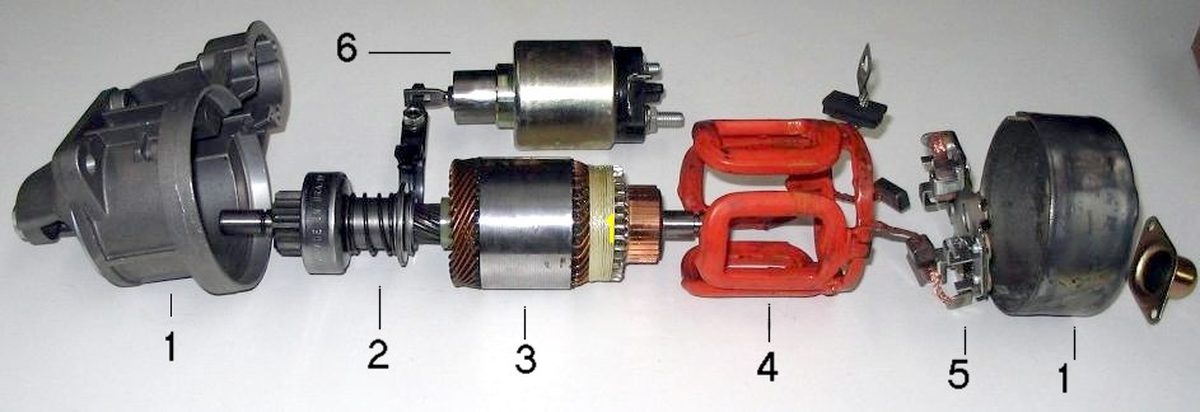
Image Credits: Wikimedia Commons (CC BY-SA 3.0)
A harsh grinding sound first thing in the morning gets every driver's attention. The good news is that the timing of the noise tells you most of what you need to know. A grind that happens the instant you turn the key is a different problem from a grind that appears on your first brake press backing out of the driveway.
The first case usually involves the starter motor. The second is usually surface rust on the brake rotors, a cosmetic issue that clears itself. Both are well documented, and both have clear next steps.
This article explains what that grinding sound is, the most common causes, how to tell them apart, and when the noise means a trip to the mechanic.
What that grinding sound actually is
Grinding is the sound of metal teeth failing to mesh. In a starter, a small pinion gear slides out and engages a much larger ring gear on the engine's flywheel or flexplate, spinning the engine until it fires. When those teeth meet cleanly, you hear normal cranking.
When they clash, slip, or drag, you hear grinding.
"The starter motor has a small gear that engages a larger gear, called the ring gear, on the engine's flywheel or flexplate," wrote John Paul, the Providence Journal's Car Doctor columnist, in a September 2026 reader Q&A. When the starter drive wears out, the pinion no longer seats properly against the ring gear, and the result is that unmistakable metallic growl.
Brake grinding is a different mechanism with a similar sound. Overnight moisture lays a thin film of rust on bare cast-iron rotors, and the first few brake applications scrape that film off. The pads act like sandpaper on the rust layer until the rotor face is clean again.
The most common causes
A worn starter drive. This is the classic cause of grinding during cranking. The starter drive, sometimes called the Bendix drive, is the mechanism that throws the pinion gear into the flywheel and pulls it back once the engine starts. When it sticks or wears, the gears clash instead of meshing. John Paul notes that the starter drive may simply be worn, but if the ring gear has also been damaged, the repair gets considerably more expensive, which is why early attention matters.
Damaged flywheel or flexplate teeth. If the ring gear's teeth are chipped, flattened, or stripped, the pinion spins without catching, producing loud grinding and sometimes a no-start. As the Car From Japan repair guide explains, worn ring gear teeth let the pinion spin on its axis without turning the flywheel, so the engine never cranks.
A sticking solenoid. The solenoid is the electromagnetic switch that pushes the pinion gear outward. Mechanics note that a sticking solenoid can leave the gear dragging against the flywheel for a moment too long, which produces a brief grind right as the engine catches.
Surface rust on brake rotors. This is the morning-specific cause. After rain, snow, or a humid night, a thin layer of oxidation forms on the rotors while the car sits. Drivers on automotive Q&A forums describe a loud scrape on the first brake applications that fades within a few minutes of driving, which matches the rust-wipe-off explanation. Damp climates make it worse, and it is considered benign when it clears quickly.
Worn brake pads. When friction material wears through, the metal backing plate contacts the rotor directly, and that grinding does not fade after warm-up. In the UK, MOT inspection standards require a minimum of 1.5mm of visible brake pad friction material, according to garage mechanics answering driver questions on Gumtree. Anything near that floor deserves immediate attention, because metal-on-metal contact destroys rotors fast.
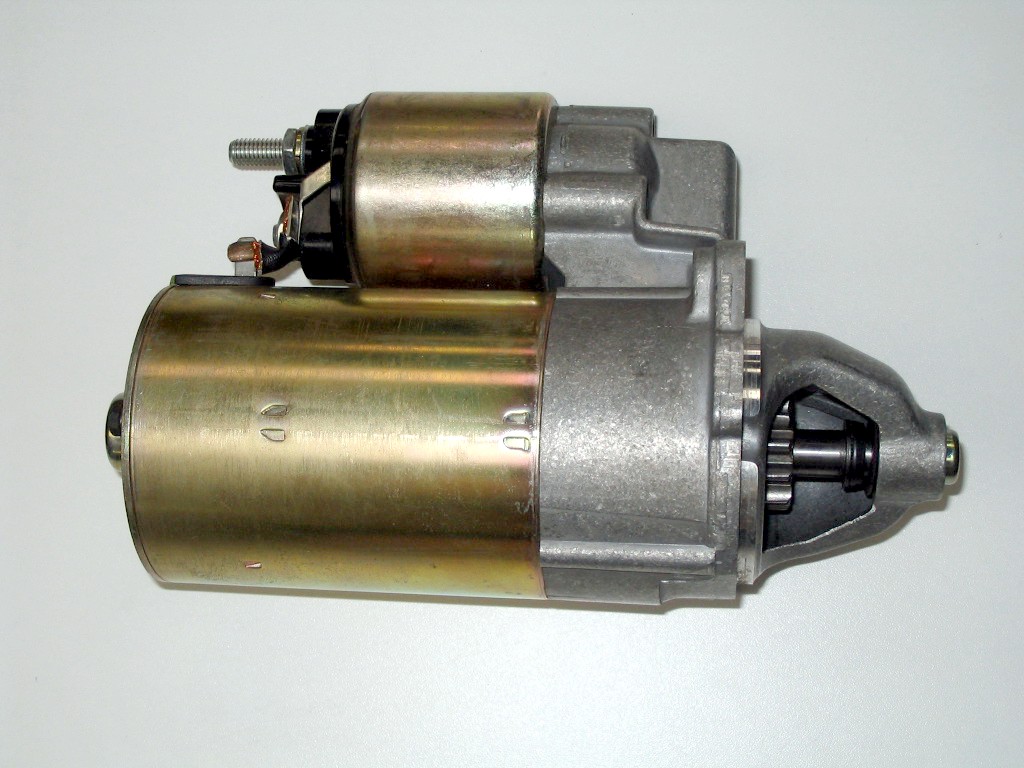
Image Credits: Wikimedia Commons (CC BY-SA 3.0)
How to tell the causes apart
Listen for when the noise happens, because the timing is the diagnosis.
- Grind happens only while cranking, then the engine starts normally. Starter drive or solenoid issue. Book a diagnosis soon. Driving on it risks chewing up the flywheel's ring gear, turning a starter replacement into a far bigger job.
- Grind happens on cranking and the engine does not start, or starts only sometimes. Worn pinion or damaged ring gear teeth. Motorcar Parts of America's starter diagnostic guide lists grinding, clashing, and clanging during starting as signs the starter drive gear is worn or not engaging properly, and warns that ignored noises can damage the engine's flywheel.
- Grind appears on the first brake presses of the day and fades within a few stops. Surface rust on the rotors. Normal, especially after wet weather. A few gentle stops clear it.
- Grind when braking continues all day, or you feel vibration in the pedal. Worn pads or a stuck caliper. This one does not fix itself. Get the brakes inspected.
A weak battery can muddy the picture, since low voltage makes the starter labor and sound rough. If the engine cranks slowly in addition to grinding, have the battery tested too. A battery that dies overnight has its own set of causes worth ruling out.
When to see a mechanic
Any grinding tied to the starter deserves a professional listen sooner rather than later. John Paul's advice to a reader with intermittent grinding was direct: have a mechanic listen to the noise and determine whether the problem is limited to the starter or involves the ring gear as well. In most cases, he wrote, the culprit is a faulty starter, which is the cheaper of the two outcomes.
Brake grinding that survives the warm-up is the other red flag. Pads worn to the backing plate score the rotors with every stop, and a stuck caliper can overheat the whole assembly.
If you are unsure how much friction material is left, a quick visual check through the wheel spokes helps. Pads thinner than about 3mm are due for replacement, and anything at the metal is urgent. Drivers tracking warning lights should also know why the check engine light can come on by itself, since unrelated faults sometimes appear together.
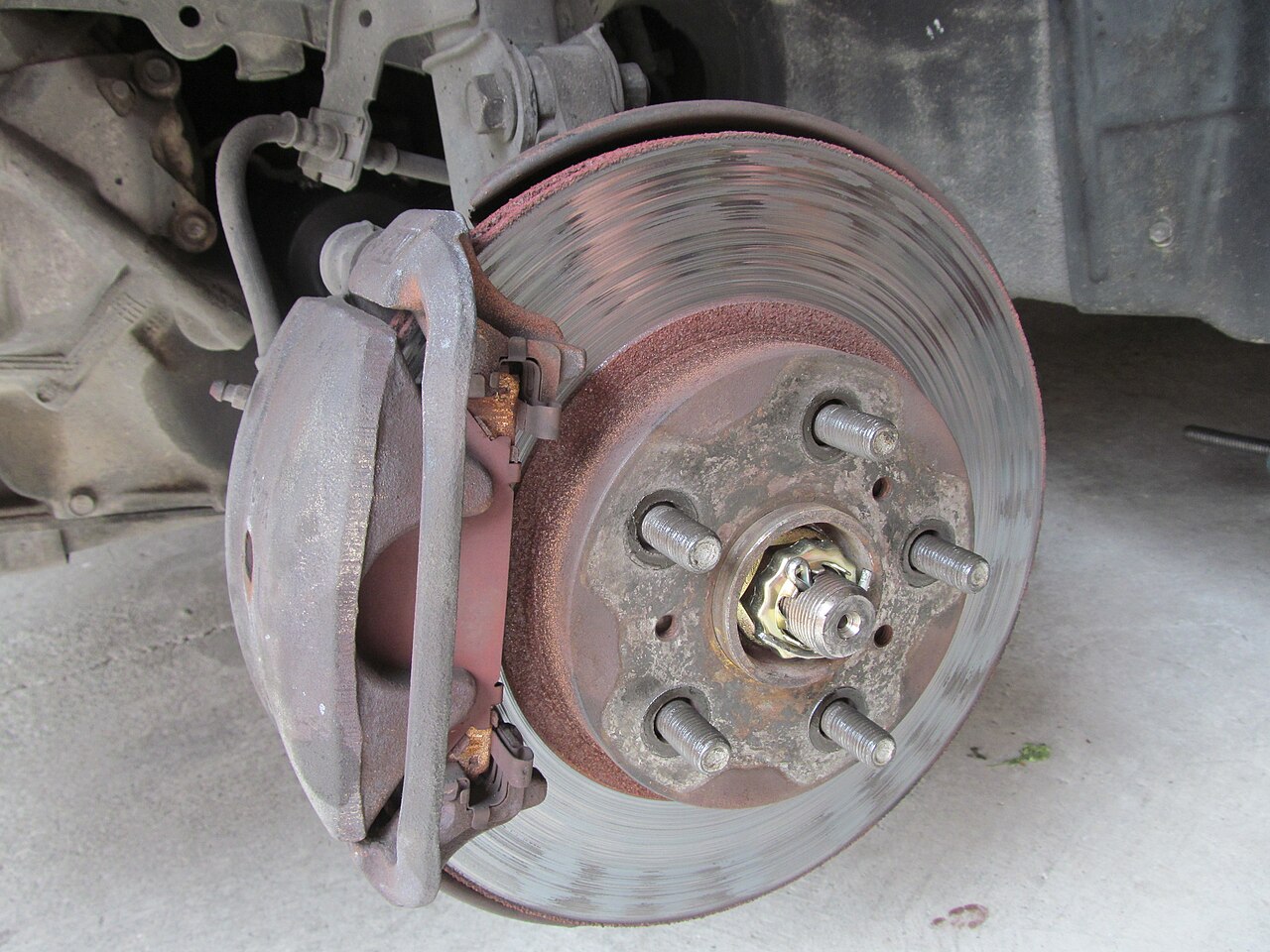
Image Credits: Wikimedia Commons (CC BY 2.0)
Frequently asked questions
Is it safe to drive with a grinding starter?
For a short time, usually yes, but every grind wears the flywheel's ring gear a little more. What starts as a starter replacement can become a transmission-out flywheel job if ignored for months. Get it diagnosed within days, not seasons.
Why does the grinding only happen on cold mornings?
Two reasons stack up. Cold thickens engine oil slightly, making the starter work harder, and overnight dampness rusts the brake rotors. A marginal starter drive or a rusty rotor that is silent in dry summer weather can both announce themselves on the first cold, wet morning of autumn.
Can I fix a grinding starter myself?
Diagnosis is straightforward for a shop with a lift, but replacement involves high-current wiring and precise alignment with the flywheel. Unless you are an experienced DIY mechanic, this is a pay-a-professional repair. What you can do yourself is describe the timing of the noise accurately, because that is what narrows the diagnosis.
The bottom line
Morning grinding is the car telling you where to look: at the key turn, suspect the starter drive, solenoid, or flywheel teeth. At the first brake press, suspect overnight rotor rust. Rust that clears in a few stops is normal. Anything tied to cranking, or any brake grind that outlasts the warm-up, earns a mechanic's ears before a small repair becomes a big one.
Topics: car noise, starter motor, brakes, car maintenance, diagnostics
Rive News's research desk writes evidence-based explainers from public records and reporting. It covers travel, cars, careers, and education.
Latest in Auto
- Why a car battery dies overnight: the drains that kill a charge by morning.
- Why the check engine light comes on by itself: what the light actually monitors.
- How to tell brake pads need replacing: the signs before metal meets metal.
Get one clear explainer in your inbox every morning. Subscribe to the Rive News newsletter.
© 2026 Rive News. We correct errors promptly. Send corrections to the research desk; substantive updates get a new timestamp.
Related stories

Why Does Tire Pressure Drop in Cold Weather?
Cold weather can cut tire pressure by 1 psi for every 10°F drop, thanks to the ideal gas law. Here is what happens inside the tire and what

Why Do Brake Rotors Warp, or Do They Actually?
Mechanics rarely see a truly warped rotor. The shudder usually comes from uneven pad deposits a few thousandths of an inch thick. Here is th

How to Buy a Used Car Without Getting Scammed: The Checklist
Over 450,000 cars a year have rolled-back odometers, NHTSA says. This checklist covers VIN checks, title washing, and the inspection that ca