
Why Does the Check Engine Light Come On and Off by Itself?
Key takeaways
- The light goes off by itself when the engine computer runs its self-checks over several drive cycles and the fault no longer appears.
- The most common on-and-off triggers are a loose gas cap, a failing oxygen sensor, and occasional misfires.
- The computer still stores the fault code after the light goes out, so a scan is worth doing. AAA says delaying repairs can make them 50% more expensive.
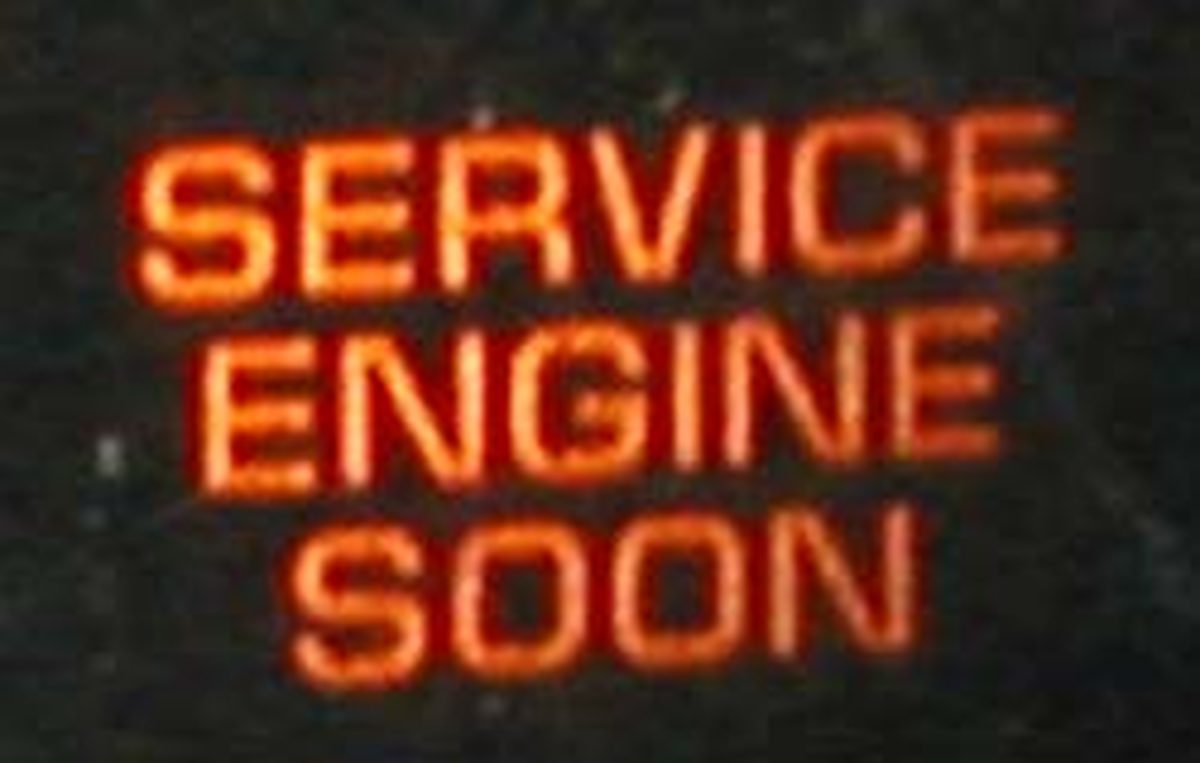
A check engine light that appears, disappears, and returns feels like the car is playing tricks. It is not.
The light follows strict rules: the engine computer turns it on when a fault is detected. It turns it off when its self-tests pass for a set number of drive cycles (full warm-up and driving routines). The fault often stays stored in memory the whole time.
This article explains how the on-and-off cycle works, including the most common on-and-off causes, what to do when the light appears, and the bottom line on whether you can ignore it.
How the light can turn itself off
Your car's computer (the ECU) constantly monitors the engine, emissions systems, fuel mixture, and dozens of sensors. When something falls outside the expected range, it stores a diagnostic trouble code and lights the check engine lamp.
The important part: the light is tied to repeated verification, not a single event. According to Engineer Fix, if the problem stops happening, the computer runs its checks over later drive cycles. It switches the light off once it confirms the fault is gone.
The stored code usually stays in the system. That is why the light can vanish while the real issue is only dormant (sleeping), waiting for the right conditions to return.
Loose or faulty gas cap
The most frequent and simplest cause of an on-and-off check engine light is the fuel cap. The cap is part of the evaporative emission control (EVAP) system. That system seals the fuel system to keep vapors from escaping. A cap left loose after refueling lets the EVAP system detect a pressure leak. The computer logs a fault, often code P0440 or P0455.
The fix is free: tighten the cap until it clicks. After a few successful drive cycles, the computer verifies the seal is holding and turns the light off, per Engineer Fix. But a worn or cracked cap will not seal no matter how tightly you twist it. The light will keep returning until the cap is replaced.
Intermittent sensor faults
Modern cars depend on sensors to measure air intake, exhaust oxygen, engine temperature, and throttle position. A sensor does not have to be dead to cause trouble. It only has to misread now and then. (Intermittent means it comes and goes.)
An oxygen sensor starting to fail may send bad readings only under certain conditions, such as cold starts, highway speeds, or hot engine temperatures, according to Tim's Automotive Repair and Sales. Moisture, vibration, or a brief voltage spike can also make a sensor report a nonsensical reading for a short time, as Engineer Fix explains. The computer lights the lamp, the conditions change, the sensor reports normally again, and after enough clean drive cycles the light goes out.
Mass airflow sensors fail the same way, producing readings that briefly push the air-fuel mixture too lean (too little fuel) or too rich (too much fuel). Because these faults depend on temperature and load, the light can seem to follow no pattern at all.
Intermittent misfires
Misfires from worn spark plugs or weakening ignition coils often happen only under specific conditions, like heavy acceleration or cold starts. When the misfire stops, the light may turn off after a few drive cycles, Tim's Automotive notes.
Do not take that as the all-clear. Repeated misfires damage spark plugs, coils, and the catalytic converter over time.
A flashing check engine light, as opposed to a steady one, means an active misfire is happening right now. It needs immediate attention. If your car stumbles from a stop before the light appears, see our explainer on why a car hesitates when accelerating from a stop.
Vacuum leaks and wiring gremlins
Small vacuum leaks come and go by nature. (A vacuum leak is a crack that lets extra air into the engine.) Cracked hoses, worn gaskets, or tired intake manifold seals open and close as the engine warms and cools. So the light follows the temperature of the engine bay. Autocarshub's technical guide describes this as one of the harder causes to catch precisely because it depends on temperature.
Loose wiring and aging connectors behave the same way. A connector that cuts out now and then produces ghost faults that come and go. A catalytic converter losing efficiency also tends to trigger warnings only under certain driving conditions, turning on and off for weeks before it fails for good.
What to do when the light comes and goes
You do not need to panic, but you should not ignore it either. Follow these steps:
- Tighten the gas cap first. Twist it until it clicks. This alone solves the problem in a surprising number of cases.
- Note the pattern. Does the light appear after refueling, during hard acceleration, or when the engine is cold? These clues help a mechanic find the cause faster.
- Get the codes read. Many auto parts stores scan cars for free. The stored code stays even after the light goes out, and it names the fault.
- Watch for performance changes. Shaking, stalling, or rising fuel use means the issue is bigger than a loose cap.
- Act early. According to AAA, waiting too long after the check engine light comes on can make repairs up to 50 percent more expensive than fixing them early.
If the battery is also dying overnight or the car has other electrical quirks, read our guide to causes of a car battery dying overnight. A grinding noise when starting in the morning paired with the light is another pattern worth checking.
Frequently asked questions
Can a check engine light turn off by itself?
Yes. When the fault stops occurring, the engine computer runs its self-checks over several drive cycles. It switches the light off once the readings return to normal. The stored fault code usually stays in memory, so the real cause can still be diagnosed.
Does the light going off mean the problem is fixed?
Not necessarily. It means the fault has not repeated recently.
A developing problem, like a slowly failing oxygen sensor or an early-stage misfire, can vanish for days or weeks and then return. The pattern of return is the real information.
How many drive cycles does it take for the light to reset?
It varies by maker and fault type, but several successful drive cycles is the general rule. A drive cycle is not a fixed number of miles. It is a set of operating conditions (cold start, cruising, idle) that lets the computer run its full self-test sequence.
Is it safe to drive with an intermittent check engine light?
A steady light that comes and goes is usually safe for short trips while you arrange a scan, as long as the car drives normally. A flashing light means an active misfire and should be treated as urgent: continued driving can destroy the catalytic converter.
The bottom line
An on-and-off check engine light is almost never a ghost. It is an on-and-off fault that the computer keeps catching and then clearing.
Start with the gas cap, get the stored codes read even when the light is out, and fix small problems before they grow. The light going dark is information, not a cure.
Latest in Auto
- Why Does My Car Hesitate When Accelerating From a Stop?
- Car Battery Dying Overnight: Causes
- Car Grinding Noise When Starting in the Morning
- Why Your Steering Wheel Shakes: Meaning and Causes
Tags
check engine light, OBD-II codes, car sensors, car diagnostics, car maintenance
Rive News's research desk writes plain-English explainers on how everyday machines work, based on documented sources.
Subscribe for one useful explainer every morning.
© 2026 Rive News. All rights reserved. Corrections: [email protected].
Related stories

Why Does Tire Pressure Drop in Cold Weather?
Cold weather can cut tire pressure by 1 psi for every 10°F drop, thanks to the ideal gas law. Here is what happens inside the tire and what

Why Do Brake Rotors Warp, or Do They Actually?
Mechanics rarely see a truly warped rotor. The shudder usually comes from uneven pad deposits a few thousandths of an inch thick. Here is th

How to Buy a Used Car Without Getting Scammed: The Checklist
Over 450,000 cars a year have rolled-back odometers, NHTSA says. This checklist covers VIN checks, title washing, and the inspection that ca