
Why your car smells like burning after a long drive
By Rive News / Research desk | Rive News / Published October 27, 2026 at 9:00 AM PKT
Key takeaways
- A burning smell after a long drive most often comes from hot brakes, oil on a hot engine part, or a slipping belt.
- The character of the smell matters: oily, sweet, rubbery, and acrid plastic smells point to different systems.
- A smell that fades after one hard drive matters less than one returning every trip; get help at once for smoke, flames, or a strong electrical smell.
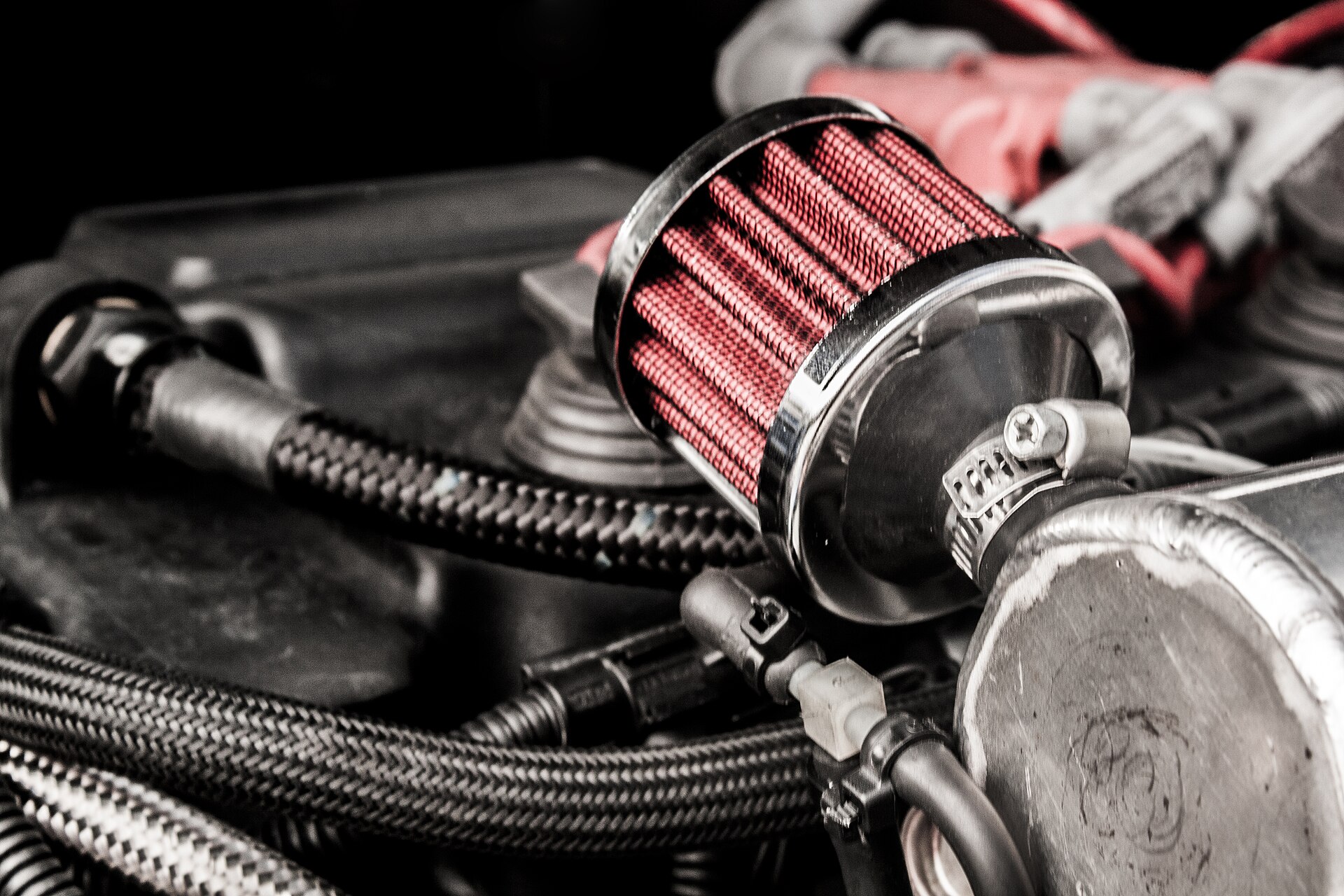
An open engine bay, where oil, belts, and wiring sit close to hot metal surfaces. Photograph: the car engine bay
Image Credits: Wikimedia Commons
A burning smell from a car is the smell of something getting hotter than it should, or of a fluid or material touching a surface hot enough to scorch it. Engines, brakes, and exhaust parts all run hot by design, so a small amount of heat is normal. The smell becomes a warning when it is strong, repeated, or joined by smoke, a warning light, or a change in how the car drives.
This article explains the common causes of a burning smell after a long drive, including hot brakes, leaking oil, slipping belts, and electrical faults, and how to check each one safely.
Why a long drive brings the smell out
A long drive builds heat in stages. The engine reaches full operating temperature, the exhaust system gets hotter than it does on a short trip, and the brakes absorb repeated stops. A small oil leak that produces nothing on a five-minute trip may only start to smoke once the exhaust manifold has had time to get fully hot.
The same logic applies to brakes on a long downhill stretch.
Firestone Complete Auto Care notes that brakes naturally generate heat, especially during heavy stopping or downhill driving, and that a persistent burning smell may indicate dragging brakes or a stuck brake caliper keeping constant pressure on the rotor. That distinction matters. Heat from one hard descent is expected.
Heat that appears on flat, gentle driving is not.
Stop-and-go traffic adds another layer. Firestone also notes that stop-and-go traffic places extra heat and stress on the engine, transmission, and brakes, which can make burning smells more noticeable when a component is already struggling. A long drive does not create every fault, but it gives an existing fault time and temperature to show itself.
Hot brakes: the most common cause
Brakes turn motion into heat. Pads press against rotors, friction slows the wheels, and the parts get hot. On a long downhill run, in heavy traffic, or while towing, that heat builds faster than it can escape.
The result is a sharp, chemical smell near the wheels, sometimes with a soft pedal or reduced stopping power.
One simple check helps after the car has cooled. If one wheel feels far hotter than the others, or the car pulls to one side while braking, a brake may be dragging. A stuck caliper or a parking brake left partly engaged keeps a pad in contact with the rotor.
That constant friction wears pads and rotors fast, and it can warp rotors over time.
A practical step from several repair guides is to pull over safely and let the brakes cool for at least 30 minutes after heavy downhill use. Do not pour cold water on very hot brakes, and do not touch a rotor to test it. On a descent, use a lower gear so the engine helps slow the car, which takes load off the brakes.
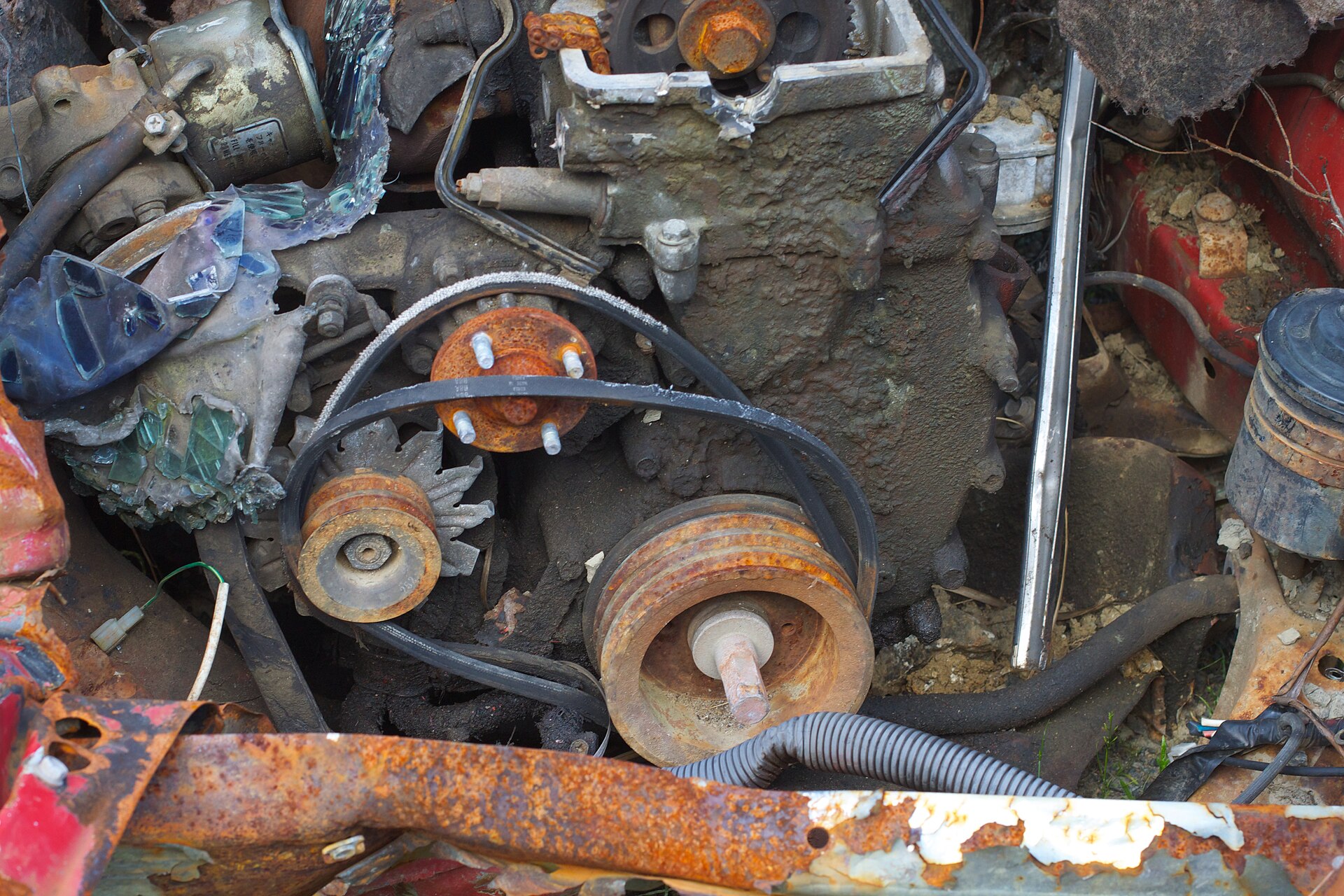
A worn engine bay, where ageing belts and seals are more likely to leak or slip. Photograph: the engine bay with defective belts
Image Credits: Wikimedia Commons
Leaking oil on hot parts
Oil has a distinct, bitter smell when it burns. A valve cover gasket, an oil filter seal, or a drain plug can let a small amount of oil escape. That oil then drips or seeps onto the exhaust manifold or another hot surface and burns off.
Wisco Automotive describes this pattern: light smoke from the engine area after parking, oil spots where the car stands, and a falling oil level on the dipstick.
A recent oil change can cause a short-lived version of the same smell. Firestone notes that a small amount of oil spilled during an oil change burns off once the engine heats up, and that this smell usually fades after a short drive. If the odor persists for several days, the guide warns, there may be a leak or an improperly sealed filter that should be inspected.
Check the oil level with the dipstick when the engine is cool, and look for fresh oily residue around the top and sides of the engine. A small leak still deserves attention. Oil on hot parts raises fire risk, and a falling level can damage the engine if it drops too low.
A slipping belt, a stuck hose, or debris
A burning rubber smell often points to a belt. The serpentine belt drives the alternator, power steering pump, and air conditioning compressor. If it becomes loose, cracked, or misaligned, it can slip, overheat, and glaze.
A squeal on start-up or when turning the steering wheel is a common companion symptom.
Replacement intervals vary by car, but one repair guide cites a typical range of 60,000 to 100,000 miles for a serpentine belt. That figure is a planning guide, not a rule for every model. The car maker's manual for the specific vehicle is the authority, and a frayed or cracked belt should be replaced regardless of mileage.
Debris can fool even careful drivers. A plastic bag caught on the exhaust pipe melts and produces a sharp burning smell that lingers. Wisco Automotive lists this as a simple culprit worth checking once the underside of the car is fully cool.
A hose resting against a hot part, or a tyre rubbing on a broken splash shield, can produce a similar rubbery smell.
Sweet, acrid, and electrical smells need faster action
Not every burning smell is the same, and the differences guide urgency. A sweet, syrupy smell often means coolant leaking onto a hot surface. Coolant loss leads to overheating, so a sweet smell plus a rising temperature gauge should not be ignored.
An acrid smell like melting plastic points to wiring. Community Auto Inc describes this as a sharp smell that can come from overheating wiring, a short circuit, or a fuse melting its surrounding insulation, and warns that it can lead to failed electronics or, rarely, an electrical fire. If the smell comes from the vents, turn that system off and get the car checked.
If you see smoke or flames, stay clear and call emergency services rather than opening the bonnet.
A burning clutch smell is a separate case for manual cars. It resembles scorched paper and tends to follow hill starts, heavy traffic, or a foot resting on the clutch pedal. Occasional clutch smell after a difficult hill start is one thing.
A smell that appears often suggests the clutch is slipping and needs inspection.
What to check, in order
Start with safety. Park away from traffic, switch the engine off, and wait for parts to cool before touching anything under the bonnet or near a wheel. Note when the smell appears, whether it comes from the front, a wheel, or the vents, and whether any warning light is on.
Those three details help a mechanic far more than a vague report.
Next, check the simple items. Look at the oil level and for spots under the car. Check that the parking brake is fully released.
Look at the belt for fraying, and check the wheel wells for debris or a loose liner. If one wheel is much hotter than the rest after cooling time, say so when booking the check.
Book an inspection if the smell repeats, if the oil level keeps falling, if the car pulls while braking, or if any warning light stays on. A mechanic can check for a stuck caliper, a leaking gasket, a worn belt, or a wiring fault with the car on a lift. Early checks are usually cheaper than the damage caused by a dragging brake or a growing oil leak.
Frequently asked questions
Is a burning smell after a long downhill drive normal?
It can be. Brakes get very hot on long descents, and a brief smell that fades as they cool is common. A smell that stays, or appears on flat roads, needs a check.
Can I keep driving if the smell fades?
A one-off smell after hard braking is less urgent, but a repeated smell is not something to ignore. Check the oil level and the parking brake, then book an inspection if it returns.
Does a burning smell always mean a fire risk?
No, but some causes carry real risk, especially leaking oil on hot parts and melting wiring. Smoke, flames, or a strong electrical smell mean stop and get help at once.
The bottom line
A burning smell after a long drive is usually the car telling you that heat has found something it should not touch: a brake pad working too hard, oil on an exhaust part, or a belt slipping on a pulley. Match the smell to the driving pattern, check the simple items when the car is cool, and treat sweet coolant smells and acrid electrical smells as urgent. When the smell keeps coming back on normal trips, that repeat pattern is the clearest sign to get the car inspected.
Tags: car smells, brakes, engine oil, car maintenance
Rive News is a research desk that writes plain-English explainers from public sources, with no fake authors or invented test drives.
Related
- Why your car shakes when you brake
- What the check engine light actually means
- Why brakes squeak in the morning
- What to do if your car overheats on the motorway
Subscribe for one practical car explainer each week.
Standards: facts are attributed to named public sources; no diagnosis of a specific vehicle is offered here.
Related stories

Why Does Tire Pressure Drop in Cold Weather?
Cold weather can cut tire pressure by 1 psi for every 10°F drop, thanks to the ideal gas law. Here is what happens inside the tire and what

Why Do Brake Rotors Warp, or Do They Actually?
Mechanics rarely see a truly warped rotor. The shudder usually comes from uneven pad deposits a few thousandths of an inch thick. Here

How to Buy a Used Car Without Getting Scammed: The Checklist
Over 450,000 cars a year have rolled-back odometers, NHTSA says. This checklist covers VIN checks, title washing, and the inspection that