
What the check engine light actually checks in your car
By Rive News / Research desk | Rive News / Published October 27, 2026 at 9:00 AM PKT
Key takeaways
- The light is the visible end of your car's onboard diagnostics system, which watches engine and emissions sensors for readings outside normal limits.
- It never names a broken part. It only says a fault was logged, and a scan tool must read the stored trouble code.
- A steady light means book a diagnosis soon. A flashing light means a severe misfire may be damaging the catalytic converter, so slow down and get help.
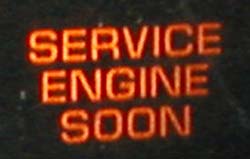
[The check engine warning light, also called the malfunction indicator lamp, lit on a dashboard.] Photograph: the check engine light symbol
Image Credits: Wikimedia Commons
The check engine light is a warning lamp on your dashboard, usually shaped like an engine outline, that switches on when your car's onboard computer detects a fault. Its formal name is the malfunction indicator lamp, often shortened to MIL. It does not measure your engine the way a fuel gauge measures fuel.
It reports the verdict of a monitoring system that runs every time you drive.
That system is called On-Board Diagnostics II, or OBD-II. It has been standard on all 1996 and newer light-duty vehicles sold in the United States, according to the Nevada DMV. This article explains what that system actually checks, including the sensors it watches, the trouble codes it stores, and what steady and flashing lights mean for your next move.
What the system behind the light is
OBD-II is a standardized computer system built into your car. Its job is to watch the engine and emissions control systems continuously and to flag faults that could raise exhaust pollution or hurt performance. The Nevada DMV describes it as a system that monitors engine performance and emissions control systems to keep the vehicle running efficiently.
The brain of the system is the engine control unit, or ECU. Sensors around the engine and exhaust feed it data in real time. The ECU compares each reading with the range the manufacturer set for normal operation.
When a reading falls outside that range, or a system fails one of its built-in self-tests, the ECU stores a diagnostic trouble code, known as a DTC, and switches the light on.
This matters because the light is a messenger, not a diagnosis. As one diagnostics guide puts it, the code is the "why" and the light is just the "hey, look here." Reading the code is the first step of a repair, not the whole job.
The sensors and systems it watches
The list of monitored items is long, and it covers more than the engine itself. The main groups are air and fuel, ignition, exhaust, and the evaporative emissions system that traps fuel vapour.
Oxygen sensors sit in the exhaust and report how much oxygen remains after combustion. The ECU uses that data to adjust the air-fuel mixture. A mass airflow sensor measures incoming air volume.
Crankshaft and camshaft position sensors track where the pistons and valves are in their cycle, which the ECU needs to time sparks and fuel injection.
The knock sensor listens for abnormal combustion, often called knocking or pinging. The coolant temperature sensor reports engine temperature, which affects fuelling and emissions controls. The catalytic converter gets its own efficiency check: the system compares the oxygen sensors before and after the converter to judge whether it is still cleaning exhaust properly.
The evaporative system, or EVAP, is checked for leaks. That is why a loose fuel cap is one of the most common triggers. A cap that does not seal lets fuel vapour escape, and the system logs an EVAP leak code, often P0455 for a large leak or P0456 for a small one.
What a trouble code actually says
A diagnostic trouble code is a five-character string, such as P0301 or P0420. The first letter names the system family, with P standing for powertrain. The digits that follow narrow the fault to a subsystem and a type.
There are more than a thousand standard codes, plus manufacturer-specific ones.
Here is the catch that trips up many drivers. A code points to a symptom, not necessarily a cause. Code P0171 means the system is running too lean on one bank of cylinders.
That single code could come from a vacuum leak, low fuel pressure, a dirty mass airflow sensor, an exhaust leak ahead of the oxygen sensor, or a gasket problem. Replacing the oxygen sensor on the strength of the code alone can waste money and leave the real fault untouched.
Technicians therefore pair the code with freeze-frame data, which is a snapshot of engine conditions at the moment the fault was recorded. They also run physical tests, such as checking for vacuum leaks or measuring fuel pressure, before condemning a part. A code reader from a parts store gives you the starting point of that process, not the finish line.
Why the light sometimes comes on by itself
Some faults must fail twice before the light switches on. DieselNet's account of OBD rules explains the sequence. When the system first detects a possible malfunction, it stores a pending fault code and a freeze-frame snapshot, but the light stays off.
If the fault shows up again in the next driving cycle where that system is monitored, the light comes on and the code becomes confirmed.
If the fault does not recur, the pending code is erased. And if a confirmed fault stops appearing, the light can switch off after several clean driving cycles, though the code may stay stored for at least 40 engine warm-up cycles. That is why a light can vanish on its own after a loose cap is tightened.
The system needs a few trips to confirm the leak is gone.
This two-step logic also explains the companion article on lights that come and go. A fault on the borderline of its threshold can pass one day and fail the next, so the lamp follows the test results rather than a fixed schedule.
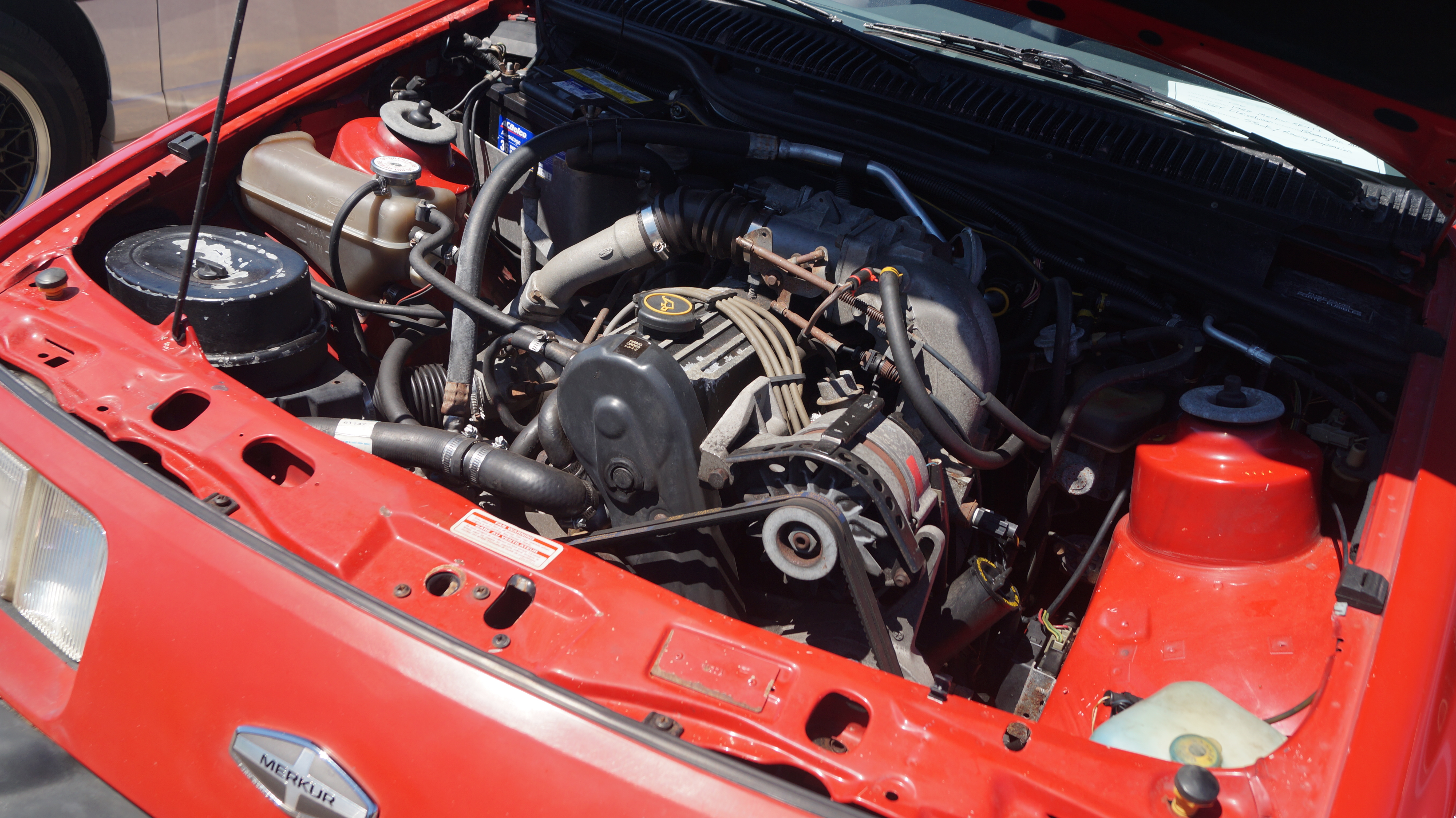
[An open engine bay showing the engine and its surrounding components.] Photograph: a car engine bay
Image Credits: Wikimedia Commons
Steady light versus flashing light
The pattern of the light is the most useful thing it tells you without a scan tool. A steady light means a fault has been confirmed but is not currently causing severe damage. The car is often safe to drive to a workshop, and the fault is commonly emissions-related, such as a failing oxygen sensor or a small EVAP leak.
Book a diagnosis soon, because ignoring it can cost fuel economy and let a small fault grow.
A flashing light is different. It usually signals a severe engine misfire, where one or more cylinders are not firing properly. Unburnt fuel then passes into the exhaust, where it can overheat and destroy the catalytic converter within a short distance.
The Nevada DMV is direct on this point: "If the light is flashing, it indicates a severe problem, slow down and seek service immediately to avoid damaging the catalytic converter."
If your light flashes, reduce speed, avoid hard acceleration, and stop somewhere safe. Do not keep driving at motorway speed in the hope it clears. A converter replacement can run into four figures, which makes a tow look cheap by comparison.
What to do when the light appears
Start with the pattern. Flashing means stop and seek help. Steady means note the details and arrange a diagnosis.
Check the fuel cap first, since it is free and takes seconds. Tighten it until it clicks, then drive normally for a few trips and see whether the light clears on its own.
Write down what you observe before anything is cleared. Note whether the light is steady or flashing, any symptoms such as rough running or lost power, and any recent work on the car. If you have a scan tool or can borrow one, record the exact codes and whether the tool labels them pending, stored, or permanent.
Do not clear codes before a diagnosis just to switch the light off. Clearing erases the freeze-frame data a technician needs, and the fault will return if the cause is still there. It can also reset the system's readiness monitors, which some emissions tests require to be complete.
Frequently asked questions
Does the check engine light mean I need an oil change?
No. The light is tied to the onboard diagnostics system, which monitors engine and emissions systems. Oil life has its own separate reminder or gauge on most cars.
A light that appears soon after an oil change usually points to something disturbed during service, such as a loose connector or cap, rather than the oil itself.
Can I drive with the check engine light on?
If the light is steady and the car feels normal, you can usually drive to a workshop for a diagnosis. If the light is flashing, or the car shakes, loses power, overheats, or smells of burning, stop somewhere safe and seek help. A flashing light usually means a severe misfire that can damage the catalytic converter.
Will the light turn itself off?
Sometimes. If the fault stops occurring, the system can switch the light off after several clean driving cycles, though the code may stay stored. A loose fuel cap fixed and driven for a few trips is the classic case.
A fault that keeps failing will keep the light on.
Is a cheap code reader enough to fix the problem?
A code reader tells you where to start, not what to replace. Codes point to symptoms, and one code can have several causes. Use the reader to record the code and freeze-frame data, then test before buying parts.
The bottom line
The check engine light checks nothing directly. It is the dashboard face of a monitoring system that watches dozens of sensors covering air, fuel, ignition, exhaust, and fuel vapour, and it switches on when a reading or self-test fails. The stored trouble code tells a technician where to start looking, but only testing finds the cause.
Treat a steady light as a prompt to book a diagnosis, and a flashing light as a prompt to slow down and stop. That distinction is the single most valuable thing the light itself can tell you.
Tags: check engine light, OBD-II, car diagnostics, car maintenance
Rive News's research desk covers practical explainers on cars, careers, study, fitness, and food, written from public sources and checked against a published QA list.
Related
- Why does the check engine light come on and off by itself
- What the check engine light actually means
- How a catalytic converter actually cleans exhaust
Subscribe for one practical explainer each morning, written to be read in five minutes.
Standards: facts checked against public sources listed above; corrections welcomed and noted on update.
Related stories

Why Does Tire Pressure Drop in Cold Weather?
Cold weather can cut tire pressure by 1 psi for every 10°F drop, thanks to the ideal gas law. Here is what happens inside the tire and what
Why Do Brake Rotors Warp, or Do They Actually?
Mechanics rarely see a truly warped rotor. The shudder usually comes from uneven pad deposits a few thousandths of an inch thick. Here

How to Buy a Used Car Without Getting Scammed: The Checklist
Over 450,000 cars a year have rolled-back odometers, NHTSA says. This checklist covers VIN checks, title washing, and the inspection that