
How Does a Catalytic Converter Actually Clean Exhaust?
Key takeaways
- A three-way catalytic converter runs three reactions at once, cutting carbon monoxide, hydrocarbons, and nitrogen oxides.
- Platinum and palladium handle oxidation; rhodium handles the harder job of breaking apart nitrogen oxides.
- The converter does almost nothing when cold, so most emissions escape during the first minutes of driving.
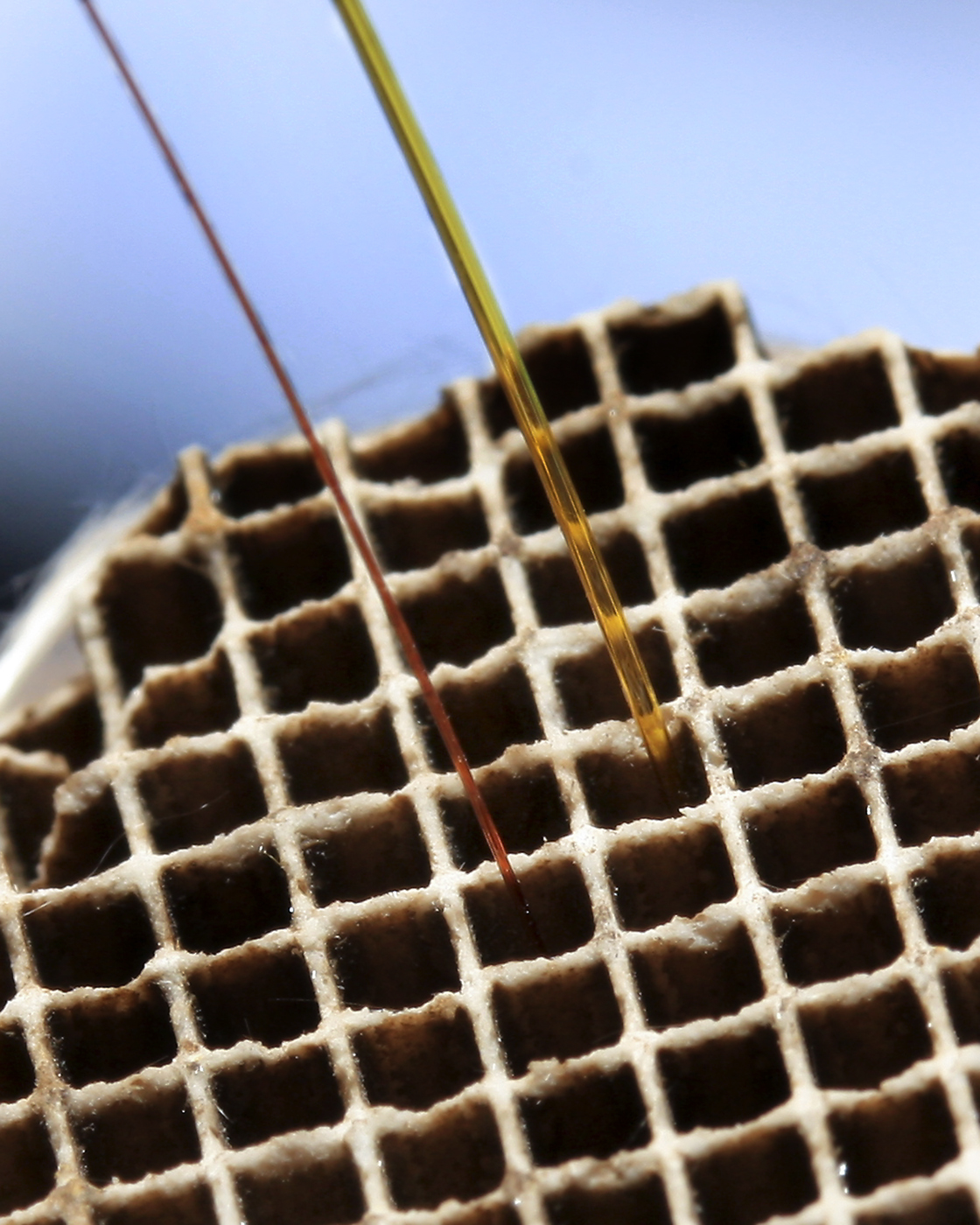
A catalytic converter is an emissions control device that sits in a car's exhaust system and converts harmful pollutants into less harmful ones before they leave the tailpipe. It does this with chemistry, not filters. Precious metals baked onto a honeycomb surface speed up reactions that would otherwise happen far too slowly.
The "three-way" name refers to the three regulated pollutants it tackles: carbon monoxide, unburned hydrocarbons, and nitrogen oxides. This article takes a closer look at how a catalytic converter actually cleans exhaust, including what a catalytic converter is, how the reduction stage works, how the oxidation stage works, how the control system keeps it efficient, and the bottom line.
What is a catalytic converter?
It is a stainless steel canister mounted in the exhaust pipe, usually under the floor of the car. Inside is a ceramic or metallic honeycomb with thousands of tiny channels. Exhaust gas flows through these channels on its way out of the engine.
The honeycomb is coated with a rough layer called a washcoat, made of aluminum oxide. According to ScienceReader, this washcoat gives the surface a huge area relative to its size. Tiny particles of three precious metals sit on that washcoat: platinum, palladium, and rhodium.
Each metal has a different job. Platinum and palladium drive oxidation reactions. Rhodium drives the reduction reaction.
As HowStuffWorks notes, the whole point of the structure is to expose the maximum catalyst surface to the exhaust stream while using the smallest possible amount of these extremely expensive metals.
The device has been standard equipment since 1975, when it arrived as one of the auto industry's answers to clean-air laws in the United States. Nearly every gasoline car on the road today carries one.
How the reduction stage works
Reduction is the first stage, and it deals with nitrogen oxides, or NOx. These form when high combustion temperatures force nitrogen and oxygen from the intake air to bond. NOx contributes to smog and acid rain, and it irritates human mucous membranes, according to HowStuffWorks.
Rhodium is the star of this stage, with platinum assisting. When a molecule of nitric oxide (NO) or nitrogen dioxide (NO2) touches the catalyst surface, the catalyst pulls the nitrogen atom out of the molecule. The freed oxygen pairs off as O2, and the nitrogen atoms bond with other nitrogen atoms stuck to the surface, forming harmless nitrogen gas, N2.
The net reaction is as simple as 2NO becoming N2 plus O2.
ScienceReader notes that NOx is stable and does not break apart easily under normal exhaust conditions. That is why rhodium is so important. It is the only commonly used metal that can split NOx apart at scale, and manufacturers cannot easily remove it even when rhodium prices spike.
There is a second benefit hidden in this step. The oxygen freed when NOx breaks apart is available downstream for the oxidation reactions. Reduction and oxidation work as a team inside the same housing.
How the oxidation stage works
The second stage burns what the engine failed to burn. Two pollutants meet their end here: carbon monoxide and unburned hydrocarbons.
Carbon monoxide is a colorless, odorless, poisonous gas produced by incomplete combustion. Hydrocarbons are the evaporated, unburned fuel fragments that make up a large share of smog. The oxidation catalyst, built on platinum and palladium, helps these gases burn at temperatures far lower than an open flame would require.
The chemistry follows a simple pattern. Carbon monoxide reacts with oxygen to form carbon dioxide: 2CO plus O2 becomes 2CO2. Hydrocarbons react with oxygen to form carbon dioxide and water vapor.
A catalyst, by definition, speeds the reaction without being consumed, so the platinum and palladium keep working for years.
One detail matters here. Oxidation needs a steady supply of oxygen. Driving conditions swing the exhaust between lean (excess oxygen) and rich (excess fuel) many times per minute.
Vectree explains that modern converters add cerium oxide, or ceria, to the washcoat as an oxygen reservoir. In lean moments it soaks up oxygen; in rich moments it releases it. This buffering keeps the oxidation reactions stable through stop-and-go traffic.
How the control system keeps it efficient
The converter can only do its three-way job inside a narrow chemical window. Both oxidation and reduction need the engine to run close to the stoichiometric air-fuel ratio, which for gasoline is about 14.7 parts air to 1 part fuel by weight. Stray too far lean and NOx reduction falls off; stray too far rich and oxidation starves for oxygen.
The car enforces this window with a feedback loop. An oxygen sensor mounted upstream of the converter measures how much oxygen is in the exhaust. The engine computer reads that signal and trims fuel delivery, nudging the mixture back toward the ideal ratio.
HowStuffWorks describes this as a control scheme that also guarantees enough oxygen remains in the stream for the oxidation catalyst to burn hydrocarbons and carbon monoxide.
Heat is the other non-negotiable. The catalysts activate only once the converter reaches roughly 300 to 500 degrees Celsius, a point engineers call light-off. ScienceReader reports that before light-off, the converter does almost nothing, and most of a vehicle's total emissions escape during the first few minutes of driving.
That period is called cold start.
Carmakers fight cold-start emissions two ways. One is to mount the converter closer to the engine manifold so hot gases reach it sooner. The trade-off, noted by HowStuffWorks, is that extreme heat shortens the converter's life.
That is why many cars compromise with a position under the front passenger seat. The other approach is electric preheating, which hybrid cars can support with their high-voltage battery packs.
How it compares to older designs
The earliest converters were two-way designs that only oxidized carbon monoxide and hydrocarbons. They could not reduce NOx, so a separate system had to handle it. The three-way converter unified all three reactions in one canister, paired with the oxygen-sensor feedback loop that made the narrow operating window practical.
The physical structure has also settled on one winner. Early designs experimented with ceramic beads coated in catalyst. Most cars today use the honeycomb structure instead, because its straight channels offer more surface area with less restriction to exhaust flow.
Understanding the basics of the engine misfire versus stall distinction helps here too, since unburned fuel from misfires is exactly what the oxidation stage must clean up. And the reason a diesel's exhaust aftertreatment looks different traces back to why diesel engines clatter, since diesel combustion chemistry leans toward different pollutants.
Frequently asked questions
Why does my car smell like rotten eggs sometimes?
That sulfur smell usually points to the converter or the fuel. Sulfur compounds in gasoline can be converted into hydrogen sulfide when the catalyst is overheated or aging. A persistent rotten-egg smell is worth a mechanic's look, since it can signal a failing converter or a rich-running engine.
Can a car run without a catalytic converter?
Mechanically, yes. Legally, in most places, no. Removing emissions equipment violates federal clean-air regulations in the United States, and the engine computer will protest with a check-engine light and poor fuel trim.
The upstream oxygen sensor readings would no longer match expectations.
How long does a catalytic converter last?
A well-maintained converter often lasts the life of the car, commonly 10 years or more than 100,000 miles. What kills them early is contamination. Engine oil or coolant leaking into the exhaust coats the catalyst, and chronic misfires send raw fuel that overheats the honeycomb until it melts.
Why do catalytic converters contain valuable metals?
A standard converter holds several hundred dollars' worth of platinum, palladium, and rhodium, according to HowStuffWorks. That is also why converters are stolen: trucks and SUVs sit high enough that a thief with a reciprocating saw can cut one out in about a minute.
Do electric cars need catalytic converters?
No. There is no combustion and no exhaust stream to treat. That is one reason electric cars have single-speed transmissions and generally fewer exhaust-related parts to maintain.
The bottom line
A catalytic converter cleans exhaust with three simultaneous reactions on a precious-metal honeycomb. Rhodium breaks nitrogen oxides into plain nitrogen and oxygen. Platinum and palladium burn carbon monoxide and unburned hydrocarbons into carbon dioxide and water.
An oxygen sensor and ceria buffer keep the chemistry balanced near the 14.7:1 air-fuel ratio, and heat is the switch that turns it all on.
The practical takeaway is simple. Short trips are the dirtiest trips your car makes, because the converter spends most of the drive still warming up. If your check-engine light comes on with an emissions code, get it checked promptly.
A dead converter does not just fail an inspection; it turns a clean-running car into a rolling smokestack.

Tags: catalytic converter, exhaust system, emissions, car maintenance
Latest in Auto
- What Is the Difference Between an Engine Misfire and a Stall?
- Why Do Diesel Engines Clatter More Than Petrol Engines?
- What Is Turbo Lag and Why Do Modern Turbos Have Less of It?
- Why Do Headlights Dim When You Use Power Windows?
Get one clear car explainer like this in your inbox every morning. Subscribe to the Rive News newsletter.
Related stories

Why Does Tire Pressure Drop in Cold Weather?
Cold weather can cut tire pressure by 1 psi for every 10°F drop, thanks to the ideal gas law. Here is what happens inside the tire and what

Why Do Brake Rotors Warp, or Do They Actually?
Mechanics rarely see a truly warped rotor. The shudder usually comes from uneven pad deposits a few thousandths of an inch thick. Here

How to Buy a Used Car Without Getting Scammed: The Checklist
Over 450,000 cars a year have rolled-back odometers, NHTSA says. This checklist covers VIN checks, title washing, and the inspection that