
Why Do Electric Cars Have Single Speed Transmissions?
Key takeaways
- Electric motors deliver maximum torque from zero rpm and spin to 20,000 rpm, a range no gearbox needs to manage.
- One fixed gear ratio covers standing starts and highway cruising, with no shifts interrupting power.
- Multi-speed EV gearboxes exist, but add cost and complexity for gains most drivers would never feel.
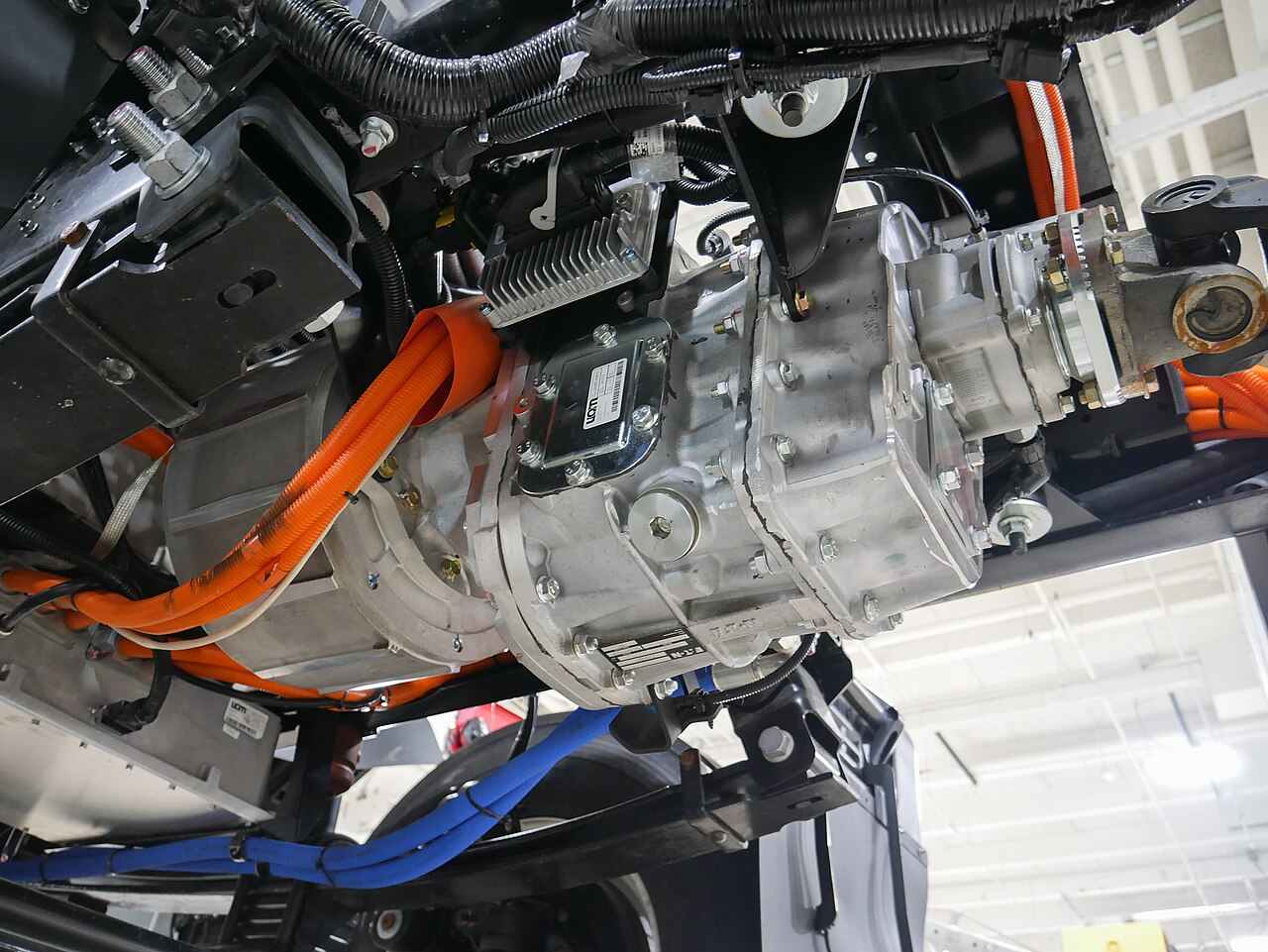
Climb into an electric car, press the accelerator, and it simply goes. No clutch, no gear changes, no hunting for the right ratio. Under the floor sits a single fixed gear that takes the car from a standstill to its top speed.
That simplicity is possible because an electric motor behaves nothing like a combustion engine. This article takes a closer look at why electric cars have single-speed transmissions, including what gears are actually for, how an electric motor's torque curve differs, why one ratio is enough, what the exceptions prove, and the bottom line.
What gears are actually for
A gearbox exists to solve an engine's weakness. A petrol engine only spins reliably to about 7,000 rpm in an average road car, and it only makes usable torque in a narrow slice of that range. As Autocar India explains, gears vary the effective torque and speed so the engine stays in the meat of its power band: a big gearwheel for leverage off the line, a small one for speed at cruise.
Every shift is a compromise. The engine's revs drop, power delivery pauses for a fraction of a second, and a complex mechanism of clutches, bands, and planetary gears manages the handoff. Automatics hide the work, but the work is still happening.
Remove the narrow power band and the gearbox loses its job. That is exactly what the electric motor does.
How an electric motor's torque curve differs
An electric motor develops its maximum torque from literally a standstill. There is no idle, no revving to reach the power, no waiting for boost. Autocar India notes that this torque stays consistent across a broad rev range, and the motor can spin safely to as much as 20,000 rpm.
The Straits Times illustrated the difference with a real comparison. The MG 4 EV and the Audi Q3 1.5-litre both make 250 Nm of torque. The MG has all of it from the moment the driver touches the pedal.
The Audi's engine must be revved to 1,500 rpm before its full twist arrives. Off the line, the EV feels quicker than its horsepower figure suggests because none of its performance is locked behind revs.
The curve does change shape at high speed. EV Energy Hub explains the physics: as the motor spins faster, it generates back electromotive force, a voltage that opposes the battery. Once back-EMF equals battery voltage, the motor is voltage-limited.
The controller then uses field weakening, adjusting current timing to partially cancel the rotor's magnetic field. That lets the motor spin faster, but with less torque. Power stays roughly flat while torque slopes down.
Even with that slope, the usable band is enormous compared with a combustion engine. One ratio can span it.
Why one ratio is enough
Do the math and the single gear starts to look inevitable. Motor Authority worked through the Formula E example: a race motor spinning to 20,000 rpm with a single 11.4:1 reduction gear reaches 225 kph, about 140 mph. No shifts, no interruption, just one ratio converting motor speed to wheel speed.
Road cars need less. Most production EVs are governed to around 100 mph, and a single reduction gear covers everything from parking-lot creep to highway cruise. The unit itself is little more than a fixed gear reducer with a differential, lighter, simpler, and more reliable than any multi-speed transmission.
There is no clutch to wear, no torque converter to sap efficiency, and no shift logic to calibrate.
The driving feel follows. With no upshifts dropping the revs, acceleration is one continuous surge. Lift off the pedal and the same motor becomes a generator, feeding energy back to the battery through regenerative braking.
A combustion car needs separate systems for propulsion and engine braking; the EV uses one machine for both.
There is a trade-off worth naming. Research published in MDPI's World Electric Vehicle Journal points out that at sustained high speeds, a single-speed gearbox forces the motor into high-rpm, lower-efficiency operation. A second ratio could keep the motor in its sweet spot on the autobahn.
For most driving, though, the simplicity wins.
What the exceptions prove
Multi-speed EV gearboxes are not impossible, just usually unnecessary. Autocar India lists the exceptions. Some Formula E race cars have run gearboxes with up to five speeds.
The Porsche Taycan uses a two-speed gearbox on its rear axle: a short first gear for launch acceleration and a tall second gear for efficient high-speed cruising.
History's most famous attempt was the original Tesla Roadster. It launched with a two-speed transmission, but durability problems with the shifting mechanism under the motor's instant torque ended the experiment. Tesla replaced it with a single-speed unit, and the company never looked back.
These cases prove the rule rather than break it. The Taycan's second gear buys a little more top-end efficiency and launch violence at the cost of real engineering complexity. For nearly every EV on sale, as Autocar India concludes, a single ratio provides the bulk of the required performance without the complexity and cost of a multi-ratio gearbox.
Contrast that with the elaborate breathing apparatus a combustion car needs. A turbocharged engine fights turbo lag to build boost, a diesel rattles through compression ignition, and the exhaust needs a catalytic converter to stay legal. The EV sidesteps all of it with one gear and a motor.
Frequently asked questions
Do electric cars have reverse gear?
Not as a separate gear. The motor simply spins backward. Direction is an electrical command, not a mechanical ratio, which is one more part the single-speed unit does not need.
Why do EVs feel faster than their horsepower suggests?
Instant torque and no shift interruptions. A 132 bhp EV can feel quicker off the line than a 150 bhp turbocharged petrol car, as The Straits Times found, because the petrol car must rev up and shift while the EV is already at full thrust.
Could a CVT work in an EV?
Technically yes, but it would add friction and complexity to solve a problem the motor does not have. No production EV uses one, and the efficiency gains would be marginal against the losses.
Do single-speed EVs wear out their motors faster?
There is no evidence of that. Electric motors have far fewer wearing parts than engines or multi-speed transmissions, and the fixed gear sees smooth, predictable loads. Most EV drivetrain warranties run 8 years or more.
Will future EVs get multi-speed gearboxes?
Some performance models might, following the Taycan's lead, chasing autobahn efficiency or quicker launches. But the cost, weight, and complexity penalty means the single-speed unit will likely remain the default for mainstream EVs.
The bottom line
Electric cars have single-speed transmissions because their motors do not need gears. Maximum torque from zero rpm, a usable range stretching to 20,000 rpm, and flat power delivery across most of it mean one fixed ratio handles every driving situation. Adding gears would add cost, weight, and failure points for benefits most drivers would never notice.
The exceptions confirm it. The Taycan's two-speed box and Formula E's multi-speed experiments chase marginal gains at the edge of performance. For everyone else, the single gear is not a compromise.
It is the whole point.
Tags: electric cars, transmissions, EV motors, drivetrain
Latest in Auto
- How Does a Catalytic Converter Actually Clean Exhaust?
- What Is Turbo Lag and Why Do Modern Turbos Have Less of It?
- Why Do Diesel Engines Clatter More Than Petrol Engines?
- Why Do Headlights Dim When You Use Power Windows?
Get one clear car explainer like this in your inbox every morning. Subscribe to the Rive News newsletter.
Related stories

Why Does Tire Pressure Drop in Cold Weather?
Cold weather can cut tire pressure by 1 psi for every 10°F drop, thanks to the ideal gas law. Here is what happens inside the tire and what

Why Do Brake Rotors Warp, or Do They Actually?
Mechanics rarely see a truly warped rotor. The shudder usually comes from uneven pad deposits a few thousandths of an inch thick. Here

How to Buy a Used Car Without Getting Scammed: The Checklist
Over 450,000 cars a year have rolled-back odometers, NHTSA says. This checklist covers VIN checks, title washing, and the inspection that