
How to Check Transmission Fluid Without a Dipstick
Key takeaways
- Many cars built after 2005 use sealed transmissions with no dipstick, to stop owners adding the wrong fluid.
- The check happens underneath the car: engine running, vehicle level, fluid inside a specific temperature window, then the fill or overflow plug comes out.
- The correct level shows as a thin trickle from the plug. No trickle means add fluid; a steady stream means it was overfilled.
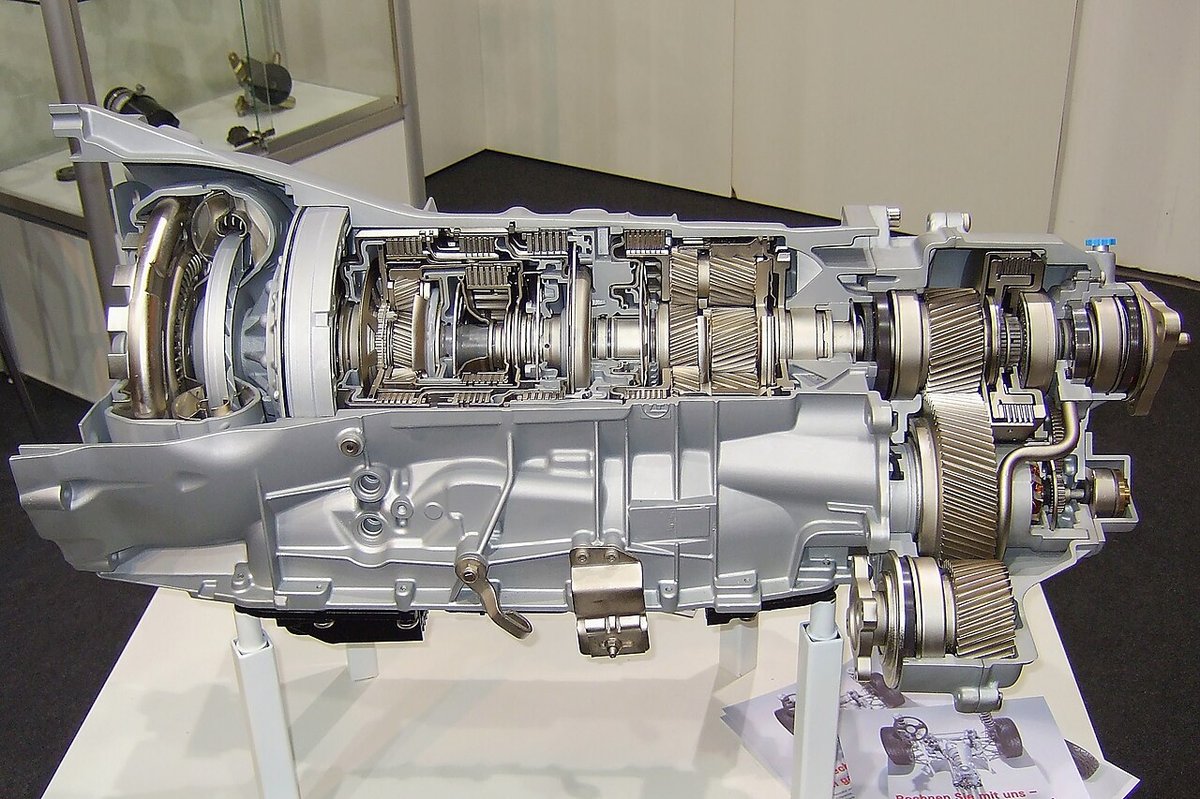
A transmission unit; on sealed designs the fill plug is reached from underneath the vehicle. Photograph: Wikimedia Commons contributor
Image Credits: Wikimedia Commons
If you pop the hood looking for the transmission dipstick and cannot find one, nothing is missing. Many modern vehicles, especially those built after 2005, simply do not have a dipstick under the hood. They use sealed transmissions filled with long-life fluid, and the manufacturer removed the dipstick to discourage owners from checking the fluid or topping up with the wrong type, which can cause serious damage.
That does not mean the fluid can never be checked. It means the check works differently: through a fill or overflow plug on the transmission itself, with the engine running and the fluid at a precise temperature. This article explains why the dipstick disappeared, how the plug method works, what the temperature windows are, and when to let a shop handle it. It closes with the bottom line and answers common questions.
Why your car has no dipstick
Two things changed in transmission design. First, fluids got much better. Modern automatic transmission fluid is engineered to last far longer than the fluid of the 1990s, so routine top-ups became rare. Second, tolerances got tighter. Transmissions are extremely sensitive to fluid type and level, and a well-meaning owner adding the wrong ATF can do more harm than low fluid would.
So manufacturers sealed the system. There is still a way in: a fill plug on the side or bottom of the transmission case, sometimes paired with a separate overflow or check plug. Reaching it requires getting under the car, which is exactly the point. It keeps casual topping-up out and leaves the job to people with the right fluid, the right tools, and the service procedure.
The trade-off is real. A slow leak that a dipstick would have caught early can now go unnoticed until shifting problems appear. That makes periodic professional checks more important, not less.
The fill-plug method, step by step
The core procedure is the same across most sealed transmissions, though the exact plug location and temperature window vary by model. Always check your owner's manual or the factory service procedure for your specific vehicle first.
- Get the car level and secure. Park on a flat surface, set the parking brake, and lift the vehicle safely on jack stands or a lift so you can reach the transmission pan. Never work under a car supported only by a jack.
- Warm the transmission to its check temperature. Start the engine and let the transmission reach the specified window. This is the step people get wrong: fluid expands as it heats, so checking it cold or hot gives a false reading. Typical windows run 115 to 133 F, but some models differ, as the examples below show.
- Cycle through the gears. With your foot firmly on the brake, shift slowly through each gear position, pausing briefly in each, then return to Park. This fills all the fluid passages so the level reads correctly.
- Remove the check or fill plug with the engine running. The engine must be idling during the check. If a thin stream or trickle of fluid runs out, the level is correct.
- Add fluid if nothing comes out. If no fluid trickles out, the level is low. Pump the manufacturer-specified fluid in through the fill plug until it begins to overflow, then reinstall the plug to the specified torque.
An OBD2 scanner adds a useful cross-check. It cannot measure the fluid level directly, but its live data shows transmission fluid temperature, shift behavior, and hydraulic pressure. Sustained readings above 200 F can point to low or degraded fluid, according to AutoNation's mobile service guide.
For the general maintenance side of automatics, our 3,000-mile oil change myth explainer covers how service intervals have changed across the whole car.
Real temperature windows by model
The temperature window is not one-size-fits-all, which is why the owner's manual matters:
- Lexus GX (Toyota WS fluid): check through the overflow plug on the pan with the engine idling and the truck level. The fluid must sit between 97 and 115 F on the GX470, or 115 and 126 F on the GX460, per The Truck Garage's service writeup. Remove the plug and let excess fluid drain to a trickle.
- BMW (older 5 Series automatics): the transmission temperature must be between 86 and 122 F (30 to 50 C), monitored with a scan tool. With the engine running and the car level, remove the filler plug; if fluid drips out, the level is full.
- 2020 Nissan Sentra (sealed CVT): warm the vehicle to operating temperature, then remove the fill plug on the side of the transmission case. Fluid should sit level with the plug hole. Never drain fluid by removing the drain plug alone during a check, or you will over-drain the transmission.
Notice the pattern: engine running, vehicle level, temperature verified, trickle means correct. Get any one of those wrong and the reading is meaningless.
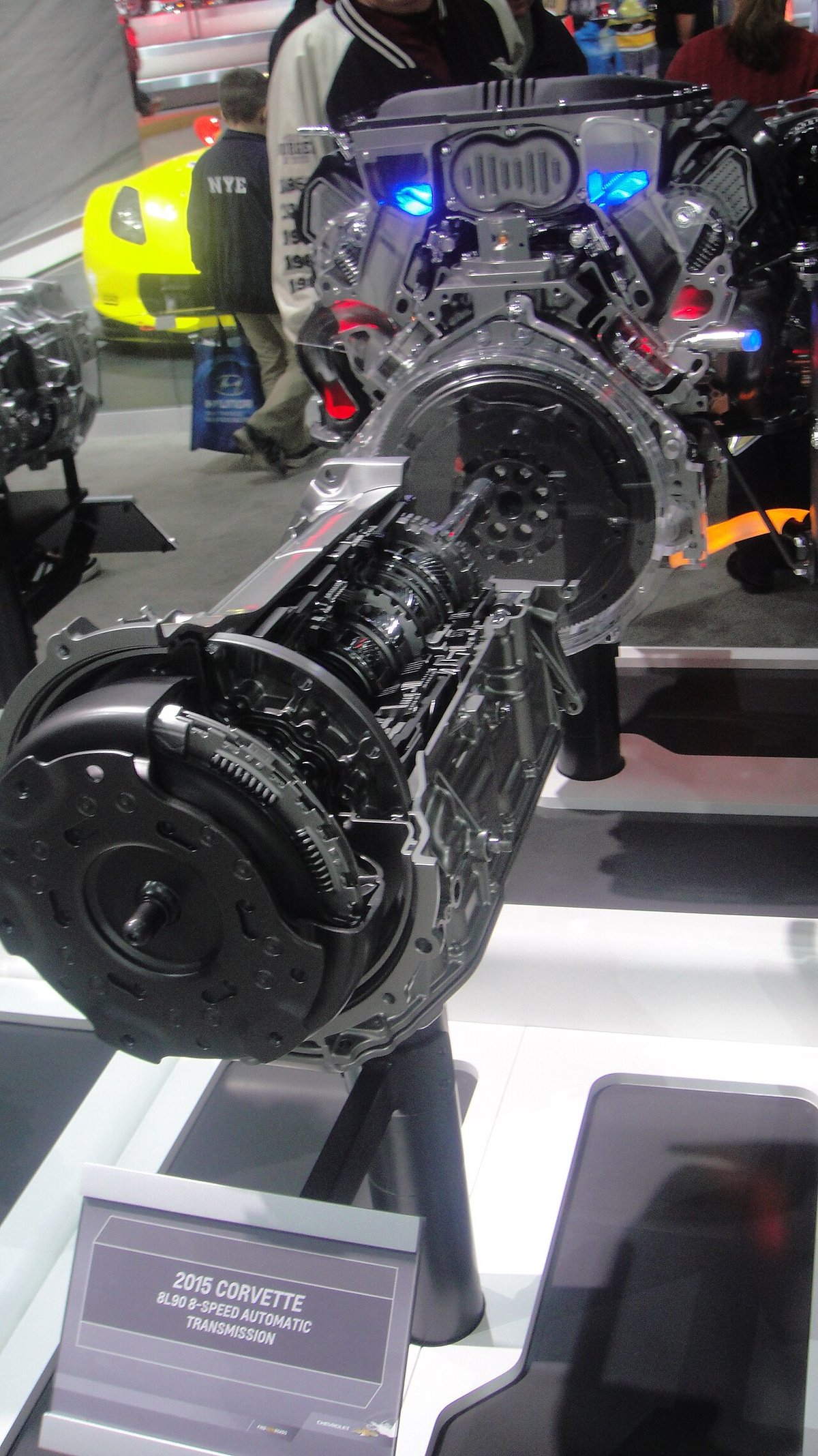
A modern 8-speed automatic transmission of the sealed type that ships without a dipstick. Photograph: Wikimedia Commons contributor
Image Credits: Wikimedia Commons
What the fluid itself tells you
If you do get a sample on your finger during the check, its condition says a lot:
- Healthy fluid: translucent red or pink with a slightly sweet smell.
- Aging fluid: darker red or brown. Still serviceable, but a fluid service is due.
- Burnt fluid: dark brown or black with a burnt smell. This signals overheating or internal wear and needs professional diagnosis.
Fluid is maintenance, not repair. If the transmission is already slipping, shuddering, or shifting harshly, fresh fluid will not fix worn clutches. Diagnose first, service second.
When to let a shop do it
This check is genuinely harder than checking engine oil. You need a safe way to lift a level car, a scan tool or infrared thermometer to verify fluid temperature, the exact fluid specification for your transmission, and a hand pump to add fluid through the plug. Quick-lube drive-throughs typically do not carry the scan tools needed to verify transmission temperature.
Consider a shop visit if any of these apply: you cannot safely lift and level the car, you do not know the exact fluid specification, the fluid smells burnt, or the transmission already shows symptoms. A transmission rebuild costs thousands; a professional fluid check costs a fraction of that.
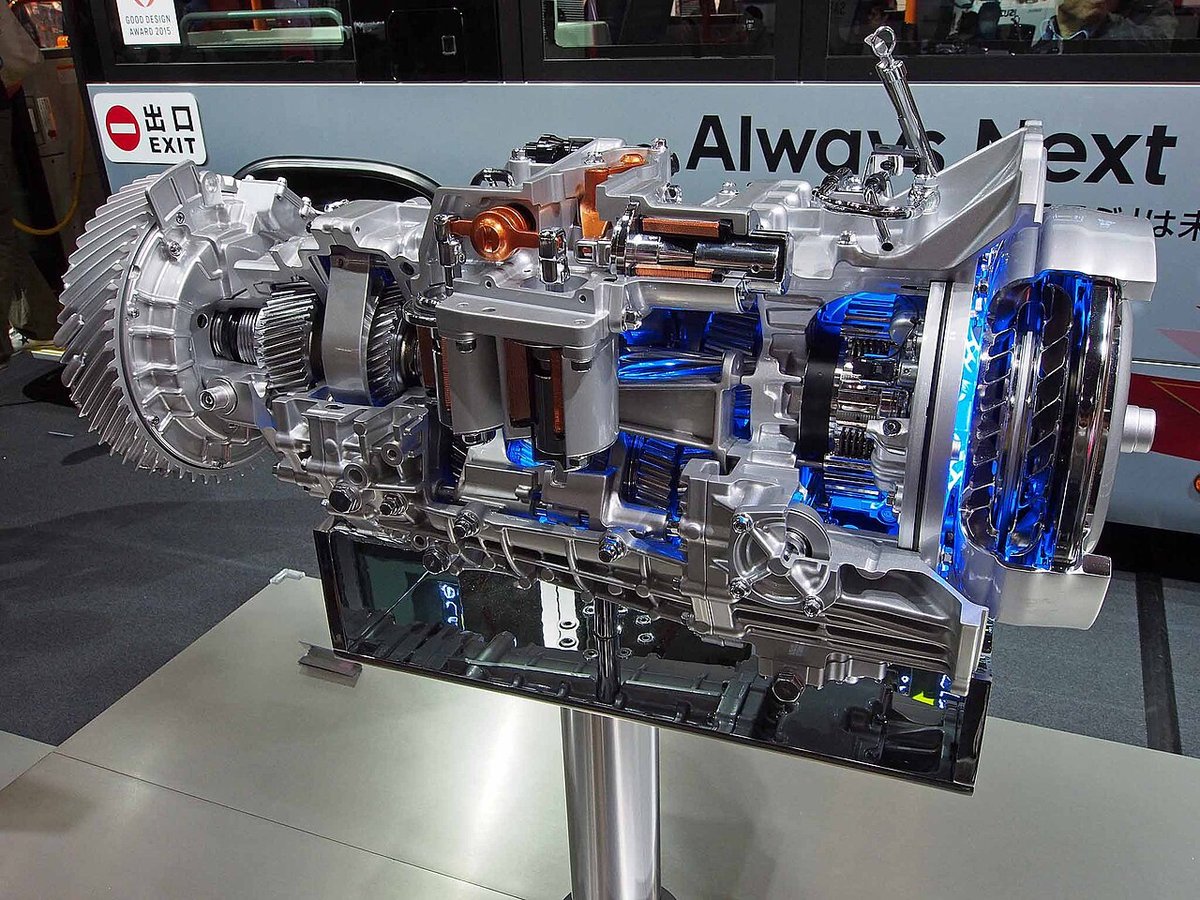
A cutaway model of a transmission showing its internal components. Photograph: Wikimedia Commons contributor
Image Credits: Wikimedia Commons
Frequently asked questions
Why do new cars not have a transmission dipstick?
Manufacturers removed them as transmissions moved to long-life fluids and tighter tolerances. The dipstick invited owners to check and top up fluid, but adding the wrong type of ATF can damage a modern transmission. The sealed design pushes fluid service toward trained technicians with the correct fluid.
Can I add a dipstick to a sealed transmission?
Aftermarket dipstick kits exist for some models, but they are not a factory procedure and the level markings may not match your transmission's calibration. If you install one, treat its reading as a rough guide, not a specification. The plug method with a temperature check remains the accurate way.
How often should sealed transmission fluid be changed?
It depends on the manufacturer and your driving. Some brands call their fluid lifetime fill under normal use, while severe service (towing, heavy loads) can call for replacement around 60,000 miles. Many independent specialists recommend a drain-and-fill every 60,000 miles regardless, since fluid degrades with heat and age.
What happens if transmission fluid is low?
Low fluid causes delayed or harsh shifting, slipping between gears, overheating, and eventually internal damage. Because there is no dipstick to warn you, watch for symptoms instead: a flare in RPM between shifts, a shudder when the torque converter locks up, or a dashboard warning light.
Can I check transmission fluid when the engine is cold?
No, not accurately. Transmission fluid expands significantly as it heats, so a cold check will read low even when the level is correct. The check must happen with the engine running and the fluid inside the manufacturer's specified temperature window.
The bottom line
No dipstick does not mean no maintenance. It means the check moved underneath the car and got pickier: level vehicle, engine idling, fluid inside its temperature window, trickle from the plug means correct.
If you have the lift, the scan tool, and the right fluid, the procedure is straightforward. If you do not, this is one of the cheaper jobs to hand to a shop, and far cheaper than the transmission it protects.
---
Rive News's research desk covers automotive how-tos. Articles cite named public sources; no claims are invented.
Latest in Auto
- How to Jump Start a Car Safely: Step-by-Step Guide
- Why Your Car Battery Keeps Dying Overnight
- Do Brake Rotors Really Warp?
- The 3,000-Mile Oil Change Myth
Subscribe for weekly car-care explainers.
Rive News follows a corrections policy: factual errors are corrected promptly with a visible update note.
Related stories

Why Does Tire Pressure Drop in Cold Weather?
Cold weather can cut tire pressure by 1 psi for every 10°F drop, thanks to the ideal gas law. Here is what happens inside the tire and what

Why Do Brake Rotors Warp, or Do They Actually?
Mechanics rarely see a truly warped rotor. The shudder usually comes from uneven pad deposits a few thousandths of an inch thick. Here

How to Buy a Used Car Without Getting Scammed: The Checklist
Over 450,000 cars a year have rolled-back odometers, NHTSA says. This checklist covers VIN checks, title washing, and the inspection that