
Why do EVs hum at low speed? The AVAS safety rule explained
Key takeaways
- Electric and hybrid cars hum at low speed because safety regulators require an artificial warning sound, called AVAS, to protect pedestrians.
- US rules require the sound up to 30 km/h, while EU and most other markets require it up to 20 km/h, with minimum loudness limits.
- The sound must rise in pitch and volume with speed so listeners can judge whether the car is accelerating.
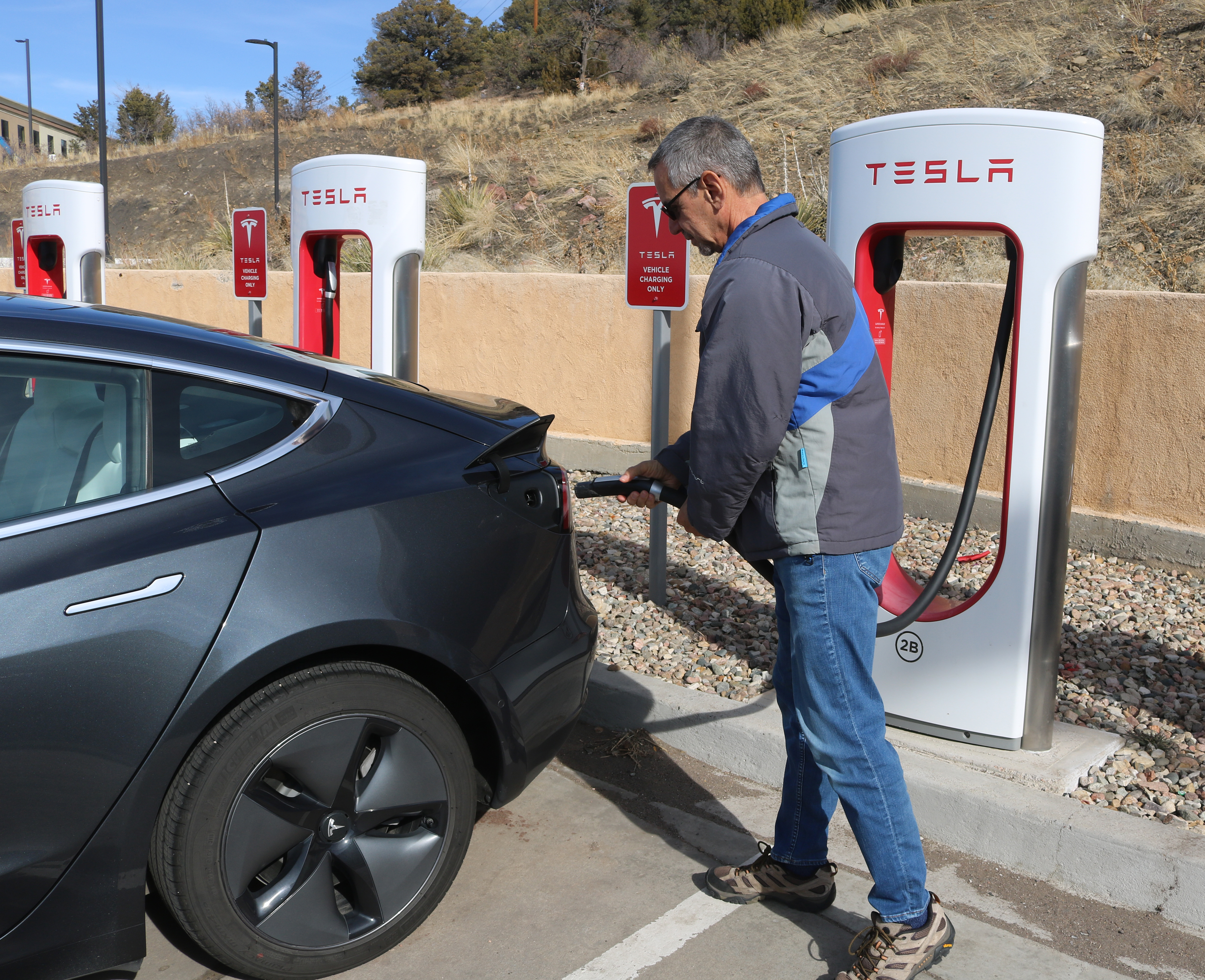
Electric cars are nearly silent at parking speeds, which is why regulators require an artificial warning hum. Photograph: Jeffrey Beall/Wikimedia Commons
Image Credits: Wikimedia Commons / Jeffrey Beall
Pull out of a parking space in a new electric car and you will hear it: a soft electronic hum or whir that rises as you accelerate, then fades away once you are moving briskly.
It is not a quirk of the motor. It is not a speaker playing music. It is a legally required safety system doing its job.
Electric motors make very little noise at low speed, which creates a genuine hazard for pedestrians, cyclists, and people with visual impairments. Regulators around the world answered with a mandate: make the car audible. This article explains what that hum is, where the rules require it, and how the technical requirements work.
The quiet-car problem
A gasoline car's engine and exhaust announce it long before it arrives. An electric car at parking-lot speed makes almost no powertrain noise at all. For a blind pedestrian, a child near the curb, or anyone who listens before looking, there is effectively no warning.
The scale of the underlying risk is sobering. According to the National Highway Traffic Safety Administration's 2023 pedestrian traffic safety fact sheet, 7,314 pedestrians were killed in US traffic crashes in 2023, accounting for 18 percent of all traffic fatalities. Quiet vehicles add a specific detection problem on top of that baseline, particularly for vulnerable road users.
The industry's answer is the Acoustic Vehicle Alerting System, or AVAS: a speaker-and-software package that makes an electric or hybrid vehicle emit a deliberate sound at low speed and when reversing. As ElectricVehicle Life explains, below roughly 20 to 30 km/h (about 12 to 19 mph), an EV's tire and wind noise are too faint to warn anyone nearby, so the AVAS fills that gap with an engineered tone.
Where the rules require it
Almost every major car market now mandates AVAS, though the technical rulebooks split into two camps. The United States follows Federal Motor Vehicle Safety Standard 141, finalized by NHTSA in the 2016 to 2017 period. Full compliance was phased in by September 2020.
The rest of the world largely follows UN Regulation 138, adopted around the same time.
The two standards disagree mainly on the cutoff speed. Under UN Regulation 138, used across the EU, UK, Japan, South Korea, and Australia, the sound is required from startup to 20 km/h and when reversing.
The EU made AVAS mandatory on newly type-approved electric and hybrid models in July 2019, extending it to all new cars in July 2021. Under FMVSS 141, the sound is required up to 30 km/h (18.6 mph), a higher threshold, and also while the vehicle is stationary with the system active.
China has its own standard, GB/T 37153, which mostly aligns with UN Regulation 138 except that all minimum noise levels sit 2 dB higher. The regulations also cover hybrids, plug-in hybrids, and fuel-cell cars, not just pure battery electrics.
What the hum has to do, technically
Regulators did not just require "a sound." They specified how it must behave so pedestrians can extract useful information from it. A good AVAS sound must be detectable in city background noise, directional enough to locate, and informative about speed.
Under UN Regulation 138, the sound must rise in pitch and volume as the car accelerates, with the frequency shifting by at least 0.8 percent per km/h.
That pitch rise lets a listener tell whether the car is speeding up and roughly how fast. The regulation sets a minimum of about 56 dB(A) at 20 km/h and a maximum of 75 dB(A), measured 2 meters from the front of the vehicle, according to ElectricVehicle Life.
The US standard takes a different approach. FMVSS 141, based on SAE J2889-1, requires a relative volume change of 3 dB at each cruising speed test point of 10, 20, and 30 km/h, but does not require the pitch shift.
EV Engineering and Infrastructure reports that compliance can be shown through specific one-third octave bands between 315 and 3150 Hz, with one band below 1000 Hz and another at or above it.
One detail surprises many drivers: the system switches off at higher speeds. Above about 20 to 30 km/h, tire and wind noise are loud enough that an EV sounds roughly like any other car, so the artificial sound is no longer needed. The hum is strictly a low-speed device for creeping, reversing, and car-park maneuvers.
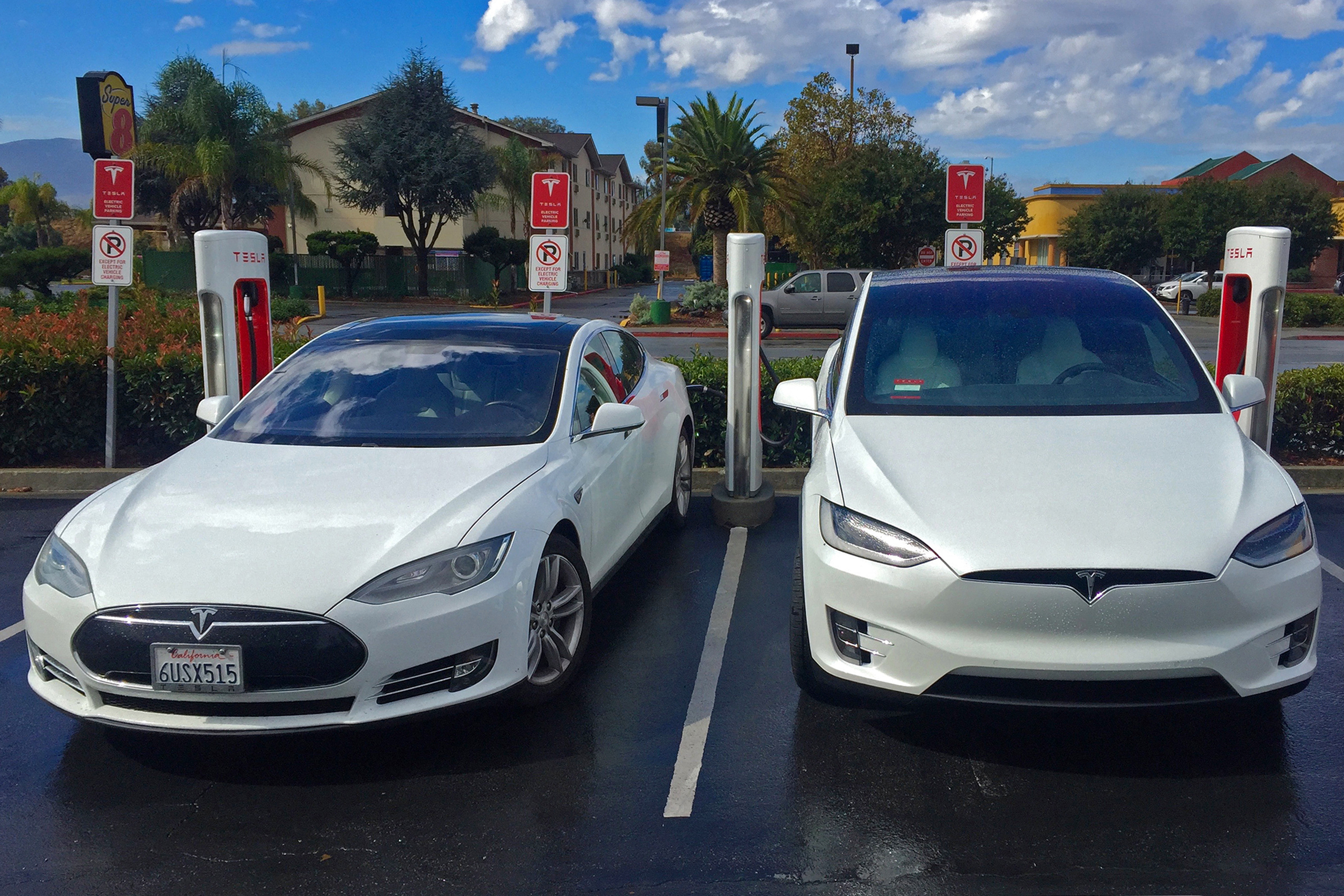
Every new EV sold in major markets carries an AVAS speaker to meet pedestrian warning rules. Photograph: Wikimedia Commons contributor/Wikimedia Commons
Why the sounds differ between brands
The regulations set minimums, not melodies. Within the loudness and behavior limits, carmakers are free to design their own sounds, and many have turned compliance into a branding exercise.
Some hums mimic a distant engine note, others sound openly electronic, and at least one program famously hired a Hollywood composer. ElectricVehicle Life notes the creative range, from a Paris music lab's designs to experimental sounds so futuristic that test subjects looked up at the sky.
That freedom has a downside. A 2025 lab study reported by Autoblog recreated street scenes and asked people to point to the car using sound alone.
With one vehicle, people did fine. With two, mistakes and delays grew.
With three, the basic two-tone alert performed worst, with more wrong guesses and about four seconds needed to lock on. Broader hiss-style alerts and richer multi-tone sounds localized better in busy scenes.
The same report highlights how seriously regulators take calibration. A Chevrolet Equinox EV recall (NHTSA 24V-925) covered 7,606 model-year 2025 units whose pedestrian alert was too quiet and failed the required volume change around 12 to 19 mph.
A Mercedes-Benz EQE and EQS recall (NHTSA 25V-366) covered 94 vehicles whose AVAS played the wrong reversing sound. Both were fixed with free software updates.
Can I turn off the pedestrian warning sound?
In most markets, no. The regulations require AVAS to operate whenever the vehicle is in its low-speed operating range, and carmakers do not provide a driver defeat switch for the mandated sound. Some markets allow a brief pause function, but the system reactivates on the next drive cycle.
Why does the hum change when I reverse?
Regulations treat reversing as a distinct operating condition with its own sound requirements. The reverse tone is deliberately different so pedestrians can tell the car is backing toward them rather than driving away.
Do hybrids need AVAS too?
Yes. The rules apply to any vehicle with an electric mode of operation, including conventional hybrids, plug-in hybrids, and fuel-cell vehicles. The requirement targets quiet operation, not battery size.
Will the hum drain my battery?
No meaningful amount. The AVAS speaker draws a tiny fraction of the power used by the drivetrain, the climate system, or even the headlights. Its energy cost is negligible.
Drivers curious about how EVs differ mechanically from combustion cars can read our explainer on why electric cars have no gears like petrol cars, and hybrid owners may like how hybrid cars decide when to use the electric motor.
The bottom line
The low-speed hum is not a design flourish. It is a regulated safety system, required up to 30 km/h in the US and 20 km/h across most of the rest of the world, engineered to rise in pitch and volume so pedestrians can hear where the car is and what it is doing. Carmakers get to choose the tune, but the physics of the requirement is fixed: quiet cars must announce themselves where tire noise cannot.
Latest in Automotive
- Why electric cars have no gears like petrol cars
- How hybrid cars decide when to use the electric motor
- Petrol vs diesel vs hybrid cars: the differences
Subscribe for weekly automotive explainers in plain English.
Related stories

Why Does Tire Pressure Drop in Cold Weather?
Cold weather can cut tire pressure by 1 psi for every 10°F drop, thanks to the ideal gas law. Here is what happens inside the tire and what

Why Do Brake Rotors Warp, or Do They Actually?
Mechanics rarely see a truly warped rotor. The shudder usually comes from uneven pad deposits a few thousandths of an inch thick. Here

How to Buy a Used Car Without Getting Scammed: The Checklist
Over 450,000 cars a year have rolled-back odometers, NHTSA says. This checklist covers VIN checks, title washing, and the inspection that