
How hybrid cars decide when to use the electric motor
By Rive News / Research desk | Rive News / Published October 24, 2026 at 9:00 AM PKT
Key takeaways
- A hybrid's control unit reads vehicle speed, throttle position, and battery charge constantly, then picks engine, motor, or both.
- The power-split device, a planetary gearset, blends the two power sources so the engine can stay at its most efficient RPM.
- Below about 25 mph most hybrids run electric only; hard acceleration and highway cruising bring the engine in.
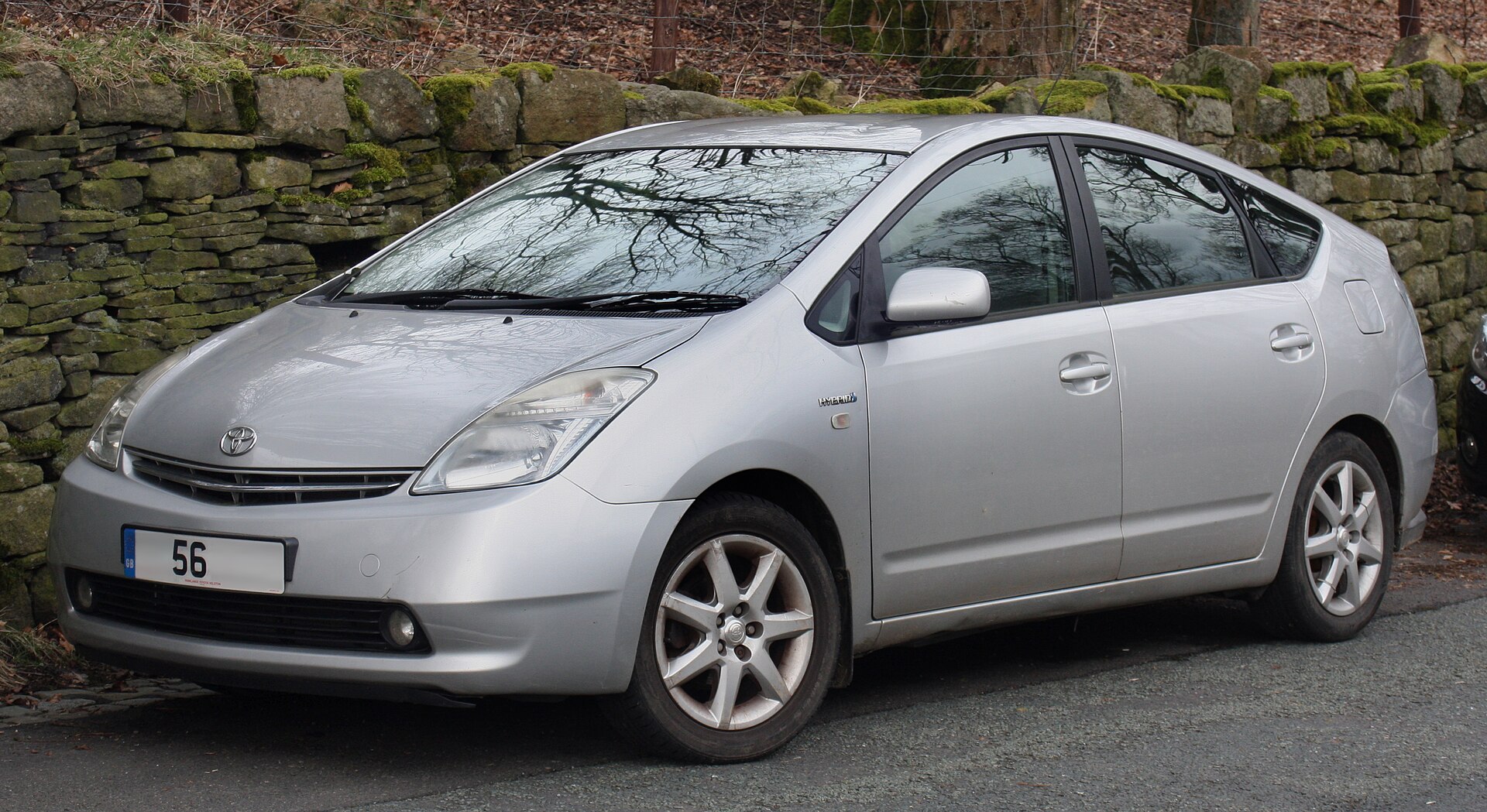
[A Toyota Prius with Hybrid Synergy Drive. Its planetary power-split device is the mechanical heart of the gas-or-electric decision.] Photograph: DieselFordMondeo
Image Credits: Wikimedia Commons
A hybrid car does not guess when to use its electric motor. A dedicated control unit reads the car's sensors many times per second and decides, moment by moment, whether the wheels should turn on electricity, gasoline, or both at once.
This article takes a closer look at that decision, including the inputs the computer reads, the power-split device that blends the two sources, how the choice changes from city streets to highway, and what happens during braking.
The brain: a control unit between you and the wheels
In a conventional car, your right foot decides the power delivery directly. In a hybrid, an extra layer sits in between: the energy management controller.
Wikipedia's Hybrid electric vehicle article describes it this way: every hybrid includes an energy management controller, interposed between the driver and the component controllers, whose job is to determine the optimal power split between the on-board energy sources.
Optimal usually means minimal fuel consumption, but the strategy can also target lower emissions, longer battery life, or a compromise of all three. The controller runs a closed loop: it measures the results of its decisions and adjusts continuously.
The inputs the computer actually reads
The decision rests on live sensor data. The hybrid powertrain control module monitors vehicle speed, accelerator pedal position, battery state of charge, and engine operating conditions, among other parameters.
Each input answers a question. Vehicle speed and throttle position say how much power the driver wants right now. Battery charge says how much electric power is available to give.
Engine conditions say whether the gasoline engine is warm and ready to run efficiently.
Pull away gently from a light with a full battery, and the answer is obvious: electric only. Floor it onto a highway on-ramp with a low battery, and the computer has no choice but the engine.
The power-split device: where the blending happens
In series-parallel hybrids, the two power sources meet in the power-split device, usually a planetary gearset. Toyota's Hybrid Synergy Drive made this layout famous in the Prius.
The device mechanically combines engine and motor power and varies the split ratio on the fly. Its cleverest trick: the engine can run at its most efficient RPM regardless of road speed, while the gearset and the electric motor handle matching that to the wheels.
Two motor-generators do the work. One drives the wheels and doubles as a generator under braking.
The other starts the engine and generates electricity from it. The control unit decides how much of the engine's output goes straight to the wheels and how much becomes electricity.
A drive, decision by decision
Start the car and pull out of the driveway. Only the electric motor runs, drawing from the battery. Silent, smooth, zero gasoline.
Cruise through the neighborhood under about 25 mph and the car stays in electric mode as long as charge allows. In stop-and-go traffic this is where hybrids earn their fuel economy.
Ask for more power and the engine wakes up. The first motor-generator spins it to life almost imperceptibly, and the power-split device starts dividing its output between the wheels and electricity generation.
Floor it to merge and everything fires at once. The engine delivers maximum power through the gearset while the battery sends a full jolt to the drive motor for extra torque. BatterySkills notes the Hyundai Tucson Hybrid pairs its 1.6-liter turbo engine with a 44 kW motor for 226 total horsepower in exactly this combined mode.
Settle into highway cruising and the engine takes the lead at its efficient RPM. The electric side drops to small assists or even becomes a generator when there is surplus power.
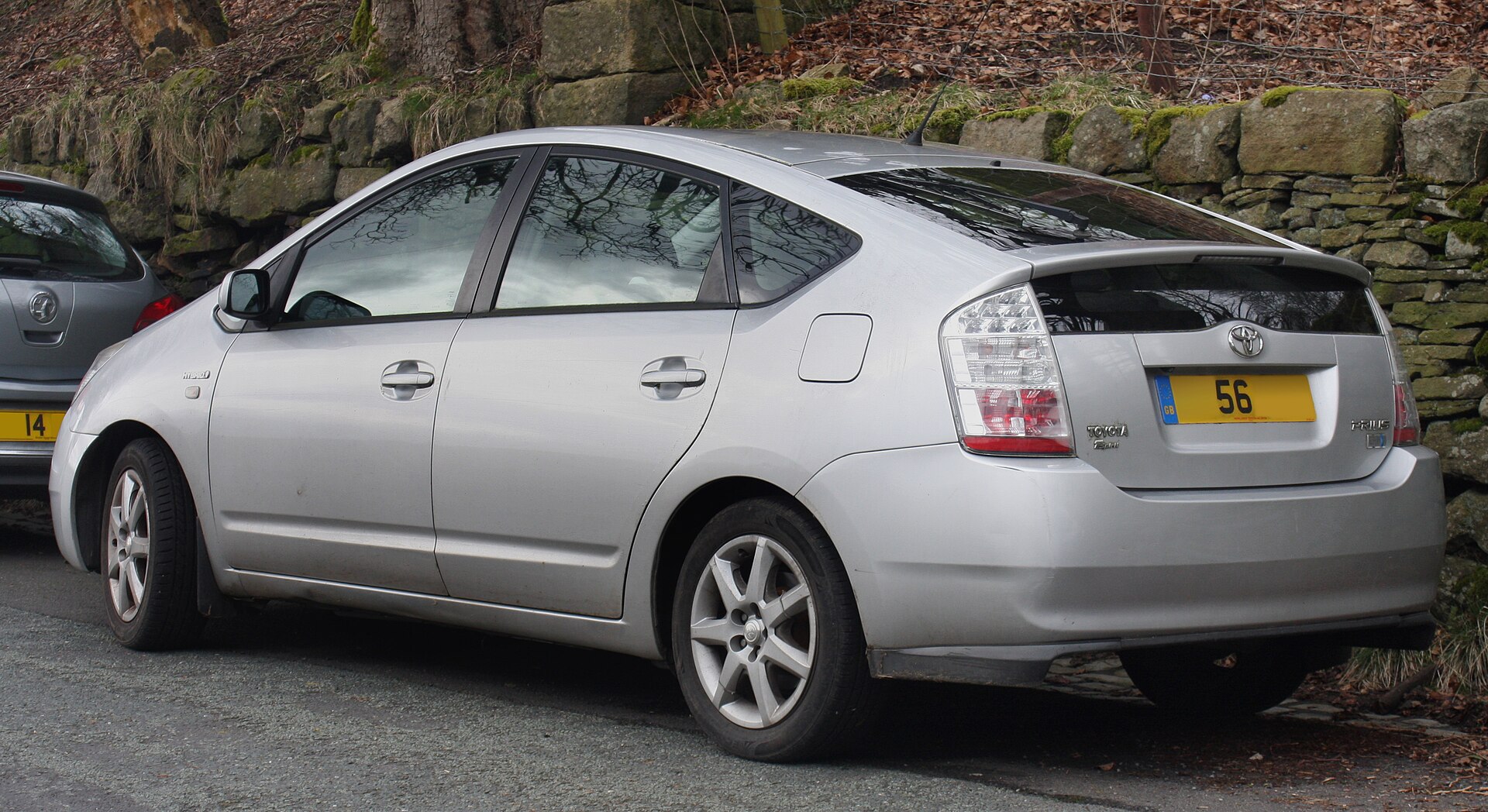
[The rear of a Toyota Prius. The same power-split logic has carried the model through multiple generations.] Photograph: DieselFordMondeo
Image Credits: Wikimedia Commons
Braking: the motor runs in reverse
Lift off or press the brake and the decision flips again. The drive motor reverses its role and acts as a generator, converting the car's kinetic energy into electricity that recharges the battery.
This regenerative braking is a large part of hybrid efficiency. BatterySkills reports the Ford Escape Hybrid recovers up to 90 percent of braking energy this way.
The control unit blends regenerative braking with the friction brakes so the pedal feels normal. It constantly adjusts the blend to maximize recovered energy without making deceleration jerky.
Why the engine still runs at all
If electric driving is so efficient, why keep the engine? Because batteries are small in a conventional hybrid and energy density favors gasoline at sustained high power.
Highway cruising at steady speed is the gasoline engine's happy place. It runs at constant, efficient RPM while the electric system idles or tops up the battery for the next slow stretch.
The computer is really managing one scarce resource: battery charge. Spend it where electric drive wins, in the city and at launch, and let the engine do the steady work it does best.
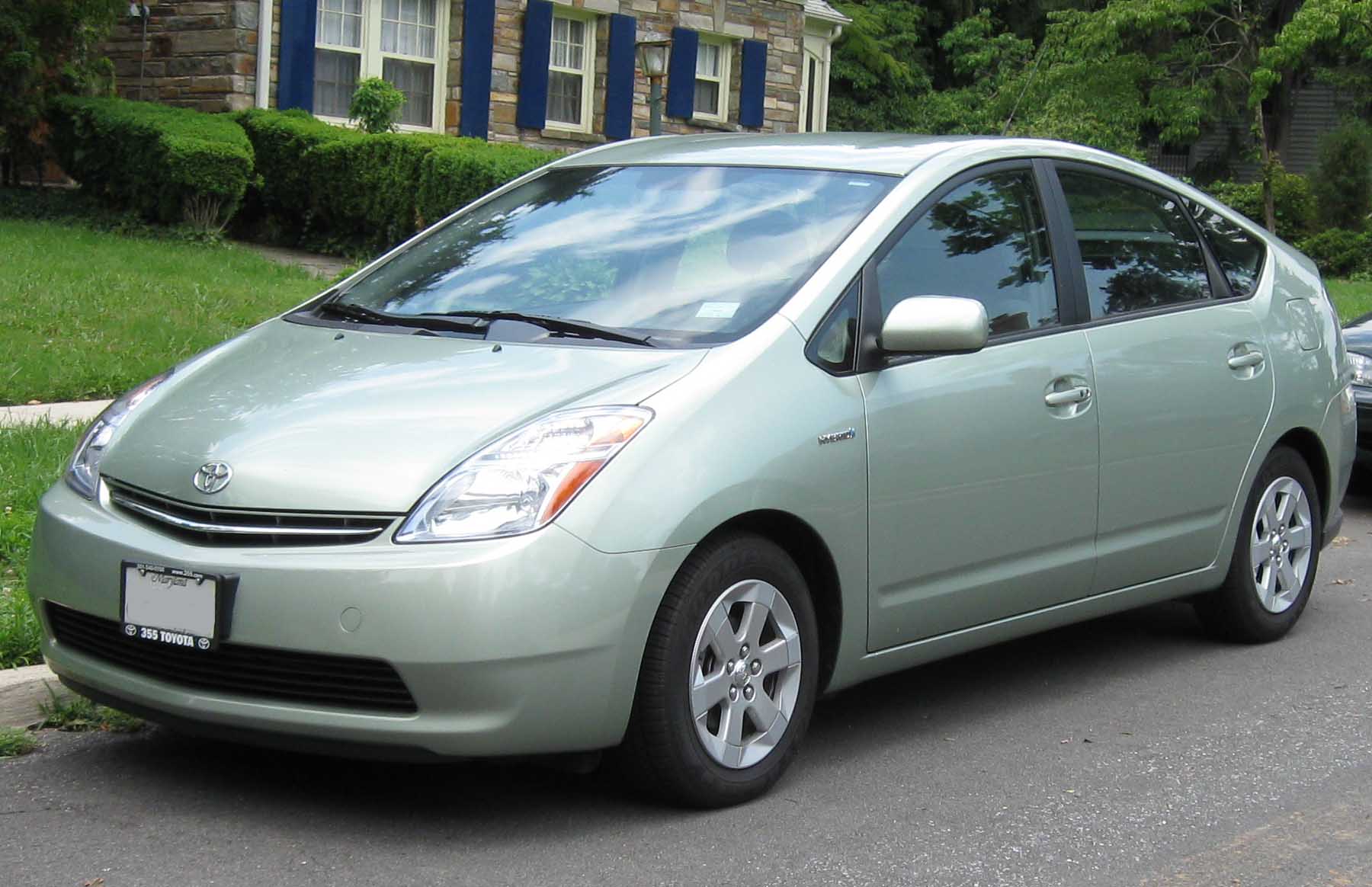
[A second-generation Toyota Prius. Its control strategy proved that a small battery plus smart splitting beats a bigger engine alone.] Photograph: IFCAR
Image Credits: Wikimedia Commons
Can a hybrid run on electric only?
Yes, at low speeds and light throttle with enough charge. Most switch the engine on above roughly 25 mph or under hard acceleration.
Do hybrids need to be plugged in?
Conventional hybrids do not. They recharge through regenerative braking and the engine. Plug-in hybrids add a charge port and a bigger battery.
What happens if the hybrid battery dies?
The car cannot run normally. The high-voltage battery is central to the powertrain, though the 12-volt system handles accessories separately.
Is the switching noticeable while driving?
In a healthy power-split hybrid, barely. Engine starts are smoothed by the motor-generator, and the gearset has no shift points to feel.
The bottom line
A hybrid picks electric or gasoline the way a good manager assigns work: by reading the situation. Speed, throttle, and battery charge flow into the control unit, and the power-split device executes the split. Electric for launch and low speed, engine for steady cruising, both for hard acceleration, and the motor in reverse to catch energy when you slow down.
Tags: hybrid cars, electric motors, car technology
The Rive News research desk writes explainers from primary sources and published research, with every claim traceable to a named source.
Related
- Why do EVs lose range in winter? Causes and fixes
- What does it mean when your car burns oil but does not leak?
- Why does my car hesitate when accelerating from a stop?
- How to stop your car windows from fogging up
Subscribe to the Rive News newsletter for one evidence-based explainer every morning.
Rive News publishes research-backed explainers. Corrections: reply to any article and we review every report.
Related stories
Why does your car make a squealing noise when starting
A squeal at startup usually means a slipping serpentine belt. Learn the causes, the checks you can do, and when to get a mechanic involved
Why Does Your Car Smell Like Petrol After Starting
A brief petrol smell at startup can be normal cold-start enrichment, but a strong or lingering smell can mean a fuel leak. Learn the causes
What is the difference between petrol, diesel and hybrid cars?
Petrol, diesel and hybrid cars differ in fuel use, torque and running costs. Diesel uses 15-20% less fuel, hybrids win in town, and rules