
Why electric cars have no gears like petrol cars do
By Rive News / Research desk | Rive News / Published October 29, 2026 at 9:00 AM PKT
Key takeaways
- Electric motors produce maximum torque from zero rpm, so they need no gears to get moving from a standstill.
- Electric motors spin to around 20,000 rpm, far past a petrol engine's 7,000 rpm redline, so one ratio covers city and highway speeds.
- Most EVs still have one fixed reduction gear; the Porsche Taycan's two-speed rear axle is a rare exception.
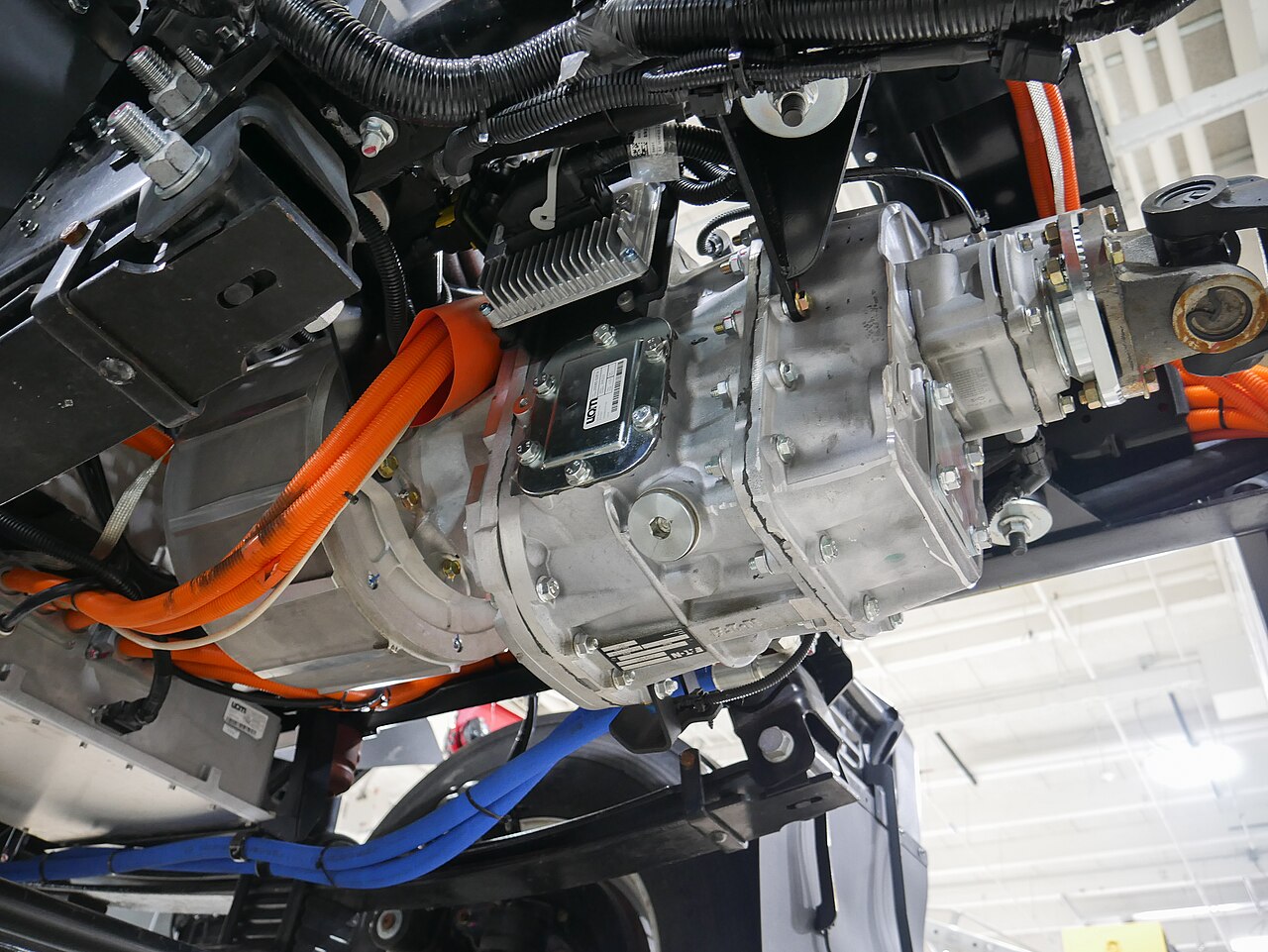
An electric motor and single-speed transmission unit in an electric truck. Photograph: Foxcorner
Image Credits: Wikimedia Commons
What gears actually do in a petrol car
A petrol engine only works well in a narrow rev range. It makes little usable torque at low revs, and it cannot spin past its redline, typically around 6,000 to 7,000 rpm for an ordinary road car.
Gears solve that problem. A low gear multiplies torque for pulling away, and a high gear lets the car travel fast while the engine spins at a comfortable speed.
Without gears, a petrol car would face an impossible choice. One ratio geared for quick starts would cap top speed, and one geared for top speed would barely move off the line.
This article explains why electric motors escape that trade-off, what the single gear in an EV actually does, and where multi-gear EVs still exist.
The electric motor's different power curve
An electric motor develops its maximum torque from literally a standstill, at zero rpm. That single fact removes the main job of a first gear.
Torque then stays strong across a wide rev range. The motor does not need to be coaxed into a narrow power band, because its useful band is broad by nature.
The rev range is the second half of the answer. Many production electric motors spin to 15,000 to 18,000 rpm, and some reach 20,000 rpm or more, according to engineering guides.
Compare that with a petrol engine's roughly 7,000 rpm ceiling. The electric motor's working range is roughly three times wider, so one fixed ratio can stretch from standstill to motorway speed.
What the single gear actually is
Saying an EV has no gears is slightly imprecise. Most electric cars have one gear: a single-speed reduction gear between the motor and the wheels.
The reduction gear matters because the motor spins far faster than the wheels should. A typical ratio, around 9 to 1, slows the motor's output down and multiplies its torque on the way to the wheels.
The unit is usually housed with the motor and inverter in one assembly. There is no clutch, no torque converter, and no shifting mechanism for the driver to operate.
From the driver's seat, the car behaves like an automatic. The selector offers Drive, Reverse, Neutral, and Park, and once in Drive, no gear changes happen at all.
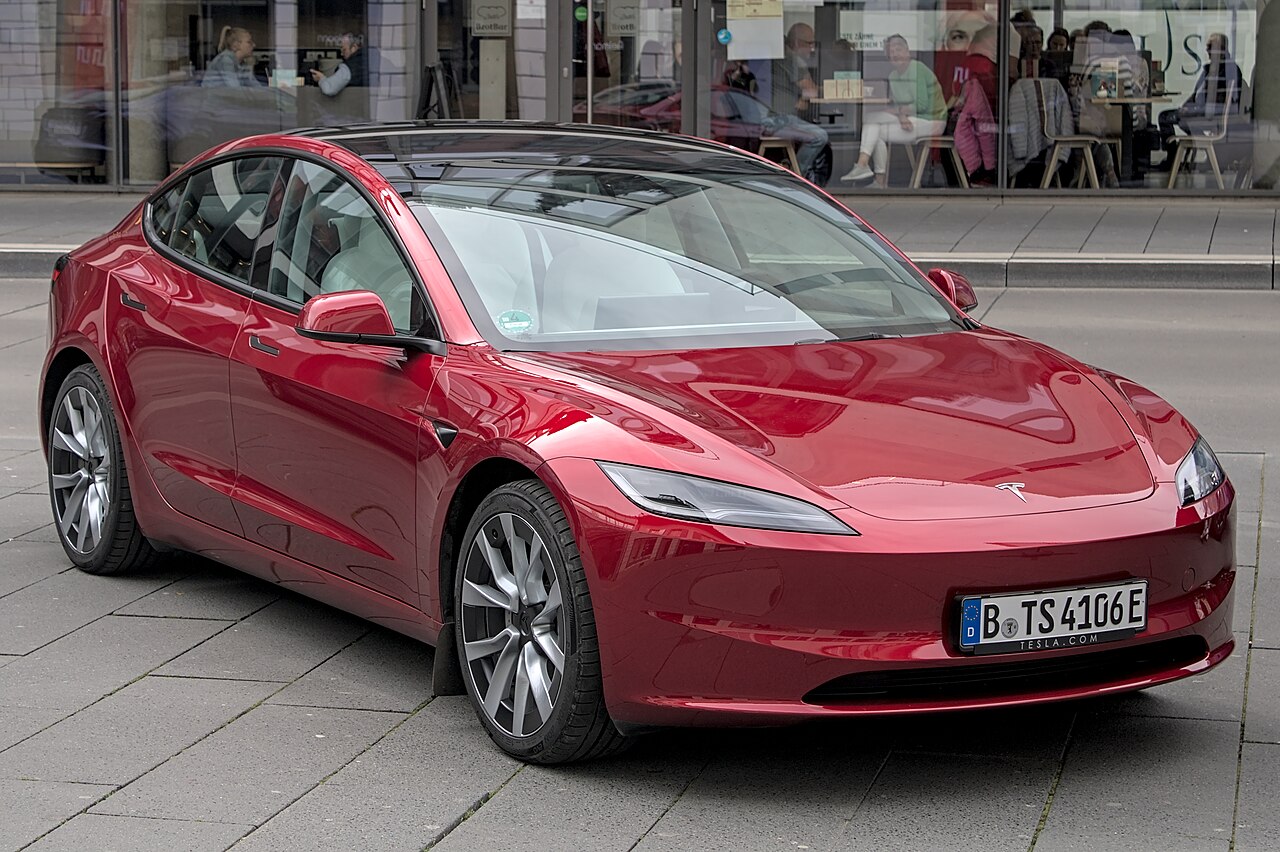
A Tesla Model 3 on display. Its single fixed gear covers everything from launch to highway speed. Photograph: Alexander-93
Image Credits: Wikimedia Commons
Reverse without a reverse gear
Reverse works differently in an EV too. A petrol car needs a dedicated reverse gear set, because its engine can only spin one way.
An electric motor simply spins backwards. The inverter reverses the electrical current to the motor windings, and the car moves backwards with no extra gearing involved.
That simplicity is one reason EV drivetrains have fewer moving parts. Fewer parts mean less friction loss, less weight, and less to wear out over the car's life.
Why not add gears anyway
Engineers have asked this question, and the answer is that extra gears buy little for most drivers. A multi-ratio gearbox would add complexity, cost, weight, and friction losses.
Autocar India summarised the trade-off plainly. A multi-ratio setup could improve low-end acceleration and top speed slightly, and could help range marginally, but a single ratio already provides the bulk of required performance.
The electronic controller does part of the gearbox's old job. By adjusting the frequency of current supplied to the motor windings, it controls speed and torque precisely across the whole range.
Regenerative braking also works through the same single ratio. When the driver lifts off, the motor acts as a generator, sending energy back to the battery while slowing the car.
The exceptions that prove the rule
A few performance EVs do use more than one gear. The best known is the Porsche Taycan, which uses a two-speed transmission on its rear axle.
The Taycan's first gear sharpens launch acceleration, and its second gear lets the motor spin slower and more efficiently during sustained high-speed driving.
Some Formula E race cars have used gearboxes with up to five speeds, according to Autocar India. Racing pushes motors to extremes where a single ratio is a compromise worth avoiding.
These exceptions confirm the general rule rather than breaking it. When the goal is everyday driving, the single-speed design wins on simplicity and cost.
What this means for drivers
The practical result is smooth, uninterrupted acceleration. There are no shift pauses, no hunting for gears on hills, and no clutch wear in traffic.
Maintenance changes too. An EV's reduction gear still needs its specialised fluid changed periodically for lubrication and cooling, but there is no clutch to replace and no gearbox service schedule like a conventional automatic.
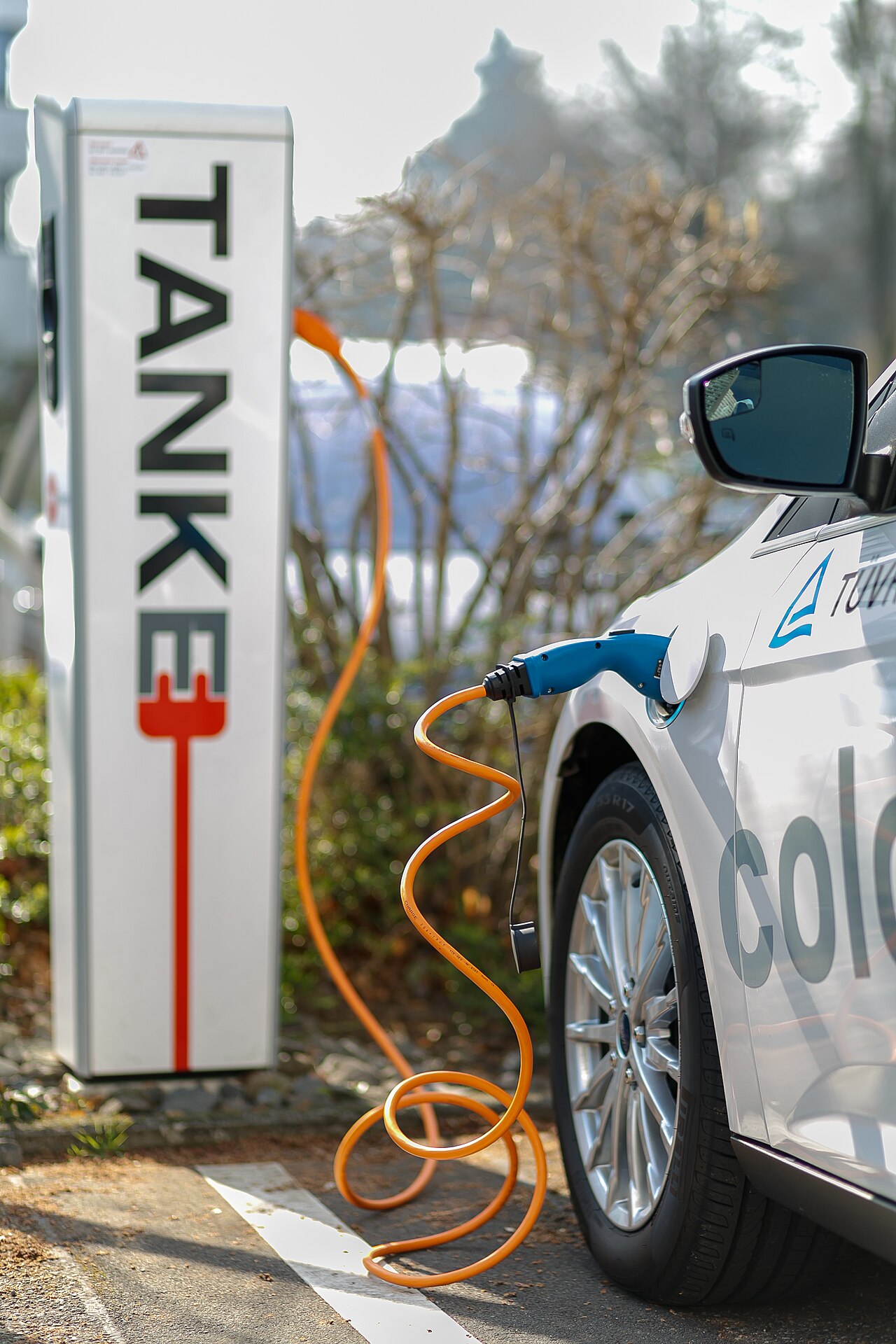
A public electric car charging point in Cologne, Germany. Simpler drivetrains are part of why EVs need less maintenance. Photograph: CEphoto, Uwe Aranas
Image Credits: Wikimedia Commons
Efficiency at very high speed is the one weak spot. Near top speed, some single-speed EVs lose efficiency as the motor spins at its upper limits, though this rarely matters in normal driving.
For buyers comparing cars, gear count is not a useful metric. Range, charging speed, and build quality matter far more than whether the drivetrain has one ratio or two.
Frequently asked questions
Do electric cars have a gearbox at all?
Most have a single-speed reduction gear, not a multi-gear gearbox. It slows the motor's output and multiplies torque, but it never shifts while driving.
Can an electric car have a manual transmission?
There is no practical reason for one. Electric motors do not stall and deliver instant torque, so a clutch pedal and gear lever would add complexity without benefit.
Why does the Porsche Taycan have two gears?
Its two-speed rear axle sharpens launch acceleration in first gear and improves efficiency at sustained high speed in second gear. It is a performance choice, not a necessity.
Do single-speed EVs struggle at motorway speed?
No. Most are designed to reach and hold motorway speeds comfortably, though efficiency may taper near top speed on some models.
Does regenerative braking need gears?
No. Regenerative braking works independently of gearing: the motor acts as a generator during deceleration, and the single-speed transmission simply passes reverse torque to the wheels.
The bottom line
Electric cars have no gears like petrol cars because their motors do not need them. Full torque from zero rpm solves the standing start, and a rev range reaching 20,000 rpm covers the rest of the speed range on a single ratio.
The single reduction gear that remains is simpler, lighter, and cheaper than a multi-gear transmission. Two-speed exceptions like the Taycan exist for performance at the extremes, but for everyday driving, one gear is all an electric motor needs.
Tags: electric cars, transmission, EV motors, gears, drivetrain
Rive News's research desk covers cars, driving, and automotive technology, drawing on published guides and documented findings.
Related
- Why electric cars have no gearbox: the single-speed answer
- Why do electric cars have single speed transmissions?
- What is the difference between a hybrid and an electric car
- What is regenerative braking in simple terms, and how it works
Subscribe to Rive News for one research-backed automotive explainer each week.
Rive News publishes general educational information based on cited public sources; facts are checked against those sources before publication.
Related stories

Why Does Tire Pressure Drop in Cold Weather?
Cold weather can cut tire pressure by 1 psi for every 10°F drop, thanks to the ideal gas law. Here is what happens inside the tire and what
Why Do Brake Rotors Warp, or Do They Actually?
Mechanics rarely see a truly warped rotor. The shudder usually comes from uneven pad deposits a few thousandths of an inch thick. Here

How to Buy a Used Car Without Getting Scammed: The Checklist
Over 450,000 cars a year have rolled-back odometers, NHTSA says. This checklist covers VIN checks, title washing, and the inspection that