
Why electric cars have no gearbox: the single-speed answer
By Rive News / Research desk | Rive News / Published October 27, 2026 at 9:00 AM PKT
Key takeaways
- Most electric cars use one fixed gear ratio because an electric motor makes its maximum torque from a standstill.
- A petrol engine only makes useful torque in a narrow rev band, which is why it needs several gears.
- Some high-performance electric cars, such as the Porsche Taycan, use two gears, but they are the exception.
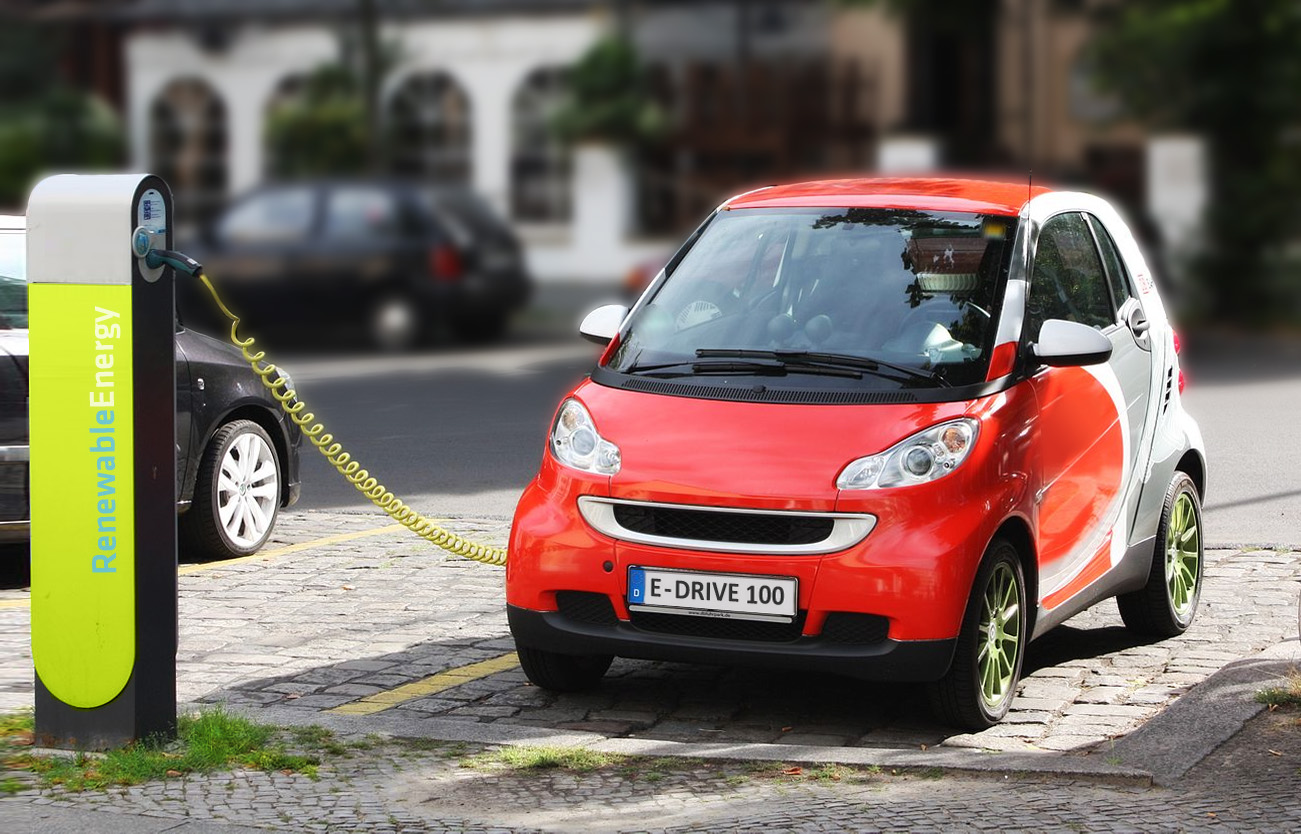
An electric car recharging, with a single fixed gear handling every speed. Photograph: the charging car
Image Credits: Wikimedia Commons
An electric car has no multi-speed gearbox because it does not need one. The usual setup is a single-speed unit, sometimes called a fixed reduction gear, which connects the motor to the wheels at one unchanging ratio.
This article explains why electric cars have no gearbox in the traditional sense, including what a gearbox does in a petrol car, how an electric motor changes that job, what the single-speed unit actually does, and when two gears still make sense.
What a gearbox does in a petrol car
A gearbox exists to solve a weakness in a petrol or diesel engine. Such an engine makes almost no usable torque at very low revs, and it only reaches its strongest output inside a narrow band of engine speed.
Gears let the driver, or the automatic transmission, keep the engine inside that band. A low gear gives leverage for pulling away, while a high gear lets the car cruise at speed without over-revving the engine.
Autocar India puts the typical petrol limit at around 7,000rpm for an average road car. That ceiling is part of why the gear ratios have to do so much work.
Without several ratios, a petrol car would face an awkward trade. A gear chosen for quick starts would cap its top speed, while a gear chosen for top speed would make pulling away painfully slow.
How an electric motor changes the job
An electric motor behaves in almost the opposite way. According to Autocar India, it develops its maximum torque from literally a standstill, and that output stays fairly consistent across its rev range.
That single fact removes the main reason for a gearbox. There is no narrow power band to protect, and no need to step through ratios to keep the motor in a sweet spot.
The rev range helps too. Autocar India notes that electric motors can spin to as much as 20,000rpm, far beyond a typical petrol engine. One fixed ratio can therefore cover both a standing start and motorway cruising.
Engineer Fix adds that the motor controller adjusts the electrical current to manage speed and torque precisely. In effect, the electronics take over part of the job that mechanical gears used to do.
Reverse is another job that gets simpler. An electric motor can spin backwards, so many electric cars reverse by running the motor in the other direction instead of using a separate reverse gear.
The result is a drivetrain with very few parts devoted to changing ratios. Drivers get one pedal feel from a crawl to cruising speed, with no shift points to learn or anticipate.
What the single-speed unit actually does
Saying an electric car has no gearbox is a useful shorthand, but it is not quite the full story. Most electric cars still have a gear set, but it has only one ratio, so there is nothing to shift.
That gear set performs reduction, which trades speed for force. The motor spins fast, the gears slow that rotation down, and the wheels receive more turning force as a result.
This matters because torque multiplication is what gets a heavy car moving. Engineer Fix describes the single gear unit as a form of torque multiplication, with a larger gear driving a smaller one attached to the wheels.
The result is smooth, uninterrupted acceleration. With no shifts, there are no pauses in power delivery and no clutch to wear out.
Simplicity brings practical gains as well. Fewer moving parts can mean lower manufacturing cost and less maintenance than a multi-speed automatic transmission, though the unit still needs its own lubrication and cooling.
Why extra gears would add little for most drivers
Engineers could fit a multi-speed gearbox to an electric car, and in some cases they have. The question is what everyday drivers would gain, and for most cars the answer is not much.
A second or third gear might sharpen low-speed acceleration slightly or lift top speed a little. Autocar India notes that a multi-ratio setup could also improve range marginally in some cases.
Those gains have to be weighed against added weight, cost, complexity, and friction losses. For a family car, the single-speed compromise already covers the speeds people actually drive.
There is a maintenance angle too. A multi-speed automatic has clutches, valve bodies, and many more wear points, while a single-speed unit has far fewer parts that can fail in that particular way.
There is also a driving feel argument. Electric car buyers tend to value the seamless surge that comes from never shifting, and adding gears would interrupt exactly that sensation.
When two gears still make sense
The best-known exception is the Porsche Taycan, which uses a two-speed transmission on its rear axle. Engineer Fix reports that the design helps efficiency at very high speeds and supports strong top-end acceleration.
Race cars offer another example. Autocar India notes that some Formula E cars have used gearboxes with up to five speeds, where rules and extreme performance targets change the trade-offs completely.
These cases prove that multi-gear electric drivetrains are possible, not that they are necessary. They appear where top speed, sustained high-speed running, or racing demands justify the extra hardware.
For the cars most people buy, one ratio remains the practical choice. The motor's wide operating range already does the work that gears used to do.
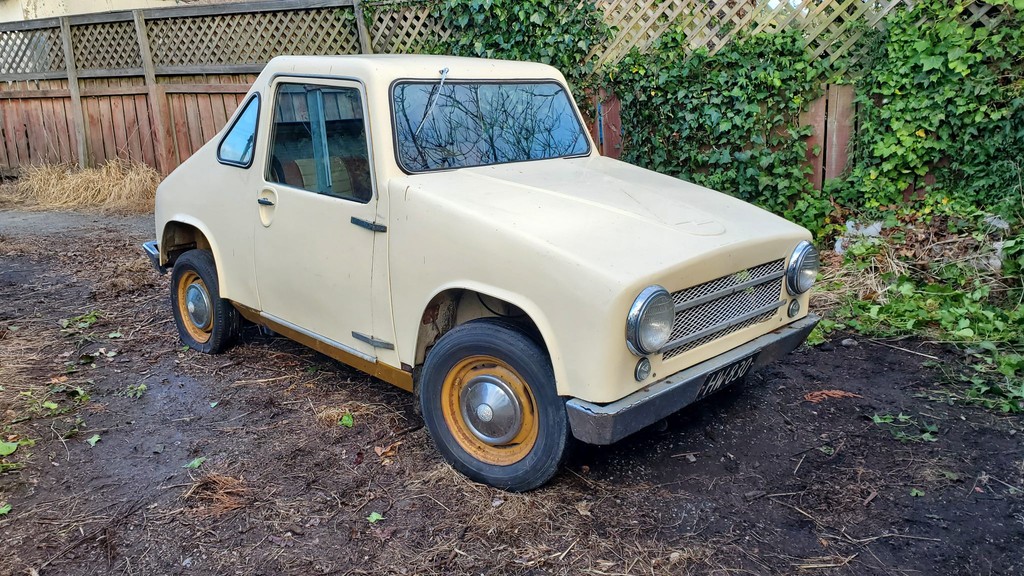
An early electric car, a reminder that electric drive predates the modern single-speed era. Photograph: the MacConachie electric car
Image Credits: Wikimedia Commons
The bottom line
Electric cars skip the traditional gearbox because their motors make full torque from zero revs and spin to around 20,000rpm. A single fixed reduction gear turns that wide range into both strong launches and relaxed cruising, with no shifting in between.
If you are comparing electric cars, the gearbox question is mostly settled. Look instead at battery size, charging speed, and real-world range, since those shape daily ownership far more than the number of gears.
Tags: electric cars, transmissions, electric motors
Rive News's research desk covers how everyday technology works, drawing on manufacturer documents, trade press, and public technical explainers.
Related
- Why Do Electric Cars Have Single Speed Transmissions?
- What Is the Difference Between a Hybrid and an Electric Car
- Why Do EVs Lose Range in Winter? Causes and Fixes
- What is regenerative braking in simple terms, and how it works
Subscribe for one plain-English explainer each morning.
Rive News aims for accurate, sourced explainers; corrections are published when an error is confirmed.
Related stories

Why Does Tire Pressure Drop in Cold Weather?
Cold weather can cut tire pressure by 1 psi for every 10°F drop, thanks to the ideal gas law. Here is what happens inside the tire and what
Why Do Brake Rotors Warp, or Do They Actually?
Mechanics rarely see a truly warped rotor. The shudder usually comes from uneven pad deposits a few thousandths of an inch thick. Here

How to Buy a Used Car Without Getting Scammed: The Checklist
Over 450,000 cars a year have rolled-back odometers, NHTSA says. This checklist covers VIN checks, title washing, and the inspection that