
Why new cars have no spare tyre in the boot anymore
By Rive News / Research desk | Rive News / Published October 29, 2026 at 9:00 AM PKT
Key takeaways
- A spare tyre, wheel, jack, and tools add 30 to 50 pounds, so deleting them helps fuel economy and emissions targets.
- Carmakers also save an estimated $100 to $300 per vehicle and gain boot space for cargo or batteries.
- Run-flat tyres and sealant kits replace the spare for small punctures, but not for blowouts or sidewall damage.
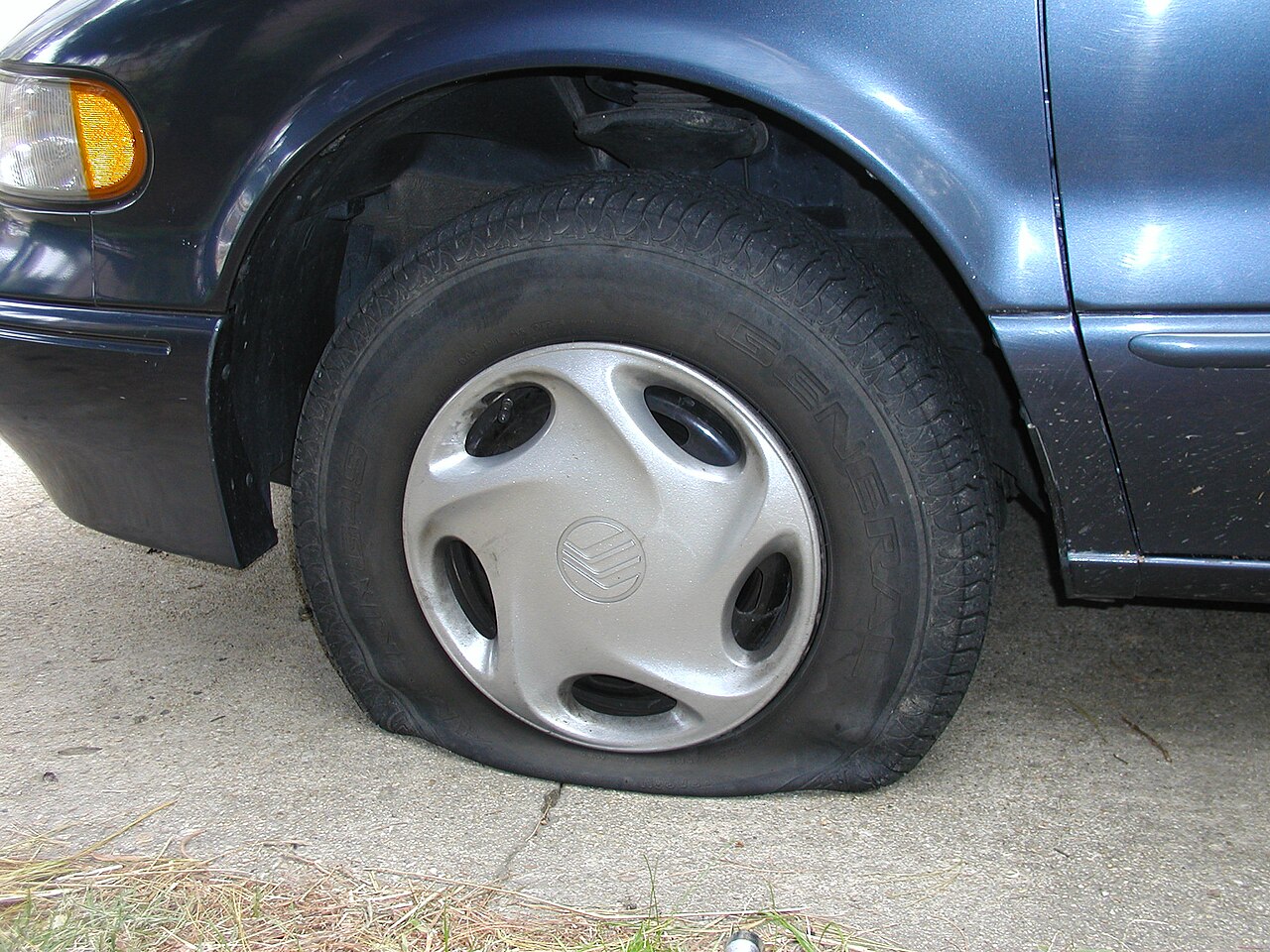
A flat tyre on a Mercury Villager van. A run-flat tyre would keep its shape in the same situation. Photograph: Gerlach
Image Credits: Wikimedia Commons
The missing wheel in the boot
Open the boot of a new car and you may find something unexpected: an empty well, a small compressor, and a bottle of sealant, but no spare wheel.
For decades, a spare was standard equipment. Changing a flat at the roadside was a basic driving skill, and the tools for it came with the car.
That has changed across much of the industry. This article explains the four reasons carmakers dropped the spare, what replaces it, and where the replacement falls short.
Reason one: weight and fuel economy
Weight is the biggest reason, and the numbers are concrete. A full-size spare, wheel, jack, and tools add 30 to 50 pounds to a vehicle, according to motoring guides summarising manufacturer figures.
Fifty pounds sounds small on a car weighing over a tonne. It matters because carmakers chase efficiency across an entire production run, and every pound removed helps meet fuel economy and emissions targets.
Lighter cars need less energy to accelerate. A lighter car also brakes and handles slightly better, though the difference from a spare alone is modest.
The key point is that the spare spends most of its life unused. Carmakers argue that carrying 50 pounds of rarely used equipment for years is wasteful, and regulators measuring fleet emissions agree.
Reason two: manufacturing cost
Deleting the spare also saves money on every car built. Industry estimates put the saving at $100 to $300 per vehicle, covering the wheel, tyre, jack, tools, and the assembly time to fit them.
Across a model selling hundreds of thousands of units a year, that saving runs into tens of millions of dollars. Carmakers under pressure to hold prices down find that hard to ignore.
Autoblog described the alignment neatly. The spare's removal is a rare case where the cost-saving move and the fuel-economy move are exactly the same decision, which is part of why it spread so quickly through the industry.
Reason three: space for other things
Removing the spare well gives designers room they can use elsewhere. The freed space can hold extra cargo, a larger battery, exhaust components, or underfloor storage.
Electric vehicles sharpen this trade-off. Battery packs occupy the low, flat underbody space where a spare once sat, and engineers chasing range are reluctant to add weight back onto a car already heavy from its battery.
Hybrids face a similar squeeze. The battery and electric motor hardware compete for the same space, and the spare usually loses.
Reason four: alternatives that mostly work
The spare's disappearance coincided with alternatives that cover the most common puncture. Most flats are small tread punctures, and those are exactly what the alternatives handle.
Run-flat tyres have reinforced sidewalls that carry the car for about 50 miles at reduced speed even at zero pressure. BMW, Mini, and several other brands leaned into run-flats heavily, betting that convenience would outweigh the downsides for their buyers.
Tyre repair kits take a different approach. A bottle of sealant and a small compressor can seal a small tread puncture in minutes, without lifting the car or getting dirty.
Roadside assistance is the third leg. Many new cars include several years of cover, so a driver who never wants to touch a wheel can call for help instead.
Where the replacements fall short
The alternatives have a hard limit. Sealant kits cannot fix sidewall damage, large punctures, or blowouts, and run-flat tyres cannot survive those either.
A sidewall puncture is common in real-world driving, from potholes and kerbs. When it happens to a car with no spare, the only option is a tow truck, with typical service calls costing $75 to $150 before the replacement tyre.
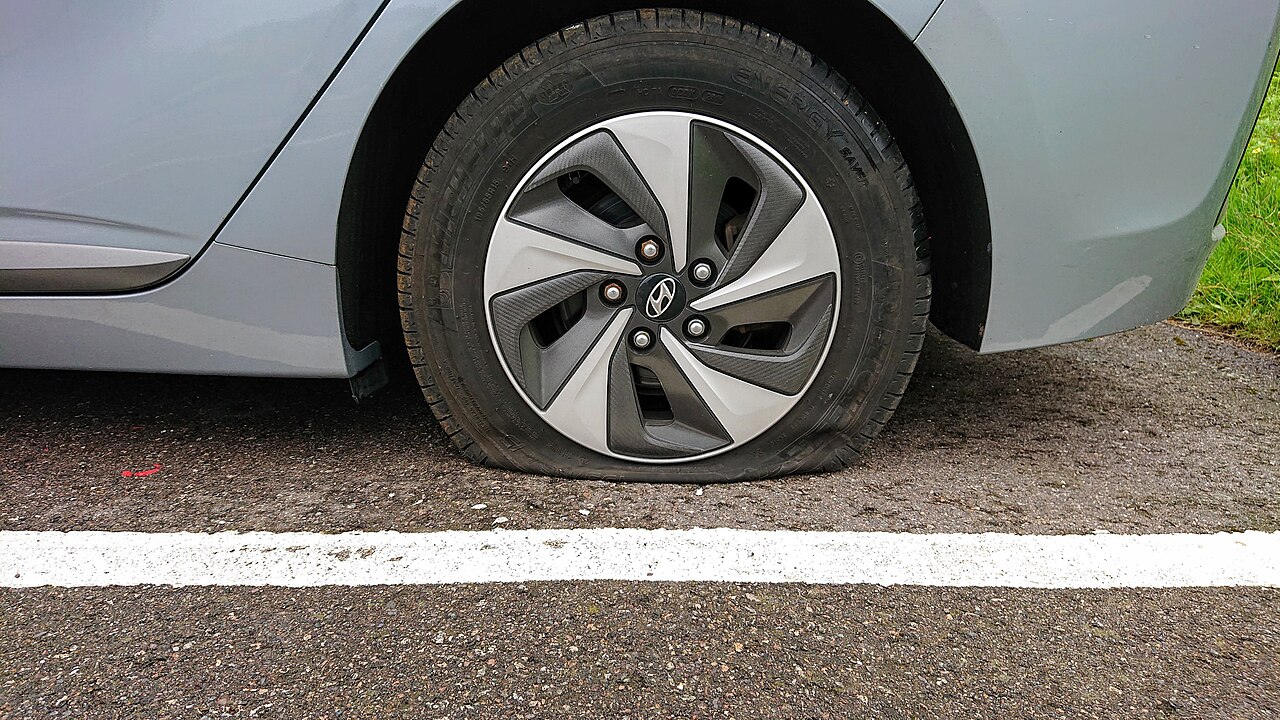
A damaged automobile tyre that has lost its air. Driving on it is not recommended. Photograph: Stian Martinsen
Image Credits: Wikimedia Commons
Run-flats also carry ongoing costs. They ride firmer than standard tyres, wear differently, and cost noticeably more to replace, so the convenience is taxed every time new rubber is needed.
Rural drivers face the worst version of this gap. Fifty miles of run-flat range means little if the nearest tyre shop is further away, or if it is closed when the puncture happens.
What to do if your car has no spare
First, check what your car actually carries. Look under the boot floor before you need it, and learn whether you have a sealant kit, run-flats, or nothing at all.
Check the sealant's expiry date every 12 months. Expired sealant is less effective and can clog the valve stem without sealing the puncture, and replacement bottles cost $10 to $20.
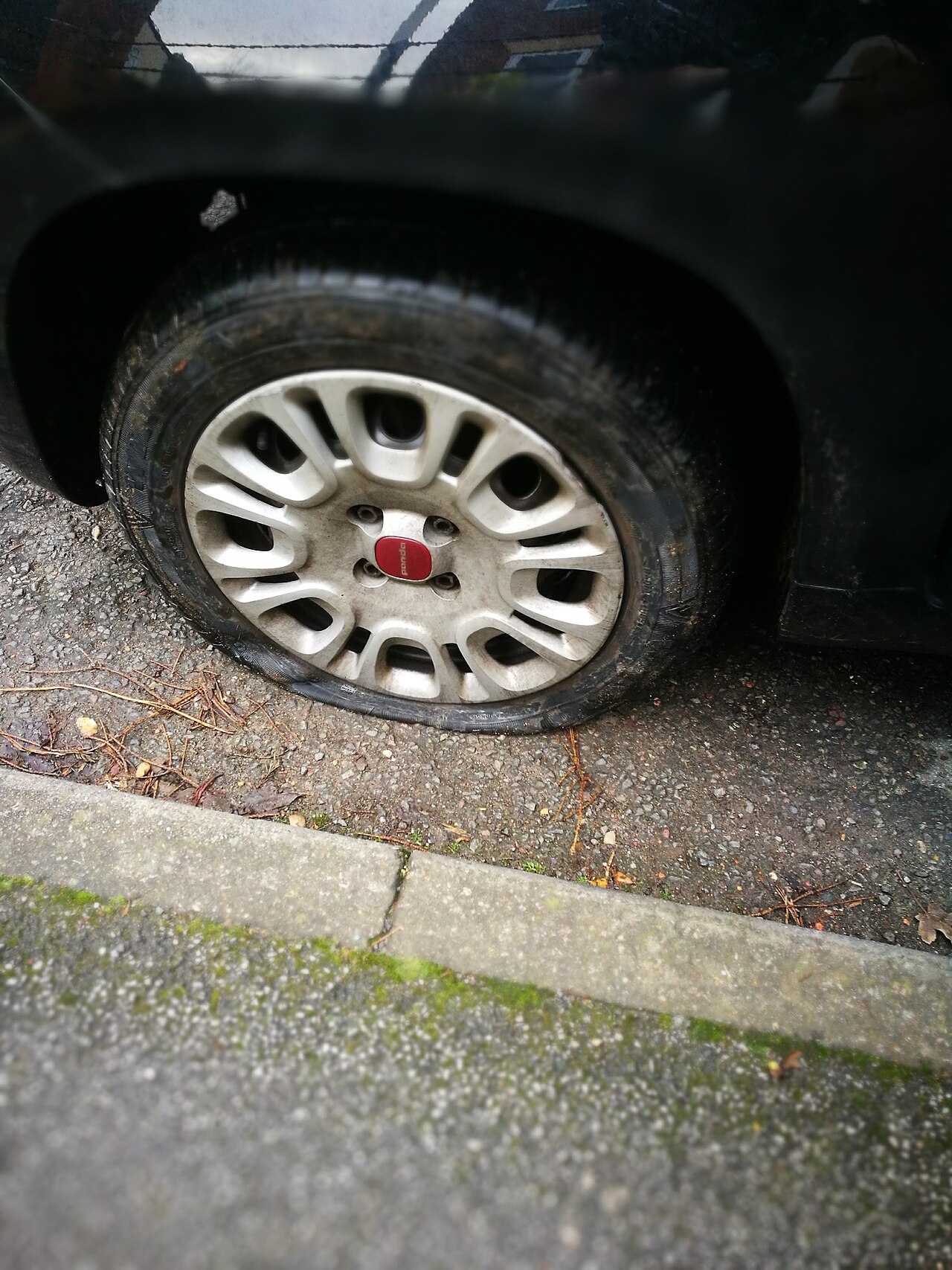
A flat tyre on a Fiat Panda. Photograph: Xwizard35
Image Credits: Wikimedia Commons
Keep tyres properly inflated and inspect them regularly. Most punctures start as slow leaks, and catching one early keeps a small problem from becoming a roadside stop.
Consider buying a space-saver spare if your car has a well for one. Many owners do exactly this, accepting the weight and space cost in exchange for self-sufficiency.
Finally, know your roadside cover. Save the number in your phone, and check what it actually includes before a dark, rainy night forces you to find out.
Frequently asked questions
Do all new cars lack a spare tyre?
No. Many still include one, especially larger SUVs and trucks, but the spare is now optional or absent on a large share of new passenger cars.
Can I add a spare to a car that did not come with one?
Often yes, if the car has a spare well or boot space for it. Check the owner's manual for the correct size, and remember to check its pressure regularly.
How far can run-flat tyres go after a puncture?
About 50 miles at reduced speed, according to manufacturer guidance. That is enough to reach a shop in most urban areas, but not always in rural ones.
Does sealant ruin the tyre?
Sealant is a temporary repair. The tyre usually needs professional inspection afterward, and some tyre shops charge extra to clean sealant before repairing or replacing it.
Why do EVs rarely have spares?
Battery packs occupy the underbody space where spares once sat, and EV makers are reluctant to add 40 or more pounds to cars already heavy from their batteries.
The bottom line
New cars have no spare tyre because four pressures point the same way. Weight savings help emissions targets, cost savings help prices, freed space helps packaging, and run-flats plus repair kits cover the most common punctures.
The trade-off is real, and drivers should know it before they need it. For small tread punctures, the replacements work fine. For blowouts and sidewall damage, a car without a spare is a car waiting for a tow truck.
Tags: spare tyre, run-flat tyres, car maintenance, new cars, roadside
Rive News's research desk covers cars, driving, and automotive technology, drawing on published guides and documented findings.
Related
- How to change a flat tyre safely on the roadside
- Run-flat tires: how they work and what the tradeoffs are
- How to make your tyres last longer with simple care
- Why does tire pressure drop in cold weather?
Subscribe to Rive News for one research-backed automotive explainer each week.
Rive News publishes general educational information based on cited public sources; facts are checked against those sources before publication.
Related stories

Why Does Tire Pressure Drop in Cold Weather?
Cold weather can cut tire pressure by 1 psi for every 10°F drop, thanks to the ideal gas law. Here is what happens inside the tire and what

Why Do Brake Rotors Warp, or Do They Actually?
Mechanics rarely see a truly warped rotor. The shudder usually comes from uneven pad deposits a few thousandths of an inch thick. Here

How to Buy a Used Car Without Getting Scammed: The Checklist
Over 450,000 cars a year have rolled-back odometers, NHTSA says. This checklist covers VIN checks, title washing, and the inspection that