
How power steering lightens the wheel: hydraulic vs electric
Key takeaways
- Power steering multiplies the small twist you apply to the wheel using pressurized fluid or an electric motor, so steering a two-ton car feels effortless.
- Hydraulic systems route fluid at 800 to 1,500 psi through a valve controlled by a torsion bar; electric systems use a torque sensor, a control unit, and a motor instead.
- Electric power steering uses about a tenth of the energy of hydraulic systems and now dominates new cars because it only draws power while you turn.
Power steering is an assist system bolted onto your car's basic steering linkage. It senses how hard you twist the steering wheel and adds its own force in the same direction, so the heavy work of pivoting the front wheels happens with a light touch.
Underneath, a rack-and-pinion setup still does the actual steering. Your wheel turns a pinion gear, the pinion drives a toothed rack sideways, and tie rods push the wheels. Power steering simply adds muscle to that chain, either with hydraulic pressure or an electric motor.
This article explains what steering would feel like without help, how hydraulic power steering multiplies your effort, how electric power steering lightens the wheel differently, and why electric systems took over.
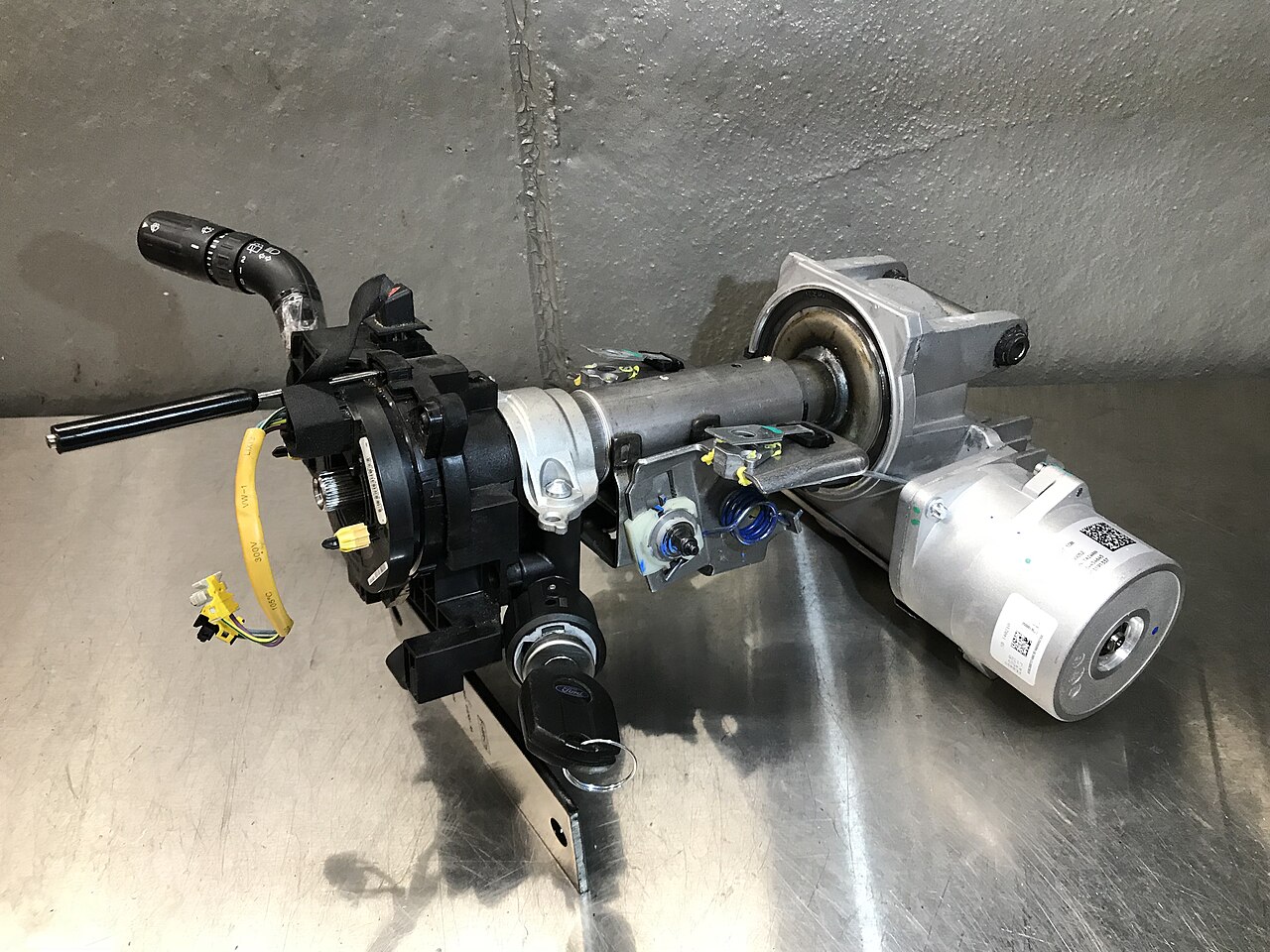
An electric power steering column assembly with the assist motor mounted at its base. Photograph: Samf4u
Image Credits: Wikimedia Commons / Samf4u
What steering feels like with no power assist
Turn a modern car with the engine off and you get a preview of manual steering. At parking speed the wheel goes heavy enough that you need both arms, because you are dragging the tires sideways against their full grip on the pavement.
Older cars were engineered around this reality. They used slow steering ratios and big-diameter wheels to give the driver mechanical leverage, and drivers accepted the tradeoff. Today nobody wants that workout, and a failed assist can make the wheel feel alarming if you are not expecting it.
Tire condition changes the effort too. Under-inflated tires put more rubber on the road and raise the force needed to pivot them, which is one reason tire pressure drops in cold weather can make winter steering feel heavier. Power steering hides most of that variation, so drivers rarely notice.
How hydraulic power steering multiplies your effort
Hydraulic power steering starts with a pump driven by the engine's serpentine belt. Inside the pump, a rotor with sliding vanes spins inside an oval chamber, trapping fluid and squeezing it out at high pressure. According to EngineerFix's guide to how the pump works, that pressure typically runs between 800 and 1,500 psi whenever the wheel is being turned.
The clever part is the rotary valve in the steering gear. A thin torsion bar sits between the steering wheel and the pinion, and it twists a tiny amount when you apply torque. That twist shifts a spool valve, which routes the high-pressure fluid to one side of a piston attached to the rack.
Fluid pressure then shoves the piston and the rack in the direction you are steering. The harder you pull, the more the torsion bar twists, the wider the valve opens, and the more assist you get. As Underhood Service explains, the amount of assist depends directly on that torsion bar deflection and the port area it exposes.
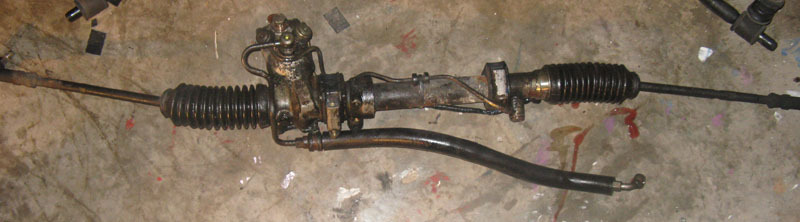
A hydraulic power steering rack with its fluid lines and protective boots. Photograph: l0lnix
Image Credits: Wikimedia Commons / l0lnix
Hold the wheel steady and the valve returns to neutral, sending fluid straight back to the reservoir with no assist. A relief valve protects the system from pressure spikes, and a flow-control valve keeps pressure stable whether the engine is idling or revving.
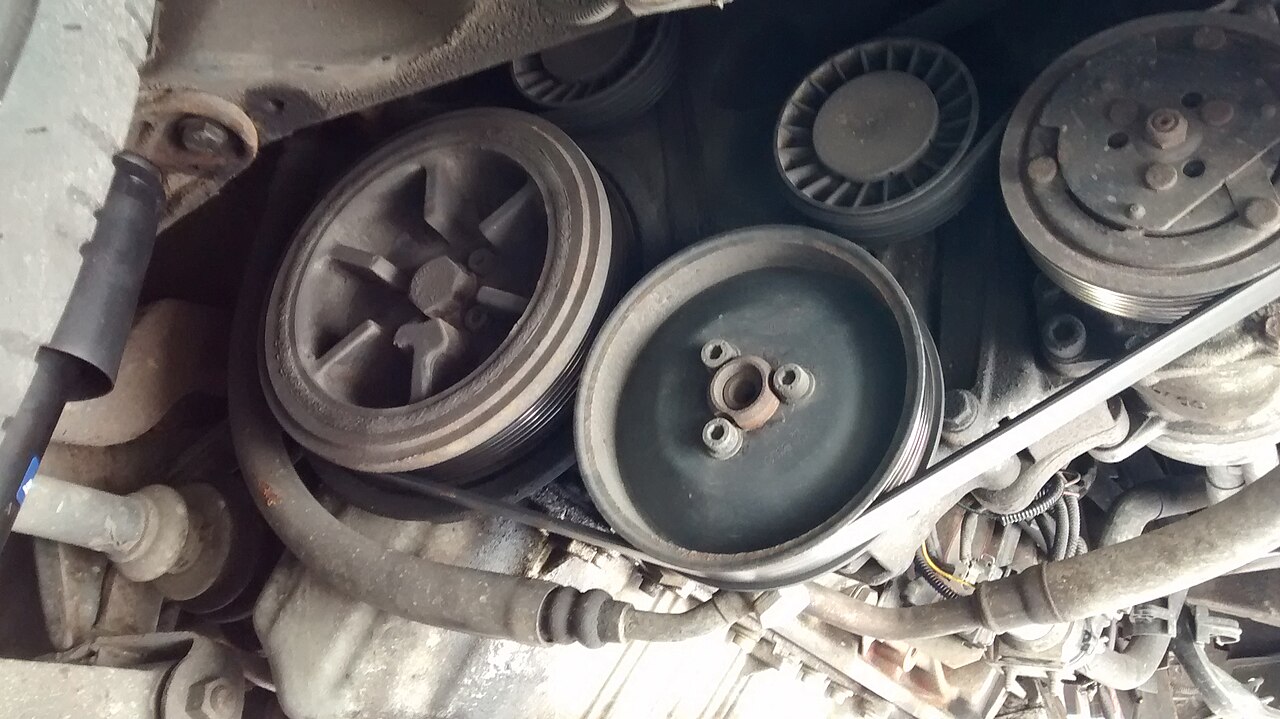
The belt-driven power steering pump and its pulley on an engine. Photograph: Hans Haase
Image Credits: Wikimedia Commons / Hans Haase
This design dominated for decades because it is simple and strong. But the pump runs constantly whenever the engine turns, burning fuel even when you are driving straight, and the whole system needs sealed hoses, a reservoir, and periodic fluid attention. Much like the debate around the engine oil change interval myth, power steering fluid also has a service life that owners often ignore until the pump starts groaning.
How electric power steering lightens the wheel differently
Electric power steering throws out the pump, fluid, and hoses entirely. A torque sensor on the steering column watches the same kind of torsion bar twist that hydraulic systems use, measuring both the direction and magnitude of your effort. That data goes to a control unit along with vehicle speed and steering angle.
The control unit then commands an electric motor to add torque in the right direction. In column-assist designs the motor sits on the steering column and helps the shaft; in rack-assist designs it drives the rack directly through a gear set. NAPA's guide notes the motor only runs while you are actually turning the wheel.
This gives engineers something hydraulics never had: precise, speed-sensitive control. EngineerFix reports the system commands maximum assist at parking speeds and trims it back on the highway so the car feels stable instead of twitchy. Every input becomes a calculation rather than a fixed mechanical response.
The motor itself is a bidirectional brushless unit, and the control unit constantly adjusts its output in real time.
Because the electronics also read ABS and stability-control data, assist can adapt to road surface conditions too, according to a specialist steering systems guide. That flexibility is why even trucks and performance cars now use electric systems.
Why electric power steering took over
Energy is the deciding factor. AutoZine's technical school explains that electric power steering uses only about a tenth of the power of a hydraulic system, largely because it sits in standby on the straight-ahead and draws current only while you steer. A belt-driven pump, by contrast, saps engine power for the entire drive.
The history stretches back further than most drivers guess. AutoZine notes the world's first electric power steering appeared on the Suzuki Cervo in 1988, working mainly as parking assistance. NAPA's guide adds that GM revived the concept in the early 1990s for the EV1, its first purpose-built electric car.
Fuel-economy regulations then pushed the technology into everything. Dropping the pump, fluid, reservoir, and hoses cut weight and complexity, and sealed electric systems leak nothing. For automakers chasing every gram of carbon dioxide, that made the switch inevitable.
There is one tradeoff enthusiasts still debate. Electric systems historically filtered out more road feel than hydraulic ones, and some drivers prefer the heavier, more talkative steering of older cars. Modern tuning has narrowed that gap, but the character difference is real and documented across the industry.
Frequently asked questions
Can you still steer if power steering fails?
Yes, but it gets hard. The mechanical rack-and-pinion linkage still works, so you can muscle the car to the shoulder. Expect parking-speed effort to need both arms, and keep both hands on the wheel until you stop.
Does power steering assist the same at every speed?
Not on modern systems. Electric steering gives maximum help for parking and dials assist down at highway speed for stability. Early hydraulic cars gave roughly constant assist, which is why old cars could feel twitchy on the freeway.
What does low power steering fluid feel like?
On a hydraulic car, the wheel gets heavier, the pump may whine or groan on turns, and you might feel vibration through the rim. Check the reservoir level and look for wet hoses or the garage floor for leaks before topping up.
Is heavy steering always a power steering problem?
No. Low tire pressure, a worn belt on hydraulic systems, or a weak battery or failing motor on electric systems can all stiffen the wheel. EV batteries lose capacity over time, and on electric-assist cars a dying 12-volt battery can starve the steering motor too.
The bottom line
Power steering lightens the wheel by measuring your effort and adding its own. Hydraulic systems do it with fluid squeezed to 800 to 1,500 psi and a valve that opens in proportion to how hard you twist. Electric systems do it with a torque sensor, a control unit, and a motor that only works while you turn, using about a tenth of the energy.
If your steering suddenly gets heavy, treat it as a warning and get the system checked before a parking lot becomes a wrestling match.
Latest in Automotive
- Why your steering wheel shakes at speed
- How tire pressure drops in cold weather
- The engine oil change interval myth
- Synthetic vs conventional oil: what actually differs
Subscribe for one practical car explainer like this every morning.
Related stories

Why Does Tire Pressure Drop in Cold Weather?
Cold weather can cut tire pressure by 1 psi for every 10°F drop, thanks to the ideal gas law. Here is what happens inside the tire and what
Why Do Brake Rotors Warp, or Do They Actually?
Mechanics rarely see a truly warped rotor. The shudder usually comes from uneven pad deposits a few thousandths of an inch thick. Here

How to Buy a Used Car Without Getting Scammed: The Checklist
Over 450,000 cars a year have rolled-back odometers, NHTSA says. This checklist covers VIN checks, title washing, and the inspection that